
Large-scale infrastructure projects face tighter cost control
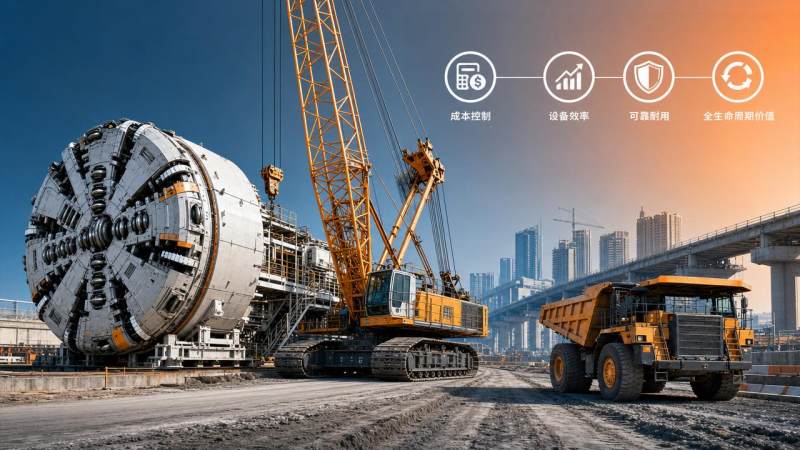
As large-scale infrastructure projects face tighter cost control, financial approvers need more than rough budgets—they need clear, intelligence-backed visibility into equipment efficiency, delivery risks, and total lifecycle value.
From TBMs and crawler cranes to mining trucks and road machinery, understanding where capital creates measurable returns is now essential to protecting margins and ensuring strategic project execution.
What Financial Approvers Are Really Searching For
When users search for insights on large-scale infrastructure projects under tighter cost control, they are usually not looking for abstract commentary. They want a practical framework for approving capital with fewer surprises.
For financial approvers, the core question is simple: how can a project remain on budget without sacrificing schedule, safety, output, or long-term asset performance?
That question becomes harder in heavy industry, where a single procurement decision involving a TBM, crawler crane, or mining fleet can shift project economics by millions.
The most useful answer is not “cut spending everywhere.” It is to identify which costs are controllable, which risks are hidden, and which equipment decisions improve total project returns.
Why Cost Control Has Become Stricter in Large-Scale Infrastructure Projects
Cost scrutiny is rising because infrastructure investors, lenders, and public sponsors now face pressure from every direction: inflation, supply volatility, environmental compliance, and lower tolerance for schedule overruns.
In parallel, project stakeholders expect more accountability from procurement and finance teams. Approvals are no longer based only on initial price, but on lifecycle performance and delivery certainty.
Large-scale infrastructure projects also depend on tightly coordinated equipment chains. If one critical machine arrives late, underperforms, or requires frequent intervention, downstream costs accelerate quickly.
That is why financial control is becoming more granular. Approvers must evaluate not only capex, but utilization, maintenance burden, energy consumption, parts access, operator readiness, and residual value.
For sectors linked to tunneling, open-pit mining, road building, and ultra-heavy lifting, this shift is especially important because equipment intensity is unusually high and failure costs are amplified.
Where Budgets Usually Break First
Many billion-dollar projects do not fail because the original budget was careless. They fail because early assumptions ignored how operational complexity converts into financial leakage.
The first weak point is often productivity mismatch. A machine may meet specifications on paper, but not under actual geology, altitude, weather, haul distance, or lifting cycle conditions.
The second weak point is schedule-related cost escalation. Delayed commissioning, spare part shortages, slow mobilization, and rework can turn a reasonable procurement into a budget problem.
The third is fragmented decision-making. Engineering may prioritize technical peak performance, procurement may focus on unit price, and operations may inherit the lifecycle consequences without alignment.
The fourth is underestimating support infrastructure. Power supply, transport logistics, maintenance bays, digital connectivity, and crew capability often determine whether expensive equipment creates value or idle time.
For financial approvers, identifying these stress points early is more useful than demanding across-the-board cuts that may weaken project execution later.
How to Evaluate Equipment Beyond Purchase Price
In tight-control environments, the cheapest machine is rarely the lowest-cost decision. The right question is whether the equipment reduces total cost of ownership while protecting the project schedule.
For example, a TBM with higher cutter head durability may cost more initially, but lower cutter replacement frequency can reduce stoppages, labor exposure, and tunnel advance uncertainty.
A crawler crane with stronger lifting stability, faster assembly logic, and proven service support may outperform a lower-priced alternative once wind farm, nuclear, or petrochemical schedules are modeled realistically.
Mining dump trucks illustrate the same principle. Fuel efficiency, payload consistency, brake reliability, and tire management often matter more financially than headline acquisition discounts.
Road machinery also deserves lifecycle analysis. Paving precision, compaction consistency, and telematics-enabled maintenance can improve surface quality and reduce future repair liabilities for concession or public operators.
Financial approvers should therefore request a value model that includes output per shift, downtime exposure, maintenance intervals, energy or fuel intensity, consumables, and redeployment potential.
The Five Questions Every Financial Approver Should Ask Before Approval
First, what project variable does this equipment decision improve most clearly: speed, throughput, safety, energy efficiency, quality consistency, or reduced dependence on scarce labor?
Second, what is the cost of underperformance? In large-scale infrastructure projects, one unreliable machine can trigger liquidated damages, subcontractor standby costs, and financing pressure.
Third, how robust is the supplier support model? Approvers should review spare parts access, field service response times, local training, remote diagnostics, and historical uptime evidence.
Fourth, what assumptions support the ROI case? If the model depends on perfect utilization or ideal ground conditions, approval should be conditional on sensitivity testing.
Fifth, what is the fallback plan? Equipment resilience is not only technical. It includes backup logistics, alternate parts channels, and operational adaptability when site conditions change.
These questions help finance teams move from passive budget checking to active value protection.
Why Intelligence Matters More Than Raw Market Pricing
In heavy equipment markets, price transparency alone is not enough. Two machines with similar specifications can produce very different economic outcomes depending on deployment context.
This is where sector intelligence becomes valuable. Market signals around project tenders, raw material supply, shipping congestion, and technology iteration can reshape procurement timing and negotiation leverage.
For example, knowing that cutter head material costs are rising or that a component bottleneck is forming allows approvers to reassess purchase timing before budget pressure worsens.
Likewise, intelligence on 5G remote-controlled excavation, electrified haulage, or high-altitude operating adaptations may help finance teams distinguish durable innovation from expensive experimentation.
For an intelligence-driven platform such as TF-Strategy, the real value lies in connecting machinery parameters with construction methods and strategic project economics, not merely publishing equipment news.
What Tight Cost Control Means for TBMs, Cranes, Trucks, and Road Machinery
Tighter cost control does not affect all asset categories equally. Financial approvers should understand where each equipment class tends to create or destroy value.
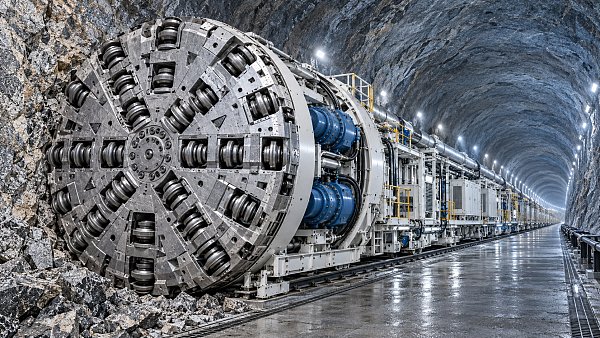
For TBMs, the biggest financial variables are geological compatibility, cutter life, advance rate stability, and maintenance access. Small technical differences can have major schedule consequences.
For crawler cranes, risk often concentrates in mobilization planning, assembly time, lift-path certainty, and weather-window utilization. Delays here can ripple across major installation packages.
For mining dump trucks, the financial focus is usually on payload realization, fuel or power costs, component life, and fleet availability under extreme terrain or climate conditions.
For large road machinery, value often comes from repeatable quality, reduced rework, and digital control precision that supports both productivity and long-term pavement performance.
A disciplined approval process should therefore adapt its metrics by equipment type rather than applying a single generic cost-control template.
How to Build a More Defensible Approval Model
Financial approvers need a method that is rigorous enough for governance and practical enough for project teams. A strong model combines technical evidence with commercial sensitivity analysis.
Start with a base-case scenario that reflects normal site conditions and planned output. Then test downside cases involving delays, reduced utilization, higher consumable use, and service interruptions.
Next, compare at least three value dimensions: direct cost, schedule impact, and strategic resilience. A machine with a higher invoice price may still be superior if it reduces schedule risk materially.
It is also useful to separate controllable and uncontrollable variables. Exchange rates and commodity swings may be external, but spare stock policy, operator readiness, and maintenance discipline are manageable.
Finally, require post-approval tracking. Cost control improves when original assumptions are measured against actual productivity, downtime, and service performance over the project lifecycle.
Common Mistakes That Lead to False Savings
One common mistake is approving the lowest bid without quantifying operational penalties. This creates apparent savings at the procurement stage while increasing hidden costs during delivery.
Another is treating vendor promises as substitutes for evidence. Marketing claims about efficiency or reliability should be validated through reference projects, service records, and operating environments similar to yours.
A third mistake is ignoring interoperability. Digital monitoring systems, attachments, transport requirements, and site support capacity all influence whether equipment can perform as modeled.
Finance teams also sometimes approve innovative technology without defining the adoption threshold. New-energy or automated equipment can be powerful, but only if infrastructure and capability are ready.
False savings usually emerge when decisions optimize one line item while weakening the economics of the full delivery system.
What High-Value Decision Support Should Look Like
For financial approvers, the best support is not more data, but more decision-grade clarity. They need intelligence translated into budget relevance.
That means seeing how machine specifications affect cycle times, how service networks affect uptime, and how market trends affect supplier risk and future operating costs.
It also means understanding strategic fit. A contractor expanding into complex tunneling or green energy installation may justify premium equipment if it builds long-term competitive capability.
TF-Strategy’s positioning is especially relevant here because heavy industry decisions are rarely isolated. They sit at the intersection of geology, hydraulics, logistics, energy transition, and capital discipline.
When intelligence connects those factors coherently, financial approvers can move from reactive cost gatekeeping to proactive value stewardship.
Conclusion: Cost Control Should Improve Decisions, Not Just Reduce Spending
Large-scale infrastructure projects are facing tighter cost control, but the answer is not indiscriminate budget compression. It is sharper judgment about where capital protects delivery and where spending creates avoidable risk.
For financial approvers, the most reliable path is to evaluate equipment through lifecycle value, schedule sensitivity, support quality, and strategic fit rather than purchase price alone.
In sectors driven by TBMs, ultra-large excavators, crawler cranes, road machinery, and mining trucks, better approvals come from better intelligence. That is how margins are protected without weakening execution.
When finance teams ask the right questions and use evidence-based equipment assessment, cost control becomes a strategic advantage rather than a constraint on project success.
Related News
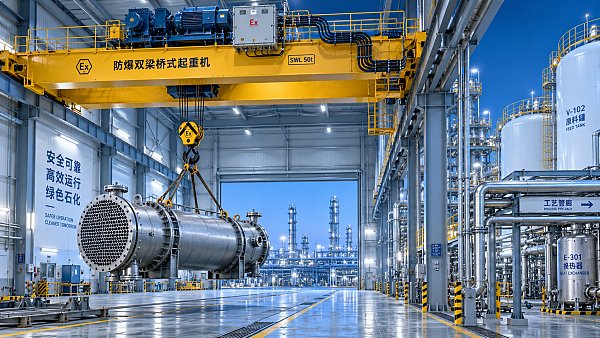
 Oct 06, 2026Selecting Petrochemical Overhead Cranes for Hazardous Areas and Heavy Process LoadsPetrochemical overhead cranes for hazardous areas: learn how to match capacity, duty, controls, corrosion protection, and maintenance access for safer, reliable lifts.
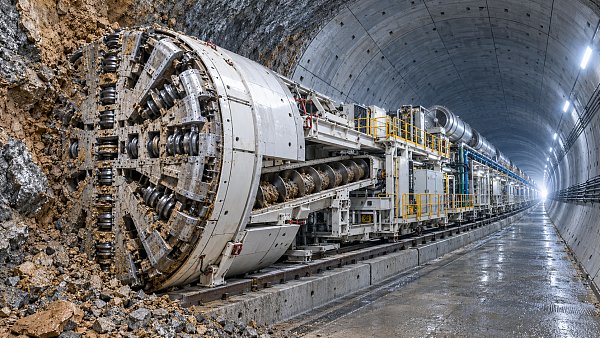
 Oct 05, 2026Tunneling Equipment Specification Planning: Key Criteria for Ground and Project RisksEquipment specification planning tunneling: learn how to match TBM systems to ground risks, geometry, safety, logistics, and lifecycle cost for more reliable project delivery.
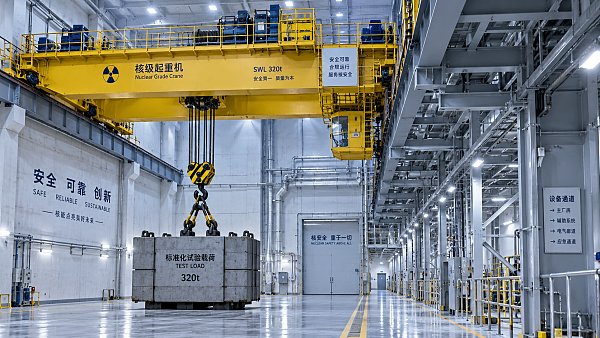
 Oct 04, 2026Nuclear Lifting Equipment Cost: Budgeting for Compliance, Testing, and Lifecycle RiskNuclear lifting equipment cost explained: budget for compliance, proof-load testing, installation, documentation, and lifecycle risk to make confident procurement decisions.
 Oct 03, 2026How to Assess TBM Manufacturers for Hard-Rock Tunneling Projects?Choose the right tunnel boring machine manufacturer for hard-rock projects. Explore key criteria for design, lifecycle cost, factory quality, and service support.
Ms. Elena Rodriguez
Weekly Insights
Stay ahead with our curated technology reports delivered every Monday.