
Nuclear Components Material Traceability: Key Documentation and Inspection Checkpoints
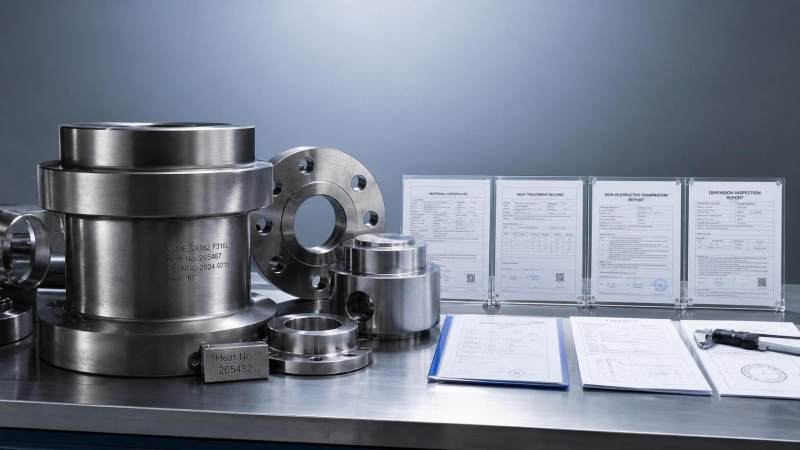
Why does material traceability sit at the center of nuclear components sourcing?
For nuclear components, traceability is not a paperwork formality. It is the chain that connects raw material origin, processing history, inspection evidence, and final release.
When that chain is weak, delivery risk rises fast. A missing heat number or unclear test record can delay acceptance more than a visible machining issue.
This matters across heavy industry projects. Nuclear construction often depends on crawler cranes, specialized transport, and strict installation windows, so document gaps can affect far more than one part.
From the perspective of TF-Strategy’s infrastructure intelligence, nuclear components sit inside a broader execution system. Material certainty supports lifting plans, site sequencing, safety control, and commercial predictability.
In practical terms, traceability answers several real questions. Is the material exactly what the drawing and code require? Was it tested under the right standard? Can each processing step be tied back to one verified source?
If the answer is incomplete, the problem is not only technical. It can turn into rework, witness hold points, replacement sourcing, or contract disputes.
Which documents should be checked before approving nuclear components?
Most search queries around nuclear components start with one concern: which records actually prove compliance? The short answer is that no single certificate is enough.
A reliable review usually combines material origin records, manufacturing records, inspection evidence, and release authorization. Each document should match part number, revision, heat number, and quantity.
- Material Test Certificate or Mill Test Report, showing chemical composition, mechanical properties, heat number, and applicable material specification.
- Certificate of Conformance, linking the delivered item to contract requirements, drawing revision, and code or regulatory commitments.
- Heat treatment records, including furnace identification, cycle parameters, charts, and operator authorization where required.
- NDE records, such as UT, RT, PT, or MT reports, with procedure references, technician qualification status, and acceptance results.
- Dimensional inspection reports, especially for interfaces, lifting points, pressure boundaries, and fit-up critical features.
- Welding documents, including WPS, PQR, welder qualifications, weld maps, consumable control, and repair history.
- Identification transfer records, proving that trace marks remained controlled after cutting, machining, or assembly.
A common mistake is reviewing these files one by one, without checking cross-consistency. For nuclear components, the real value lies in whether every reference points to the same manufacturing story.
A quick document checkpoint table
The table below works as a practical screening tool before factory release or final payment review.
How do you confirm that heat numbers and markings remain trustworthy?
This is where many nuclear components reviews become more technical. A valid mill certificate means little if identification control is lost during fabrication.
In actual manufacturing, plates are cut, forgings are machined, and subcomponents are assembled. Every transfer step creates a chance for marking loss or mix-up.
The better approach is to track traceability through the production route, not only at receiving inspection. Ask whether the original heat number was physically transferred, recorded, and later verified.
- Check raw material photographs or receiving logs against the certificate.
- Review cut plan or nesting records for plate and pipe segmentation.
- Confirm transfer marking procedure after cutting or beveling.
- Match shop traveler numbers with heat and batch references.
- Verify assembled nuclear components still link to all child materials.
When nuclear components involve forgings or heavy welded structures, extra attention is wise. Large sections may pass through multiple subcontractors, increasing the chance of incomplete marking continuity.
More experienced reviewers often ask one simple question: if this mark disappears today, can the full material history still be reconstructed tomorrow? That is a useful standard.
What inspection checkpoints matter most before shipment?
Not every inspection point carries the same value. For nuclear components, the critical checkpoints are the ones that close compliance risk before logistics begins.
Shipping oversized or highly regulated parts without full verification can trigger expensive delays at site. That risk is especially visible in heavy-lift planning and installation sequencing.
The most useful checkpoints usually include:
- Incoming material verification before fabrication starts.
- Witness points after major forming, forging, or machining stages.
- Hold points before pressure boundary closure or inaccessible weld completion.
- Final dossier review before painting, preservation, or export packing.
- Pre-shipment marking check on body, tags, crates, and records.
The timing of these checks matters as much as the checks themselves. If a discrepancy is found only at final release, corrective work can affect schedule, crane allocation, and transport permits.
In broader infrastructure delivery, that is why documentation control should be tied to project logistics. TF-Strategy often highlights this connection across heavy equipment projects where physical execution and compliance timing must stay aligned.
Where do nuclear components traceability failures usually begin?
They rarely begin with dramatic fraud. More often, failures start with ordinary process weakness that goes unchecked for too long.
One frequent issue is document inconsistency between supplier tiers. A forging shop, machining subcontractor, and inspection agency may each use different identification logic.
Another problem is assuming that a code-stamped item is automatically traceable in full. Stamping supports compliance, but it does not replace a complete material history.
There is also a cost trap. Some teams focus on unit price, then discover later that missing traceability on nuclear components creates extra audits, re-documentation, and delayed site acceptance.
The most practical prevention method is early document mapping. Before production starts, define which records are mandatory, who issues them, how they connect, and when each review point closes.
A short risk checklist helps keep reviews grounded:
- Unclear subcontractor scope for testing or marking transfer.
- Missing revision control between drawing, PO, and quality plan.
- Test reports issued without direct item identification.
- Late discovery of NCRs affecting released nuclear components.
- Packing lists that do not match dossier item counts.
How should the final review be organized before a sourcing decision closes?
By the final stage, the goal is not to collect more files. The goal is to decide whether the evidence around nuclear components is complete, coherent, and usable under audit.
A practical closing review usually compares four things together: contract requirement, drawing requirement, manufacturing record, and physical marking on the delivered item.
If one of these four does not align, pause the release decision. Even small mismatches can grow once components enter transport, lifting, and installation workflows.
For complex infrastructure supply chains, that discipline protects more than compliance. It supports schedule certainty, better claim defense, and cleaner handover between fabrication yard and project site.
A sensible next step is to build a traceability review sheet specific to the nuclear components being sourced. Include mandatory documents, acceptance criteria, hold points, and document owners.
That kind of structured review fits well with TF-Strategy’s wider view of power, precision, and delivery control. In heavy industry, strong decisions usually come from linked technical evidence, not isolated certificates.
When traceability is treated as an operational checkpoint rather than an afterthought, nuclear components move through the supply chain with fewer surprises and stronger confidence at every stage.
Related News
 Sep 22, 2026How to Evaluate a High-Altitude Mining Solutions Manufacturer for Remote ProjectsEvaluate a high-altitude mining solutions manufacturer with proven derating, cooling, service logistics, and lifecycle-cost support for remote projects.
 Sep 21, 2026Industrial Supplier Evaluation: A Risk-Based Scorecard for Quality, Capacity, and DeliveryIndustrial supplier evaluation made practical: use a risk-based scorecard to assess quality, capacity, and delivery reliability, reduce project risk, and select suppliers with confidence.
 Sep 20, 2026Comparing Heavy Equipment Warranty Suppliers: Coverage, Claims, and Downtime RiskSupplier comparison for heavy equipment warranty: evaluate coverage, claims speed, service networks, and downtime risk to protect uptime and project costs.
 Sep 19, 2026Mining Truck Technology Trends: What Fleet Managers Should Prioritize for 2026Mining truck technology trends for 2026: prioritize electrification, autonomy, predictive maintenance, and road intelligence to improve fleet uptime, safety, and cost control.



Ms. Elena Rodriguez
Weekly Insights
Stay ahead with our curated technology reports delivered every Monday.