
Open Pit Mining Haulage: How Trucks, Roads and Loading Work Together
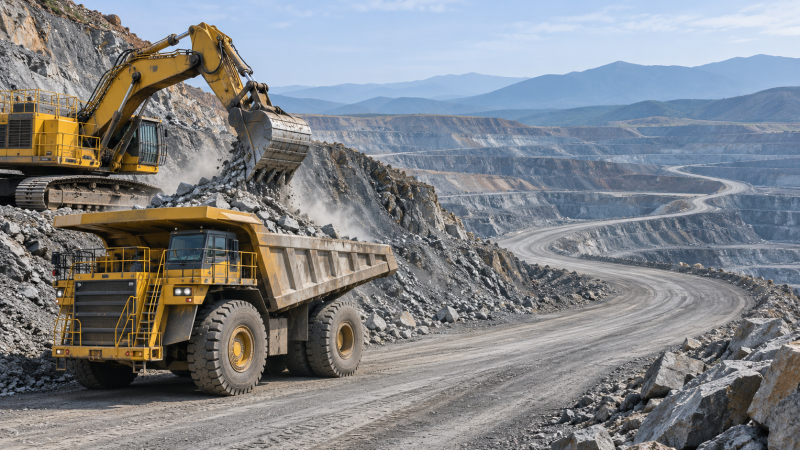
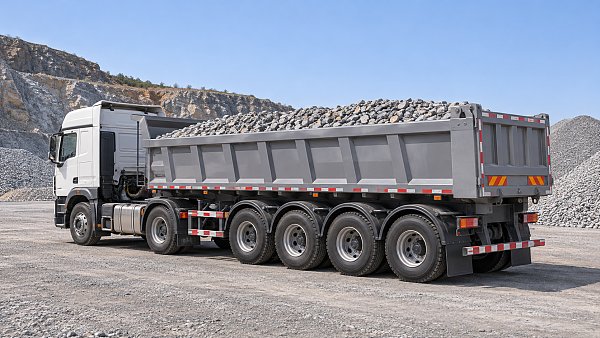
Open pit mining haulage moves excavated material from the working face to its next destination, such as a crusher, stockpile or waste dump. The system works as a continuous cycle: a truck travels empty to a loading area, receives material from an excavator or loader, travels loaded to a discharge point, unloads and returns. Output depends on the time and capacity of every part of that cycle.
A large truck alone does not guarantee high production. It must receive a suitable payload without excessive loading time, travel on roads that support safe and efficient movement, and discharge without joining a long queue. A restriction at any one point can leave expensive equipment waiting elsewhere.
The haul cycle connects the whole operation
A truck cycle includes more than driving time. It also includes spotting at the loading face, waiting for a loading unit, filling the truck, maneuvering at the destination and dumping. Fueling, inspections, shift changes and maintenance affect the time available for hauling, although they are usually tracked separately from an individual cycle.
For a simple estimate, divide the material delivered in a representative period by the time taken. At the individual-truck level, a useful starting relationship is:
Average material moved per operating hour = average payload per trip × completed trips per operating hour.
This relationship is straightforward, but its inputs need care. A truck’s rated payload is not necessarily its average actual payload, and a theoretical travel time does not include every delay. Fleet production also depends on how many trucks are available and operating during the same period. Comparing a calculated maximum with actual mine output without accounting for those differences creates a misleading gap.
The loaded and empty legs deserve separate attention. A steep climb to the surface often slows a loaded truck substantially, while an empty return trip on the same road has different traction, braking and traffic constraints. If the crusher is moved or the pit deepens, the balance of the cycle changes even when the fleet and loading equipment stay the same.
Matching trucks to the loading equipment
The size of the truck body and the effective bucket load determine how many passes an excavator or wheel loader needs to fill a truck. A pass is one bucket load placed into the body. Too many passes extend loading time; too few can make it difficult to reach a consistent payload without exceeding the truck’s limits.
Bucket capacity alone does not establish the mass in each pass. Rock density, fragmentation, moisture and how completely the bucket fills all affect the load. Loose, bulky material may fill the truck body before it reaches the desired payload. Dense material can bring the truck close to its payload limit while the body still appears to have space.
Pass matching is therefore a working range rather than a fixed number chosen from equipment brochures. The final bucket load may be smaller than the preceding ones to avoid overloading. When material properties change between benches, the same truck and excavator combination can require a different loading approach.
Loading position also affects cycle time and equipment condition. A truck must have enough room to enter, spot and leave without unnecessary reversing or interference with other vehicles. The loading unit needs a stable working platform and a suitable swing angle. Poor positioning adds seconds to each pass and may create a queue even when the excavator has sufficient nominal capacity.
How material enters the body matters as well. Large rocks dropped from excessive height can damage the body and suspension, while an uneven load shifts weight across axles and tires. A full-looking truck is not necessarily a well-loaded truck: distribution and adherence to the equipment’s payload limits matter alongside total tonnage.
Truck numbers, queues and the bottleneck
Adding trucks can raise production when the loading unit is frequently idle and the rest of the route has spare capacity. Once trucks begin waiting consistently at the shovel or discharge point, an additional truck may increase congestion without materially increasing output. The same fleet can be too small for a long uphill route and excessive for a short haul.
Queue location provides a useful clue, but it is not a diagnosis by itself. A queue at the excavator can indicate too many trucks, slow spotting, difficult digging or an interruption in loading. A queue at the crusher can indicate slow dumping, restricted access, a full receiving area or a downstream interruption. Observing when the queue starts and how quickly it clears helps distinguish a persistent capacity constraint from a temporary disturbance.
Average cycle time can conceal these differences. Two routes with the same average may have very different reliability: one may run steadily, while the other alternates between clear travel and long delays at a junction. Variability affects dispatching because trucks arriving in bunches compete for the same loading or dumping space.
Material destination also changes the calculation. Ore may travel to a crusher or stockpile while waste goes to a dump on another route. A fleet assigned according to one average distance can be poorly balanced when the proportion of ore and waste changes. Separating cycle records by route, destination and material gives a clearer picture than combining every trip into one figure.
Road conditions shape travel time and payload
Haul roads are part of the production system. Their alignment, gradient, width, surface and drainage influence the speed at which trucks can travel, as well as tire wear, fuel use and the consistency of the cycle.
Gradient affects loaded and empty trucks differently. On an uphill loaded section, engine power and traction limit speed; a longer route with a gentler climb can sometimes compete with a shorter, steeper route. On a downhill loaded section, braking and retarding capability become central constraints. A short route is not automatically the fastest route if trucks must descend slowly to remain within safe operating limits.
Rolling resistance is equally important but less visible. Soft, rutted or poorly maintained surfaces require more effort to move a truck than a firm, even road. That extra resistance increases travel time and energy demand. It can also reduce traction on a ramp, particularly when wet conditions combine with a steep grade.
Road width and geometry determine how traffic flows. Curves, intersections and narrow sections can force trucks to slow or wait, especially where loaded and empty traffic meet. Sight distance, separation from smaller vehicles, berms and drainage require attention as the pit develops and routes change. Site-specific road design and traffic controls govern the arrangement; a nominal road width alone says little about a blind corner or a congested junction.
Surface maintenance has direct operational value. Potholes, standing water and loose material can cause speed variation, tire damage and uncomfortable vehicle movement. Excessive watering suppresses dust but can also soften the running surface or reduce grip. The useful balance changes with weather, road material and traffic intensity.
At the loading face and the dump
The loading face is a moving workplace. As excavation progresses, the approach road, waiting position and truck spotting area must move with it. A layout that was efficient at the beginning of a shift can become restrictive as the face advances or the floor develops ruts.
Fragmentation affects both ends of the loading process. Oversized rock can slow digging, prevent efficient bucket filling and create difficult loads in the truck body. Very fine or wet material presents different problems, including sticking in the body and incomplete discharge. The appropriate response depends on the material and the equipment; simply increasing truck capacity does not resolve either condition.
At the destination, a truck needs space to approach, reverse where required, raise its body and leave. A crusher pocket, stockpile and waste dump each impose different maneuvering and discharge conditions. If a truck must wait for the receiving area to clear, the delay belongs to the haul cycle even though the road itself is unobstructed.
Dumping also introduces stability and clearance concerns. Ground condition at a dump edge, the position of other equipment and the possibility of material sticking in a raised body all affect how the area is managed. Discharge procedures and exclusion zones are established for the specific site and equipment.
Reading performance without confusing symptoms and causes
Payload, cycle time and availability are useful measures when viewed together. Low tonnes per hour could result from underloading, a long haul, road delays, equipment downtime or limited capacity at the destination. Increasing payload would address only one of those causes and could create an overload problem if trucks are already close to their limits.
Payload records are most useful when paired with the material type and loading unit. A consistent shortfall across several trucks may point to bulky material or conservative loading. A shortfall concentrated on one route or at one loading area warrants a closer look at the local conditions and measurement records.
Cycle-time records benefit from the same separation. Loaded travel, empty travel, loading, dumping and queue time reveal different constraints. A rising loaded travel time on the same ramp might reflect a deteriorating road surface or a change in traffic, while longer loading time could reflect harder digging or a change in truck positioning. A change in the combined cycle time alone cannot identify which occurred.
Availability and utilization should also be distinguished. Availability describes whether equipment is fit and ready for work; utilization describes how much of an available period it is actually used, according to the definitions adopted at the site. A truck can be mechanically available but parked because no loading unit is ready. Conversely, a heavily utilized truck can still deliver little material if it spends much of its operating time in queues.
When the pit changes, the haulage balance changes
An open pit is not a fixed route network. Deeper benches can lengthen the loaded climb, new working faces can alter travel distances, and a relocated dump can shift traffic onto a different ramp. A fleet arrangement that was balanced earlier may develop shovel idle time or a bottleneck at a junction as those conditions change.
Seasonal weather can have a similarly uneven effect. Rain may slow travel through soft road sections and complicate loading of wet material, while dry conditions can increase dust and reduce visibility. The resulting delays are not necessarily uniform across the mine, so route-specific observations matter.
Meaningful comparisons use consistent boundaries: the same treatment of waiting time, the same payload basis and clearly identified routes. With those conditions established, changes in haul distance, road resistance or loading performance become easier to distinguish from changes in how the figures were recorded.
Have questions about this sector analysis, or seeking best practices specific to your niche? Drop us a line below and let the senior consultants at TF-Strategy assist you.
Related News
 Nov 11, 2026Choosing Equipment Capacity for Different Workloads and ApplicationsExplore equipment application by capacity to match machines to real workloads, reduce bottlenecks and choose cost-effective solutions with confidence.
 Nov 10, 2026Crane Performance Comparison: Load Capacity, Reach and Lifting SpeedCrane performance comparison made practical: evaluate load capacity, reach and lifting speed to choose the right crane for your site and work sequence.
 Nov 09, 2026Heavy Equipment Technology Systems: Telematics, GPS and Machine ControlExplore heavy equipment technology systems, from telematics and GPS to machine control, and learn how to choose the right tools for your fleet and site.
 Nov 10, 2026Selecting a Four-Axle Rear Dump Semi-Trailer for Aggregate HaulingExplore dump special trailers for aggregate hauling. Learn how to compare legal payload, body durability and tipping safety before choosing a four-axle rear dump semi-trailer.
Ms. Elena Rodriguez
Weekly Insights
Stay ahead with our curated technology reports delivered every Monday.