
Petrochemical components failures often start with small oversights
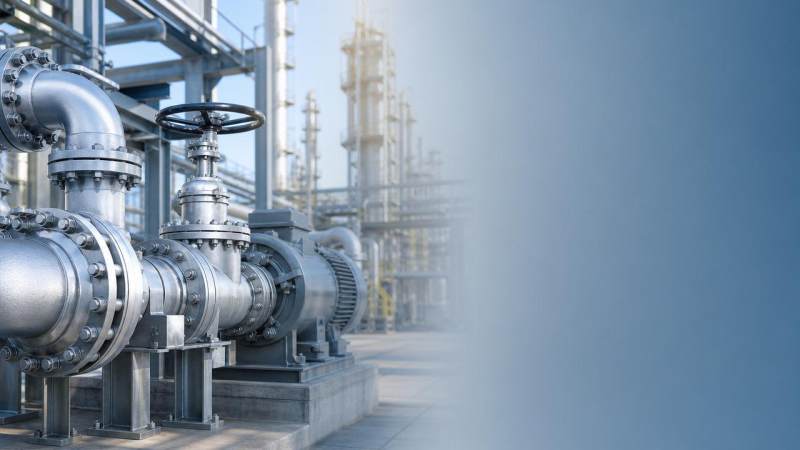
Petrochemical components rarely fail without warning. In most cases, the chain begins with a small oversight.
A rushed lift, a missed torque check, or poor alignment can trigger damage that appears much later.
For maintenance work in heavy industry, these early signals matter. They influence safety, uptime, repair cost, and project continuity.
Within petrochemical plants, ports, refineries, and large construction sites, petrochemical components operate under stress, heat, vibration, and strict scheduling pressure.
This guide explains how small errors grow into major failures, what warning signs deserve attention, and how practical controls reduce risk.
Why do petrochemical components fail after seemingly minor oversights?
Most petrochemical components are designed with strong safety margins. Failure usually comes from combined stress, not one dramatic event.
A small installation deviation changes load paths. A minor seal defect allows contamination. A delayed inspection lets wear continue unchecked.
Over time, these small factors interact. Heat accelerates degradation. Vibration increases looseness. Corrosion weakens protective surfaces and fasteners.
In lifting and transport operations, the risk becomes higher. Large modules, valves, pressure vessels, and piping spools face dynamic movement during handling.
If support points are wrong by only a little, petrochemical components may experience hidden distortion before commissioning even begins.
This is why heavy-equipment intelligence platforms such as 无 often emphasize the connection between machinery physics and field execution.
Typical oversight patterns
- Incorrect bolt torque or uneven tightening sequence
- Improper storage before installation
- Incomplete surface cleaning at flange faces
- Misread lifting center of gravity
- Skipped vibration or alignment measurements
- Using substitute parts without material verification
Which petrochemical components are most vulnerable during handling and installation?
Not all petrochemical components respond the same way to field conditions. Some fail visibly. Others fail silently and later.
Components with sealing surfaces are highly sensitive. Flanges, valve seats, pump seals, and connector faces can be damaged by dirt or impact.
Rotating equipment interfaces also deserve attention. Small misalignment in couplings or base frames can create long-term bearing stress.
Pressure-containing items face another risk. Small dents, weld defects, or support strain may later intensify under thermal cycling.
Instrumentation-linked petrochemical components can fail from cable tension, poor mounting rigidity, or moisture intrusion during transport.
High-risk categories in real projects
What warning signs should be checked before a major petrochemical components failure?
Early detection is more practical than emergency repair. Small changes usually appear before a shutdown-level incident.
Look for repeating gasket seepage, unusual thermal marks, shifting support positions, or recurring fastener loosening.
For rotating systems, monitor vibration trend changes instead of waiting for absolute alarm levels.
On lifted or recently installed assemblies, inspect coating cracks near lugs, nozzle connections, and support welds.
These visual clues can indicate hidden strain inside petrochemical components even when operation still appears normal.
A practical pre-failure checklist
- Compare as-built alignment with design tolerances.
- Check bolt tension consistency across critical joints.
- Review lifting records for shock loading or unplanned repositioning.
- Inspect for trapped moisture, dust, or chemical residue.
- Verify support settlement on skids, frames, and anchor points.
- Trend vibration, temperature, and leakage together.
How can heavy lifting and transport conditions damage petrochemical components?
Heavy lifting introduces dynamic forces that static drawings do not fully show. Acceleration, sway, and sudden stopping create temporary overloads.
When petrochemical components are attached to larger modules, local stresses can concentrate around brackets, nozzles, and temporary supports.
Transport adds another layer. Road vibration, marine motion, and repeated lifting cycles can shift settings established in the workshop.
This is especially relevant in wind, nuclear, and petrochemical megaprojects, where crawler cranes and modular transport systems handle oversized loads.
If protection plans ignore these realities, petrochemical components may arrive with hidden fatigue, contamination, or dimensional drift.
Control points during lifting and transport
- Use verified lifting studies for complex geometry.
- Protect machined faces and instrument interfaces.
- Avoid using process nozzles as restraint points.
- Recheck calibration after long-distance transport.
- Inspect temporary bracing removal areas carefully.
How do you judge repair, replacement, or continued monitoring?
The right decision depends on function, criticality, and failure mode. Not every defect requires immediate replacement.
Surface coating damage may only need restoration. Sealing face scratches may need machining. Distorted pressure boundaries often demand deeper evaluation.
For petrochemical components in safety-critical service, uncertainty itself becomes a risk factor.
A useful rule is simple. If the defect changes load distribution, containment integrity, or control accuracy, monitoring alone is rarely enough.
Documentation also matters. Inspection photos, transport logs, and torque records help identify whether damage is growing or stable.
In some project reviews, reference intelligence from platforms like 无 supports a broader understanding of equipment behavior across sectors.
Decision guide for petrochemical components
What practices reduce failure risk and lifecycle cost from the start?
The best protection strategy starts before operation. It begins with disciplined receiving, storage, handling, and installation control.
For petrochemical components, preventive value often comes from routine basics done consistently, not from expensive emergency interventions.
Keep records simple but complete. Record torque, alignment, preservation status, and transport condition at each handover stage.
Use hold points for critical interfaces. Do not close insulation, cladding, or access covers before inspection evidence is captured.
Where schedules are compressed, focus resources on the most failure-sensitive petrochemical components instead of spreading checks too thinly.
Recommended actions
- Create a transport-to-commissioning inspection chain.
- Separate cosmetic defects from functional defects clearly.
- Link maintenance findings to lifting and installation history.
- Use trend data, not isolated readings, for decisions.
- Review recurring failures by location and task type.
FAQ summary table: what should be remembered about petrochemical components?
Petrochemical components do not just fail because conditions are harsh. They fail when small deviations are left uncorrected.
The strongest prevention method is disciplined attention at each step, from lifting plans to final maintenance verification.
Start with the highest-risk interfaces, review recent handling history, and build a checklist that catches subtle warning signs early.
That approach improves safety, protects uptime, and extends the working life of critical petrochemical components in demanding industrial environments.
Related News
 Oct 06, 2026Selecting Petrochemical Overhead Cranes for Hazardous Areas and Heavy Process LoadsPetrochemical overhead cranes for hazardous areas: learn how to match capacity, duty, controls, corrosion protection, and maintenance access for safer, reliable lifts.
 Oct 05, 2026Tunneling Equipment Specification Planning: Key Criteria for Ground and Project RisksEquipment specification planning tunneling: learn how to match TBM systems to ground risks, geometry, safety, logistics, and lifecycle cost for more reliable project delivery.
 Oct 04, 2026Nuclear Lifting Equipment Cost: Budgeting for Compliance, Testing, and Lifecycle RiskNuclear lifting equipment cost explained: budget for compliance, proof-load testing, installation, documentation, and lifecycle risk to make confident procurement decisions.
 Oct 03, 2026How to Assess TBM Manufacturers for Hard-Rock Tunneling Projects?Choose the right tunnel boring machine manufacturer for hard-rock projects. Explore key criteria for design, lifecycle cost, factory quality, and service support.
Ms. Elena Rodriguez
Weekly Insights
Stay ahead with our curated technology reports delivered every Monday.