
Seven Practical Tools That Cut Construction Equipment Idle Time on Active Jobsites
Idle Time Is a Production Problem Before It Becomes a Fuel Problem
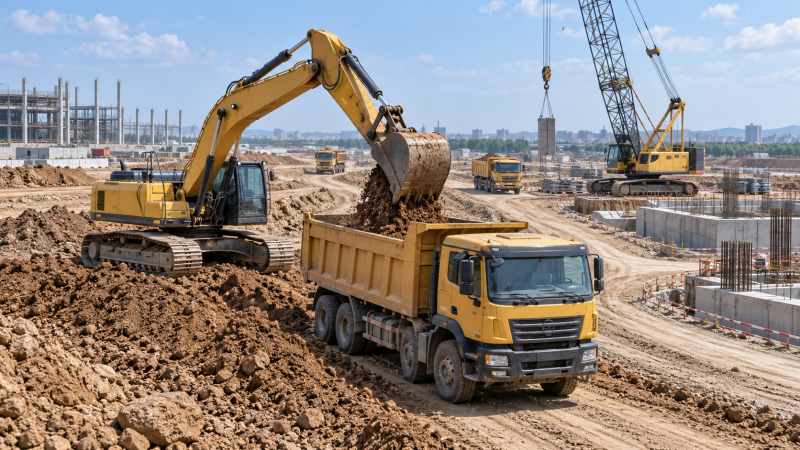
Construction equipment can be fully functional, properly staffed, and still spend too much of the day producing nothing. An excavator may wait for trucks. A crawler crane may sit while a lift plan is revised. A paver may pause because material delivery has fallen out of sequence. In tunnel and mining work, a single bottleneck upstream or downstream can leave several high-value machines running at low load or parked with operators waiting.
That is why reducing idle time should not begin with a generic instruction to operators to shut machines down more often. Excessive idling is usually a visible symptom of poor coordination, incomplete work release, maintenance uncertainty, or weak production visibility. The most useful tools give project teams a clearer answer to three questions: which machines are idle, why are they idle, and what action can remove the constraint before the next shift?
For project managers, the priority is not to drive idle time to zero. Some idle periods are operationally necessary: equipment may need to hold position during a critical lift, wait under exclusion-zone rules, warm up in severe conditions, or remain available for a short, predictable handoff. The objective is to reduce avoidable idle time without creating unsafe shutdowns, rushed workflows, or equipment that is unavailable when the workfront opens.
1. Telematics That Separates “Engine On” From Productive Work
Basic location tracking has limited value if it only shows where a machine is. To manage idle time, the telematics system needs to distinguish engine hours, idle hours, operating hours, travel, fuel burn, fault events, and where possible, machine load or work mode. A wheel loader idling beside a stockpile is a different problem from one that is cycling slowly because the crusher feed is inconsistent. Both may appear as low utilization in a simple report.
The practical requirement is a daily exception view rather than a monthly utilization spreadsheet. Project staff should be able to identify machines that have exceeded an agreed idle threshold, compare them against their planned role, and see whether the pattern is isolated or repeated across a fleet. Geofencing adds useful context: it can reveal whether a machine is inactive at the workfront, at a refueling point, in a maintenance area, or parked far from the next task.
Telematics is particularly valuable for dispersed earthworks, quarry development, road construction, and mine-support fleets, where supervisors cannot physically observe every asset throughout the shift. It is less effective when data is collected but no one owns the review process. A dashboard does not reduce idle time by itself; it needs an assigned user, a review cadence, and a defined response when a pattern appears.
What to configure before relying on telematics reports
- Machine-specific idle definitions, since a crane, excavator, haul truck, and asphalt paver do not operate in the same cycles.
- Clear site and work-zone geofences that reflect the actual production layout.
- Shift boundaries aligned with field operations, including handover and planned breaks.
- Exception alerts limited to actionable events, so supervisors do not ignore the system due to excessive notifications.
- A method for recording the operational reason behind major idle events.
Without that last step, telematics often creates a misleading management conversation. A report may show high idle time, while the field team knows that an access road closure, blasting window, inspection hold, or material shortage was responsible. The data should prompt investigation, not become a blunt performance score.
2. A Delay-Code System That Captures the Reason, Not Just the Duration
A machine can be idle for dozens of reasons, but most projects need only a manageable set of delay codes to make patterns visible. Useful categories often include waiting for material, waiting for trucks, waiting for survey release, weather hold, access restriction, planned maintenance, unplanned repair, operator availability, fueling, safety hold, and design or permit clarification.
The point is not to make operators complete a burdensome administrative task after every pause. The system should capture meaningful production losses with the least friction possible. Depending on the project, this may be done through a dispatch terminal, a mobile form, a foreman’s end-of-shift review, or integration with fleet-management software. For major equipment, a supervisor may need to validate the code when the delay exceeds a defined duration.
Delay codes turn “the fleet was underutilized” into a more useful statement. For example, if excavator idle time is mainly caused by truck shortages, replacing or disciplining excavator operators will not improve output. If cranes regularly wait for rigging inspections or lift-zone clearance, the remedy belongs in work packaging and safety coordination. If road machinery waits for asphalt or aggregate delivery, the critical constraint may sit in the supply chain rather than on the paving train.
Projects should avoid overly broad codes such as “other” or “site delay.” Those categories may make reporting easy, but they conceal the exact conditions that management needs to address. At the same time, an overly detailed list encourages inconsistent coding. A limited system used consistently is more valuable than a sophisticated taxonomy that crews bypass.
3. Short-Interval Planning Linked to Equipment Dependencies
Many idle losses originate before the shift begins. Equipment is assigned to a work area without confirming that the area is released, materials are available, access is clear, attachments are on site, and downstream capacity exists. The result is a machine that arrives ready to work but has no productive task.
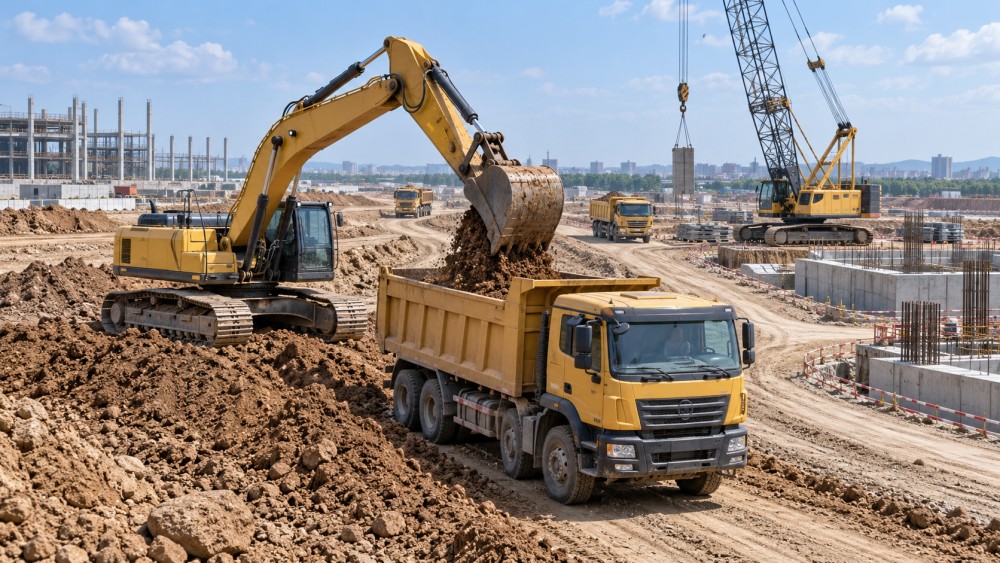
Short-interval planning addresses this problem by looking closely at the next shift, next day, or next few days rather than relying solely on the master schedule. For equipment-intensive operations, the planning conversation should map the dependency chain around each critical machine. An excavator needs a prepared excavation area, survey control, hauling capacity, and a disposal or stockpile plan. A crawler crane needs completed foundations or laydown sequencing, verified rigging, permitted access, and a work area protected from conflicting traffic. A TBM support system needs segment supply, muck removal, ventilation, maintenance windows, and downstream logistics aligned with advance rates.
Project managers do not need a complex new planning platform to begin. A simple constraint board can work when it makes responsibilities visible. Each critical item should have an owner and a due date: access route confirmed, material released, haul fleet allocated, lift plan approved, service crew scheduled, or workface inspected. The discipline matters more than the software.
Use the plan to protect high-cost equipment first
Not all idle time has the same consequence. A compact machine that waits briefly may be inconvenient; an ultra-large excavator, specialized paver, tunnel boring system, or high-capacity crawler crane can disrupt an entire production chain when it sits unused. Planning should begin with assets that govern output, have limited replacement options, or require substantial mobilization and specialist support.
This does not mean every costly asset must remain active every minute. It means the team should know when it is deliberately held and when it is waiting because the workfront was not prepared. That distinction helps managers make better choices about fleet size, subcontractor coordination, and shift structure.
4. Dispatch and Queue Management for Cyclical Operations
In earthmoving, mining, and bulk material handling, idle equipment often reflects an unbalanced cycle. Haul trucks queue at a loader. A loader waits for trucks. Dozers wait for a compaction pass or a cleared dumping area. A crusher is starved while trucks are delayed at a weighbridge or fueling point. Adding equipment to one part of the system can worsen congestion elsewhere.
Dispatch tools help supervisors see the system as a flow rather than a collection of individual machines. The simplest versions track loading, travel, dumping, return, and queue time. More advanced systems can recommend truck allocation, route changes, or loader assignments based on live conditions. The value comes from identifying the constraint in the cycle and adjusting resources around it.
Before investing in a sophisticated dispatch platform, managers should assess whether the site can support disciplined data inputs. Truck locations, loading events, route definitions, and production targets must be credible. A poor operating plan does not become reliable because it appears on a screen.
There is also a common mistake in using queue data: treating every queue as waste. Some controlled queueing may protect safety, maintain separation, or stabilize loading operations. The issue is sustained, unplanned waiting that does not serve a production or safety purpose. Managers should compare queue duration with cycle variability, travel conditions, and downstream capacity before changing fleet numbers.
5. Digital Pre-Start and Workfront Readiness Checks
Daily inspections are often discussed as a maintenance requirement, but they are also an idle-time tool. A machine that reaches the work area and then discovers a hydraulic issue, missing attachment, expired permit, damaged hose, or incomplete access arrangement can lose a full production window. The same applies when operators arrive without clear task priorities or required site information.
Digital pre-start checklists can bring these issues forward if they are designed around work readiness instead of compliance alone. Alongside equipment condition, the checklist can confirm fuel or charging status, attachment availability, service due dates, operator authorization, communication equipment, access route, exclusion zones, and required documentation. For specialized lifting and underground equipment, the list may also include environmental controls and emergency readiness checks relevant to the planned task.
The benefit depends on timing. A readiness check completed at the start of the shift is too late if a missing item requires a long response. For critical equipment, the review should begin before mobilization or during the previous shift’s handover. This is especially important for machines with unique tooling, long setup times, or support crews that cannot be called in immediately.
6. Maintenance Planning That Uses Condition Data and Production Windows
Deferred maintenance can appear to improve utilization for a day, then create extended downtime at the worst possible moment. Conversely, routine service scheduled without regard to the production plan can leave equipment unavailable when a constrained workfront is finally ready. The goal is to place maintenance in planned windows and use condition signals to prevent avoidable failures.
Condition monitoring may include fault codes, fluid analysis, temperature trends, pressure readings, wear indicators, battery condition, or technician inspection findings. The level of monitoring should match the value and failure consequences of the equipment. A major crane, large excavator, or tunnel support system usually justifies closer attention than a low-cost, easily substituted asset.
Maintenance planners need visibility into the construction sequence. If a crane has a low-demand period between major lifts, that may be the right place for inspection and service. If a haul fleet will be constrained by weather or blasting, the maintenance team can use the opportunity to complete work that would otherwise interfere with production. Coordination is more important than simply increasing preventive-maintenance activity.
Projects should also track maintenance-related idle time separately from breakdown downtime. Waiting for a technician, parts, approval, or a service bay is different from the repair itself. Those distinctions expose whether the issue lies in equipment reliability, parts logistics, maintenance staffing, or weak planning.
7. Operator Workflow Tools and Shift-Handover Discipline
Operators are often the first people to recognize that a machine is becoming unproductive. They see recurring congestion, incomplete work areas, poor material quality, conflicting trades, and controls that are beginning to behave abnormally. Yet this knowledge is lost when shift handover is informal or when reporting a delay requires too much effort.
A practical operator workflow tool can be as simple as a structured handover record combined with a mobile channel for reporting constraints. The handover should state the machine’s condition, location, fuel status, active task, outstanding defects, workfront status, and the next shift’s expected priority. For machines that work across multiple crews, this avoids a common source of avoidable idling: the incoming operator spending time locating the equipment, understanding its condition, or waiting for a supervisor to clarify the assignment.
Operator input should inform management decisions, but it should not become a mechanism for assigning blame based on engine-hour reports alone. Some idle time is controlled by the operator; much of it is created by dispatch, logistics, engineering release, weather, safety restrictions, or the overall work plan. A fair process produces better data and makes crews more likely to report emerging problems early.
How to Choose the Right Starting Point
Projects often buy telematics first because it is tangible and widely available. That can be sensible, particularly for a fleet spread across several work areas. But the first investment should follow the dominant cause of idle time.
The strongest approach usually combines several tools, but not all at once. Start with one equipment class or one constrained workstream, establish a baseline, identify the most frequent avoidable delay, and correct the operating process around it. Once teams can connect machine data with production decisions, idle time becomes a controllable project variable rather than an accepted cost of keeping a site moving.
Related News
 Oct 19, 2026Sizing Industrial Hydraulic Power Packs: Pressure, Flow, and Duty CycleSize industrial hydraulic power packs with confidence. Learn how pressure, flow, and duty cycle affect performance, energy costs, and heat control—and avoid costly sizing mistakes.
 Oct 18, 2026How Equipment Specifications Affect Purchase, Installation, and Operating CostsExplore equipment specification planning cost factors that shape purchase, installation, and operating budgets. Compare lifecycle costs, avoid oversizing, and buy with confidence.
 Oct 17, 2026Tunnel Boring Machine Supplier List: Compare TBM Types and Service CoverageExplore our tunnel boring machinery supplier list to compare EPB, slurry and hard rock TBMs, assess service coverage and lifecycle costs, and build a smarter procurement shortlist.
 Oct 16, 2026Heavy-Duty Petrochemical Lifting: Selecting Cranes by Load, Radius, and Site AccessExplore heavy-duty petrochemical lifting solutions. Compare cranes by load, radius, site access, and ground support to reduce project risk and optimize lifting costs.

Ms. Elena Rodriguez
Weekly Insights
Stay ahead with our curated technology reports delivered every Monday.