
Tunnel Boring Machine Price: Cost Drivers for Urban Metro Projects
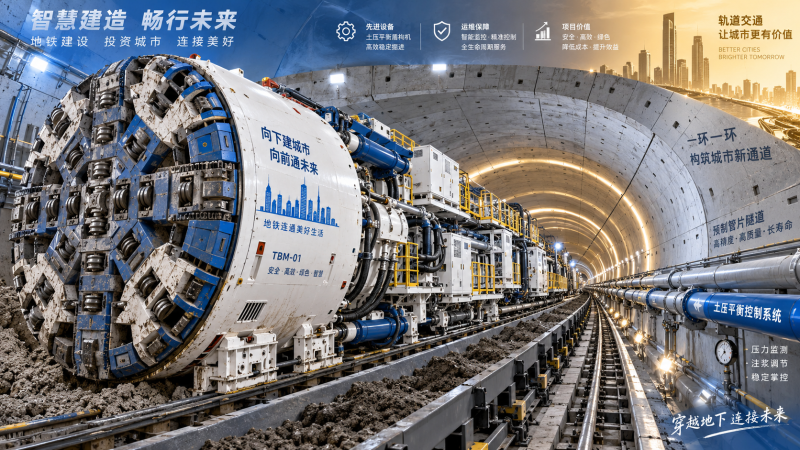
The purchase price of a tunnel boring machine is rarely the number that determines whether an urban metro drive remains commercially controllable. A lower initial quotation can become the more expensive option if the machine is poorly matched to mixed geology, requires major site modifications, arrives without sufficient commissioning support, or creates long stoppages when cutters, seals, or electrical components are needed.
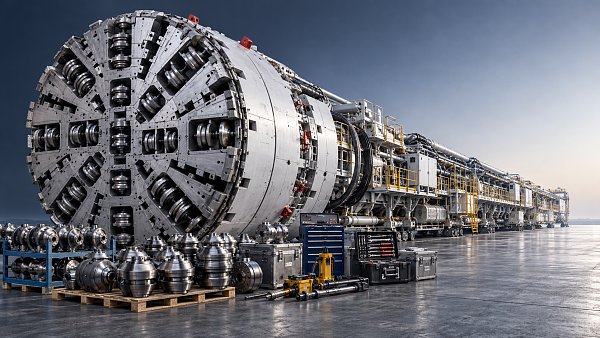
For metro works, tunnel boring machine price should be treated as the cost of securing a defined excavation capability under specific ground, alignment, logistics, and programme conditions. The machine itself is only one part of that capability. Procurement decisions improve when the quotation is separated into technical configuration, delivery scope, operating consumables, support obligations, and risk allocation rather than assessed as a single capital-equipment figure.
Why metro TBM prices are difficult to compare directly
Two machines with similar excavation diameters may have materially different prices because they are designed for different ground-pressure regimes, groundwater conditions, curve radii, segment systems, and operating strategies. A shield intended for relatively uniform cohesive soils is not equivalent to a machine expected to handle variable sand, clay, boulders, permeable water-bearing strata, and intermittent rock within the same drive.
Urban metro projects also place constraints on the equipment that do not appear in a basic machine specification. Launch and reception shafts may be small. Surface transport routes can limit the dimensions and weight of components. The tunnel alignment can include tight horizontal curves, gradients, cross-passage interfaces, or station breakthroughs. Settlement limits near utilities and occupied structures may require more precise face-pressure management and more extensive real-time monitoring. Each requirement can alter the machine design, auxiliary systems, factory testing scope, and site support package.
This is why comparing only cutterhead diameter, installed power, and quoted delivery date is insufficient. Those fields describe the machine at a high level, but they do not establish whether the quoted configuration can manage the project’s specific risk profile.
Machine type sets the baseline cost structure
The first price driver is not brand or country of manufacture; it is the excavation method required by the ground conditions.
Earth pressure balance machines
Earth pressure balance (EPB) TBMs are commonly considered where the excavated material can be conditioned into a plastic, controlled muck plug inside the pressure chamber and screw conveyor. Their commercial attractiveness is often linked to efficient spoil handling and practical operation in soft ground. However, the price and operating cost rise when the design must accommodate abrasive soils, large cobbles, changing water conditions, high face pressures, or difficult conditioning requirements.
An EPB quotation should identify the screw conveyor design, wear protection, pressure-control capability, conditioning injection points, foam and polymer systems, and provisions for interventions. A machine offered with basic conditioning equipment may appear more economical than one with a more robust package, but the difference can be consequential where soil conditioning is central to pressure control and torque management.
Slurry shield machines
Slurry TBMs are generally selected where groundwater control, permeable granular soils, or high pressures make slurry-based face support more appropriate. Their equipment package extends beyond the shield itself. It can include slurry circulation pumps, separation plant interfaces, crushing arrangements, piping, tanks, control systems, and monitoring equipment. The separation plant capacity, target particle-size separation, slurry treatment arrangement, and spoil disposal assumptions must be examined alongside the TBM price.
A quotation that excludes major slurry support systems is not directly comparable with an integrated package. Conversely, purchasing all slurry infrastructure from one source may simplify interfaces but can reduce flexibility if local separation equipment, power systems, or treatment facilities are already available through the project supply chain.
Mixed-face and variable-ground capability
Many metro alignments cannot be neatly classified as either soft-ground or rock tunnelling. Geological transitions, weathered rock, boulders, man-made obstructions, and localized hard inclusions create a mixed-face requirement. The premium for a machine configured for variable conditions may be justified by stronger cutterhead structures, appropriate tooling, enhanced wear protection, higher torque, more capable drive systems, and access arrangements for tool changes.
The important question is not whether a supplier describes its machine as “mixed ground capable.” It is whether the proposed design is supported by the baseline ground model and by clear operational limits. Procurement documents should require the supplier to state assumed maximum particle size, expected abrasivity range, allowable rock strength or hardness indicators where relevant, groundwater pressure basis, cutter intervention conditions, and excluded ground scenarios.
Diameter is important, but configuration matters more than size alone
Larger shields require more structural steel, greater installed power, more robust main bearings, larger hydraulic systems, and more complex transport and assembly arrangements. Diameter therefore has a substantial influence on tunnel boring machine price. Yet a price curve based only on diameter can mislead metro planners.
A smaller-diameter machine with an unusually tight turning requirement, a reinforced cutterhead, high-pressure sealing, extensive monitoring, and a short shield length for constrained launch conditions can be more complex than a larger machine intended for a straightforward alignment. The same applies to segment erection. Ring geometry, segment weight, number of pieces per ring, universal ring requirements, dowel arrangements, gasket type, and automated handling needs all affect erector design and backup layout.
The shield should be priced against the actual tunnel system, not against excavation diameter in isolation. This includes the lining supplier’s dimensional tolerances, segment storage plan, rail or conveyor logistics, grout delivery method, and required build accuracy. A well-priced TBM package that does not integrate reliably with the segment and muck-handling system can transfer cost into operations and delay.
Cutterhead, tools, and wear protection are not minor line items
For urban metro tunnelling, cutterhead design is a primary risk-control component. Its opening ratio, spoke or plate arrangement, cutting-tool layout, muck flow path, wear plates, agitation features, and access provisions influence excavation efficiency and intervention exposure. The correct design depends on the expected material rather than on a generic preference for a particular cutterhead style.
Tooling costs require special attention because the purchase contract may include only an initial set of cutters, scrapers, disc cutters, rippers, or wear elements. The quantity included, tool grade, procurement lead time, local stockholding arrangement, and replacement price can have a greater lifecycle impact than a modest variation in the base machine quotation.
Procurement teams should distinguish between:
- initial tooling supplied for commissioning and early excavation;
- recommended project spares based on the geological baseline;
- consumables priced under a framework or call-off arrangement;
- wear parts that require scheduled replacement; and
- critical parts whose failure could stop the drive.
Tool-life commitments should be handled carefully. A fixed consumption guarantee is difficult to evaluate unless the contract clearly defines the reference ground, operating mode, conditioning regime, allowable interventions, and measurement method. A better commercial structure may combine transparent unit pricing, agreed stock levels, technical support, and a defined process for reassessing forecasts when actual ground conditions differ from the baseline.
Automation and digital systems add value only when the operating model can use them
Modern TBM proposals frequently include automated guidance, ring-build assistance, excavation data recording, machine-condition monitoring, remote diagnostic capability, and interfaces to project data systems. These features can support quality control and maintenance planning, but they should not be accepted as undifferentiated extras.
The procurement assessment should ask what each system measures, who owns the data, whether it can exchange information with the contractor’s project environment, how long data storage is provided, and what happens after the warranty or service period ends. Cybersecurity responsibilities, remote-access approval procedures, and software licensing should be specified before contract award.
Automation can also change the staffing and training requirement. A more sophisticated control system may reduce some repetitive tasks, but it can increase dependence on trained operators, electrical technicians, software support, and reliable communications. The commercial value lies in an operating arrangement that can sustain the system, not merely in the presence of advanced functions on a technical brochure.
The delivered price is shaped by logistics, assembly, and interfaces
A factory-ex works price does not represent the project cost of putting a TBM into operation. Urban projects often face constrained shaft access, limits on heavy-haul movements, restrictions on delivery times, and complex lifting plans. The machine may need to be shipped in smaller modules, assembled in a launch box, or transferred through temporary works that impose additional engineering requirements.
Quotation comparisons should state the applicable Incoterm and identify responsibility for inland haulage, marine transport, insurance, customs clearance, local taxes, unloading, storage, assembly, commissioning, and demobilization. Currency exposure also matters where the TBM, electrical equipment, tools, and service personnel are sourced from different jurisdictions.
Interface omissions are a common cause of apparent savings. A supplier may price the shield, backup, and standard controls, while the project must separately provide transformers, ventilation interfaces, dewatering, compressed air, grout plant connections, conveyor arrangements, rails, locomotives, segment handling equipment, or slurry treatment facilities. None of these items is automatically included simply because they are necessary for tunnelling.
Delivery schedule has a cost beyond liquidated damages
TBMs for metro schemes are often engineered to order. The required design reviews, supplier submittals, long-lead procurement, fabrication, factory acceptance testing, shipping, assembly, and commissioning must be aligned with shaft readiness and civil works sequencing. A promised manufacturing date has limited value if it does not define the milestones that lead to site acceptance.
Contracts should establish measurable events: design freeze, approval of key submittals, completion of fabrication, factory acceptance testing, shipment release, arrival at site, mechanical completion, dry commissioning, wet commissioning where applicable, and performance demonstration. Payment milestones should not concentrate too heavily before the equipment has passed meaningful acceptance stages.
Schedule risk also sits in supplier capacity. The relevant review is not only whether the manufacturer has produced similar machines, but whether its current engineering, fabrication, testing, and field-service resources can support the committed programme. Critical subcontracted components—main drives, bearings, variable-frequency drives, hydraulics, gearboxes, control hardware, and separation equipment—deserve the same scrutiny as the TBM builder.
Warranty language can conceal significant operating exposure
A standard warranty may cover defects in materials and workmanship, but it does not necessarily cover performance in difficult ground, accelerated wear, production shortfalls caused by site interfaces, or damage arising from operating conditions. The exclusions matter as much as the warranty period.
For a metro TBM contract, the commercially useful questions include whether the supplier will provide resident engineers during launch and ramp-up; response-time commitments for remote and site support; availability of critical spare parts; responsibility for root-cause analysis following serious failures; and the procedure for approving modifications during excavation.
Performance guarantees should be realistic and carefully bounded. Advance rate depends on many factors outside the TBM supplier’s control, including segment supply, muck removal, shaft logistics, power availability, maintenance discipline, ground conditions, and permitted working hours. Guarantees are most defensible when linked to defined mechanical capabilities and acceptance tests rather than broad promises of daily or monthly production.
Evaluate total cost of ownership through scenario-based comparison
The useful comparison is not “Supplier A is cheaper than Supplier B.” It is whether each proposal delivers the same functional scope under the same assumptions. A structured commercial comparison should normalize the proposals into a common cost model covering:
Scenario testing is particularly valuable where ground uncertainty remains material. One scenario can reflect the baseline geological interpretation; another can test higher abrasivity, more frequent hard inclusions, slower spoil handling, or delayed segment delivery. The purpose is not to predict the exact outcome. It is to identify which proposal becomes disproportionately expensive or operationally fragile when conditions depart from the ideal case.
Purchase, lease, and refurbished equipment require different risk assumptions
Outright purchase provides control over configuration, deployment, and potential reuse, but it also leaves the buyer carrying residual-value and refurbishment risk. This may be appropriate where future projects can use a similar diameter and ground-support method. It is less compelling when the machine is highly specialized to one alignment or when storage and refurbishment capability are limited.
Leasing or project-based availability arrangements can reduce residual-value exposure, but the agreement must define refurbishment condition, accepted wear levels, responsibility for damage, return logistics, and the consequences of schedule extension. A low periodic charge can be offset by restrictive return conditions or expensive extension terms.
A refurbished TBM may offer a lower entry price, especially where its diameter and shield type broadly fit the project. The key issue is not the machine’s age alone. It is the remaining life and documented condition of the main bearing, cutterhead, shield structure, drives, hydraulic systems, electrical equipment, backup components, and controls. Compatibility with current safety requirements, local electrical standards, segment geometry, and the project’s expected ground must be verified. Refurbishment scope should be detailed enough to distinguish cosmetic renewal from replacement of failure-critical components.
Where price negotiations should focus
The strongest negotiation opportunities are often found in scope clarity rather than in an arbitrary reduction of the base machine price. Critical spare packages, tooling framework prices, resident support duration, software access, acceptance criteria, training, documentation, and delivery responsibilities can carry substantial operational value. A supplier that agrees to transparent unit rates and defined response commitments may present lower project risk than one offering a discounted machine with broad exclusions.
Technical deviations should be priced explicitly. If a supplier proposes a different cutterhead arrangement, reduced backup capacity, alternate drive configuration, or reduced instrumentation package, the commercial comparison should record the operational consequence as well as the price difference. “Complying” offers can vary greatly when specifications permit alternatives without requiring equivalent evidence.
The most defensible TBM procurement decision is therefore not the one with the lowest purchase order value. It is the one that establishes a credible match between machine capability, geological uncertainty, site interfaces, support capacity, and the cost of recovering from delay. For an urban metro project, that alignment is the practical meaning of a competitive tunnel boring machine price.
Related News
 Oct 20, 2026Which Heavy Machinery Maintenance Standards Apply to Your Construction Fleet?Discover which heavy machinery maintenance standards apply to your fleet. Clarify legal duties, OEM requirements, and inspection rules to reduce risk and keep equipment ready for work.
 Oct 19, 2026Sizing Industrial Hydraulic Power Packs: Pressure, Flow, and Duty CycleSize industrial hydraulic power packs with confidence. Learn how pressure, flow, and duty cycle affect performance, energy costs, and heat control—and avoid costly sizing mistakes.
 Oct 18, 2026How Equipment Specifications Affect Purchase, Installation, and Operating CostsExplore equipment specification planning cost factors that shape purchase, installation, and operating budgets. Compare lifecycle costs, avoid oversizing, and buy with confidence.
 Oct 17, 2026Tunnel Boring Machine Supplier List: Compare TBM Types and Service CoverageExplore our tunnel boring machinery supplier list to compare EPB, slurry and hard rock TBMs, assess service coverage and lifecycle costs, and build a smarter procurement shortlist.
Ms. Elena Rodriguez
Weekly Insights
Stay ahead with our curated technology reports delivered every Monday.