
What Is Earth Engineering and Which Ground Conditions Require Different Methods?
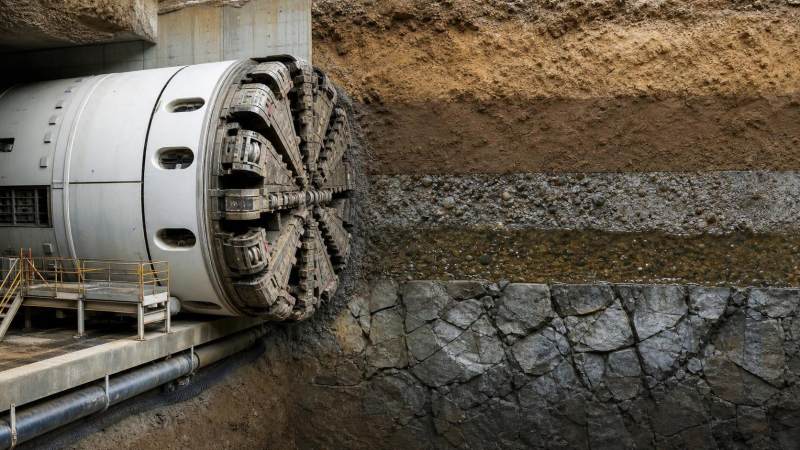
Why does earth engineering always start with the ground?
Earth engineering is not just digging, cutting, or supporting soil and rock.
It begins with one basic question: what will the ground do when disturbed?
That question shapes excavation speed, machine choice, lining design, water control, and project risk.
In practice, the same tunnel, pit, or foundation can need very different methods across short distances.
Soft clay may squeeze and deform.
Hard rock may stand briefly, then fail along joints.
Mixed ground can damage tools because the machine face meets different resistance at once.
This is why earth engineering matters across heavy industry, not only in civil works.
TBM drives, open-pit access, crane pads, haul roads, and deep cuts all depend on reliable ground behavior models.
For infrastructure intelligence platforms such as TF-Strategy, earth engineering is a decision framework.
It links geology, machine performance, construction method, and long-term cost in one view.
What is earth engineering in practical terms?
A simple definition is helpful, but it is not enough.
Earth engineering is the planning and control of soil, rock, groundwater, and excavation response.
The goal is to make ground workable, stable, and predictable during construction and operation.
That includes investigation, excavation, support, drainage, monitoring, and equipment matching.
In urban tunneling, it may focus on settlement control and face pressure balance.
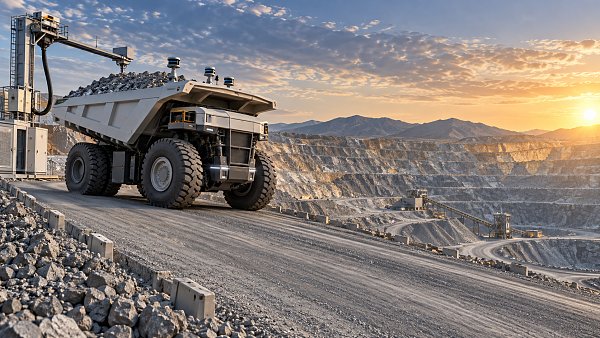
In mining, it may focus on slope stability, blasting response, and haulage continuity.
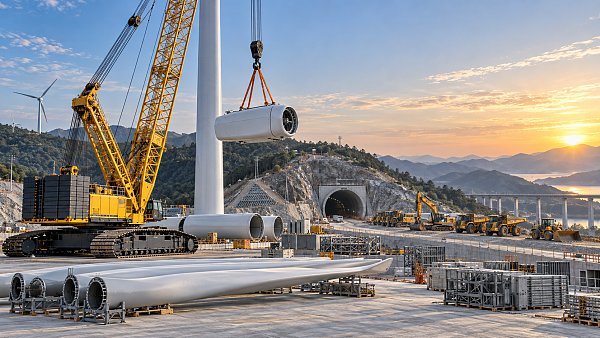
For large lifting projects, it can even affect crane bearing pressure and temporary platform design.
So when people ask what earth engineering is, the best answer is broader than excavation alone.
It is the discipline of making ground conditions compatible with machinery, safety, and production targets.
Which ground conditions usually require different methods?
This is where earth engineering becomes highly specific.
Different ground conditions do not just change productivity.
They can completely change the construction logic.
A useful way to read the problem is to connect each condition with its likely response.
The key point is not the label alone.
It is how strength, permeability, abrasivity, and discontinuities combine under stress.
That is why earth engineering decisions often change after more drilling, probing, or face mapping.
How do method choices change between soft ground, rock, and mixed-face work?
The method shift is usually more dramatic than many early schedules assume.
In soft ground, the priority is often control.
You try to keep the face stable, limit movement, and avoid water-driven collapse.
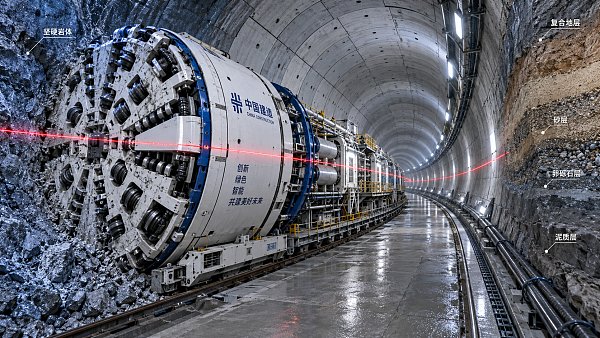
Earth Pressure Balance and slurry TBMs are common responses in tunneling because they manage face support directly.
In rock, the strategy may move toward penetration, support timing, and wear management.
A hard-rock TBM, drill-and-blast sequence, or mechanical excavation plan depends on rock mass quality, not strength alone.
Jointed rock can behave worse than stronger intact rock because the weakness is structural.
Mixed-face conditions are often the most difficult.
Part of the cutterhead may enter rock while another part passes through clay or sand.
That creates unbalanced forces, steering issues, and uneven wear.
In real earth engineering practice, these zones usually demand tighter monitoring and lower production expectations.
- Soft ground favors pressure control, conditioning, and settlement management.
- Rock work favors penetration logic, support class selection, and cutter consumption planning.
- Mixed-face work favors flexibility, advance caution, and stronger geological forecasting.
That difference matters for cost models as much as for safety.
What mistakes are common when judging ground conditions too quickly?
A frequent mistake is treating the site investigation report as fixed truth.
Ground data is always partial.
Boreholes sample points, not the whole volume.
Earth engineering becomes risky when teams assume continuity between limited observations.
Another mistake is focusing only on strength values.
High groundwater pressure, swelling minerals, cobbles, gas, or abrasive quartz can be project-defining.
Needle-like changes in geology can also disrupt production far more than average values suggest.
There is also a planning error that appears in heavy equipment strategy.
People sometimes choose the machine first, then try to fit the ground to it.
The better approach is the reverse.
TF-Strategy often frames this as a stitched decision chain.
Ground parameters, support logic, hydraulic demand, wear profile, haulage rhythm, and safety margin should align.
When they do not, overruns usually appear as delays, excessive maintenance, or unstable performance.
How should earth engineering be evaluated before method selection?
A practical evaluation is less about finding one perfect answer.
It is about reducing uncertainty to a manageable range.
That means combining geotechnical data with equipment behavior and construction constraints.
The checklist below is a useful starting point.
This type of review is especially useful when comparing TBM configurations, open-pit sequences, or temporary heavy-load platforms.
It turns earth engineering from a descriptive report into a usable decision tool.
Where does this matter most in today’s heavy infrastructure landscape?
The importance of earth engineering is growing because projects are getting more constrained and more ambitious at once.
Urban tunnels must limit movement near dense utilities and buildings.
Open-pit mines chase deeper zones with changing geomechanics and haul profiles.
Wind, nuclear, and petrochemical projects need stable lifting areas for crawler cranes and oversized components.
Even large road machinery depends on subgrade response, drainage performance, and material consistency.
That wider relevance explains why intelligence-led platforms pay close attention to geology, machine physics, and operating strategy together.
TF-Strategy’s view of heavy industry reflects this connection clearly.
Earth engineering is not isolated from fleet electrification, digital monitoring, remote excavation, or TCO analysis.
It sits underneath them.
If the ground model is weak, even advanced equipment loses value.
If the ground model is strong, production, safety, and maintenance planning become far more realistic.
So, what is the most useful next step when comparing methods?
Start by translating geology into decisions, not just descriptions.
Ask how each ground condition affects excavation control, support timing, water management, and equipment wear.
Then compare methods against those factors instead of against headline production claims.
A strong earth engineering review usually includes three practical outputs.
- A ground condition map that highlights change zones, not just average conditions.
- A method matrix linking each zone to support, dewatering, and machine settings.
- A risk list covering delay triggers, wear hotspots, and monitoring thresholds.
That is the level where earth engineering becomes actionable.
It helps separate feasible plans from optimistic assumptions.
For anyone tracking tunnels, mining, road systems, or heavy lifting corridors, the message is consistent.
Ground conditions are not background data.
They are the starting signal for every serious earth engineering decision.
The next sensible move is to compare site data, likely ground transitions, and machine-method fit before judging cost, schedule, or long-term performance.
Related News
 Sep 19, 2026Mining Truck Technology Trends: What Fleet Managers Should Prioritize for 2026Mining truck technology trends for 2026: prioritize electrification, autonomy, predictive maintenance, and road intelligence to improve fleet uptime, safety, and cost control.
 Sep 17, 2026How TBM Guidance Technology Maintains Alignment Through Curves and Variable GroundTunnel boring machine guidance technology helps teams maintain precise alignment through curves and variable ground, reducing risk, improving lining accuracy, and protecting schedules.
 Sep 16, 2026Infrastructure Equipment Market Reference: Demand, Pricing, and Supplier BenchmarksInfrastructure equipment market reference for buyers: assess demand signals, total cost, pricing risks, and supplier benchmarks for tunnels, mining, cranes, and road projects.
 Sep 15, 2026How to Evaluate Infrastructure Equipment Suppliers for Complex Project RequirementsInfrastructure equipment solutions supplier evaluation guide for complex projects: assess technical fit, lifecycle cost, reliability, local support, and contract risk.
Ms. Elena Rodriguez
Weekly Insights
Stay ahead with our curated technology reports delivered every Monday.