
What Safety Standards Govern Underground Construction Projects in Europe?
What Safety Standards Govern Underground Construction Projects in Europe?
What safety standards apply to underground construction in Europe? The practical answer is not a single tunnel rulebook. A metro extension, hydropower tunnel, road tunnel, underground utility gallery, and mine-development heading may share hazards, but each sits within a layered framework: EU occupational safety law, national construction regulations, machinery requirements, project permits, client specifications, and technical standards adopted to demonstrate safe practice.
For project owners and contractors, the difficult part is rarely finding one applicable standard. It is understanding how the rules interact at the face, inside the TBM backup train, at shafts, during segment logistics, and in an emergency. Compliance cannot be treated as a document exercise completed before mobilisation. Underground conditions change with geology, water ingress, gas risk, machine configuration, construction sequence, and the number of people working beyond the portal.
European practice generally expects risk to be designed out where possible, controlled collectively where necessary, and managed through procedures and personal protective equipment only where residual risk remains. That principle influences everything from choosing an excavation method to locating refuge arrangements and setting ventilation capacity.
The legal hierarchy: EU directives set the baseline, national law controls the site
The EU’s occupational safety and health framework begins with Directive 89/391/EEC, commonly called the Framework Directive. It establishes broad employer duties: assess risks, prevent hazards, provide information and training, consult workers, and adapt preventive measures as conditions change. Its principles are relevant underground because a generic risk assessment is seldom enough. A tunnel’s risk profile can shift rapidly after a geological transition, a pressurised intervention, a ventilation disruption, or a revised haulage arrangement.
For construction works, Directive 92/57/EEC on temporary or mobile construction sites is especially important. It requires safety and health coordination where multiple contractors are involved and provides the foundation for pre-construction safety planning in Member States. In practice, project teams need clear responsibility for interface risks: shaft access, lifting zones, electrical isolation, spoil handling, temporary works, emergency routes, and the handover between civil, mechanical, and electrical teams.
These directives do not operate directly as a universal site manual. Each Member State transposes them into domestic law and may impose more detailed requirements. Germany, France, Italy, Spain, the Nordic countries, and other jurisdictions apply their own rules, approved codes of practice, inspection arrangements, and competent-authority expectations. The United Kingdom is no longer an EU Member State, but remains part of the European market and follows its own framework, including the Construction (Design and Management) Regulations 2015. A contractor moving between European markets should not assume that a safety plan accepted in one jurisdiction will satisfy another.
The client’s contract and permit conditions can be equally decisive. A public rail project may require safety arrangements that exceed the minimum legal baseline, particularly where future operation, passenger evacuation, fire resilience, or interoperability requirements influence construction-stage decisions.
Risk assessment must reflect the underground method, not just the work package
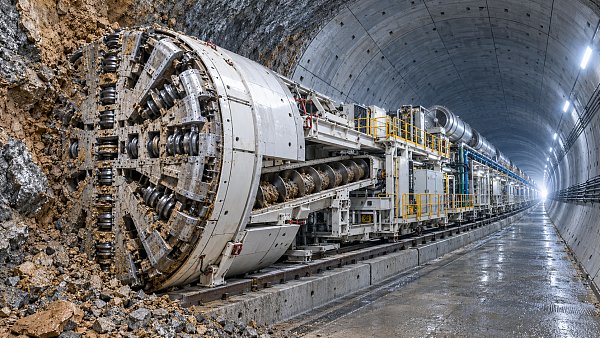
A credible underground risk assessment connects hazards to the actual construction method. Drill-and-blast work introduces misfire control, blast exclusion, fumes, unsupported ground, and re-entry decisions. Mechanised tunnelling has a different concentration of risk: rotating cutterheads, high-pressure hydraulic systems, confined access, segment handling, conveyor interfaces, belt fires, and interventions under compressed air or earth pressure balance conditions.
The risk register should also follow the sequence of work. A tunnel that is safe during normal advance may become high-risk during cutterhead inspection, hyperbaric intervention, breakthrough, cross-passage excavation, backup extension, or removal of a TBM through a shaft. Generic “confined space” language often fails to capture these transitions. The controls need to identify who has authority to stop work, what conditions trigger that decision, and how the site verifies that conditions are safe before restart.
This is one reason why construction methodology matters as much as machinery specifications. The Global Terra-Force Hub (TF-Strategy) tracks the connection between machine parameters, geological conditions, and project execution because a TBM’s cutterhead design, installed power, segment logistics, conveyor system, and pressure-control capability all affect the practical safety envelope underground.
Machinery safety: CE marking is necessary, but it does not make the worksite safe
Construction machinery placed on the EU market has historically been governed by the Machinery Directive 2006/42/EC. The newer Machinery Regulation (EU) 2023/1230 will apply from January 2027, subject to the regulation’s transitional framework. Manufacturers, importers, and users should confirm which regime applies to the equipment and date of placing on the market rather than relying on outdated procurement language.
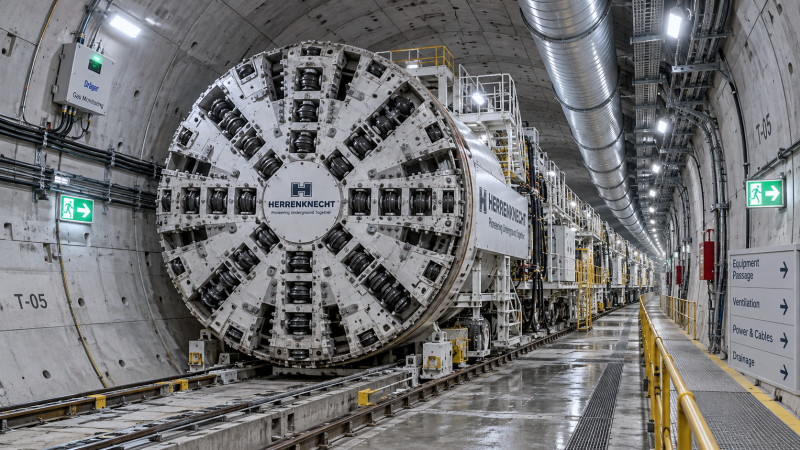
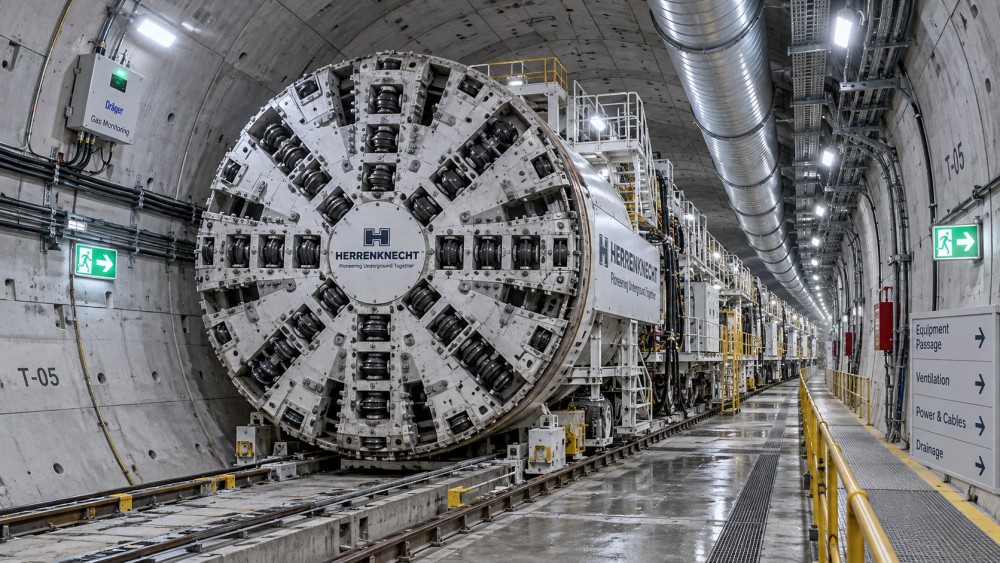
For tunnel boring machines, EN 16191, Tunnel boring machines — Safety requirements, is a central technical reference. It addresses safety matters associated with TBM design and operation, but it does not remove the need for project-specific controls. A machine may be correctly CE marked and still require additional guarding, access controls, fire protection measures, communications, or rescue provisions when integrated into a particular tunnel system.
The employer’s duty to provide suitable work equipment is also shaped by Directive 2009/104/EC on the use of work equipment by workers. The relevant question is broader than whether the equipment was compliant when delivered. Has it been maintained? Has it been altered? Are guards and emergency stops functional? Are lifting accessories inspected? Can operators isolate hazardous energy before maintenance? Has the machine’s original risk assessment been revisited after site modifications?
This distinction is often missed in international procurement. Product conformity concerns the machine. Worksite safety concerns the machine, people, geology, temporary infrastructure, operating procedures, and supervision together.
Ventilation, air quality, and explosive atmospheres
Ventilation is one of the most operationally sensitive controls in underground construction. It must address diesel emissions where combustion equipment is used, dust, welding fumes, blasting gases, heat, humidity, oxygen displacement, and potentially hazardous geological gases. A ventilation plan should not only state fan capacity. It should define air routes, duct integrity, monitoring locations, alarm responses, backup arrangements, and the effect of construction-stage changes such as extending a heading or adding a cross-passage.
Where flammable gases, vapours, or combustible dust may create an explosive atmosphere, the ATEX workplace directive, 1999/92/EC, requires employers to assess explosion risk, classify hazardous zones where applicable, and prepare an explosion protection document. Equipment intended for use in potentially explosive atmospheres may also fall under the ATEX equipment directive, 2014/34/EU. Whether ATEX applies depends on the actual hazard assessment; it should not be assumed simply because work is underground, nor ignored because a project is described as civil rather than mining.
Continuous gas monitoring, fixed or portable, is only useful when escalation is disciplined. Teams need agreed alarm thresholds based on the project assessment, competent interpretation of readings, and authority to evacuate or suspend activities. Instrument calibration, bump testing, sensor placement, and recordkeeping are not minor maintenance tasks; they support the decision to keep people in the heading.
Fire safety and evacuation are design questions
Underground fires are difficult because smoke travels, visibility disappears quickly, and escape routes may be long or obstructed by trains, conveyors, pipes, cables, or stored materials. Construction sites therefore need a fire strategy tailored to the current tunnel configuration, not merely to the completed asset.
Directive 89/654/EEC establishes minimum workplace safety and health requirements, including emergency routes and exits, while national rules and project specifications supply much of the operational detail. In a tunnel, the fire strategy commonly addresses ignition sources, combustible load, cable selection and routing, detection, firefighting equipment, emergency lighting, communications, evacuation direction, refuge or safe areas where required, and access for rescue services.
European standards can support those choices. For example, EN 1838 covers emergency lighting applications, while the EN 12101 series addresses smoke and heat control systems. Their relevance depends on the system being installed and the project’s legal and contractual basis. A standard cited in a design specification is not automatically a complete evacuation solution. Travel distance, gradient, available walking space, visibility, personnel numbers, and the time required to shut down or isolate equipment must be examined together.
Road tunnels on the trans-European road network have a specific regulatory reference in Directive 2004/54/EC, which sets minimum safety requirements for certain tunnels longer than 500 metres. It is not a universal construction standard for every underground project. Still, it can shape design and safety expectations where a project falls within its scope or adopts similar operational principles.
People, competence, and controlled access
Underground work exposes people to risks that cannot be controlled by signage alone: moving plant, falling objects, pressurised systems, poor visibility, noise, fatigue, heat stress, manual handling, and restricted escape. Directive 89/656/EEC governs the use of personal protective equipment at work, but PPE is the final layer. It does not substitute for separating pedestrians from rail or vehicle routes, engineering out lifting exposure, or maintaining ventilation.
Competence must be role-specific. A trained surface crane operator is not automatically competent to manage underground lifting constraints. A TBM operator needs to understand machine alarms and operational limits; maintenance personnel need robust lockout and tagout procedures; emergency teams need familiarity with the evolving tunnel layout. Where compressed-air work is planned, medical fitness, decompression procedures, and specialist supervision require particular attention under applicable national requirements.
Language is another practical issue on multinational sites. Safety-critical instructions, permit systems, muster information, and emergency communications must be understood by the workforce that will use them. Translating a procedure after an incident is too late.
A workable compliance approach for cross-border projects
The most reliable approach is to develop a project compliance matrix early, then keep it live. It should distinguish legal obligations, permit conditions, client requirements, harmonised or referenced standards, and internal controls. Each item needs an owner, evidence of compliance, review timing, and a clear link to the relevant construction phase.
- Identify the governing country law and authority requirements before finalising the method statement.
- Review TBM, conveyors, lifting systems, electrical installations, and temporary works as an integrated system.
- Test emergency arrangements under realistic conditions, including communications failure and restricted access.
- Reassess hazards after material changes in geology, equipment, sequencing, workforce composition, or tunnel length.
- Keep national specialists involved where requirements on fire, explosives, pressure work, rescue, or environmental permits are involved.
For decision-makers comparing equipment and construction approaches, safety should be evaluated alongside output and total cost of ownership. A higher advance-rate target has little value if it creates an unmanageable maintenance exposure, constrains evacuation routes, or exceeds the ventilation and logistics capacity of the project. TF-Strategy’s focus on TBM systems, hydraulic power, heavy lifting, and construction intelligence reflects this reality: physical machine data only becomes useful when interpreted against the construction environment and the rules governing it.
European underground construction safety is therefore best understood as a managed interface between law, engineering, equipment, and field discipline. Before work begins, confirm the applicable national regime and project approvals. Before each major phase changes, revisit the risk assessment. That is usually more valuable than searching for a single standard that appears to cover the whole tunnel.
Related News
 Oct 07, 2026How to Evaluate a Hydraulic System Component Supplier for Heavy Equipment UptimeChoose a hydraulic system component supplier with proven quality, technical fit, and reliable delivery to reduce heavy equipment downtime and lifecycle costs.
 Oct 06, 2026Selecting Petrochemical Overhead Cranes for Hazardous Areas and Heavy Process LoadsPetrochemical overhead cranes for hazardous areas: learn how to match capacity, duty, controls, corrosion protection, and maintenance access for safer, reliable lifts.
 Oct 05, 2026Tunneling Equipment Specification Planning: Key Criteria for Ground and Project RisksEquipment specification planning tunneling: learn how to match TBM systems to ground risks, geometry, safety, logistics, and lifecycle cost for more reliable project delivery.
 Oct 04, 2026Nuclear Lifting Equipment Cost: Budgeting for Compliance, Testing, and Lifecycle RiskNuclear lifting equipment cost explained: budget for compliance, proof-load testing, installation, documentation, and lifecycle risk to make confident procurement decisions.
Ms. Elena Rodriguez
Weekly Insights
Stay ahead with our curated technology reports delivered every Monday.