
What heavy haulage costs often hide before a project starts
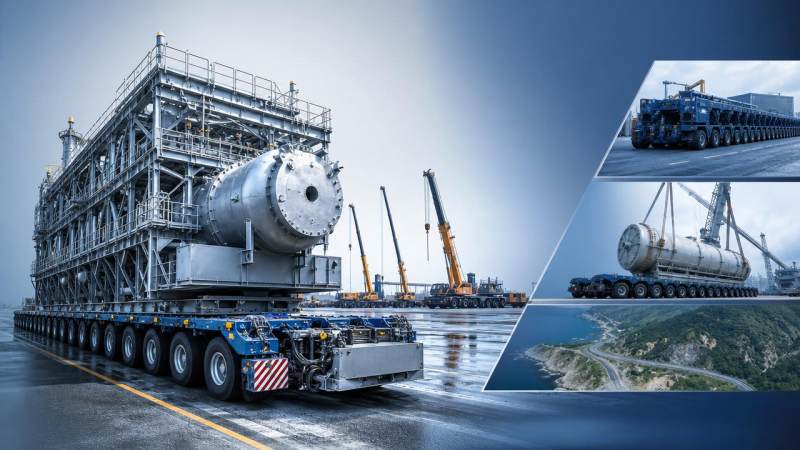
Before contracts are signed, heavy haulage costs often extend far beyond freight quotes. For financial approvers, the real risks hide in route surveys, permit delays, escort requirements, crane coordination, insurance, and schedule disruption. Understanding these hidden cost drivers early helps protect project margins, improve budget accuracy, and prevent expensive surprises once oversized equipment starts moving.
In sectors such as tunneling, open-pit mining, wind installation, petrochemical construction, and large civil works, heavy haulage is rarely a simple transport line item. Moving a TBM shield, crawler crane components, ultra-large excavator modules, or mining dump truck assemblies can trigger a chain of pre-mobilization costs that appear weeks before the first axle turns.
For finance teams, this matters because early-stage omissions often distort total landed cost by 8% to 20%, especially when cargo exceeds standard road limits in mass, axle load, height, or turning radius. A low initial quote may therefore become the least reliable number in the approval file.
Within the intelligence-driven heavy equipment ecosystem followed by TF-Strategy, heavy haulage is not just an operational task. It is a capital-risk interface between machine dimensions, route engineering, construction sequencing, compliance, and cash-flow timing. That makes it a strategic review area for every financial approver involved in large project delivery.
Why heavy haulage budgets are often understated at approval stage
Many approval packages start with a freight quotation, but oversized transport pricing usually assumes a provisional route, a provisional schedule, and provisional site readiness. In practice, 5 to 7 hidden variables can change the number after award, and most of them sit outside the carrier’s base rate.
The freight quote is only the visible layer
A quoted heavy haulage rate may cover tractors, trailers, drivers, and basic mileage. It may not include bridge analysis, police escort, utility line lifting, temporary road reinforcement, cargo lashing redesign, weather standby, or multi-crane transfer support. For loads above 80 tonnes or dimensions above local thresholds, these additions can be material.
Financial approvers should ask whether the quotation is based on a desk review or a physical survey. A desk-only estimate may be acceptable for standard plant equipment, but for abnormal loads over 4.5 meters wide, 4.8 meters high, or 30 meters long, physical route validation is often the safer basis.
Oversized cargo changes the cost structure before movement starts
When the cargo is a TBM cutterhead section, crane boom insert set, or mine shovel body, cost formation shifts from fuel and distance to engineering and compliance. The pre-move stage can consume 10 to 25 working days, depending on jurisdiction, permit complexity, and route congestion.
- Route survey and obstruction mapping
- Permit application by axle group, dimension, and travel window
- Escort planning with local authorities or private providers
- Loading and offloading crane synchronization
- Temporary storage or laydown arrangement at transfer points
Where financial leakage begins
Leakage usually begins when project teams treat each item as incidental rather than systemic. A 3-day permit delay can trigger crane idle time, labor standby, vessel berth rescheduling, and missed installation windows. In wind or mining logistics, one delayed module may affect an entire 4-step site assembly sequence.
This is why heavy haulage must be reviewed as a multi-stage cost package, not a trucking expense. The most accurate budgets separate line-haul, engineering support, compliance, lifting interface, and schedule contingency into distinct approval codes.
The table below shows the difference between visible transport cost and the hidden cost categories that frequently surface after internal approval.
The key conclusion is simple: if a quote only prices the transport leg, it does not yet price the project risk. Financial approval should therefore require a scope matrix showing what is included, excluded, assumed, and time-sensitive.
The main hidden cost drivers before a heavy haulage project starts
Before movement begins, heavy haulage costs are shaped by engineering checks, public-road restrictions, cargo geometry, site readiness, and timing dependencies. In capital projects, these factors often emerge 2 to 6 weeks before delivery and can affect both budget and revenue recognition schedules.
1. Route surveys and road geometry verification
A route survey is not a paperwork formality. It verifies bridge capacities, turning radii, road camber, low clearances, pavement condition, lay-by availability, and temporary obstacle removal. For abnormal loads, one failed turn or one weak culvert can force a route extension of 40 to 120 kilometers.
That extension can increase not only transport distance, but escort hours, fuel burn, toll exposure, and working-time restrictions. In mountainous mining regions or urban tunnel projects, a physical survey can be the difference between an executable route and a non-compliant one.
2. Permits, escort windows, and authority coordination
Permit lead times vary widely. Some local moves can be cleared in 3 to 5 working days. Cross-regional or cross-border heavy haulage may take 2 to 4 weeks, especially where multiple road agencies, police units, or customs interfaces are involved.
The cost issue is not only the permit fee. The real exposure comes from restricted travel windows, such as night-only movement, weekend convoys, or escort-only passage. These limitations compress operational flexibility and increase standby charges across the project chain.
3. Loading, lifting, and transfer coordination
A heavy haulage move often starts and ends with cranes, SPMTs, jack-and-skid systems, or modular platform trailers. If the lifting contractor, transport contractor, and receiving site work from different assumptions, interface delays appear immediately. Even a 6-hour mismatch can create a full day of idle cost.
This is especially relevant for crawler crane disassembly packs, TBM backup components, and oversized mine equipment shipped in modules. Every transfer point introduces another layer of liability, handling risk, and schedule exposure.
4. Insurance, liability, and cargo condition risk
Standard carrier liability may be insufficient for high-value components with long replacement lead times. A damaged slew ring, TBM bearing, or hydraulic module can create losses far beyond repair cost because the schedule impact may spread across civil works, labor, and commissioning teams.
Finance reviewers should confirm at least 4 insurance points: transit cover value, loading and unloading liability, delay-related exclusions, and subcontractor responsibility. These details are often overlooked until a claim scenario emerges.
5. Schedule disruption and domino costs
The most underestimated cost driver in heavy haulage is time. A delayed abnormal load can hold up foundation works, assembly crews, rented cranes, or production startup. On large industrial sites, one missed milestone can shift a 14-day plan into a 21-day recovery cycle.
Because these effects are indirect, they are often excluded from the transport package and absorbed elsewhere in the project budget. Financial approvers should insist on a delay-cost map before sign-off, especially for equipment tied to one-time installation windows.
How finance teams can evaluate heavy haulage more accurately
The best control point is not after award but before approval. A structured review method helps finance teams distinguish between a competitive quote and an incomplete one. In practice, 6 review checks can eliminate many expensive surprises.
Build approval around total transport readiness
Instead of approving one transport figure, request a readiness package with route status, permit assumptions, lifting method, insurance scope, and contingency triggers. This approach is particularly useful when handling equipment from the heavy industry domains tracked by TF-Strategy, where machine size and project sequencing are tightly linked.
In some internal knowledge workflows, stakeholders also maintain reference links such as 无 to centralize documentation placeholders during commercial review. The important point is not the placeholder itself, but disciplined document control across engineering, logistics, and finance.
A practical 6-point approval checklist
- Has a physical route survey been completed, or is pricing based on assumptions only?
- Are permit lead times shown in calendar days with jurisdiction breakdown?
- Are escort, utility, and police coordination costs included or excluded?
- Who carries crane standby cost if loading or arrival timing changes?
- Does insurance cover cargo value and handling phases, not only road transit?
- Is there a quantified contingency, such as 5% to 12%, for schedule and compliance variation?
The table below can be used by financial approvers to classify heavy haulage proposals before issuing budget release.
A quote that scores well on these four areas is not always the cheapest on paper, but it is usually more bankable in execution. For finance teams, that distinction matters more than a narrow saving on base freight.
Separate controllable and uncontrollable costs
One useful budgeting method is to divide heavy haulage costs into three buckets: fixed known costs, variable operational costs, and contingent event costs. This prevents post-award discussions where every overrun is presented as unforeseeable.
- Fixed known costs: base transport, standard trailer type, agreed cranes, standard insurance.
- Variable operational costs: route extension, escort hours, toll changes, labor shift changes.
- Contingent event costs: permit refusal, weather closure, utility relocation, civil access failure.
For many projects, setting a 7% to 10% provisional reserve for the second and third buckets is more realistic than forcing a single fixed number too early. That reserve can later be released or refined after survey and permit confirmation.
Common mistakes that turn heavy haulage into a budget surprise
Budget surprises usually do not come from one dramatic failure. They come from ordinary assumptions that remain untested until execution. For procurement and finance teams, several repeat mistakes appear across mining, tunneling, and large lifting projects.
Mistaking prior experience for current route feasibility
A route used 12 months ago may now contain roadworks, new utility lines, changed traffic controls, or seasonal restrictions. Heavy haulage planning must be current, not inherited. This is particularly true in fast-developing urban corridors and remote extraction regions affected by weather damage.
Ignoring cargo readiness and packaging details
A cargo declared at one dimension may become larger once shipping frames, weather covers, support saddles, or lifting lugs are added. A 150-millimeter height increase can change permit class, while a shifted center of gravity can alter trailer selection and axle distribution.
Approving transport before site access is truly ready
If access roads, laydown pads, crane mats, or receiving crews are not ready, the transport cost may continue to accrue while the cargo waits. On complex sites, 24 to 48 hours of waiting can become a major avoidable expense, especially when escorted convoy time slots are missed.
Treating heavy haulage as a logistics-only decision
Heavy haulage touches engineering, HSE, legal, procurement, and finance at the same time. When one department owns the decision in isolation, hidden costs stay hidden. More reliable projects use a cross-functional sign-off sequence with at least 3 stakeholders: transport, site operations, and finance.
Where organizations maintain reference portals or archived bid placeholders, even a simple entry like 无 can remind teams that document governance matters as much as transport pricing. The discipline around information flow reduces misalignment before it becomes a cost event.
A better decision framework for financial approvers
The most effective heavy haulage approvals are based on total cost of movement, not lowest line-haul price. For large equipment projects, the financial question should be: what is the most credible cost to deliver the cargo safely, legally, and on schedule within the project sequence?
What to require before releasing budget
Ask for 5 documents before final approval: cargo data sheet, route basis note, permit status matrix, lifting interface plan, and insurance summary. If any of these are missing, the number is still preliminary. A finance team that applies this rule usually gains better cost predictability and fewer emergency approvals later.
Decision signals of a mature heavy haulage proposal
- Clear separation of included and excluded scope
- Named milestones for survey, permit, mobilization, and delivery
- Defined standby rates and delay triggers
- Contingency logic linked to actual risk factors
- Alignment between transport timing and site installation sequence
For organizations investing in high-value machinery and infrastructure delivery, this approach protects margin and strengthens capital discipline. It also supports better vendor comparison because suppliers are measured on execution clarity, not just headline price.
Heavy haulage costs often hide in the interfaces: between road and site, permit and schedule, lift and transport, engineering and finance. When those interfaces are priced early, projects gain fewer surprises, more accurate cash planning, and stronger control over total delivered cost. If your team is reviewing oversized equipment movement for tunneling, mining, or major lifting programs, now is the right time to validate hidden cost drivers, request a more complete transport scope, and get a tailored decision framework before approval. Contact us to explore more practical heavy haulage planning solutions and project intelligence support.
Related News
 Oct 06, 2026Selecting Petrochemical Overhead Cranes for Hazardous Areas and Heavy Process LoadsPetrochemical overhead cranes for hazardous areas: learn how to match capacity, duty, controls, corrosion protection, and maintenance access for safer, reliable lifts.
 Oct 05, 2026Tunneling Equipment Specification Planning: Key Criteria for Ground and Project RisksEquipment specification planning tunneling: learn how to match TBM systems to ground risks, geometry, safety, logistics, and lifecycle cost for more reliable project delivery.
 Oct 04, 2026Nuclear Lifting Equipment Cost: Budgeting for Compliance, Testing, and Lifecycle RiskNuclear lifting equipment cost explained: budget for compliance, proof-load testing, installation, documentation, and lifecycle risk to make confident procurement decisions.
 Oct 03, 2026How to Assess TBM Manufacturers for Hard-Rock Tunneling Projects?Choose the right tunnel boring machine manufacturer for hard-rock projects. Explore key criteria for design, lifecycle cost, factory quality, and service support.


Ms. Elena Rodriguez
Weekly Insights
Stay ahead with our curated technology reports delivered every Monday.