
Why construction safety still fails on well planned sites
Even on projects with detailed schedules, certified teams, and advanced equipment, construction safety can still break down in unexpected ways. For quality controllers and safety managers, the real challenge is not planning alone, but closing the gap between procedures, site behavior, equipment risk, and execution under pressure. This article explores why well planned sites still fail, and what practical signals leaders should watch before minor lapses become major incidents.
Why construction safety failures still happen after planning is complete
A well planned site often looks strong on paper. The method statement is approved, permits are signed, toolbox talks are scheduled, and lifting paths are mapped. Yet construction safety does not fail because documents are missing alone. It fails when site conditions move faster than controls.
For safety managers and quality personnel, the key issue is execution drift. This is the slow separation between what the plan assumed and what the crew actually faces. On heavy industry projects involving TBM logistics, crawler cranes, road machinery, or mining haulage, that drift can become dangerous within hours.
Well planned sites are especially vulnerable to hidden confidence. Once a project believes its planning quality is high, supervisors may pay less attention to weak signals such as rushed handovers, incomplete exclusion zones, changed soil bearing conditions, or temporary repair practices around mobile equipment.
- Controls are written for a normal shift, but work continues under weather pressure, night operations, or recovery schedules.
- Teams are competent individually, but interfaces between lifting, transport, excavation, and quality inspection are weak.
- Equipment is advanced, yet operators and spotters do not share the same mental model of risk.
- Audit records are clean, while actual field behaviors adapt informally to save time.
What quality controllers and safety managers should inspect beyond paperwork
Construction safety management improves when leaders inspect work as a system, not as isolated checklists. Quality defects, schedule compression, equipment overload, and contractor communication problems usually appear together. A cracked temporary access road, for example, is not just a civil issue. It can change crane stability, truck path behavior, and emergency response timing.
The table below highlights the most common disconnects seen on technically prepared sites and the signals that deserve immediate escalation.
The pattern is clear. Construction safety failures rarely begin with one dramatic mistake. They begin when small deviations stop being treated as deviations. For control teams, escalation discipline matters more than document volume.
How heavy equipment complexity changes construction safety risk
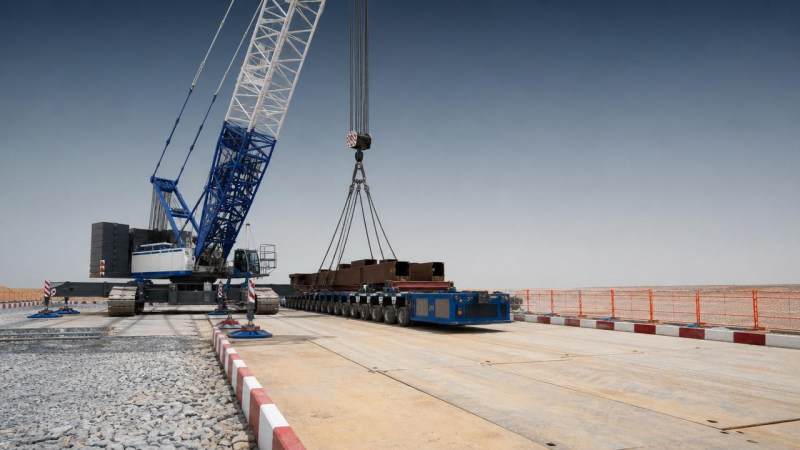
In heavy infrastructure, equipment risk is not limited to machine condition. It includes machine-task fit, terrain interaction, operator visibility, lifting geometry, maintenance timing, and logistics sequencing. A TBM backup train, a crawler crane lifting a nacelle component, or a mining dump truck on a gradient all create different risk chains.
This is why intelligence matters. TF-Strategy focuses on the physical parameters and strategic application of heavy equipment, helping decision makers interpret safety risk in relation to geology, hydraulic load, haulage demands, and delivery quality. That perspective is valuable because construction safety is often compromised where engineering assumptions and operating realities do not match.
Typical high-risk interfaces on planned sites
- Lifting and transport overlap, where crane operations share space with delivery vehicles under changing exclusion controls.
- Excavation and support installation, where production speed can outpace inspection and ground response monitoring.
- Maintenance during operations, when access, lockout, and restart communication are handled informally.
- Remote or digitalized equipment use, where connectivity, latency, camera blind zones, and intervention authority must be clearly defined.
Projects that study these interfaces early usually perform better than projects that only inspect isolated tasks. The value of intelligence portals and sector analysis is not news alone. It is the ability to connect equipment trends, such as remote-controlled excavation or electric haulage, with their emerging construction safety implications.
Which site conditions most often break construction safety controls
Even mature projects face recurring trigger conditions. These do not always look severe at first, which is why they are missed. Safety managers should classify them as control breakers rather than routine disruptions.
- Schedule recovery after delay. Crews start stacking tasks, reducing separation distances, and compressing inspection windows.
- Late design or scope change. Temporary works, lifting studies, or traffic routes are adjusted faster than the permit system can respond.
- Contractor interface confusion. One party owns the asset, another owns the workface, and nobody clearly owns the dynamic risk.
- Harsh environment exposure. Dust, vibration, altitude, heat, groundwater, and poor visibility degrade both human and machine performance.
- Normalisation of deviance. Temporary shortcuts become accepted because nothing bad happened yesterday.
Where projects involve ultra-large excavators, road machinery, or high-tonnage haulage, environmental loading and route condition monitoring become central. A plan approved in dry conditions may not remain valid after rainfall, blasting effects, thaw cycles, or repeated axle loads.
Construction safety comparison: planned compliance versus real operational control
Many teams confuse compliance evidence with operational control. Both matter, but they are not the same. The comparison below helps quality and safety leaders judge whether a site is only administratively complete or truly under control.
This distinction is practical. Compliance tells you a process exists. Operational control tells you it is still effective at 4 p.m., under fatigue, noise, time pressure, and changing site geometry. Construction safety depends on the second condition.
How to build a stronger field verification model
Safety managers and quality controllers need a verification model that is fast enough for daily use and deep enough for complex work. The goal is not more paperwork. The goal is earlier detection of control decay.
A practical five-point field check
- Check task understanding. Ask two workers and one supervisor to describe the same task boundaries and stop conditions.
- Check physical conditions. Verify ground support, access paths, weather exposure, visibility, and temporary works against the current plan.
- Check machine condition in context. A machine may be mechanically available but not safe for the exact terrain, load, or simultaneous operation.
- Check interfaces. Confirm who controls exclusion zones, who gives movement authority, and who owns the last-minute changes.
- Check recovery behavior. When small problems occur, does the team pause and reassess, or improvise and continue?
This model works across sectors because it follows the way incidents emerge. In tunneling, open-pit mining, and large lifting projects, the accident path often begins with a mismatch between assumptions, equipment behavior, and workface adaptation.
What standards and procurement decisions influence construction safety most
Construction safety is shaped long before a crew starts work. Procurement, contractor evaluation, maintenance planning, and technical data review all affect field performance. Choosing equipment or subcontractors on price and nominal capacity alone often transfers risk to the execution phase.
The table below outlines what safety and quality personnel should verify during selection and mobilization, especially for high-load, high-consequence operations.
International projects may also reference general frameworks such as ISO-based management systems, lifting practice guidance, lockout principles, traffic management rules, and confined space controls. The exact requirement depends on jurisdiction and contract, but the management lesson is universal: procurement decisions shape exposure long before incidents occur.
Common misconceptions that weaken construction safety on “good” sites
“If the team is experienced, supervision can be lighter”
Experience helps, but it can also speed up informal adaptation. Skilled crews often solve problems fast, which is valuable operationally and risky when changes are not formally captured.
“Advanced equipment automatically reduces risk”
Modern systems improve capability, but they also add software dependencies, sensor trust issues, and new maintenance demands. Construction safety improves only when technology, procedures, and operator training evolve together.
“A passed audit means the site is safe”
An audit is a snapshot. Incidents often emerge between audits, during shift changes, urgent recovery work, or non-routine maintenance. Field verification must remain dynamic.
“Minor defects can wait until the next shutdown”
Some can, some cannot. The challenge is that repeated alarm suppression, hydraulic seepage, degraded braking feel, or temporary guard removal can normalize risk behavior across the site.
FAQ for safety managers and quality teams
How can construction safety be measured more accurately than by incident rates alone?
Use leading indicators tied to control quality. Examples include permit changes per shift, unresolved maintenance safety items, repeat findings at the same workface, exclusion zone breaches, late design updates, and the percentage of workers who can correctly explain task stop points. These indicators show whether controls remain alive in operations.
Which work areas deserve the closest attention on well planned sites?
Focus on interfaces: lifting near transport routes, excavation near temporary support transitions, maintenance during production, and any high-energy task performed under schedule pressure. Planned sites usually fail at boundaries, not at obvious core tasks.
What should be reviewed before approving heavy equipment mobilization?
Review route capacity, turning radii, bearing surfaces, weather exposure, maintenance support, recovery arrangements, operator communication systems, and compatibility with the actual duty cycle. Construction safety depends on these practical details more than on brochure capacity.
How can intelligence support improve prevention on complex projects?
Projects benefit when sector intelligence links machine parameters, application trends, and operational risks. For example, understanding cutter head material changes, remote excavation control logic, or electric haul truck deployment constraints can help teams update maintenance assumptions, training needs, and emergency planning before exposure grows.
Why informed decision support matters before failure signals become incidents
Construction safety improves when management can see beyond isolated reports. That is where TF-Strategy adds practical value for heavy industry stakeholders. By tracking global infrastructure methods, equipment evolution, and strategic demand patterns, the platform helps contractors and control teams read operational risk with stronger context.
For projects involving tunneling, open-pit mining, large lifting, road construction, or heavy haulage, informed decisions on machine selection, TCO, maintenance logic, and delivery quality directly support safer execution. In some procurement research paths, teams may also encounter reference entries such as 无, but real value comes from comparing technical fit, site conditions, and control capacity instead of relying on labels alone.
Why choose us for project intelligence and next-step consultation
If you are a quality controller or safety manager facing equipment selection pressure, contractor interface risk, or uncertain operating conditions, a broader intelligence view can shorten decision time and improve control quality. TF-Strategy is built around the relationship between heavy machinery parameters, construction methodology, and infrastructure delivery demands.
You can consult on practical topics such as equipment-task fit, operating risk signals, maintenance planning impacts, delivery cycle considerations, project environment constraints, and construction safety implications of evolving technologies. For teams comparing information sources or preparing internal reviews, even a placeholder reference like 无 is less useful than a structured discussion around load profile, route condition, compliance expectations, and execution risk.
When billion-dollar engineering projects depend on stable execution, the best time to review risk is before drift becomes routine. A focused consultation can help confirm parameters, refine selection logic, clarify delivery assumptions, and identify the operational gaps that cause well planned sites to fail.
Related News
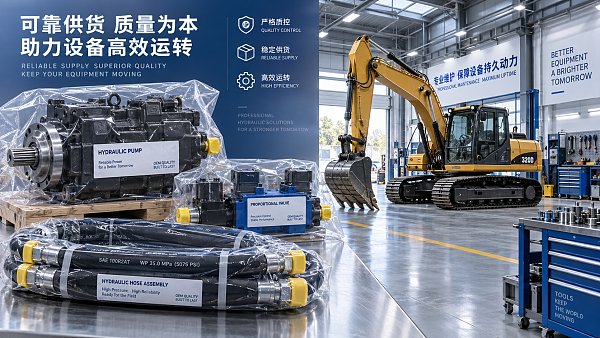
 Oct 07, 2026How to Evaluate a Hydraulic System Component Supplier for Heavy Equipment UptimeChoose a hydraulic system component supplier with proven quality, technical fit, and reliable delivery to reduce heavy equipment downtime and lifecycle costs.
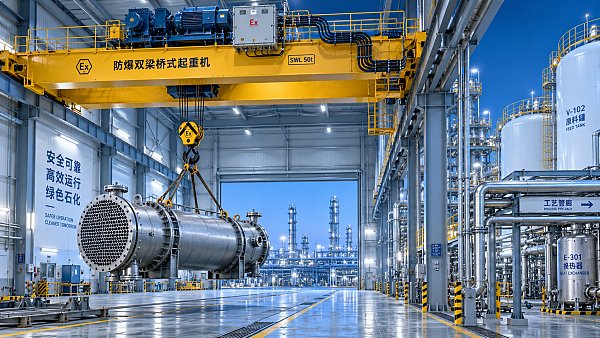
 Oct 06, 2026Selecting Petrochemical Overhead Cranes for Hazardous Areas and Heavy Process LoadsPetrochemical overhead cranes for hazardous areas: learn how to match capacity, duty, controls, corrosion protection, and maintenance access for safer, reliable lifts.
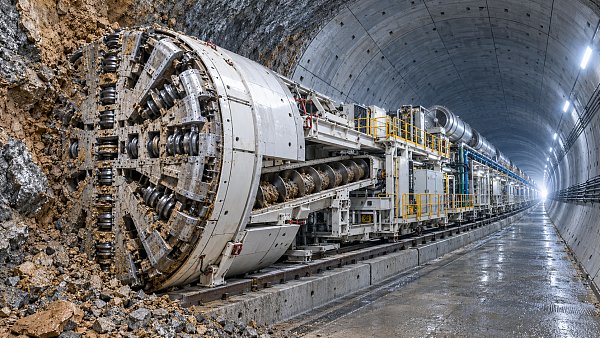
 Oct 05, 2026Tunneling Equipment Specification Planning: Key Criteria for Ground and Project RisksEquipment specification planning tunneling: learn how to match TBM systems to ground risks, geometry, safety, logistics, and lifecycle cost for more reliable project delivery.
 Oct 04, 2026Nuclear Lifting Equipment Cost: Budgeting for Compliance, Testing, and Lifecycle RiskNuclear lifting equipment cost explained: budget for compliance, proof-load testing, installation, documentation, and lifecycle risk to make confident procurement decisions.
Ms. Elena Rodriguez
Weekly Insights
Stay ahead with our curated technology reports delivered every Monday.