
What to check before sourcing petrochemical components
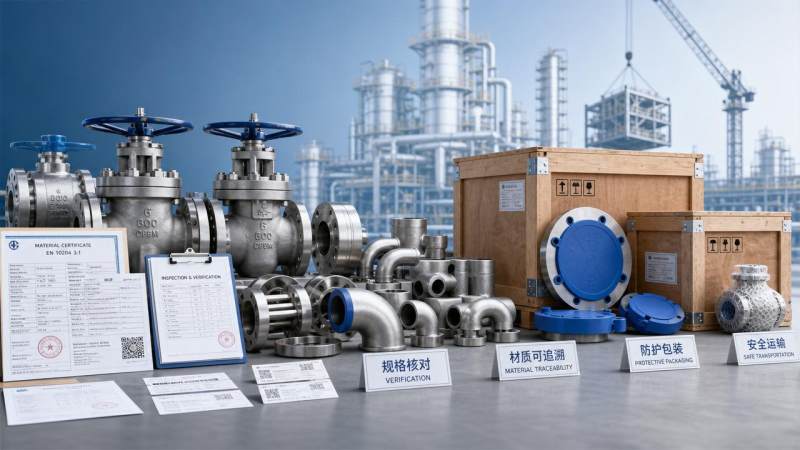
Before sourcing petrochemical components, procurement teams must verify material specifications, compliance standards, supplier credibility, lead times, and transport risks. In high-stakes sectors linked to heavy lifting and infrastructure delivery, small sourcing mistakes can trigger major cost overruns and safety issues. This guide outlines the critical checkpoints buyers should review to improve quality assurance, control total cost, and support reliable project execution.
For buyers serving refinery construction, tank farms, pipeline packages, modular skids, or crane-assisted installation projects, the sourcing process is rarely just about unit price. Petrochemical components often operate under high pressure, corrosive media, elevated temperature, or strict shutdown schedules. A mismatch in metallurgy, documentation, or packing method can delay lifting plans, create rework, and raise total installed cost well beyond the original purchase value.
This matters even more in heavy industry ecosystems such as those observed by TF-Strategy, where crawler cranes, large lifting sequences, and infrastructure delivery windows are tightly connected. Whether you are buying valves, flanges, fittings, pressure-bearing parts, supports, or specialized assemblies, procurement decisions should be structured around technical fit, traceability, supplier execution, and logistics resilience.
Why sourcing petrochemical components requires a stricter checklist
Petrochemical components are not general industrial items. In many projects, they must perform within temperature bands such as -29°C to 425°C, pressure classes from Class 150 to Class 2500, or corrosion environments involving sulfur, chlorides, hydrogen, or aggressive hydrocarbons. Procurement errors at this stage often stay hidden until fabrication, hydrotest, or site erection.
The buyer’s role therefore extends beyond issuing RFQs. It includes confirming design intent, ensuring supplier documentation is complete, checking compatibility with fabrication and lifting plans, and reducing the chance of delays during a 6-week to 20-week procurement cycle. In EPC, shutdown, and modular construction settings, one incorrect component can hold up an entire package.
Typical risk areas procurement teams should map early
- Material grade mismatch between requisition and actual service condition
- Incomplete MTCs, inspection records, or heat number traceability
- Wrong pressure rating, facing type, or dimensional standard
- Lead time gaps for forged, machined, or coated items
- Export packing failures that damage machined sealing surfaces
- Supplier subcontracting without prior buyer visibility
A practical sourcing workflow usually includes 5 stages: requirement review, supplier qualification, technical clarification, quality surveillance, and logistics control. Skipping any of these stages may save 2 or 3 days at PO release, but can cost 2 to 4 weeks later when documentation or dimensional issues surface.
How project context changes purchasing priorities
For new-build petrochemical facilities, long-lead items and code compliance usually dominate. For maintenance shutdowns, the key priorities are often rapid availability, exact dimensional replacement, and clean documentation handover. For modular construction tied to heavy lifting, packaging, lifting points, and sequence-based delivery become critical because components must arrive in the right order for fabrication yards and crane plans.
In other words, the right sourcing decision depends not only on the component itself, but also on where it sits in the wider delivery chain. Procurement teams that understand fabrication, transport, and installation logic tend to avoid hidden cost drivers more effectively.
Check technical specifications before comparing prices
The first procurement checkpoint is technical accuracy. A competitive quote is meaningless if the offered petrochemical components do not match the operating environment, connection standard, wall thickness, test requirement, or NDE scope. Many sourcing disputes start with a vague datasheet or an incomplete bill of materials.
Key specification fields buyers should confirm
At minimum, check 8 fields before RFQ release: material grade, pressure class, size range, end connection, applicable standard, corrosion allowance, testing requirements, and documentation package. If the component is part of a lifting-sensitive module, also confirm unit weight, center-of-gravity implications, and packing dimensions.
Common specification items that affect performance
The table below summarizes the specification points that frequently determine whether petrochemical components are fit for refinery, gas processing, or terminal projects.
For procurement teams, the practical takeaway is simple: quote comparison should only begin after specification normalization. If Supplier A offers ASTM A105 flanges and Supplier B offers a lower-grade substitute without equivalent testing, the price gap is not a real saving. It is a technical deviation.
Questions to ask engineering before sourcing
- Is the service corrosive, sour, cyclic, or temperature sensitive?
- Are there client-approved manufacturers or restricted mills?
- What inspection level is required: standard, witnessed, or third-party hold point?
- Do these petrochemical components need full traceability from raw material to dispatch?
- Will the components be shop-assembled, field-welded, or lifted as part of a module?
These clarifications can eliminate a large share of preventable RFQ revisions. In many industrial packages, 10% to 15% of sourcing delays come from incomplete technical alignment rather than poor supplier performance.
Verify standards, documentation, and traceability
Documentation is often treated as an afterthought, yet it is one of the biggest risk filters in petrochemical procurement. Even when the physical item looks correct, missing paperwork can stop receiving, fabrication release, or final handover. For critical petrochemical components, buyers should define documentation requirements at RFQ stage, not after award.
Documents commonly required for acceptance
- Material Test Certificates with heat numbers
- Dimensional inspection reports
- Pressure test or leak test records where applicable
- NDE reports such as UT, RT, PT, or MT if specified
- Coating or surface treatment records
- Packing list, marking details, and country of origin information
As a rule, if a component cannot be traced in 3 steps—from shipment mark to inspection report to raw material heat number—it deserves extra review. This is especially important for pressure boundary items, lifting-connected structural accessories, and components entering regulated owner systems.
Documentation control matrix for buyers
The following matrix helps procurement teams separate mandatory documents from project-dependent ones and align expectations before production starts.
Good document control shortens receiving inspection and reduces disputes. On large projects, even a 24-hour delay in document approval can affect fabrication sequence, crane booking, and installation manpower if the missing items are on the critical path.
Assess supplier capability, not just supplier claims
A qualified supplier for petrochemical components should demonstrate process control, sourcing transparency, and realistic delivery planning. A polished quotation is not proof of capability. Procurement teams should test whether the supplier can actually manage raw material, machining, inspection, preservation, and export handling under project conditions.
Supplier evaluation criteria that matter in practice
Use at least 6 evaluation dimensions: technical understanding, manufacturing scope, documentation discipline, inspection readiness, lead time reliability, and responsiveness during deviation management. For critical components, ask whether the supplier self-manufactures, subcontracts machining, or buys finished goods from third parties. Each model has different control risks.
Warning signs during vendor screening
- Lead time promises that are 30% shorter than market norms without explanation
- Reluctance to share sample documents or inspection formats
- Unclear source of forgings, castings, or mill material
- Frequent technical deviations hidden in commercial notes
- No clear procedure for non-conformance reporting or replacement action
If the supplier cannot answer basic questions within 24 to 48 hours, that often predicts slower performance later. Procurement teams buying for construction-driven sectors should value communication speed because engineering, QA, logistics, and site teams all depend on fast resolution.
Why heavy industry context matters
In projects involving crawler cranes, prefabricated pipe racks, or large petrochemical modules, component sourcing must align with handling and lifting plans. A supplier that understands preservation caps, pallet stability, crate labeling, and sequence-based dispatch will usually reduce field disruption. This is where intelligence-led procurement adds value: buyers connect component quality with wider project execution, not just purchasing compliance.
Review lead times, packaging, and transport exposure
Even technically correct petrochemical components can become a project problem if they arrive late or damaged. Buyers should validate lead times by production stage: raw material booking, machining or fabrication, inspection, document release, packing, inland transport, and export shipment. A quoted 8-week delivery may actually mean 6 weeks of production plus 2 weeks of paperwork and dispatch risk.
Lead time checkpoints to confirm before PO award
- Raw material availability in stock or mill lead basis
- Manufacturing queue and machine capacity
- Inspection hold points and third-party booking time
- Document approval cycle, often 3 to 7 days
- Packing completion and export readiness
- Port congestion or route-specific transport delays
For international procurement, packaging deserves the same attention as manufacturing. Flange faces, instrument threads, coated surfaces, and machined bores are vulnerable during handling. Buyers should specify protective caps, rust prevention, moisture barriers, shock-resistant packing, and crate marking requirements in the PO. These details are low-cost controls with high impact.
Transport risk factors often missed by buyers
Common issues include mixed packing of incompatible items, unreadable item tags after rain exposure, incomplete crate lists, and oversized loads not planned for destination handling. If petrochemical components will move to remote industrial sites, confirm whether there are altitude, temperature, road limitation, or heavy-lift interface constraints. In some projects, the final 100 kilometers create more risk than the ocean transit.
Build a procurement checklist that supports total cost control
Procurement performance should be measured by total cost of ownership, not by awarded price alone. A 5% lower purchase price can disappear quickly if the shipment requires reinspection, rework, emergency air freight, or shutdown extension. The most effective buyers use a repeatable checklist that compares suppliers on technical, commercial, quality, and delivery factors together.
Suggested scoring model for petrochemical components
A practical model uses 4 weighted blocks: technical compliance 35%, quality and traceability 25%, delivery and logistics 20%, and commercial terms 20%. The exact percentages can change by project, but this method helps avoid overemphasizing headline price.
Examples of hidden cost drivers
- Extra NDE because original records are incomplete
- Field machining due to dimensional mismatch
- Replacement freight for damaged or rusted items
- Fabrication stoppage while waiting for revised documents
- Crane or labor standby because one package misses its slot
When procurement teams document these cost drivers, internal stakeholders become more willing to support disciplined sourcing. That is particularly useful in infrastructure and heavy-equipment-linked environments, where schedule integrity can be worth far more than a small unit-price concession.
Common buyer mistakes and how to avoid them
One frequent mistake is issuing RFQs with insufficient technical detail, then trying to standardize quotations later. Another is assuming that all compliant-looking documents are equally reliable. Buyers also underestimate the effect of logistics, especially when components are needed for sequenced installation around large cranes, shutdown windows, or multi-contractor interfaces.
Three practical prevention measures
- Create a pre-RFQ review involving procurement, engineering, QA, and logistics.
- Use a document checklist that is attached to both RFQ and purchase order.
- Request milestone updates every 7 days for critical petrochemical components.
These simple controls improve visibility without creating unnecessary bureaucracy. For high-value or critical-path items, adding one pre-dispatch inspection and one packing verification step can significantly reduce receiving surprises at site.
Final procurement guidance for high-consequence projects
The best sourcing outcomes come from treating petrochemical components as part of a larger project system. Buyers should check technical specifications first, then validate standards and traceability, assess real supplier capability, and finally stress-test delivery and transport assumptions. This approach reduces quality escapes, protects schedule performance, and supports safer installation in demanding industrial environments.
For procurement professionals working across heavy lifting, petrochemical construction, and infrastructure delivery, disciplined sourcing is a competitive advantage. If you need deeper market intelligence, supplier screening support, or project-oriented sourcing insights tied to heavy industry execution, explore more solutions from TF-Strategy and contact us to discuss your component sourcing priorities, technical challenges, and delivery targets.
Related News
 Oct 08, 2026How to Evaluate a Heavy Machinery Information Platform for Project Equipment SourcingHeavy machinery information platform guide: compare equipment fit, source reliability, lifecycle costs, supplier capability, and compliance to make smarter sourcing decisions.
 Oct 07, 2026How to Evaluate a Hydraulic System Component Supplier for Heavy Equipment UptimeChoose a hydraulic system component supplier with proven quality, technical fit, and reliable delivery to reduce heavy equipment downtime and lifecycle costs.
 Oct 06, 2026Selecting Petrochemical Overhead Cranes for Hazardous Areas and Heavy Process LoadsPetrochemical overhead cranes for hazardous areas: learn how to match capacity, duty, controls, corrosion protection, and maintenance access for safer, reliable lifts.
 Oct 05, 2026Tunneling Equipment Specification Planning: Key Criteria for Ground and Project RisksEquipment specification planning tunneling: learn how to match TBM systems to ground risks, geometry, safety, logistics, and lifecycle cost for more reliable project delivery.
Ms. Elena Rodriguez
Weekly Insights
Stay ahead with our curated technology reports delivered every Monday.