
Why infrastructure construction costs change more than expected
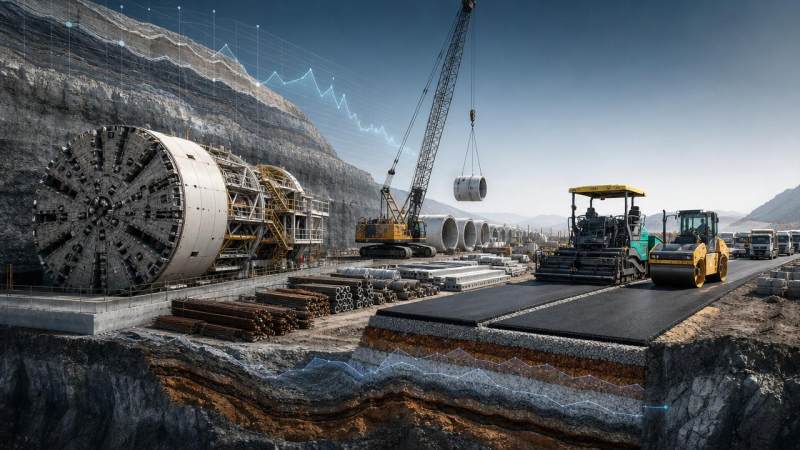
Why do infrastructure construction budgets so often drift beyond initial approvals? For financial decision-makers, the answer lies in a shifting mix of geology, equipment performance, supply volatility, labor pressure, compliance demands, and execution risk. Understanding why infrastructure construction costs change more than expected is essential to controlling capital exposure, improving forecast accuracy, and making smarter investment decisions across complex heavy-engineering projects.
Understanding cost change in infrastructure construction
Infrastructure construction covers transport links, tunnels, mines, ports, energy facilities, roads, and heavy civil systems. These projects rely on large equipment, specialized materials, and long delivery schedules.
Cost change happens when actual conditions differ from assumptions used during feasibility studies, tender pricing, and execution planning. The gap may begin small, then widen during procurement, mobilization, and field operations.
Unlike light commercial building, infrastructure construction often faces hidden subsurface uncertainty, extended logistics routes, and regulatory complexity. That makes budgets more sensitive to disruption and slower to recover once variance appears.
This issue is especially visible in heavy industry. Tunnel boring machines, crawler cranes, mining trucks, large excavators, and road machinery bring high productivity, but also concentrate risk when utilization drops or site conditions change.
Why early estimates miss the final number
Early estimates usually depend on limited design maturity. Quantities, productivity curves, equipment cycles, and permit assumptions are often incomplete. As design develops, the real scope becomes sharper, and costs move upward or downward.
- Preliminary geology may not reflect actual rock strength or groundwater behavior.
- Equipment output can differ from laboratory or supplier projections.
- Market pricing for steel, fuel, cement, or components can change rapidly.
- Site access, weather, and utility conflicts may delay critical path activities.
Key industry signals shaping infrastructure construction costs
Across global heavy engineering, several signals explain why infrastructure construction budgets are more unstable than many approval models expect. These signals affect both direct costs and schedule-driven indirect costs.
These signals rarely act alone. A delay in cutter head replacement may trigger extra labor shifts, later concrete placement, longer equipment standby, and contractual claims from downstream parties.
Heavy equipment as a cost amplifier
TF-Strategy closely tracks the machinery behind global infrastructure construction. In this environment, heavy equipment does not simply consume budget. It shapes time, safety, output quality, and financial resilience.
For TBM projects, cutter wear, segment quality, slurry balance, and ground response can alter cost curves quickly. In open-pit mining, haul road condition and cycle time directly affect fuel burn and maintenance expense.
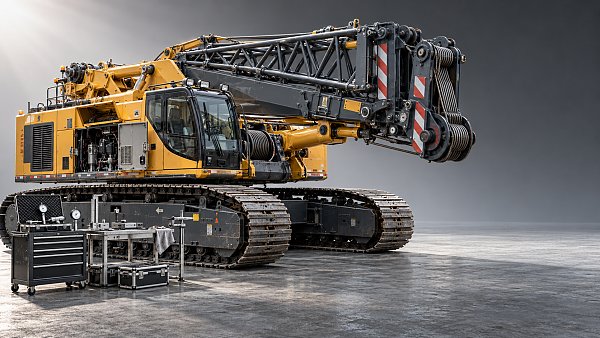
For crawler crane operations, lift planning, wind windows, and component availability can turn a short critical task into a major schedule risk. In road projects, paving temperature control and material consistency affect both rework and lifecycle value.
Where infrastructure construction budgets move the most
Budget variation is usually strongest in packages with uncertain ground, imported machinery, long supply chains, or strict technical interfaces. These zones deserve more contingency and deeper monitoring from the start.
- Underground excavation with variable geology and groundwater.
- Open-pit mining expansion under extreme climate or altitude.
- Wind, nuclear, or petrochemical lifting with narrow installation windows.
- Major highways requiring exact material sequencing and traffic staging.
- Remote projects dependent on imported parts and specialist technicians.
In each case, infrastructure construction costs change because field reality keeps rewriting the original plan. The earlier that variance is recognized, the lower the final commercial damage.
Typical sources of hidden cost escalation
- Underestimated mobilization, especially for oversized transport and assembly.
- Insufficient spare parts planning for high-wear machinery.
- Design revisions after new survey or borehole information.
- Idle time caused by interface gaps between civil, mechanical, and electrical teams.
- Temporary works omitted from base estimates.
- Environmental mitigation measures expanded during execution.
Business value of understanding infrastructure construction cost change
Better understanding of infrastructure construction cost movement improves capital discipline. It helps align approval logic with operational reality, especially in projects where heavy machinery determines productivity and risk exposure.
It also strengthens investment screening. Projects with similar contract values can have very different risk structures if one includes hard rock tunneling, ultra-heavy lifts, or unstable commodity dependence.
A more realistic view of cost change supports several outcomes:
- More accurate contingency allocation.
- Improved total cost of ownership analysis for machinery.
- Earlier action on schedule threats and procurement bottlenecks.
- Stronger comparison between technical options and delivery models.
- Reduced dispute exposure through documented assumptions.
For organizations following global infrastructure construction trends, intelligence matters as much as engineering. Market data on tenders, wear materials, digital controls, and fleet performance can refine decisions before overruns appear.
Representative scenarios across heavy engineering
The following examples show how infrastructure construction costs shift across common project types linked to heavy equipment and strategic earth engineering.
Practical measures to control change
Infrastructure construction cost control improves when assumptions are tested against field evidence, equipment behavior, and supply chain reality. Practical discipline is more useful than optimistic baseline reporting.
1. Build estimates around scenarios, not one baseline
Use best-case, expected, and stressed cases for geology, productivity, and procurement. This reveals how sensitive infrastructure construction budgets are to a few high-impact variables.
2. Connect machine data to commercial forecasts
Track utilization, cycle times, fuel use, wear rates, and downtime causes. Real machinery data often gives earlier warning than monthly cost summaries.
3. Strengthen front-end geological and site intelligence
Additional boreholes, material testing, and logistics reviews may seem expensive early on. In infrastructure construction, they often prevent much larger overruns later.
4. Protect critical spares and supplier options
For TBM cutters, hydraulic components, tires, and lifting parts, delayed replacement can multiply losses. Alternative sourcing and inventory strategy reduce fragile dependencies.
5. Review compliance as a moving cost line
Environmental, safety, and technical standards may tighten during project life. Budgeting should include monitoring growth, reporting obligations, and possible redesign consequences.
Next-step perspective for more reliable infrastructure construction decisions
Infrastructure construction costs change more than expected because projects are dynamic systems, not static spreadsheets. Ground conditions evolve, machines wear, markets shift, and interfaces fail unless actively managed.
A stronger decision process starts with better technical intelligence, clearer risk assumptions, and ongoing linkage between equipment performance and commercial control. That is where advanced sector insight becomes practical value.
TF-Strategy focuses on this intersection of power, precision, and infrastructure construction reality. By following equipment trends, geological signals, supply movements, and strategic delivery patterns, organizations can improve forecast confidence and reduce avoidable cost drift.
The next useful step is simple: review current project assumptions against actual site conditions, machine data, and supply exposure. In infrastructure construction, early truth is always cheaper than late surprise.
Related News
 Oct 23, 2026Selecting Lifting Equipment for Nuclear Component Transport: Key Safety CriteriaSelecting lifting machinery for nuclear component transport? Discover essential safety criteria, load control checks, and supplier requirements to guide confident procurement.
 Oct 22, 2026Tunnel Boring Machines in Southeast Asia: EPB vs. Slurry for Soft GroundCompare tunnel boring machines Southeast Asia projects rely on: EPB vs. slurry for soft ground. Discover how groundwater, settlement risks, and spoil handling shape the right choice.
 Oct 21, 2026Choosing Tunneling Equipment for the Middle East: Rock, Soil, and GroundwaterCompare underground tunneling equipment Middle East projects need. Explore rock, soil, groundwater, and TBM options to reduce risk and make confident procurement decisions.
 Oct 20, 2026Which Heavy Machinery Maintenance Standards Apply to Your Construction Fleet?Discover which heavy machinery maintenance standards apply to your fleet. Clarify legal duties, OEM requirements, and inspection rules to reduce risk and keep equipment ready for work.
Related News

Ms. Elena Rodriguez
Weekly Insights
Stay ahead with our curated technology reports delivered every Monday.