
When geotechnical engineering services reduce costly design changes
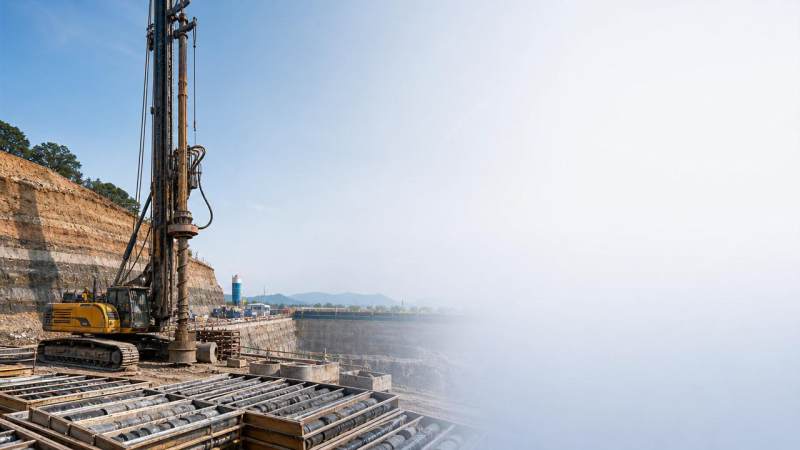
Costly redesigns often begin with overlooked ground risks. For project managers responsible for schedule, budget, and buildability, geotechnical engineering services provide the early subsurface insight needed to align design decisions with real site conditions. By reducing uncertainty before construction starts, these services help prevent change orders, delays, and avoidable cost escalation across complex infrastructure and heavy engineering projects.
For most project leaders, the central question is not whether subsurface conditions matter. It is whether early investigation can materially reduce downstream design changes, contractor claims, and delivery risk.
The short answer is yes. When geotechnical engineering services are brought in early and tied directly to design decisions, they often prevent the most expensive corrections from appearing later.
Why costly design changes often start below ground
Many design revisions are blamed on engineering complexity, procurement delays, or scope evolution. In reality, a large share of major changes begin with incomplete understanding of soil, rock, groundwater, and load behavior.
Project drawings can look coordinated on paper while still being misaligned with site reality. Once excavation begins, hidden variability in bearing capacity, settlement potential, or rock quality quickly turns assumptions into liabilities.
For project managers, this is where cost risk accelerates. A redesign after mobilization affects not only consultants, but also sequencing, temporary works, equipment planning, safety controls, and contractual relationships.
In tunnels, deep foundations, mining infrastructure, crane pads, retaining systems, and haul-road corridors, the ground is not a passive backdrop. It is an active design input.
That is why geotechnical engineering services matter most before physical work starts. They reduce the gap between modeled conditions and field conditions, allowing the design team to make decisions with fewer blind spots.
What project managers are really trying to avoid
Target readers in infrastructure and heavy engineering usually care less about technical theory and more about practical consequences. They want to avoid avoidable cost, lost time, and disputes.
The first concern is redesign during construction. A late change to foundation depth, slope angle, excavation support, or drainage treatment can ripple through procurement, approvals, and subcontractor interfaces.
The second concern is change orders. When geotechnical uncertainty is not identified and allocated clearly, contractors price defensively or submit claims once actual conditions differ from the baseline assumptions.
The third concern is schedule disruption. Ground-related surprises rarely stay isolated. They delay excavation, alter equipment access, interrupt concrete works, and create knock-on effects across the full delivery plan.
The fourth concern is constructability. A design may be structurally sound but still difficult to build safely or efficiently under actual field constraints, especially where groundwater, weak strata, or variable rock are involved.
Finally, project managers worry about decision timing. If geotechnical findings arrive too late, even accurate information has reduced value because the key design, tender, or staging choices have already been made.
How geotechnical engineering services reduce redesign risk
The value of geotechnical engineering services comes from turning unknowns into actionable design parameters. That process is broader than drilling a few boreholes and issuing a report.
Effective services usually combine investigation planning, field exploration, laboratory testing, geological interpretation, groundwater assessment, design recommendations, and construction-stage support.
At the earliest stage, geotechnical specialists help define what the project needs to know, not just what data is easy to collect. That distinction is critical for budget control.
If a project involves heavy lifting, for example, the important question may be crane pad performance under variable loading and weather exposure, not only general soil classification.
If a project includes tunneling or deep excavation, the key issue may be groundwater inflow, face stability, or rock mass behavior under excavation sequence, not simply average strength values.
By aligning investigation scope with design decisions, geotechnical engineering services reduce the chance that consultants or contractors later discover missing information at the worst possible time.
These services also help convert raw site data into design criteria. Bearing capacity, settlement estimates, lateral earth pressures, rippability, slope stability, and subgrade response all influence downstream engineering choices.
When those inputs are realistic, structural and civil designs are less likely to require revision. When they are generic, conservative in the wrong areas, or based on poor coverage, redesign becomes more likely.
Where early geotechnical input creates the biggest business value
Not every project gains value in the same way. For project managers, the strongest return usually appears where subsurface uncertainty can trigger major cost multipliers.
Foundations are one clear example. Early geotechnical input can determine whether shallow foundations are feasible, whether piles are required, and how differential settlement may affect structural performance.
That decision influences concrete volumes, reinforcement, equipment selection, construction duration, and procurement strategy. A wrong assumption at concept stage can reshape the project budget later.
Excavation support is another high-value area. In deep cuts, shafts, underpasses, or urban interfaces, geotechnical analysis helps define wall systems, dewatering needs, staging constraints, and monitoring requirements.
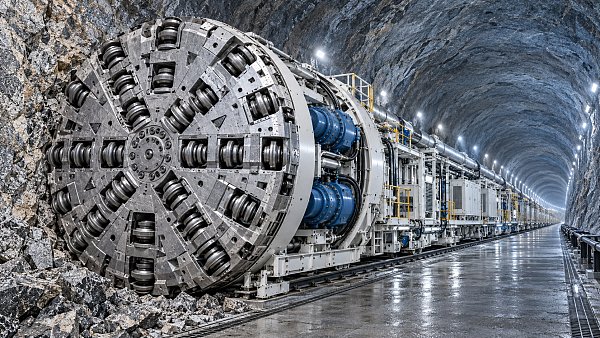
For tunneling and underground works, geotechnical engineering services are essential for anticipating ground behavior, selecting appropriate excavation methods, and reducing the chance of major intervention during construction.
In open-pit mining and heavy haulage environments, slope design, platform stability, drainage, and pavement response can affect both safety and equipment utilization. Ground intelligence directly influences asset productivity.
For ultra-large lifting operations, crane bearing pressure, settlement risk, and temporary works stability must be understood early. A late discovery of weak ground can delay lifts and force expensive remedial measures.
Across these scenarios, the pattern is consistent. The earlier the subsurface risks are translated into design and planning choices, the lower the chance of disruptive change later.
What “early enough” really means in project delivery
Many teams say they engaged geotechnical support early, but in practice the work began after key assumptions were already locked into layout, budget, or schedule models.
Early enough means before concept design is treated as fixed. It means before tender packaging, before major quantities are frozen, and before temporary works are left to be solved under field pressure.
At feasibility stage, geotechnical engineering services should identify the main subsurface risks and define what additional investigation is needed to support investment and planning decisions.
At concept and preliminary design stage, the focus should shift toward design parameters, alternative evaluation, and constructability implications. This is where major cost avoidance often happens.
Before procurement, the geotechnical baseline should be clear enough to support fair risk allocation, realistic contractor pricing, and better comparison of construction methodologies.
During construction, geotechnical specialists still add value, but the economics are different. At that point, the goal is damage control, optimization, and rapid response rather than prevention alone.
What separates useful geotechnical work from box-ticking investigations
Project managers should be careful not to equate activity with insight. A technically formal investigation can still fail to reduce redesign risk if it is disconnected from actual project decisions.
Useful geotechnical engineering services begin with targeted questions. What loads matter most? Where is variability highest? Which interfaces have the lowest tolerance for uncertainty?
The answers shape the scope of borings, test pits, in situ testing, lab testing, instrumentation, and interpretive analysis. More data is not automatically better if it does not close important decision gaps.
Another differentiator is communication quality. A report filled with technical detail but weak on implications often leaves design managers and procurement teams unsure how to act on the findings.
The most valuable providers translate ground conditions into business-relevant impacts. They explain what assumptions are reliable, what risks remain open, and what choices should be revisited now rather than later.
They also identify where variability matters more than average values. Many costly design changes come not from the mean condition, but from localized weak zones, perched water, or abrupt geological transitions.
Questions project managers should ask before relying on the findings
To judge whether geotechnical engineering services are likely to reduce future design changes, project managers should ask a practical set of questions early.
Has the investigation been planned around the most critical design and construction decisions, or was it based on a standard template with limited project-specific targeting?
Do the findings cover the areas where heavy loads, deep excavations, water control, or sensitive interfaces will occur, or are there major blind spots in spatial coverage?
Are the design recommendations clear enough to influence structural, civil, and temporary works planning, or do they remain too generic to guide real choices?
Has residual uncertainty been stated plainly, including what is still unknown and how that uncertainty should be managed in procurement, contingency, and monitoring plans?
Are the geotechnical conclusions integrated with staging, access, equipment selection, and construction methodology, or are they being treated as a separate technical appendix?
If the answer to several of these questions is no, the project may still be exposed to avoidable redesign even if investigation work has technically been completed.
How this affects cost control, procurement, and contractor alignment
One of the strongest business cases for geotechnical engineering services is improved cost predictability. Better ground intelligence supports better estimating, contingency planning, and package definition.
It also sharpens procurement strategy. When subsurface conditions are poorly defined, bidders protect themselves with higher prices, exclusions, or aggressive claim positions.
When conditions are better understood, owners and EPC teams can define baseline assumptions more clearly. That improves pricing transparency and reduces later arguments about differing site conditions.
Contractor alignment also improves. Means and methods can be assessed against realistic site constraints, allowing project teams to compare not only price, but also deliverability and risk posture.
For large infrastructure and heavy equipment projects, this alignment is especially valuable because sequencing, access, lifting plans, excavation methods, and production targets are closely linked to ground behavior.
In that sense, geotechnical engineering services do more than support design. They support commercial clarity and execution realism across the project lifecycle.
When underinvesting in geotechnical work becomes more expensive
Some project teams limit geotechnical scope to protect early budgets. This can appear efficient at first, especially when schedules are tight and concept development is moving quickly.
But underinvesting often shifts cost into later stages where correction is far more expensive. A modest saving during investigation can trigger major losses through redesign, delay, rework, or claims.
The risk is highest where site conditions are variable, structural loads are significant, groundwater is influential, or construction tolerances are narrow. These are not situations for minimal subsurface intelligence.
For project managers, the better question is not how little geotechnical work can be done, but what level of insight is needed to make high-consequence decisions with confidence.
That framing leads to better trade-offs. It connects investigation spending to risk reduction, rather than treating it as overhead detached from project outcomes.
Conclusion: better subsurface decisions mean fewer downstream surprises
When geotechnical engineering services are engaged early, scoped intelligently, and linked directly to design and construction decisions, they can significantly reduce costly design changes.
For project managers and engineering leaders, the value is practical: fewer surprises during excavation, better alignment between design and site reality, stronger procurement outcomes, and improved control over budget and schedule.
The ground will always contain some uncertainty. The goal is not perfect prediction, but better-informed decisions made before change becomes expensive.
In complex infrastructure, tunneling, mining, and heavy lifting environments, that difference is substantial. Early geotechnical clarity is often one of the most effective ways to prevent late-stage project pain.
For teams responsible for delivery, this makes geotechnical engineering services not a preliminary formality, but a strategic tool for reducing redesign risk and protecting project value.
Related News
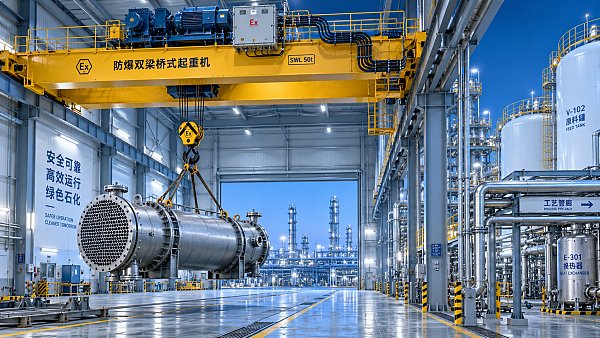
 Oct 06, 2026Selecting Petrochemical Overhead Cranes for Hazardous Areas and Heavy Process LoadsPetrochemical overhead cranes for hazardous areas: learn how to match capacity, duty, controls, corrosion protection, and maintenance access for safer, reliable lifts.
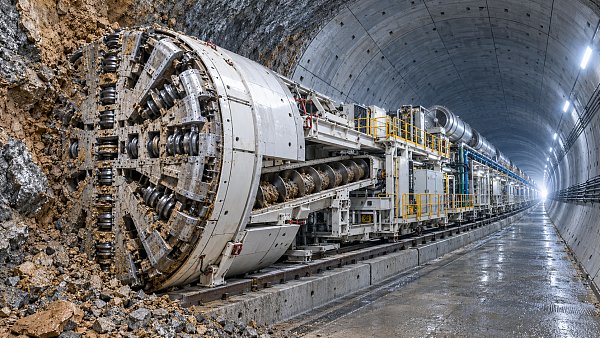
 Oct 05, 2026Tunneling Equipment Specification Planning: Key Criteria for Ground and Project RisksEquipment specification planning tunneling: learn how to match TBM systems to ground risks, geometry, safety, logistics, and lifecycle cost for more reliable project delivery.
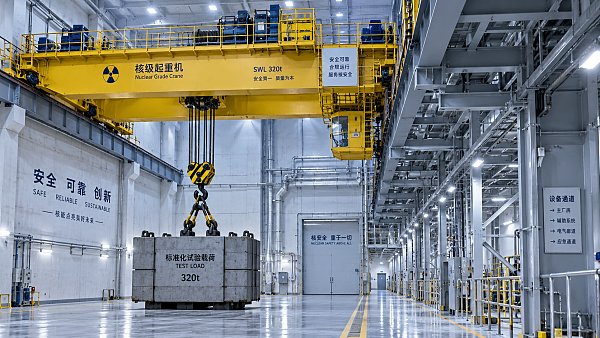
 Oct 04, 2026Nuclear Lifting Equipment Cost: Budgeting for Compliance, Testing, and Lifecycle RiskNuclear lifting equipment cost explained: budget for compliance, proof-load testing, installation, documentation, and lifecycle risk to make confident procurement decisions.
 Oct 03, 2026How to Assess TBM Manufacturers for Hard-Rock Tunneling Projects?Choose the right tunnel boring machine manufacturer for hard-rock projects. Explore key criteria for design, lifecycle cost, factory quality, and service support.
Ms. Elena Rodriguez
Weekly Insights
Stay ahead with our curated technology reports delivered every Monday.