
Which open-pit mining techniques cut costs without hurting output?
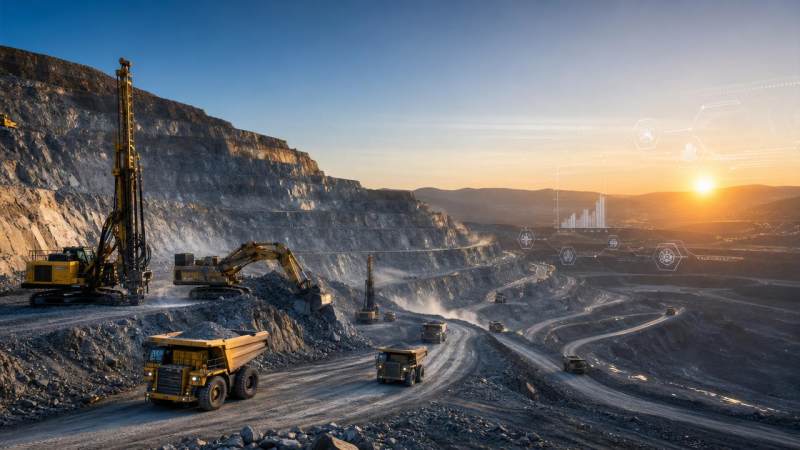
For business evaluators, identifying open-pit mining techniques that lower unit costs without sacrificing output is central to project viability.
The strongest cost gains usually come from operational design, not isolated equipment changes.
When bench geometry, blasting, hauling, loading, and maintenance work as one system, mines can sustain tonnage while reducing waste, energy use, and downtime.
This article reviews practical open-pit mining techniques that improve cost efficiency without hurting output, with emphasis on decision trade-offs, execution discipline, and measurable operating results.
Operational meaning of cost-efficient open-pit mining techniques
In surface mining, unit cost falls when more saleable tonnes move through the same asset base, or when the same tonnes require fewer inputs.
Effective open-pit mining techniques therefore target cost per tonne, strip ratio control, cycle time, fragmentation quality, fuel intensity, and equipment availability.
The key point is balance.
Aggressive cost cutting can damage output if it causes poor blast fragmentation, shovel delays, truck queues, excessive rehandling, or unstable slopes.
Sustainable savings depend on techniques that preserve material flow from drilling to dumping.
Core performance indicators
- Cost per mined tonne
- Cost per delivered ore tonne
- Shovel productivity and fill factor
- Truck cycle time and payload compliance
- Powder factor and blast outcome
- Availability, utilization, and unscheduled downtime
Current industry focus shaping open-pit mining techniques
Across heavy industry, cost pressure is rising from diesel prices, labor scarcity, harder ore bodies, and stricter environmental expectations.
As a result, modern open-pit mining techniques are becoming more data-driven, integrated, and selective.
This context explains why the best open-pit mining techniques today are less about single machines and more about coordinated production systems.
Techniques that reduce cost while protecting output
Optimized bench height and berm design
Bench geometry strongly influences drilling cost, fragmentation, safety, and loading efficiency.
Poorly matched bench heights can increase toe problems, require secondary breakage, and slow shovel loading.
Among practical open-pit mining techniques, geometry optimization often delivers low-capex savings through better blast results and smoother material handling.
Drill-and-blast precision
Blasting is not just a rock breakage step.
It shapes downstream loading rates, crusher throughput, tire wear, and even slope outcomes.
Tighter control of burden, spacing, stemming, and timing can reduce explosive waste while improving fragment size consistency.
That makes drill-and-blast one of the highest-impact open-pit mining techniques for cost reduction without output loss.
Haul road engineering and traffic flow
Haulage usually represents the largest mobile operating cost in open-pit mining.
Road gradient, rolling resistance, intersection design, drainage, and one-way routing directly affect fuel burn and cycle times.
Well-maintained roads also protect tires and suspensions, reducing cost shocks from premature wear.
Loader-truck match and dispatch discipline
A common hidden loss appears when shovels wait for trucks, or trucks queue for loading.
Better fleet matching reduces idle time without necessarily adding units.
In many mines, dispatch optimization is one of the fastest open-pit mining techniques to improve throughput per labor hour.
Selective mining and dilution control
When ore and waste boundaries are poorly controlled, low-value material enters the plant and raises downstream processing cost.
Better grade control, tighter dig lines, and cleaner floor management protect output quality, not just tonnage.
These open-pit mining techniques are especially important in lower-grade or geologically variable deposits.
Maintenance planning based on availability risk
Deferred maintenance may appear to save money, but it often destroys output through breakdowns and cascading delays.
Planned interventions, parts forecasting, and condition monitoring lower total cost of ownership by stabilizing the production chain.
Business value of these open-pit mining techniques
The business case improves when each operational change is assessed against both cost and ore flow reliability.
The most valuable open-pit mining techniques usually create compound gains across several departments.
- Lower fuel cost through shorter cycles and lower rolling resistance
- Higher crusher utilization through improved fragmentation
- Reduced explosive and drilling waste through better blast design
- Lower maintenance cost through fewer shock loads and idle hours
- Improved revenue protection through reduced dilution
For intelligence-led infrastructure and resource analysis, this systems view matters more than headline production alone.
A mine can hit tonnage targets and still underperform financially if unit costs remain structurally high.
Typical operating scenarios and suitable technique priorities
These examples show that open-pit mining techniques should be selected by bottleneck type, not by generic industry preference.
Implementation guidance and caution points
Cost-focused mine improvement works best when baseline data is credible and consistently measured.
Before changing methods, compare current drilling accuracy, blast fragmentation, truck idle time, road conditions, and shovel queue patterns.
Practical steps
- Identify the dominant cost driver by activity, not by total budget line.
- Test one improvement area first, such as blast design or haul road resistance.
- Track effect on cost, tonnes, downtime, and downstream constraints together.
- Scale only after confirming no loss in ore flow or safety margin.
There are also common mistakes.
- Reducing blast energy too far and creating oversized material
- Overloading trucks and increasing tire or frame damage
- Ignoring drainage, which raises rolling resistance after rain
- Measuring tonnes moved without checking ore quality or dilution
Successful open-pit mining techniques protect production continuity, equipment health, and material quality at the same time.
Next-step evaluation framework
A practical review can begin with three questions.
Which stage creates the highest avoidable cost per tonne?
Which open-pit mining techniques can remove that cost with limited capital exposure?
Which improvements strengthen both output stability and total cost of ownership over time?
For projects tracked through TF-Strategy, this type of structured comparison supports clearer heavy-equipment decisions, better mine planning dialogue, and stronger long-range infrastructure judgment.
In most cases, the best answer is not a single machine upgrade.
It is a coordinated set of open-pit mining techniques that removes friction across the full production chain while keeping output dependable.
Related News
 Oct 06, 2026Selecting Petrochemical Overhead Cranes for Hazardous Areas and Heavy Process LoadsPetrochemical overhead cranes for hazardous areas: learn how to match capacity, duty, controls, corrosion protection, and maintenance access for safer, reliable lifts.
 Oct 05, 2026Tunneling Equipment Specification Planning: Key Criteria for Ground and Project RisksEquipment specification planning tunneling: learn how to match TBM systems to ground risks, geometry, safety, logistics, and lifecycle cost for more reliable project delivery.
 Oct 04, 2026Nuclear Lifting Equipment Cost: Budgeting for Compliance, Testing, and Lifecycle RiskNuclear lifting equipment cost explained: budget for compliance, proof-load testing, installation, documentation, and lifecycle risk to make confident procurement decisions.
 Oct 03, 2026How to Assess TBM Manufacturers for Hard-Rock Tunneling Projects?Choose the right tunnel boring machine manufacturer for hard-rock projects. Explore key criteria for design, lifecycle cost, factory quality, and service support.
Ms. Elena Rodriguez
Weekly Insights
Stay ahead with our curated technology reports delivered every Monday.