
Why large-scale construction projects run over budget
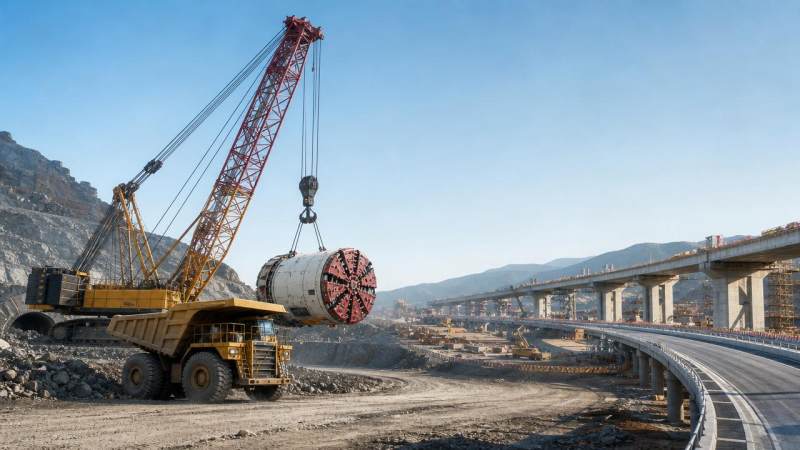
Why do large-scale construction projects so often exceed their budgets, even when led by experienced teams? From shifting ground conditions and equipment downtime to weak risk modeling, fragmented procurement, and delayed decision-making, cost overruns rarely come from a single mistake. For project managers and engineering leaders, understanding these hidden pressure points is essential to protecting margins, schedules, and stakeholder confidence in complex infrastructure delivery.
Where budget pressure really starts in large-scale construction projects
Cost overruns in large-scale construction projects usually begin before physical work accelerates. Early estimates often rely on incomplete geotechnical, logistics, equipment, and supplier data.
A tunnel, mine, highway, port, bridge, or energy project may look stable on paper, yet contain technical uncertainty that later becomes expensive field reality.
The common chain reaction behind overruns
- A weak baseline estimate understates ground risk, haulage distance, lifting complexity, or machine availability.
- Procurement decisions focus on purchase price instead of total cost of ownership, maintenance access, and operating intensity.
- Interface delays between design, contractors, suppliers, and site teams create idle equipment and labor escalation.
- Late approvals force acceleration measures, premium freight, night shifts, and costly contract variation claims.
For project managers, the key lesson is clear: large-scale construction projects need cost intelligence, not only accounting discipline after spending has already occurred.
Which hidden risks make estimates unreliable?
The most damaging risks are often technical, operational, and commercial at the same time. They affect productivity, contract exposure, and financing confidence.
The following table shows how common risk sources in large-scale construction projects convert into budget overruns across heavy engineering scenarios.
This risk mapping is useful because it links physical parameters to commercial outcomes. In large-scale construction projects, engineering assumptions are budget assumptions.
Why equipment decisions can make or break the project budget
Heavy machinery is not a simple procurement category. It is a productivity system involving power, precision, utilization, serviceability, logistics, and operator competence.
In large-scale construction projects, a poorly matched TBM, excavator, crane, paver, or dump truck can create losses far beyond the purchase contract.
Equipment selection factors project leaders should verify
- Match machine capacity with actual duty cycle, not brochure output under ideal operating conditions.
- Check maintenance accessibility, parts availability, workshop readiness, and supplier response time in the project region.
- Evaluate energy consumption under local altitude, temperature, load profile, and operating hours.
- Confirm transport dimensions, customs constraints, site access, assembly sequence, and commissioning duration.
TF-Strategy observes these issues across TBM, open-pit mining, ultra-large lifting, road machinery, and heavy haulage sectors through its intelligence-driven equipment focus.
How procurement fragmentation increases cost exposure
Many large-scale construction projects separate design, procurement, construction, and equipment planning too sharply. Each team optimizes locally, while the project absorbs system-wide inefficiency.
For example, a low-cost machine purchase may require specialized consumables, longer maintenance shutdowns, or higher fuel use under continuous operation.
Before approving procurement, project managers should compare alternatives through lifecycle impact rather than initial price alone.
A lifecycle view does not always mean selecting the most expensive option. It means selecting the option that protects production certainty.
Why risk modeling is often too narrow
Traditional risk registers often list threats without modeling how they interact. Large-scale construction projects need dynamic risk analysis, not static documentation.
A two-week customs delay can trigger crane rescheduling, labor idle time, subcontractor claims, and delayed milestone payments within the same month.
Risk models should include technical and commercial variables
- Productivity ranges for critical equipment under best case, most likely case, and adverse operating conditions.
- Sensitivity of fuel, steel, cement, tires, explosives, hydraulic components, and specialized raw materials.
- Schedule consequences of delayed permits, inspections, shipping, customs clearance, and site access preparation.
- Contract exposure from variation orders, acceleration claims, standby rates, and liquidated damages.
TF-Strategy’s Strategic Intelligence Center connects project tenders, machinery evolution, material trends, and commercial signals to support sharper risk assumptions.
How decision delays turn manageable variance into overruns
Some cost overruns are not caused by unknown risks, but by slow responses to known signals. Decision latency is expensive.
When site data shows declining TBM penetration, abnormal excavator downtime, or haulage congestion, leaders need predefined escalation rules.
Useful decision triggers for project control
- If machine availability falls below the planned threshold for consecutive reporting periods, activate maintenance and spare parts review.
- If productivity variance exceeds contingency assumptions, reassess method, staffing, tooling, and contractor interface responsibilities.
- If critical supplier lead time moves beyond float, evaluate approved substitutes and logistics acceleration options immediately.
- If quality rework rises, connect inspection findings with equipment settings, operator practice, and material consistency.
Large-scale construction projects benefit from governance that makes action easier. Waiting for perfect certainty often increases final cost.
What project managers should check before budget approval
Budget approval should not be a financial ceremony. It should be a technical-commercial validation of whether the delivery model is credible.
The following checklist helps engineering leaders challenge assumptions before large-scale construction projects move into high-spend execution.
This type of review gives decision-makers a stronger basis for contingencies, procurement strategy, and escalation authority before costs become committed.
How standards, safety, and compliance affect the real budget
Compliance is sometimes treated as paperwork, yet it directly affects equipment acceptance, insurance, inspections, commissioning, and operating permission.
Large-scale construction projects may reference ISO management systems, local lifting regulations, machinery safety rules, environmental permits, and contractual quality specifications.
Compliance items that deserve early budget attention
- Lifting plans should account for certified rigging, inspection records, ground preparation, wind monitoring, and emergency procedures.
- Tunnel projects should budget for ventilation, monitoring, ground support, intervention safety, and spoil handling requirements.
- Mining operations should consider haul road standards, brake performance, fatigue management, and high-altitude or cold-climate adaptation.
- Road projects should align machine settings with compaction control, material temperature, smoothness tolerance, and testing frequency.
Early compliance planning reduces rework and acceptance delays. It also strengthens stakeholder confidence when the project faces public or lender scrutiny.
How digitalization changes cost control in heavy engineering
Digital tools do not eliminate overruns, but they shorten the time between field deviation and management action.
Remote monitoring, fleet dispatch, 5G-controlled excavation, equipment telematics, and progress analytics help large-scale construction projects expose hidden productivity losses.
Practical digital indicators to monitor
- TBM advance rate, torque, thrust, cutter temperature, intervention frequency, and spoil characteristics.
- Excavator cycle time, fuel consumption, idle hours, hydraulic alarms, and bucket fill factor.
- Dump truck payload compliance, queue time, route speed, tire temperature, and charging or refueling delay.
- Crane utilization, lift duration, wind downtime, assembly progress, and maintenance readiness.
TF-Strategy follows these technology shifts because equipment intelligence increasingly determines whether large-scale construction projects can defend their budgets.
FAQ: budget control questions from project leaders
Why do large-scale construction projects exceed budgets even with experienced contractors?
Experienced teams still face incomplete ground data, supply volatility, approval delay, and equipment mismatch. Skill reduces exposure, but cannot replace structured risk intelligence.
What is the most overlooked cost factor in large-scale construction projects?
Equipment availability is often underestimated. Downtime affects labor, subcontractors, logistics, milestone payments, and sometimes financing covenants, not only repair cost.
How should project managers set contingency?
Contingency should be linked to quantified risks, such as geology, lead times, fuel exposure, productivity range, and change-order probability.
Can better procurement reduce cost overruns?
Yes, when procurement evaluates lifecycle cost, service support, regional logistics, certification needs, and compatibility with the construction method.
Why choose TF-Strategy for sharper project cost intelligence
TF-Strategy is built for decision-makers who manage complex earth engineering, tunneling, mining, lifting, road construction, and heavy haulage environments.
Our Strategic Intelligence Center connects machinery parameters, construction methods, tender movement, material supply, and commercial demand into practical decision support.
Consult us when you need to validate critical assumptions
- Confirm whether TBM, excavator, crawler crane, road machinery, or mining truck parameters match your operating scenario.
- Compare equipment selection options against productivity, maintenance, logistics, energy use, and total cost of ownership.
- Discuss delivery cycles, supplier constraints, specialized material risks, and realistic contingency assumptions.
- Review certification, safety, and compliance requirements before procurement decisions create avoidable delays.
For large-scale construction projects, informed decisions arrive before overruns appear. TF-Strategy helps project leaders navigate power, precision, and budget discipline.
Related News
 Oct 13, 2026OEM Equipment Suppliers in Europe: Vetting Quality, Lead Times, and SupportCompare OEM equipment Europe suppliers on quality, lead times, and after-sales support. Discover practical vetting steps to reduce downtime and buy heavy equipment with confidence.
 Oct 12, 2026How to Assess a High-Altitude Mining Equipment Manufacturer for Remote ProjectsHigh altitude mining manufacturer assessment guide: compare derating, cold-climate reliability, remote service, parts resilience, and lifecycle risk for smarter project decisions.
 Oct 11, 2026What Drives TBM Cutter Head Material Cost and Life-Cycle Value?Cutter head material cost explained: compare TBM alloys, wear protection, downtime risk, and life-cycle value to choose the most reliable, cost-effective solution.
 Oct 13, 2026Mining Haulage Services Procurement Checklist for Uptime and Cost ControlMining haulage services procurement checklist for stronger uptime, safer fleet selection, transparent pricing, and better cost control across changing mine conditions.


Ms. Elena Rodriguez
Weekly Insights
Stay ahead with our curated technology reports delivered every Monday.