
Wind Lifting Equipment Prices: Capacity, Height and Cost Factors
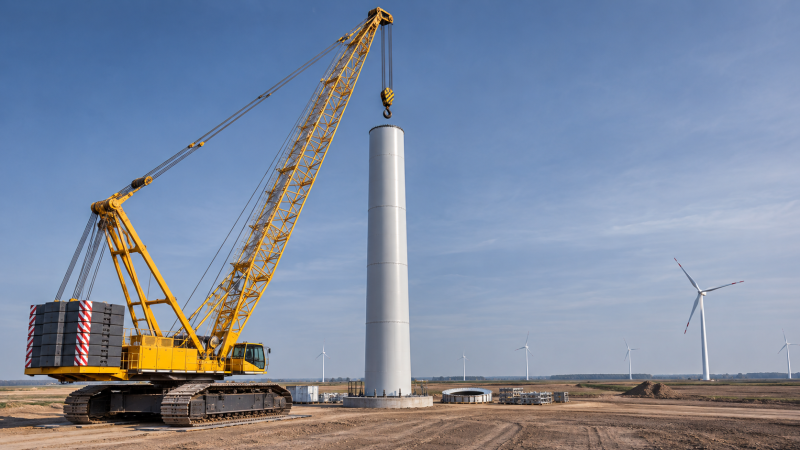
Understanding the wind lifting equipment price is essential for procurement teams balancing project budgets, lifting performance, and delivery schedules.
Costs vary with crane capacity, required hub height, boom configuration, transport needs, and site conditions, not just the initial purchase or rental rate.
This guide examines the main pricing factors and helps buyers compare equipment options with a clearer view of total project cost, operational risk, and suitability.
What Should Buyers Expect to Pay for Wind Lifting Equipment?
There is no dependable universal price for wind lifting equipment. A workable budget requires a defined turbine, lift configuration, site location, and project schedule.
For procurement, the most useful figure is the total cost of completing the lifting scope, including mobilization, assembly, operating time, support equipment, and demobilization.
A lower weekly crane rate can become more expensive if the machine needs additional transport, a larger working platform, or more time between turbines.
Purchase prices are equally configuration-dependent. Boom sections, counterweights, transport equipment, commissioning, and local support may be excluded from a headline equipment price.
Request supplier quotations against a common lift specification and commercial scope. Without those controls, apparent price differences may simply reflect different assumptions or exclusions.
For an early budget, ask qualified suppliers for indicative rates and mobilization costs in the project region, then refine them after site and turbine engineering.
Which Technical Requirements Drive the Price?
The largest cost drivers are usually the required capacity at the actual lifting radius, the hook height, and the crane configuration needed to achieve both.
A supplier cannot select a suitable crane from turbine capacity in megawatts alone. Obtain the component weights, dimensions, lifting points, and installation sequence.
Capacity at the Working Radius
A crane's advertised maximum capacity is generally achieved under specific, often restrictive conditions. It does not represent the load available at every height and radius.
Compare the heaviest or most demanding lift with the manufacturer's applicable load chart for the proposed boom, jib, counterweight, ground conditions, and operating mode.
The calculated suspended load must include the component and applicable lifting equipment, such as hooks, rigging, lifting beams, and other attachments specified by the manufacturer.
A lighter component can still govern crane selection when its lift requires a greater radius, more height, or a less favorable boom configuration.
Procurement should require the supplier to identify the governing lift and provide an engineered capacity check rather than relying on a crane's nominal tonnage.
Hub Height and Hook Height
Higher turbine hub heights can require longer booms, jibs, or specialized systems. These additions may increase equipment costs, transport loads, assembly time, and ground-space requirements.
Hub height is not the same as required hook height. The lift plan must account for component geometry, rigging length, clearances, and the installation method.
A taller configuration may also reduce lifting capacity at a given radius. Confirm height and capacity together using the precise configuration proposed for the project.
Boom, Counterweight, and Supporting Equipment
Longer booms and additional counterweights can increase the number of transport movements and the size of the assembly area, even when the base crane remains unchanged.
Some configurations require an auxiliary crane for assembly, specialized rigging, or equipment for handling counterweights. Clarify whether these are included in each quotation.
Ask suppliers to list the exact boom and jib lengths, counterweight quantities, lifting accessories, and expected transport loads for the proposed configuration.
How Do Site Conditions Change the Total Cost?
Site preparation can be a major budget item, particularly where weak soils, steep terrain, narrow roads, or limited crane-pad space constrain equipment selection.
Crane pads and access routes must be designed for the actual equipment and load cases. Ground-bearing pressures vary during travel, assembly, and lifting.
Obtain supplier ground-pressure information early and have competent engineers assess the supporting ground. Expenditure may include investigation, reinforcement, temporary works, and later reinstatement.
Transport constraints also matter. Bridges, turning radii, gradients, overhead lines, and road permits can determine whether components reach the site and how many trips are needed.
For multi-turbine projects, ask how the crane will move between pads. Travel with partial assembly may save time but requires route, ground, and configuration checks.
Weather affects both the schedule and commercial exposure. Wind limits depend on the component, lift arrangement, crane configuration, and applicable manufacturer and site requirements.
Model weather downtime using local conditions and the planned installation season. Confirm who pays during standby and whether minimum rental periods continue when lifting stops.
Remote locations may add crew accommodation, fuel logistics, maintenance response time, and spare-parts costs. These items should appear in the comparison even when separately contracted.
Which Equipment Option Offers the Best Value?
Equipment choice depends on turbine dimensions, site layout, fleet availability, and project duration. The lowest-cost option on one site may be unsuitable on another.
Crawler Cranes
Crawler cranes are widely used for heavy wind turbine installation because suitable configurations can lift substantial components to considerable heights and move around prepared sites.
Their tradeoffs include transport volume, assembly time, and ground preparation. Large configurations may need significant counterweight, auxiliary equipment, and space for setup.
They can be attractive across multiple turbines when mobilization and assembly costs are spread over a sufficiently reliable installation schedule.
Other Crane and Specialized Systems
Suitable mobile cranes may reduce setup or transport requirements on some projects, but available configurations, road access, ground support, and load charts remain decisive.
Specialized wind installation systems may offer different access or scheduling advantages. Assess their compatibility with the turbine, foundation, site conditions, and installation sequence.
For offshore projects, lifting systems may be integrated with installation vessels. Vessel availability, marine operations, port logistics, and weather windows require a separate commercial assessment.
Do not compare unlike systems on lifting rate alone. Normalize the full scope, including crew, ancillary equipment, preparation, installation duration, and technical limitations.
Should You Rent, Buy, or Use a Lifting Contractor?
Renting can limit initial capital expenditure and provide access to a specific configuration for a defined campaign. Availability and minimum rental commitments still require attention.
Buying may be worth evaluating for a contractor with a stable pipeline, suitable utilization, trained personnel, maintenance capability, and access to future transport and storage.
Ownership costs extend beyond purchase price to financing, insurance, inspections, maintenance, storage, upgrades, and eventual disposal or resale. Idle time can materially change the economics.
A lifting contractor may supply the crane, crew, engineering, and execution under one agreement. The buyer should still verify exclusions, responsibilities, and technical assumptions.
Compare options over the same expected workload and period. Include realistic utilization and downtime rather than assuming the equipment will work continuously.
How Can Procurement Compare Quotations Fairly?
Issue a consistent request for quotation that identifies turbine components, lift locations, required dates, site constraints, and the expected division of responsibilities.
Ask bidders to separate fixed charges from time-based charges. This makes mobilization, operating rates, standby, overtime, and demobilization easier to evaluate.
The following checklist helps expose differences that a headline wind lifting equipment price may conceal:
- Equipment configuration, load-chart basis, governing lift, and included rigging.
- Mobilization route, transport loads, permits, and any route-survey assumptions.
- Assembly and dismantling duration, auxiliary cranes, and supporting personnel.
- Rental or operating rates, minimum term, shifts, overtime, and standby charges.
- Ground preparation, crane pads, access roads, fuel, accommodation, and utilities.
- Maintenance, breakdown response, insurance, inspections, and spare-parts arrangements.
- Weather rules, schedule changes, cancellation charges, and extension rates.
- Taxes, currency, payment milestones, validity period, and escalation provisions.
Assign each exclusion to a responsible party and estimate its cost. Mark unresolved items separately so they are not mistaken for zero-cost activities.
Check whether the quoted equipment is committed to the project dates or merely available at the time of inquiry. Availability affects delivery risk and negotiating leverage.
Require a practical schedule showing transport, assembly, lifting, movement between turbines, and demobilization. Align it with turbine deliveries and other contractors' work.
What Does a Total-Cost Comparison Look Like?
Consider an illustrative onshore project with two technically acceptable crane proposals. The figures below are hypothetical, exclude taxes, and are not current market quotations.
Option A costs $400,000 for mobilization and setup, plus $100,000 per operating week. The planned campaign requires six weeks, producing a $1 million base cost.
Option B costs $250,000 for mobilization and setup, plus $135,000 per operating week. Over six weeks, its base cost is $1.06 million.
On those assumptions, Option A is $60,000 cheaper. However, suppose its larger configuration also requires $90,000 more in site preparation than Option B.
The adjusted totals become $1.09 million for Option A and $1.06 million for Option B, before any other differences in scope or risk.
Now suppose delays add two chargeable weeks at the stated rates. Totals rise to $1.29 million and $1.33 million respectively, assuming no other cost changes.
The preferred option therefore changes with duration. This example shows why procurement should test schedule scenarios and confirm the actual contractual treatment of delay.
For a decision model, add all included and excluded costs, then test a base case, a delayed case, and a realistic range of turbine counts.
What Commercial and Safety Risks Need Attention?
A low quote is not good value if the proposed crane cannot perform the governing lift or the supplier cannot support the committed schedule.
Have competent lifting engineers review the configuration, load charts, rigging, clearances, ground design, and installation sequence before commercial award or as a defined award condition.
Clarify who approves the lift plan and who controls changes when component weights, installation methods, or site conditions differ from the original assumptions.
Define breakdown response times and remedies, including how rental, crew, and replacement equipment are treated. Check whether support is available near the project.
Set out responsibility for weather standby and delays caused by turbine delivery, ground works, permits, or crane availability. Avoid leaving these provisions to informal agreement.
Insurance and liability terms should reflect the project structure and applicable law. Involve commercial, legal, engineering, and safety teams before accepting risk allocations.
How to Make the Final Purchasing Decision
Start by excluding proposals that cannot demonstrate technical suitability or credible equipment availability. Then compare the remaining offers on a consistent total-cost basis.
Give weight to schedule resilience, local support, and clearly allocated responsibilities alongside price. The cheapest base quotation may not deliver the lowest project cost.
Document the assumptions behind the chosen option and update the comparison when turbine specifications, ground information, or installation dates change.
The best wind lifting equipment price is the one attached to a verified configuration, a complete scope, and a realistic plan for completing the project.
Have questions about this sector analysis, or seeking best practices specific to your niche? Drop us a line below and let the senior consultants at TF-Strategy assist you.
Related News
 Nov 11, 2026Choosing Equipment Capacity for Different Workloads and ApplicationsExplore equipment application by capacity to match machines to real workloads, reduce bottlenecks and choose cost-effective solutions with confidence.
 Nov 10, 2026Crane Performance Comparison: Load Capacity, Reach and Lifting SpeedCrane performance comparison made practical: evaluate load capacity, reach and lifting speed to choose the right crane for your site and work sequence.
 Nov 09, 2026Heavy Equipment Technology Systems: Telematics, GPS and Machine ControlExplore heavy equipment technology systems, from telematics and GPS to machine control, and learn how to choose the right tools for your fleet and site.
 Nov 10, 2026Selecting a Four-Axle Rear Dump Semi-Trailer for Aggregate HaulingExplore dump special trailers for aggregate hauling. Learn how to compare legal payload, body durability and tipping safety before choosing a four-axle rear dump semi-trailer.
Ms. Elena Rodriguez
Weekly Insights
Stay ahead with our curated technology reports delivered every Monday.