
Large-Scale Infrastructure Projects Pipeline: What It Signals for Equipment Demand
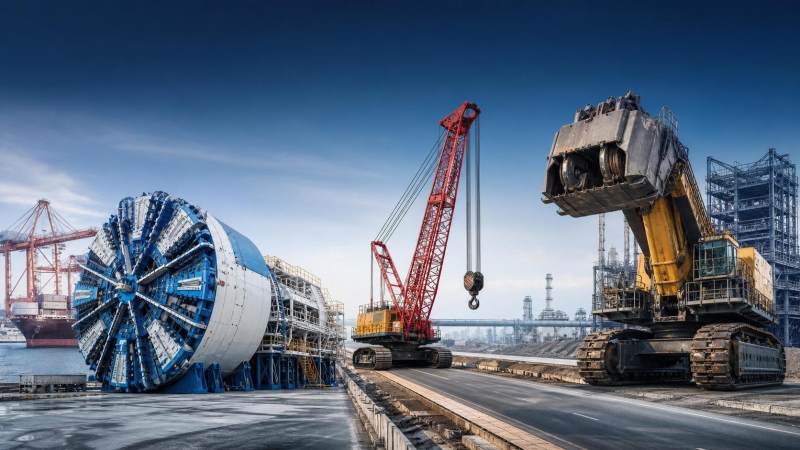
The large-scale infrastructure projects pipeline is not simply a queue of future contracts. It is an early market signal for equipment utilization, fleet positioning, procurement windows, and capital discipline across heavy industry.
When tunnel systems, mines, ports, highways, offshore wind bases, and industrial plants move from planning into funded execution, equipment demand starts shifting long before machines arrive on site.
That is why the large-scale infrastructure projects pipeline matters now. It helps explain where TBMs, crawler cranes, mining dump trucks, ultra-large excavators, and road machinery will face rising demand, tighter supply, or pricing pressure.
For intelligence-driven platforms such as TF-Strategy, the value lies in connecting project timing, construction methods, and machine parameters. That connection turns scattered project news into usable commercial insight.
Why the pipeline has become a leading indicator
In heavy equipment markets, demand rarely appears overnight. It usually builds in stages, starting with policy commitments, financing approvals, tender notices, land access, geological surveys, and package sequencing.
A credible large-scale infrastructure projects pipeline shows more than volume. It reveals the likely order of mobilization, the mix of equipment classes required, and the duration of demand by region.
This matters in a cycle shaped by energy transition, resource security, urban transit expansion, and strategic logistics investment. Projects are getting larger, more technical, and more sensitive to delivery delays.
As a result, equipment demand is increasingly tied to engineering complexity, not just project count. Ten small road upgrades do not create the same market effect as one deep tunnel, one giga-mine expansion, or one offshore fabrication base.
What the large-scale infrastructure projects pipeline actually includes
The term covers projects that are large in capital value, equipment intensity, schedule impact, or strategic importance. It spans public infrastructure, industrial megaprojects, mining developments, and energy-linked construction.
In practice, the large-scale infrastructure projects pipeline often includes metro tunnels, mountain rail corridors, open-pit mine expansions, LNG terminals, nuclear facilities, petrochemical plants, expressways, and wind installation hubs.
Not every announced project deserves equal weight. The useful pipeline is the one filtered by funding certainty, permitting progress, contractor readiness, site conditions, and technical feasibility.
A practical way to read pipeline quality
- Early-stage pipeline: signals future opportunity, but timing risk remains high.
- Tender-stage pipeline: indicates clearer equipment specifications and supplier competition.
- Awarded pipeline: points to near-term mobilization and stronger utilization visibility.
- Execution-stage pipeline: often drives parts demand, service intensity, and replacement planning.
How project pipelines translate into equipment demand
The large-scale infrastructure projects pipeline influences equipment demand through four main channels: machine selection, deployment timing, operating duration, and aftermarket intensity.
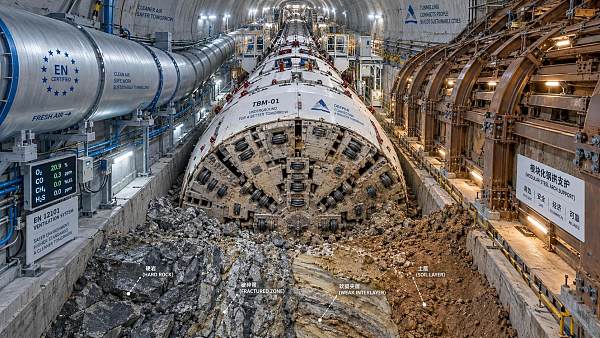
A deep urban tunnel program, for example, does not only increase TBM demand. It also affects slurry systems, segment logistics, heavy lifting, spoil handling, and specialized road support around the site.
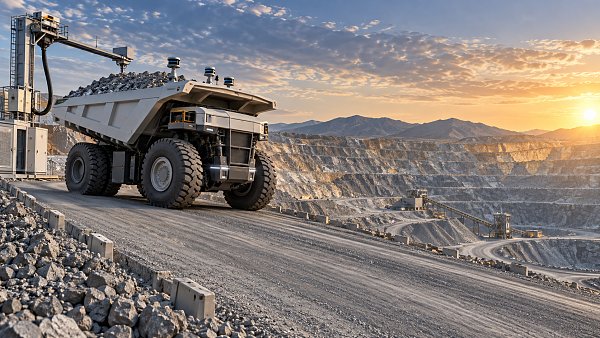
A mine expansion changes more than excavator orders. It can lift demand for dump trucks, tire supply, maintenance capacity, charging or fuel infrastructure, and remote operation systems.
This is where TF-Strategy’s cross-equipment view becomes useful. Infrastructure demand rarely sits inside one machine category. It moves through an interconnected equipment chain.
The signals that deserve closer attention
Headline investment numbers are useful, but they are not enough. The better reading comes from secondary signals that shape actual delivery conditions.
Funding structure
Projects backed by sovereign funding, multilateral finance, or strong balance sheets tend to move faster into equipment orders than politically announced but weakly funded programs.
Construction methodology
Method drives machine demand. A drill-and-blast tunnel and a mechanized TBM tunnel create very different procurement patterns, support systems, and maintenance requirements.
Geology and site constraints
Rock hardness, overburden, altitude, temperature, haul distance, and urban access determine whether standard fleets can perform efficiently or whether specialized assets are required.
Supply chain tightness
Lead times for cutter heads, large components, tires, steel structures, and power systems can move as quickly as project schedules. A strong pipeline with weak supply support creates pricing stress.
Technology transition
The shift toward remote-controlled excavation, electrified haulage, and digital fleet monitoring means the large-scale infrastructure projects pipeline now signals software and power-system demand as well.
Where business value is created
A disciplined reading of the large-scale infrastructure projects pipeline supports better decisions in asset planning, regional market entry, contract bidding, and lifecycle service strategy.
It improves timing. Companies can avoid buying too early into uncertain demand or arriving too late when utilization, freight cost, and local competition have already tightened.
It also improves fleet fit. A project-rich market does not guarantee the right demand for every machine class. The useful question is whether project specifications match installed equipment capability.
Another benefit is risk reduction. Pipeline analysis helps identify where revenue depends on a narrow group of delayed projects or where aftermarket income may outlast original equipment demand.
Applying pipeline intelligence in real decisions
A practical approach starts with segmentation. Separate the large-scale infrastructure projects pipeline by region, project maturity, equipment intensity, and technical complexity.
Then compare that view with three internal realities: available fleet, service footprint, and financing capacity. Opportunity is only meaningful when execution capacity exists behind it.
Useful questions to test market readiness
- Which projects are likely to move from concept to site activity within 12 to 24 months?
- Which equipment categories face the highest concentration of simultaneous demand?
- Where do geology, logistics, or regulation require specialized machine configurations?
- How much of future revenue depends on parts, service, and technical support rather than initial delivery?
- What raw material or component bottlenecks could delay machine availability?
This is also the point where intelligence depth matters. TF-Strategy’s focus on TBMs, ultra-large excavators, crawler cranes, road machinery, and mining dump trucks reflects how actual project demand is structured.
The most useful market view combines project tenders, machine specifications, construction methods, and trend signals such as cutter head materials, electric truck adoption, and remote-control systems.
What to watch next
The large-scale infrastructure projects pipeline will remain uneven across regions, but the direction is clear. Energy security, mineral supply, transport resilience, and urban capacity are driving sustained heavy equipment demand.
The next step is not to chase every announcement. It is to build a working pipeline map, rank projects by execution credibility, and tie that ranking to equipment classes, lead times, and service needs.
From there, the market becomes easier to read. Instead of reacting to isolated news, decisions can be anchored in a clearer view of where infrastructure activity is truly forming and what it will require on the ground.
That is where the large-scale infrastructure projects pipeline becomes most valuable: not as a headline tracker, but as a decision framework for positioning assets, partnerships, and timing with greater precision.
Related News
 Sep 29, 2026Infrastructure Construction Standards: A Project Manager’s Guide to ComplianceInfrastructure construction standards guide for project managers: turn requirements into field controls, hold points, traceability, and compliant delivery.
 Sep 28, 2026How to Specify Custom Mining Equipment for Abrasive Ground and High-Load HaulageCustom mining equipment for abrasive ground and high-load haulage: learn how to optimize payload, wear protection, powertrains, uptime, and lifecycle cost for safer, reliable production.
 Sep 29, 2026What belongs in a construction equipment package sourcing plan?Construction equipment package planning sourcing guide: learn how to match machines, attachments, site conditions, supplier support, costs, and acceptance gates for reliable project delivery.
 Sep 29, 2026How to verify equipment durability before approving suppliers at scaleHow can heavy equipment manufacturers verify durability and manage supplier risk at scale? Explore practical testing, traceability, audits, and control strategies.
Prof. Marcus Chen
Weekly Insights
Stay ahead with our curated technology reports delivered every Monday.