
Construction Equipment Load Planning: Balancing Payload, Cycle Time, and Site Access
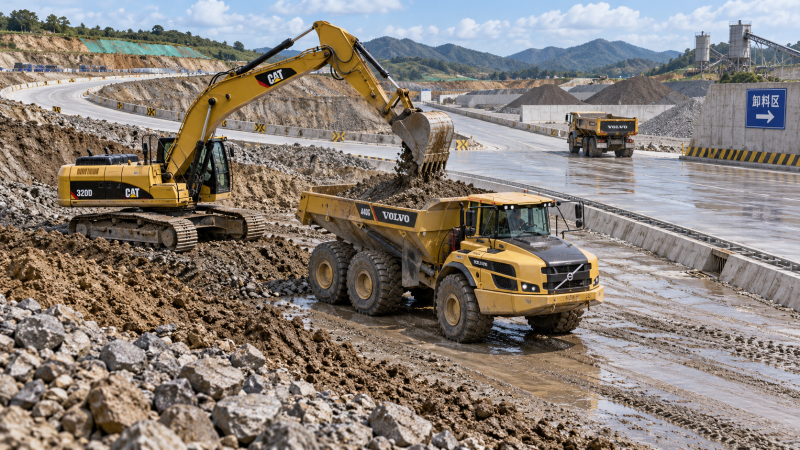
Construction equipment load planning is not a matter of selecting the largest loader, truck, excavator, or crane available. The working plan succeeds when the material moved per hour is predictable, the equipment can complete each cycle without bottlenecks, and every machine can reach, turn, load, and exit safely under actual site conditions.
A machine may have enough rated capacity on paper yet perform poorly on site because its payload is limited by haul-road grade, ground bearing pressure, loading geometry, access width, bridge limits, dump-point congestion, or the availability of the next machine in the sequence. Conversely, reducing the planned payload slightly can improve total production when it shortens loading time, avoids rejected loads, reduces tire damage, and keeps the haul circuit moving.
The practical objective is not maximum payload on an individual trip. It is the highest sustainable output from the entire loading and transport system while maintaining stability, equipment life, access compliance, and operating control.
Start With the System Constraint, Not the Machine Rating
Rated payload is an important boundary, but it is only one boundary. A fleet plan should begin by identifying the condition that controls production. On an earthmoving operation, this may be excavator bucket fill, truck spotting time, road condition, haul distance, or discharge capacity. On a confined infrastructure site, access restrictions may determine the usable truck body, turning radius, or delivery sequence before nominal payload becomes relevant. For lifting work, ground conditions, lift radius, boom configuration, and travel route can be more restrictive than the load weight alone.
Construction equipment load planning therefore requires a sequence-based view:
- Material is excavated, handled, or received.
- The transport unit positions for loading.
- The load is placed, distributed, and checked.
- The unit travels through the site or along the haul route.
- The material is discharged, placed, or lifted into position.
- The unit returns and re-enters the loading cycle.
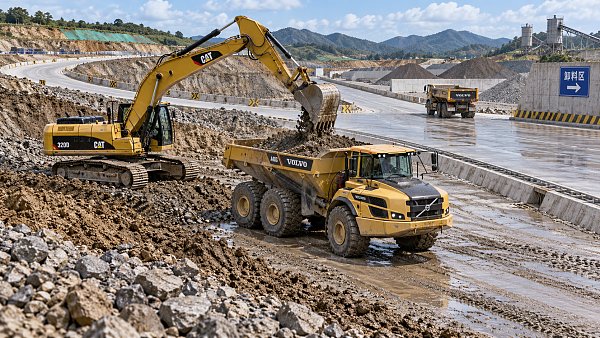
Any delay in one stage is carried into the next. Increasing bucket size may not increase production when trucks are already queuing. Adding trucks may create congestion when the loading face has only one safe approach. A larger dump truck may reduce the number of trips but become impractical if it cannot pass a narrow gate, turn at the stockpile, or maintain traction on a wet temporary haul road.
The most useful question is: what prevents the next productive cycle from starting on time? That answer should shape fleet size, loading targets, and access preparation.
Payload Must Be Based on Material, Not Just Volume
Loose volume is often mistaken for payload. A truck body, loader bucket, or skip may look adequately sized for a material, but the material's density, moisture condition, fragmentation, and compaction state determine its actual mass. Excavated rock, wet clay, crushed aggregate, demolition debris, and mixed spoil can occupy similar volumes while imposing very different loads.
Material condition also changes during a project. Rain can increase the mass and sticking behavior of fine-grained soils. Blasted rock may become more fragmented as the face changes, altering bucket fill and truck body utilization. A mixed demolition stream can create uneven loading, even when the estimated average mass appears acceptable. Planning against a single assumed density without field feedback creates a predictable risk: some loads will be underutilized while others will overload the machine or transport route.
Load distribution matters as much as total mass. An off-center load can affect steering, braking, tire loading, stability, and body wear. For articulated haulers and rigid dump trucks, material should be placed progressively through the body rather than dropped repeatedly into one area. For lifting equipment, the center of gravity must be understood before the lift arrangement is selected. A load within rated weight can still be unsuitable if its shape, rigging, wind exposure, or center of gravity changes the effective lifting condition.
Operators need a clear loading rule that reflects the material and the machine. “Fill it to the top” is not a rule. A usable rule defines the intended fill condition, avoids heaping where spillage is likely, and gives operators authority to reduce the load when ground, weather, or access conditions deteriorate.
Cycle Time Is a Fleet Calculation
Cycle time is often reduced to travel time, but the productive cycle begins when a machine becomes available for the next task. For a hauling unit, it includes approach, spotting, loading, loading checks, outbound travel, waiting at the discharge point, dumping, return travel, and repositioning. For a crane, the cycle includes rigging, hook travel, load control, placement, release, and return. For a loader working a stockpile, cycle time includes approach, bucket fill, travel, dumping, and return, along with any maneuvering required by the working area.
Small delays matter because they repeat. An extra maneuver at the loader face, a truck waiting to reverse, or a discharge point blocked by another activity may appear insignificant in isolation. Across a shift, those interruptions can become the main reason actual production falls below plan.
There is a useful distinction between a fast cycle and an effective cycle. A fast cycle that causes high-impact loading, wheel spin, rushed spotting, poor bucket fill, or chronic queuing is not efficient. It transfers time and cost into maintenance, rework, and safety exposure. Effective cycles are repeatable. They use realistic travel speeds, defined passing and turning areas, stable loading positions, and enough buffer capacity to absorb normal variation without allowing the site to become congested.
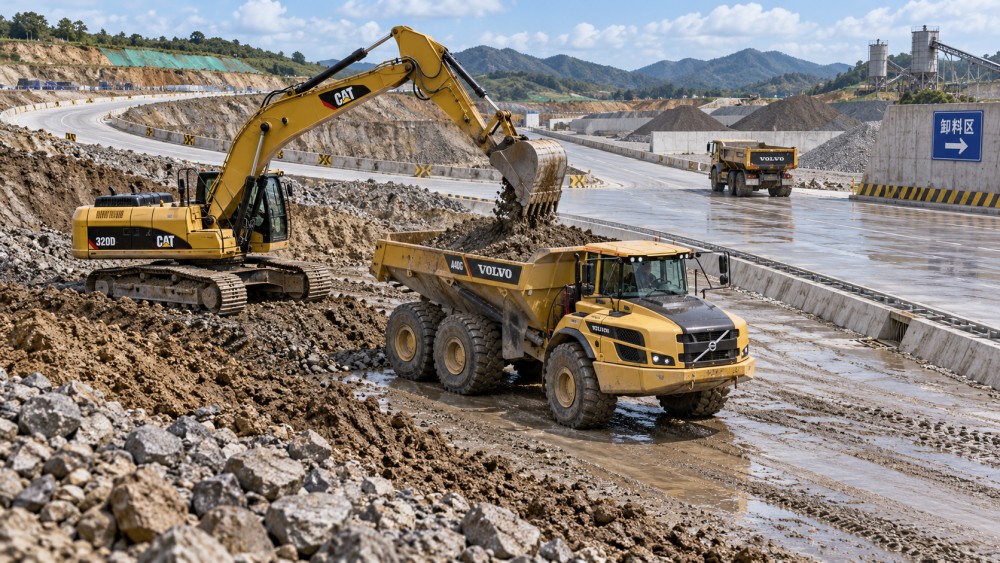
Match loading equipment and haul units by observing the actual number of passes required, not by treating a theoretical pass count as fixed. Too many passes extend truck loading time and can leave the excavator or loader tied to one unit for too long. Too few large passes may create uneven loads, impact damage, or repeated overloading. The preferred match depends on bucket fill, material fragmentation, operator visibility, truck body geometry, and the required production rhythm.
Site Access Can Override the Production Model
Site access is often reviewed late, after machine selection has been discussed. That order creates expensive constraints. The largest practical transport unit is limited by more than road width. It must clear gates, utilities, structures, pedestrian separation measures, ramps, temporary bridges, culverts, turning radii, overhead restrictions, and the condition of the receiving area. It must also be able to recover from a delay without blocking emergency access or other critical movements.
Urban work is especially sensitive to this issue. A vehicle that can physically enter may still be a poor choice if it needs several maneuvers to turn, blocks a public interface during reversing, or cannot wait inside the site. In this setting, smaller units with dependable arrival windows may outperform a larger vehicle that brings more material per trip but causes irregular unloading and access conflicts.
On remote infrastructure and mining sites, the access question is different but no less important. Long haul roads, steep grades, soft shoulders, crossfalls, low visibility, and weather can reduce the usable payload or travel speed. Roads should be treated as production assets. Their width, drainage, surface condition, berms, passing provisions, and maintenance regime influence fuel use, tire life, machine availability, and cycle consistency.
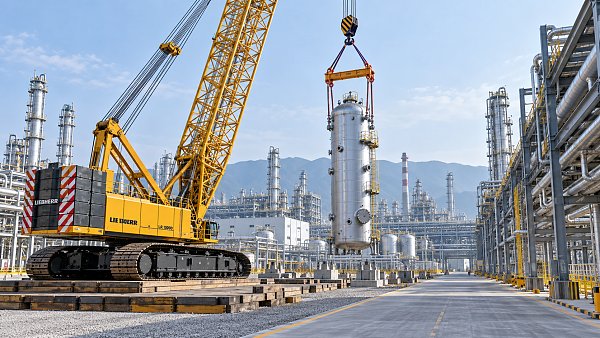
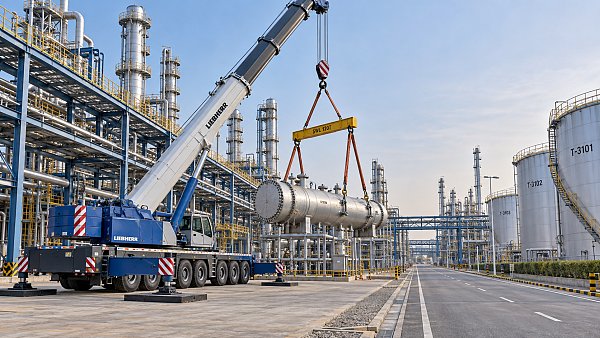
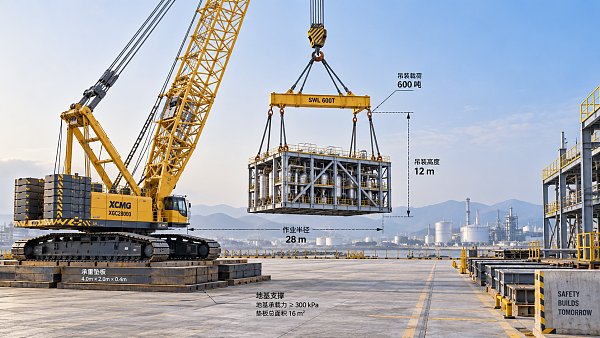
Ground bearing capacity deserves equal attention for heavy transport and lifting equipment. A route may support a vehicle under unloaded conditions but become unsuitable at working weight, particularly after rain or repeated traffic. For crawler cranes and other large lifting equipment, the support condition beneath tracks or outriggers must be assessed as part of the lift arrangement. Adding mats or improving the work platform may be more valuable than selecting a larger machine, because it turns a conditional operation into a controlled one.
Plan for the Worst Credible Working Condition
Load plans should not be based only on the cleanest, driest, least congested day. They need operating limits for foreseeable changes: wet material, reduced visibility, partial road closure, changing excavation depth, a different borrow source, equipment substitution, or simultaneous work fronts.
This does not mean designing every operation around an extreme event. It means defining which conditions require a revised loading target, slower travel, changed route, reduced lift radius, additional spotters, or temporary suspension. Without those decision points, operators are left to make inconsistent adjustments under pressure.
A short pre-start review can identify many of these changes. The review should cover the planned material source, expected material condition, equipment configuration, haul route, traffic interactions, discharge availability, ground condition, and any access restrictions introduced by other trades. It should also confirm who can change the production plan when the original assumptions no longer hold.
Conditions that should trigger a recheck
- A change in soil moisture, rock fragmentation, or material source.
- Road rutting, standing water, loss of traction, or reduced shoulder support.
- A new temporary crossing, altered traffic route, or restricted gate opening.
- Use of a substitute truck, loader, excavator, attachment, or lifting configuration.
- Repeated spillage, uneven loads, tire damage, excessive waiting, or unstable dumping behavior.
- A change in lift path, load geometry, rigging arrangement, or receiving location.
Common Planning Errors That Create Avoidable Delays
Planning around nameplate capacity alone. Rated capacity is a limit within specified conditions, not a production promise. Real conditions introduce material variation, travel resistance, loading distribution, slope, and access constraints.
Using average cycle time as the only measure. An average can hide long queues or recurring disruptions. Review the spread of cycle times and identify where variation begins. A stable operation with a slightly longer average may deliver more predictable output than a nominally faster operation with frequent stoppages.
Adding equipment before correcting the route. More trucks cannot solve a narrow haul road, blocked discharge point, inadequate turning area, or unstable loading face. Extra units may simply increase queue time and site risk.
Separating access planning from loading planning. Delivery routes, internal haul routes, turning areas, and unloading zones should be tested against the loaded machine, not just the empty machine or a site drawing. The route must work at the dimensions, weight, and visibility conditions of the intended operation.
Ignoring the handoff between machines. Production is lost when the excavator, loader, truck, crusher, paver, crane, or receiving crew operates to a different rhythm. The handoff points are where waiting accumulates, so they deserve more attention than isolated machine productivity figures.
A Practical Load Planning Sequence
Begin with the required delivered quantity and the practical work window. Then map the material flow from source to final placement, including all loading, travel, waiting, and discharge points. Identify the limiting feature of the route or work area before choosing equipment size.
Next, establish working payload targets using the actual material condition and the machine configuration. Define how loads will be distributed and what visual or measured checks will indicate an unacceptable condition. Build the initial cycle estimate from observed site movements wherever possible, including maneuvering and queue time rather than only travel distance.
Test the plan against access: loaded travel, turning, gradients, ground support, separation from people and other plant, and emergency clearance. Then check fleet balance. The aim is not to keep every machine continuously busy at every moment; it is to prevent one part of the chain from repeatedly starving or blocking another.
Finally, monitor a few operational indicators during production: load consistency, queue duration, cycle-time variation, road condition, spillage, and unplanned maneuvers. These indicators reveal whether the original plan remains valid as the site changes.
For projects involving large haulage fleets, crawler cranes, TBM logistics, or high-intensity excavation, equipment intelligence should be read alongside construction methodology rather than in isolation. TF-Strategy’s focus on heavy machinery, geological conditions, and haulage systems reflects the same operational principle: physical machine capability has value only when it fits the route, ground, sequence, and delivery requirement around it.
The strongest load plan is therefore not the one with the highest theoretical payload. It is the one that gives site teams a repeatable operating envelope: what can be loaded, how it will move, where it can wait, what conditions change the plan, and when production must yield to access or stability. That approach protects output while reducing the operational surprises that turn a promising equipment selection into a site bottleneck.
Related News
 Oct 17, 2026Tunnel Boring Machine Supplier List: Compare TBM Types and Service CoverageExplore our tunnel boring machinery supplier list to compare EPB, slurry and hard rock TBMs, assess service coverage and lifecycle costs, and build a smarter procurement shortlist.
 Oct 16, 2026Heavy-Duty Petrochemical Lifting: Selecting Cranes by Load, Radius, and Site AccessExplore heavy-duty petrochemical lifting solutions. Compare cranes by load, radius, site access, and ground support to reduce project risk and optimize lifting costs.
 Oct 15, 2026Crane Selection for Petrochemical Turnarounds: Capacity, Radius, and Site AccessExplore petrochemical lifting solutions cranes can deliver, with expert guidance on capacity, working radius, and site access to help you plan a safer, more efficient turnaround.
 Oct 14, 2026High-Capacity Heavy Lifting Solutions: Matching Load, Radius, and Ground ConditionsDiscover heavy lifting solutions high capacity projects demand—compare load charts, working radius, and ground conditions to select a feasible, cost-effective system.

Heavy Haulage Strategist
Weekly Insights
Stay ahead with our curated technology reports delivered every Monday.