
How Heavy Equipment Operations Can Cut Idle Time
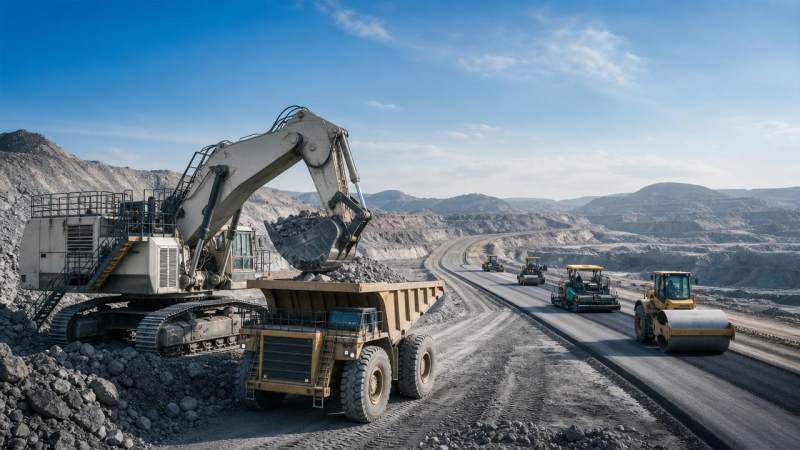
How Heavy Equipment Operations Can Cut Idle Time
Idle machines drain margins long before they appear in monthly cost reports.
Across mining, tunneling, lifting, and road construction, reducing idle time improves fuel efficiency, utilization, schedule reliability, and fleet discipline.
For modern heavy equipment operations, the goal is not simply keeping engines off. The real target is converting waiting hours into productive output.
That requires better coordination among machines, crews, haul routes, work fronts, maintenance windows, and digital control systems.
When Idle Time Becomes a Strategic Warning Signal
Idle time is often treated as a fuel problem. In reality, it usually signals mismatch inside heavy equipment operations.
A dump truck may wait because loading capacity is insufficient. A crane may idle because rigging is not ready.
A TBM support fleet may stand still because muck removal, segment supply, or ventilation sequencing is unbalanced.
Each scene has different causes. Therefore, heavy equipment operations need scenario-based diagnosis instead of one universal idle policy.
Useful analysis starts by separating necessary standby from avoidable idle. Safety waiting is different from poor dispatching.
Weather delay, blast clearance, confined-space inspection, and lifting exclusion zones may be unavoidable. Repeated queueing is usually controllable.
Open-Pit Mining: Balance Loading, Hauling, and Dumping
Open-pit mines expose idle losses quickly because cycles repeat thousands of times per shift.
In mining-heavy equipment operations, trucks often idle at shovels, crushers, fuel bays, gradients, and dump points.
The core judgment is simple. If trucks wait at loading points, hauling capacity exceeds digging capacity.
If excavators wait for trucks, loading capacity exceeds hauling capacity. Both situations raise cost per tonne.
Dispatch systems should compare actual cycle time against planned cycle time by route, bench, shift, and material type.
Better heavy equipment operations also evaluate road resistance, ramp congestion, payload variance, and shovel spotting time.
Small corrections matter. One-minute reductions across hundreds of haul cycles can release meaningful production capacity.
Practical mining controls
- Use dynamic truck allocation instead of fixed truck-to-shovel pairing.
- Monitor queue length at loading and dumping points every shift.
- Separate production trucks from service vehicles on high-traffic ramps.
- Match bucket size, truck body, and fragmentation conditions.
- Schedule fueling outside peak haulage windows whenever possible.
Tunneling: Protect TBM Advance by Removing Support Bottlenecks
In tunneling, idle time rarely appears as one parked machine. It appears as interrupted advance.
TBM-centered heavy equipment operations depend on continuous alignment between boring, mucking, segment logistics, slurry handling, and maintenance access.
When one support process slips, the entire underground production chain slows down.
The key judgment is whether the TBM is waiting for geology, machine intervention, or logistics readiness.
Geology-driven stoppage may require probing and risk control. Logistics-driven idle requires layout redesign and tighter scheduling.
High-performing heavy equipment operations track ring build time, conveyor availability, slurry plant status, and backup system utilization.
The aim is not maximum machine speed. The aim is stable advance with fewer unplanned pauses.
Tunneling idle reduction checks
- Confirm segment delivery timing before each advance window.
- Track cutterhead intervention causes separately from logistics delays.
- Use sensor data to predict conveyor, pump, and hydraulic issues.
- Align shift handovers with inspection and cleaning windows.
- Reserve underground space for critical support traffic.
Large Lifting: Cut Standby Without Weakening Safety
Crawler cranes and other ultra-large lifting assets generate high standby costs.
In lifting-heavy equipment operations, idle time often comes from late transport, incomplete rigging, wind limits, or permit delays.
Some waiting is essential. Heavy lifts require exclusion zones, load checks, ground verification, and communication discipline.
The mistake is accepting all standby as unavoidable because the lift is complex.
A better approach separates safety-controlled pause from preparation failure. This distinction protects both productivity and lift integrity.
Heavy equipment operations should build lift-readiness gates before the crane arrives at full operating cost.
These gates include ground bearing confirmation, load path clearance, rigging inspection, weather threshold review, and component arrival verification.
Lifting scenario judgment
- If rigging crews wait, planning packages are not field-ready.
- If cranes wait, upstream component logistics need control.
- If lifts pause repeatedly, wind planning needs stronger forecasting.
- If setup time expands, matting and ground preparation need review.
Road Construction: Synchronize Paving, Compaction, and Material Supply
Road machinery works under narrow temperature, timing, and quality windows.
In road-heavy equipment operations, pavers may idle because asphalt trucks arrive unevenly or rollers are poorly sequenced.
Idle time here can damage quality, not only productivity. Stop-start paving affects smoothness, density, and joint performance.
The critical judgment is whether material flow matches paving speed and compaction demand.
Digital truck tracking helps estimate arrival intervals, plant loading status, and queue risk near the paving front.
Effective heavy equipment operations maintain consistent paver movement and assign rollers by temperature zone, not habit.
When traffic control, plant output, and paving pace align, idle reduction supports both schedule and surface quality.
Different Scenarios Create Different Idle-Time Priorities
Idle reduction fails when every fleet receives the same rule.
Heavy equipment operations need different priorities according to production rhythm, safety exposure, and asset cost intensity.
This comparison shows why heavy equipment operations require operational intelligence, not only machine telemetry.
Scenario-Fit Actions for Lower Idle Time
The most reliable improvements combine field discipline, data visibility, and practical scheduling authority.
Heavy equipment operations should avoid chasing every second before the main delay patterns are understood.
1. Build an idle-time classification standard
Classify idle by reason code, location, machine type, shift, and responsible workflow.
Useful categories include safety standby, maintenance waiting, operator changeover, refueling, traffic congestion, material shortage, and dispatch delay.
2. Connect telematics with production data
Engine idle signals alone do not explain lost production.
Heavy equipment operations need telematics connected with payload, location, work order, weather, fuel, and maintenance records.
3. Set decision thresholds by scenario
A five-minute crane pause may be acceptable during a critical lift.
The same pause may be costly for repeated haul cycles or continuous paving work.
4. Review shift handovers as production events
Many fleets lose time during changeovers, inspections, warm-up routines, and unclear assignments.
Structured handovers help heavy equipment operations preserve momentum between shifts.
5. Use maintenance windows to prevent hidden idle
Minor defects often create repeated short stops before they become reportable breakdowns.
Predictive maintenance supports idle reduction by removing uncertainty from production planning.
Common Misjudgments That Keep Machines Waiting
Several mistakes repeatedly limit idle-time programs.
The first is blaming operators before reviewing system constraints.
Many idle events are caused by dispatch rules, access restrictions, incomplete permits, or poor interface planning.
The second is treating fuel savings as the only benefit.
Strong heavy equipment operations reduce engine hours, emissions, tire wear, crew waiting, and schedule volatility together.
The third is using average idle percentage without location context.
A fleet average can hide severe congestion at one crusher, shaft access, batching plant, or loading bench.
The fourth is enforcing automatic shutdown without operational judgment.
Some machines require warm systems, hydraulic readiness, cab climate control, or safety communication during standby.
Idle policy must support heavy equipment operations, not create new risks or restart delays.
A Practical 30-Day Idle Reduction Plan
A short improvement cycle can reveal the largest avoidable losses quickly.
- Select one high-cost fleet or critical production chain.
- Collect idle data by machine, location, shift, and reason.
- Validate data through field observation and supervisor notes.
- Identify the top three avoidable idle causes.
- Assign one corrective action to each cause.
- Measure fuel, utilization, cycle time, and output changes weekly.
- Standardize successful controls across similar work fronts.
This approach keeps heavy equipment operations focused on measurable bottlenecks instead of broad assumptions.
It also creates evidence for dispatch changes, maintenance timing, route redesign, and support crew allocation.
Turning Idle Data Into Competitive Advantage
Idle time is not only an operating cost. It is intelligence about how work truly flows.
When heavy equipment operations read that intelligence correctly, fleets become more predictable, safer, and more profitable.
The strongest results come from scenario-fit actions, not generic shutdown rules.
Mining needs cycle balance. Tunneling needs uninterrupted support. Lifting needs readiness discipline. Roadwork needs material-flow synchronization.
TF-Strategy tracks these patterns across global earth engineering, heavy haulage, TBM development, and ultra-large machinery deployment.
Use idle-time analysis as the next operational audit point.
Map where machines wait, why they wait, and which decisions can turn waiting into production.
That is how heavy equipment operations cut idle time while protecting safety, machine life, and delivery quality.
Related News
 Oct 12, 2026How to Assess a High-Altitude Mining Equipment Manufacturer for Remote ProjectsHigh altitude mining manufacturer assessment guide: compare derating, cold-climate reliability, remote service, parts resilience, and lifecycle risk for smarter project decisions.
 Oct 11, 2026What Drives TBM Cutter Head Material Cost and Life-Cycle Value?Cutter head material cost explained: compare TBM alloys, wear protection, downtime risk, and life-cycle value to choose the most reliable, cost-effective solution.
 Oct 13, 2026Mining Haulage Services Procurement Checklist for Uptime and Cost ControlMining haulage services procurement checklist for stronger uptime, safer fleet selection, transparent pricing, and better cost control across changing mine conditions.
 Oct 12, 2026How to Read Mining Equipment Performance Reviews Beyond Headline MetricsMining equipment performance reviews explained: learn to assess productivity, availability, maintenance risk, site conditions, and total ownership cost for smarter fleet decisions.





Heavy Haulage Strategist
Weekly Insights
Stay ahead with our curated technology reports delivered every Monday.