
Industrial Lifting Technology Explained: Sensors, Drives, and Load Control
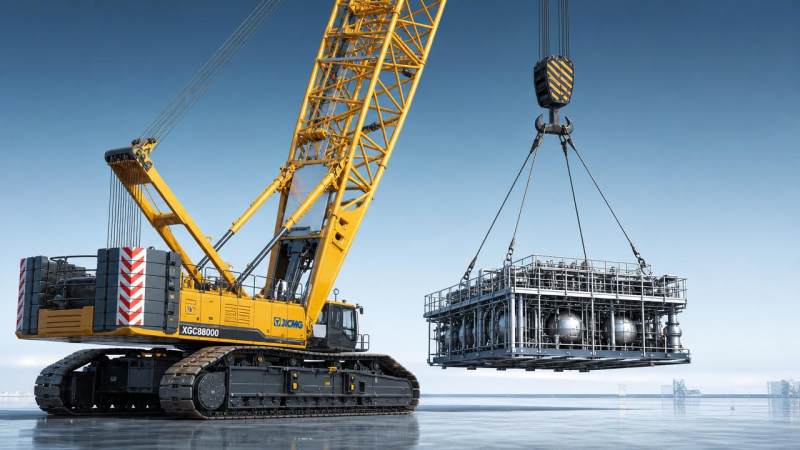
Industrial lifting technology is evolving from raw hoisting power into a data-driven discipline where sensors, drives, and load control systems determine safety, precision, and uptime.
For technical evaluators assessing crawler cranes, ultra-large lifting platforms, or heavy infrastructure equipment, understanding this control stack is now essential.
Torque feedback, variable-speed drives, real-time load monitoring, and automated protection logic now shape lift reliability in complex engineering environments.
Industrial Lifting Technology Is Moving From Strength To Controlled Intelligence
The old benchmark for lifting equipment was simple: rated capacity, boom length, and mechanical durability.
That benchmark is no longer enough for wind power, petrochemical modules, metro construction, port logistics, and nuclear infrastructure.
Modern industrial lifting technology must manage dynamic loads, ground constraints, operator variability, and changing weather windows.
The trend is clear: lifting performance is becoming a system outcome, not a single-machine specification.
Sensors read the machine state. Drives deliver controlled motion. Load control algorithms decide how much risk remains acceptable.
This shift matters because heavy lifts increasingly occur in congested sites with compressed schedules and strict safety expectations.
In this context, industrial lifting technology becomes a strategic layer of project execution, not merely an equipment feature.
Trend Signals Reshaping Heavy Lifting Decisions
Several signals show why industrial lifting technology is entering a new phase of adoption.
First, global infrastructure projects demand heavier components assembled with fewer intermediate steps.
Second, green energy projects require repeated high-altitude lifting for wind turbine nacelles, blades, and tower sections.
Third, contractors want lower total cost of ownership through predictive maintenance and reduced unplanned downtime.
Fourth, remote operation and semi-automated lifting require trustworthy data from every critical subsystem.
These signals connect industrial lifting technology with digital construction, asset intelligence, and safety governance.
- Large modules increase demand for precise load moment monitoring.
- Urban projects increase the value of compact, stable, sensor-rich lifting systems.
- Extreme environments require stronger diagnostics for hydraulics, brakes, motors, and structures.
- Insurance and compliance requirements favor traceable lift data.
Why Sensors Are Becoming The Nervous System Of Lifting Equipment
Sensors are the foundation of intelligent industrial lifting technology because they convert mechanical conditions into actionable signals.
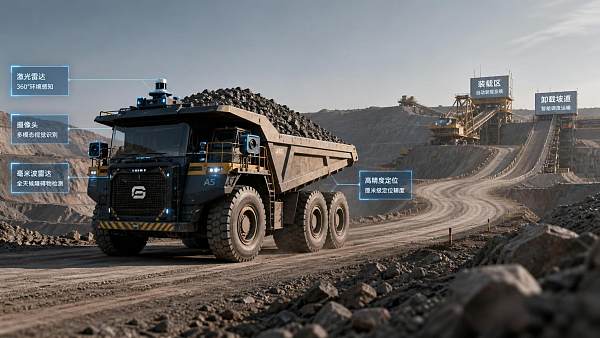
Load cells measure suspended force. Pressure sensors estimate hydraulic effort. Angle sensors track boom geometry.
Encoders monitor hoist speed and drum rotation. Inclinometers observe chassis attitude. Wind sensors support safer operating limits.
Together, these devices allow the controller to understand what the equipment is actually doing.
A single sensor is useful, but sensor fusion is where industrial lifting technology gains operational intelligence.
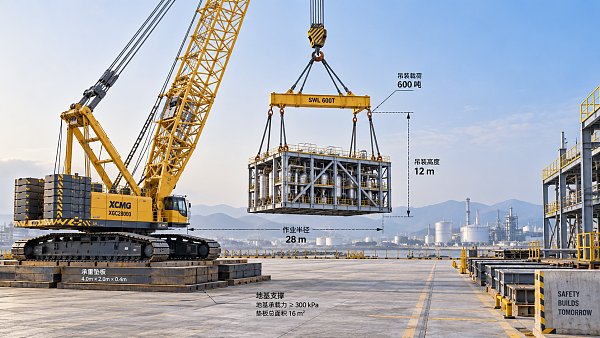
For example, load, boom angle, radius, and counterweight configuration can be compared against rated capacity curves.
When values approach unsafe thresholds, the control system can warn, limit motion, or block hazardous commands.
Critical Sensor Inputs For Load Control
Drives Are Turning Hoisting Into A Precision Motion Discipline
Drives determine how smoothly lifting force becomes motion.
In older systems, operators relied heavily on manual modulation and mechanical braking feel.
Modern industrial lifting technology uses electric drives, hydraulic drives, or hybrid architectures to improve controllability.
Variable-speed drives can adjust motor output according to load, speed command, and real-time feedback.
This reduces shock loading, improves positioning accuracy, and protects ropes, gearboxes, brakes, and structural members.
In ultra-large lifting machinery, drive response must be predictable under low-speed, high-torque conditions.
That is why torque control, regenerative braking, thermal monitoring, and redundancy design are gaining importance.
- Electric drives support fine speed control and easier energy monitoring.
- Hydraulic drives provide high force density for compact heavy equipment.
- Hybrid drives balance controllability, power availability, and field serviceability.
- Smart drives help industrial lifting technology reduce mechanical fatigue.
Load Control Logic Is Becoming The Core Safety Layer
Load control is the decision-making center of industrial lifting technology.
It compares actual operating data with safe envelopes defined by design limits, configuration, and site conditions.
The controller may calculate load moment, allowable radius, hook height, slew angle, and ground reaction forces.
When the lift enters a warning zone, the system can reduce speed or issue escalating alerts.
When a critical threshold is reached, automated protection can prevent unsafe extension, lowering, or slewing.
This does not remove operator judgment. It strengthens judgment with verified machine intelligence.
For high-value lifts, industrial lifting technology also supports digital records of load behavior and alarm events.
What Effective Load Control Should Provide
- Accurate configuration recognition before the lift begins.
- Real-time comparison against rated capacity charts.
- Smooth intervention that avoids sudden motion changes.
- Clear alarms that distinguish caution from danger.
- Event logs for maintenance, claims, and performance review.
The Main Drivers Behind This Technology Upgrade
The rise of industrial lifting technology is not caused by one invention.
It results from converging pressures across infrastructure scale, safety regulation, digital operation, and lifecycle economics.
Impact Across Equipment Design, Operations, And Maintenance
For equipment design, industrial lifting technology pushes engineering teams toward integrated control architecture.
Structural design, hydraulic sizing, braking logic, human-machine interfaces, and software validation must work together.
For field operations, the impact is equally direct.
Lift planning can move from static calculation toward live verification during execution.
Operators can see load trend, radius changes, wind risk, and utilization margin in one interface.
For maintenance, industrial lifting technology changes service priorities from reactive repair to condition-based intervention.
Abnormal current, hydraulic pressure fluctuation, brake temperature, or encoder deviation can indicate emerging failure modes.
- Design impact: more system integration and software validation.
- Operation impact: better lift visibility and controlled intervention.
- Maintenance impact: stronger diagnostics and lifecycle planning.
- Commercial impact: improved uptime, safety confidence, and asset value.
Key Focus Areas For Evaluating Industrial Lifting Technology
A high-quality system should be evaluated beyond headline capacity.
The most important question is how reliably the equipment controls risk under real operating conditions.
Industrial lifting technology should be judged by data accuracy, control response, redundancy, usability, and maintainability.
- Sensor accuracy under vibration, temperature change, and electromagnetic noise.
- Drive smoothness during inching, braking, lifting, lowering, and slewing.
- Load control logic during combined movement and changing radius.
- Interface clarity for alarms, limits, configuration, and diagnostics.
- Cybersecurity and data integrity for connected lifting platforms.
- Service access for sensors, controllers, cables, and calibration procedures.
These factors determine whether industrial lifting technology delivers value beyond demonstration conditions.
Future Direction: More Automation, More Data, Higher Accountability
The next stage of industrial lifting technology will likely combine automation, remote supervision, and predictive analytics.
Semi-automatic path control may help reduce swing and improve placement accuracy for heavy components.
Digital twins may compare planned lift sequences with real-time load and motion data.
Fleet platforms may benchmark crane utilization, fault frequency, energy use, and maintenance intervals across regions.
However, more automation also creates new responsibilities.
Control software must be validated, sensor drift must be managed, and operators must understand system boundaries.
A Practical Response Framework For Safer Heavy Lifts
Organizations adopting industrial lifting technology should avoid treating sensors and software as isolated upgrades.
The better approach is to align equipment selection, lift planning, operator training, and maintenance governance.
- Map critical lift scenarios before specifying control requirements.
- Verify sensor coverage for load, geometry, stability, and environment.
- Test drive response under realistic low-speed and high-load conditions.
- Review load control logic for warning, limitation, and emergency behavior.
- Build calibration, inspection, and data review into maintenance routines.
- Use event logs to improve lift planning and reduce repeated risk patterns.
This framework helps industrial lifting technology become a measurable performance advantage.
Conclusion: Precision Is Now Part Of Lifting Power
Industrial lifting technology is redefining how heavy equipment creates value in infrastructure, mining, energy, and industrial construction.
Sensors provide visibility. Drives provide controlled force. Load control systems provide the protective intelligence that connects both.
The strongest lifting platforms will not be judged only by rated capacity.
They will be judged by how safely, repeatably, and transparently they perform under real project pressure.
For deeper intelligence on heavy machinery trends, TF-Strategy tracks the technologies shaping power, precision, and earth engineering worldwide.
Use this perspective to assess industrial lifting technology with sharper criteria, stronger evidence, and clearer operational priorities.
Related News
 Oct 17, 2026Tunnel Boring Machine Supplier List: Compare TBM Types and Service CoverageExplore our tunnel boring machinery supplier list to compare EPB, slurry and hard rock TBMs, assess service coverage and lifecycle costs, and build a smarter procurement shortlist.
 Oct 16, 2026Heavy-Duty Petrochemical Lifting: Selecting Cranes by Load, Radius, and Site AccessExplore heavy-duty petrochemical lifting solutions. Compare cranes by load, radius, site access, and ground support to reduce project risk and optimize lifting costs.
 Oct 15, 2026Crane Selection for Petrochemical Turnarounds: Capacity, Radius, and Site AccessExplore petrochemical lifting solutions cranes can deliver, with expert guidance on capacity, working radius, and site access to help you plan a safer, more efficient turnaround.
 Oct 14, 2026High-Capacity Heavy Lifting Solutions: Matching Load, Radius, and Ground ConditionsDiscover heavy lifting solutions high capacity projects demand—compare load charts, working radius, and ground conditions to select a feasible, cost-effective system.
Heavy Haulage Strategist
Weekly Insights
Stay ahead with our curated technology reports delivered every Monday.