
Surface Mining Equipment for Coal: How to Compare Capacity, Seam Conditions, and Cost
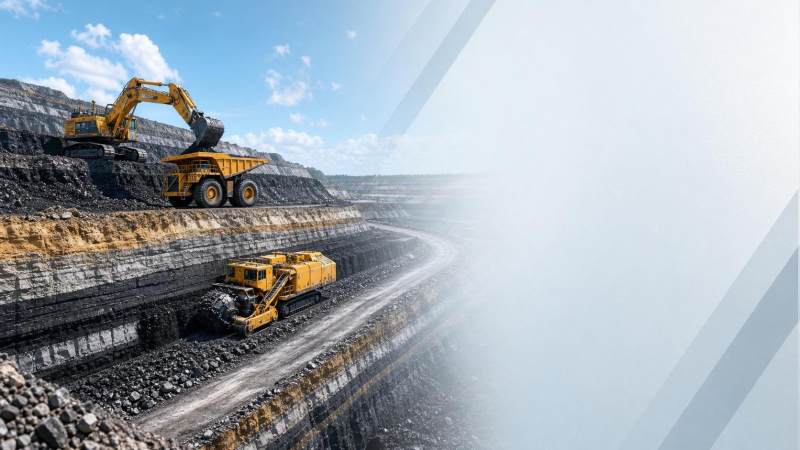
Surface Mining Equipment for Coal: How to Compare Capacity, Seam Conditions, and Cost
Choosing the right surface mining equipment for coal requires more than comparing machine size or headline output.
A higher rated capacity can still underperform when seam geometry, overburden, or haul distance are poorly matched.
That is why equipment selection should start with mining conditions, then move to production targets, and finally total cost.
In practical terms, the best surface mining equipment for coal is the fleet that delivers stable output with controlled cost and lower operating risk.
This guide builds a decision framework around three variables: capacity, seam conditions, and lifecycle economics.
Start with the Real Production Requirement
Many buying mistakes begin with annual tonnage alone.
For surface mining equipment for coal, production demand must be translated into hourly effective output, not theoretical maximum output.
That means accounting for shift pattern, weather loss, blasting delay, road maintenance, and operator efficiency.
A simple comparison model usually includes these inputs:
- planned annual coal volume
- working days and shift hours
- equipment availability target
- utilization rate under site conditions
- peak demand during seasonal output periods
From there, compare the gap between nameplate capacity and expected field capacity.
This is often where one large machine loses to a balanced fleet with better dispatch flexibility.
Why nameplate output is not enough
Surface mining equipment for coal operates inside a chain.
If excavators load faster than trucks cycle, loading time improves but mine output does not.
If trucks move efficiently but the shovel struggles in hard overburden, fleet balance breaks again.
So capacity should be compared across the whole system, including digging, loading, hauling, dumping, and road support.
Match Equipment to Seam Conditions First
Coal seams define the operating logic of the fleet.
Before comparing brands or machine size, evaluate seam thickness, dip angle, overburden depth, interburden layers, and floor stability.
These factors influence which surface mining equipment for coal can work efficiently without excessive dilution or rehandling.
Thin seams and selective mining
Thin seams usually need tighter control.
Very large excavators may raise output, but they can also increase waste mixing and coal loss.
In such cases, smaller hydraulic shovels, precision loaders, or surface miners may produce better saleable coal recovery.
Thick seams and continuous volume
Thicker seams with stable geology usually support larger bucket capacities and longer uninterrupted passes.
Here, surface mining equipment for coal can be optimized around bulk productivity, truck match factor, and lower unit cost per tonne.
Hard overburden changes everything
A common error is sizing coal equipment without separately sizing overburden removal capacity.
If the overburden is abrasive, blocky, or blast dependent, digging tools wear faster and cycle times slow down.
That increases maintenance cost and may create bottlenecks before coal extraction even begins.
Compare the Main Equipment Options
Most surface mining equipment for coal falls into a few decision paths.
The right choice depends on mine layout, stripping ratio, bench design, and product quality targets.
Recent market changes make flexibility more valuable than before.
Where mine plans shift often, modular fleets usually outperform highly specialized systems in total business value.
Look Beyond Purchase Price
Cost comparison should never stop at acquisition.
For surface mining equipment for coal, lifecycle cost often decides whether a fleet remains competitive after two or three operating seasons.
A practical total cost review should include:
- capital purchase and financing structure
- fuel or power consumption per tonne
- wear parts, GET, tires, and undercarriage cost
- planned and unplanned maintenance hours
- operator training and labor demand
- component lead time and dealer support
- residual value and redeployment potential
Unit cost can hide serious risk
Low cost per tonne looks attractive, but it may depend on ideal utilization.
If a machine requires highly stable geology, excellent roads, or imported parts with long lead times, the savings may disappear fast.
This is especially true when coal quality penalties or shipment delays carry commercial consequences.
Assess Fuel, Power, and Haulage Interaction
A strong equipment decision also depends on energy performance.
Surface mining equipment for coal often works under long idle periods, steep ramps, and variable payload conditions.
That means fuel burn on paper may differ sharply from site reality.
Truck cycle time should be tested against:
- average one-way haul distance
- elevation change and rolling resistance
- road condition through wet and dry seasons
- queue time at shovel and dump point
- payload consistency across operators
The more obvious signal today is that energy cost volatility is shaping fleet strategy.
This makes high-efficiency diesel platforms, trolley-assist readiness, and electric transition planning more relevant in procurement reviews.
Use a Decision Matrix Before You Buy
A structured matrix reduces bias and keeps discussions evidence based.
For surface mining equipment for coal, score each option across technical, operational, and commercial dimensions.
Typical scoring categories include:
- fit with seam thickness and selectivity needs
- effective hourly output under real utilization
- compatibility with haul fleet and bench geometry
- maintenance complexity and spare parts access
- fuel or power cost per tonne moved
- safety visibility, braking, and control systems
- supplier support strength in the operating region
This also helps teams compare a lower-priced offer against a higher-value offer with stronger uptime support.
Common Mistakes in Surface Mining Equipment for Coal Selection
Several mistakes appear again and again in fleet selection projects.
- choosing by bucket size without matching truck payload
- ignoring seam variability across future pit stages
- underestimating overburden hardness and wear cost
- using supplier test data without site correction factors
- treating maintenance support as a secondary issue
- optimizing for lowest purchase price only
In real operations, these errors usually show up later as lower recovery, higher dilution, poor availability, or unstable production cost.
A Practical Way to Make the Final Choice
The final decision should be simple, even if the analysis is not.
Start by filtering equipment that truly fits the seam and overburden profile.
Then compare effective capacity under actual mine conditions, not brochure conditions.
Finally, choose the surface mining equipment for coal that delivers the best balance of output, reliability, energy performance, and lifecycle cost.
For decision teams working across heavy equipment categories, this disciplined approach is what turns machine data into stronger operating strategy.
That is also where informed market intelligence becomes useful: it sharpens equipment comparison, improves TCO visibility, and supports better long-term mine planning.
Related News
 Sep 30, 2026What Does an Ultra-Large Excavator Really Cost Over Its Service Life?Ultra-large excavators cost far more than purchase price. Explore lifecycle expenses, uptime risks, energy use, maintenance, and cost-per-tonne insights.
 Sep 29, 2026Infrastructure Construction Standards: A Project Manager’s Guide to ComplianceInfrastructure construction standards guide for project managers: turn requirements into field controls, hold points, traceability, and compliant delivery.
 Sep 28, 2026How to Specify Custom Mining Equipment for Abrasive Ground and High-Load HaulageCustom mining equipment for abrasive ground and high-load haulage: learn how to optimize payload, wear protection, powertrains, uptime, and lifecycle cost for safer, reliable production.
 Sep 30, 2026When does a lower construction machinery price raise lifecycle costs?Construction machinery pricing can hide costly risks. Discover how downtime, fuel use, maintenance, productivity, and resale value shape total lifecycle costs.
Heavy Haulage Strategist
Weekly Insights
Stay ahead with our curated technology reports delivered every Monday.