
Open-Pit Mining for Copper: Equipment Choices, Ore Handling, and Common Pitfalls
Open-Pit Mining for Copper: Equipment Choices, Ore Handling, and Common Pitfalls
Open-pit mining for copper demands more than large machines and aggressive output plans. It depends on disciplined fleet design, reliable ore flow, and a realistic view of operating risk.
That is becoming more important as copper projects face deeper pits, lower grades, tighter labor markets, and pressure to reduce cost per tonne without compromising safety.
In practice, strong open-pit mining for copper is built on three linked decisions. Choose the right equipment, move ore with minimal friction, and remove operating blind spots early.
When those elements stay aligned, pit productivity improves, dilution falls, and expansion decisions become far easier to defend.
Why Equipment Selection Shapes Copper Pit Economics
Equipment choices in open-pit mining for copper affect far more than purchase price. They influence fuel burn, cycle time, maintenance intensity, bench stability, and ore recovery.
A common mistake is sizing fleets around peak production only. That often creates underutilized assets during ramp-up, waste movement shifts, or seasonal operating constraints.
A better approach starts with deposit geometry and material variability. Hardness, fragmentation profile, haul distance, bench height, and road gradient should guide machine matching.
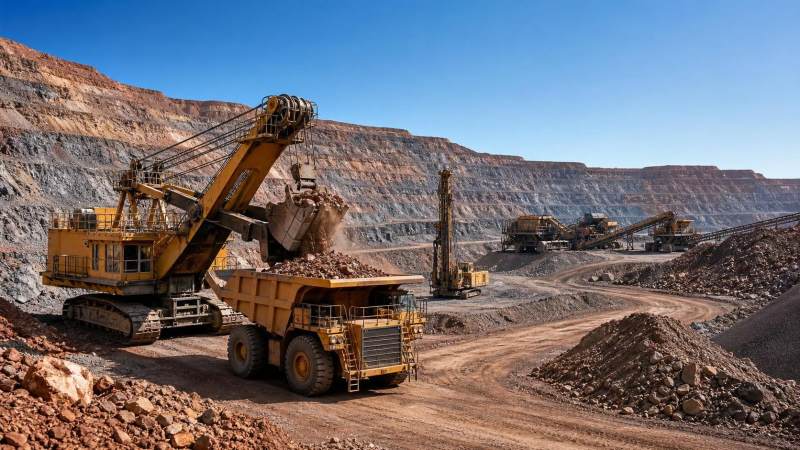
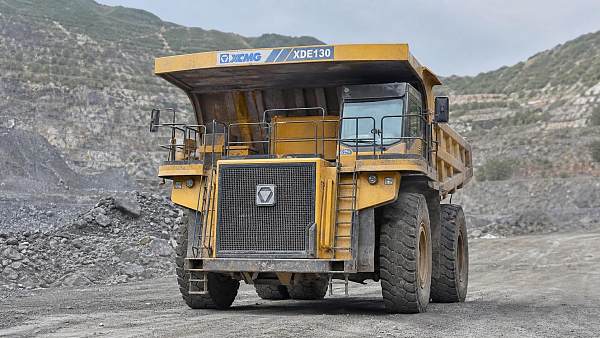
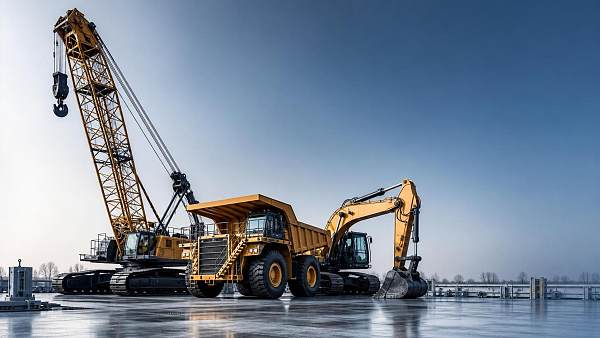
For many copper operations, the core fleet includes drills, electric rope shovels or hydraulic excavators, rigid dump trucks, dozers, graders, wheel loaders, and support equipment.
Yet the best mix depends on mining sequence and ore control requirements, not on what neighboring sites are running.
Key Fleet Matching Factors
- Excavator bucket size should match truck body capacity and target pass count.
- Truck selection should reflect haul profile, road condition, and maintenance support depth.
- Drill diameter should align with fragmentation targets and downstream crusher constraints.
- Auxiliary units must be sized for road upkeep, drainage control, and pit floor access.
- Powertrain strategy should consider diesel, trolley-assist, hybrid, or battery pathways.
From a capital planning angle, open-pit mining for copper now rewards modular expansion. Fleets that scale in clean phases usually protect cash flow better than oversized first-wave deployment.
Choosing Loading and Haulage Systems
Loading and haulage absorb a major share of total mining cost. Small mismatches here can quietly erode the economics of open-pit mining for copper over many years.
Hydraulic excavators offer flexibility and strong selectivity. Rope shovels usually deliver high productivity in stable, high-volume zones with repeatable digging conditions.
Truck fleets remain the dominant haulage option because they support phased development and changing mine plans. Still, they are not always the lowest long-term answer.
As pits deepen, haul distances grow, and fuel costs rise, in-pit crushing and conveying can become attractive. The tradeoff is higher upfront complexity and reduced route flexibility.
That means system choice should follow a life-of-mine view. A low-cost year-one solution may become an expensive year-eight burden.
Decision Points for Haulage Strategy
- Measure average and peak haul distance by development stage, not by current pit depth alone.
- Model truck queuing at loaders, crushers, waste dumps, and fueling areas.
- Compare fuel, tire, labor, and maintenance cost under multiple production scenarios.
- Stress-test weather exposure, road deterioration, and ramp congestion.
- Evaluate whether semi-mobile crushing supports future pushbacks and grade strategy.
In recent projects, the stronger signal is integration. Dispatch software, payload systems, and shovel-truck synchronization now matter almost as much as raw machine capacity.
Ore Handling: Where Copper Recovery Is Won or Lost
Ore handling is often underestimated in open-pit mining for copper. Many operations focus on blasting and hauling, then lose value through blending errors, rehandle, or crusher disruptions.
Copper deposits frequently show variable grade, hardness, moisture, and impurity patterns. That makes disciplined ore routing essential from the first blast block to the plant feed point.
The objective is not simply moving rock. It is delivering the right material, in the right sequence, at the right size, with minimal contamination.
Critical Ore Handling Controls
- Short-interval grade control to reduce ore loss and waste misclassification.
- Clearly separated ore stockpiles by grade band and metallurgical behavior.
- Crusher feed management to prevent oversize spikes and unplanned downtime.
- Moisture and fines control where sticky ore affects chutes, bins, or transfer points.
- Real-time reconciliation between mine plan, haul dispatch, and plant performance.
In actual operations, copper pit performance often weakens when ore and waste boundaries are treated as obvious. They rarely are, especially in transitional zones.
This is why open-pit mining for copper increasingly relies on tighter data loops between geology, dispatch, mine operations, and processing teams.
Common Pitfalls in Open-Pit Mining for Copper
Most failures in open-pit mining for copper do not begin with a dramatic event. They start as manageable inefficiencies that compound across drilling, loading, haulage, and ore control.
1. Overbuilding the Fleet
Buying for nameplate capacity rather than usable capacity creates idle time and weak asset returns. It also stretches maintenance teams and spare parts inventories.
2. Ignoring Pit Road Quality
Poor roads increase tire damage, fuel use, structural fatigue, and cycle variation. Even advanced trucks cannot offset weak road engineering and inconsistent drainage.
3. Treating Ore Handling as a Secondary Process
When routing rules are loose, high-value ore can be diluted or stranded. That directly reduces mill feed quality and can distort reserve confidence over time.
4. Underestimating Geotechnical Change
Pit slopes evolve as depth increases and groundwater conditions shift. Delayed response to instability can trigger access loss, redesign, or major production interruptions.
5. Separating Operations from Planning
Mine plans that are not checked against daily execution limits often look efficient on paper only. Congestion, rehandle, and blend failures usually follow.
6. Delaying Electrification and Automation Reviews
Not every site should move first. Still, waiting too long can lock a project into higher operating cost and weaker carbon performance.
A Practical Evaluation Framework
For decision-making, open-pit mining for copper should be reviewed as a connected production system. Local equipment gains mean little if they create bottlenecks elsewhere.
This framework helps identify where capital should go first. Sometimes the highest return comes from road improvements or ore tracking, not from another primary machine.
What Stronger Copper Pit Performance Looks Like
High-performing open-pit mining for copper usually shows the same pattern. Equipment is matched to geology, haulage evolves with pit depth, and ore handling is managed as a value stream.
The most resilient operations also revisit assumptions often. They update fleet logic, compare haul alternatives, and connect mine data with plant response before small losses become structural problems.
That is where disciplined analysis matters. In open-pit mining for copper, better returns usually come from better system decisions, not simply bigger machines.
A practical next step is a full operating review across fleet productivity, haulage cost, ore routing accuracy, and geotechnical exposure. That creates a clearer base for expansion, modernization, or corrective action.
Related News
 Sep 27, 2026Heavy Equipment Selection Factors for Matching Machine Capacity to Jobsite ConditionsHeavy equipment selection factors for matching capacity to jobsite conditions, improving productivity, safety, fleet efficiency, and total project cost control.
 Sep 26, 2026How to Select Wind Rotor Lifting Equipment for Safe Blade and Hub InstallationWind rotor lifting equipment selection guide: ensure safe blade and hub installation with the right lift method, load control, crane compatibility, wind limits, and compliance.
 Sep 25, 2026What Drives Heavy Haulage Cost on Oversized Construction Equipment Moves?Heavy haulage cost explained: discover how load dimensions, route surveys, permits, escorts, lifting plans, and scheduling shape reliable oversized equipment transport budgets.
 Sep 24, 2026Supplier Management Frameworks That Reduce Delays on Large Construction ProjectsLarge-scale construction projects supplier management frameworks help prevent costly delays with risk-based controls, milestone tracking, quality oversight, and escalation plans for critical packages.
Heavy Haulage Strategist
Weekly Insights
Stay ahead with our curated technology reports delivered every Monday.