
Crawler Crane Intelligence: Which Monitoring Functions Matter Most on Complex Lift Sites?
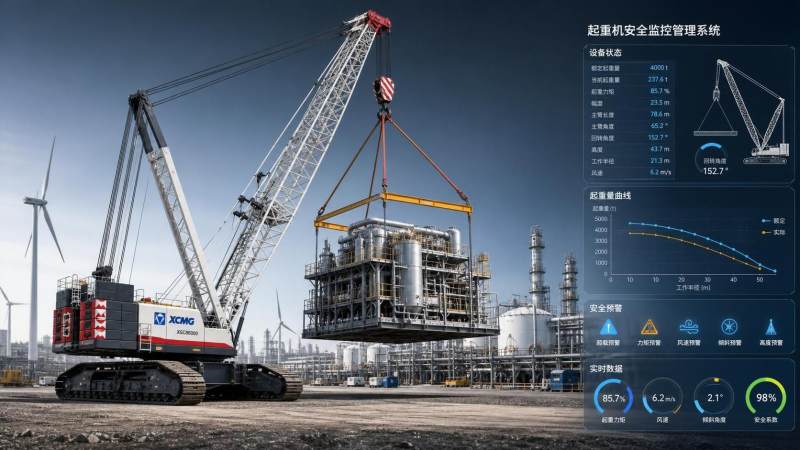
Why crawler crane intelligence now sits at the center of complex lifts
On high-risk lift sites, judgment cannot rely on operator experience alone. Crawler crane intelligence has become the layer that turns raw machine behavior into visible, usable control.
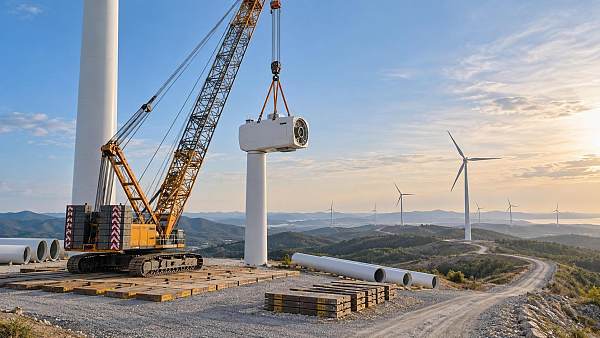
That shift matters most in wind power, nuclear construction, petrochemical modules, and other projects where lifts are heavy, slow, and expensive to interrupt.
A single uncertainty in boom position, ground reaction, or wind exposure can affect safety margins, rigging stability, and schedule confidence at the same time.
In that environment, crawler crane intelligence is not just a digital add-on. It is part of how a site understands load movement, changing risk, and execution discipline.
For an intelligence platform such as TF-Strategy, this topic fits a larger heavy-equipment pattern. The value is created when machine parameters, site methods, and project decisions are linked, not treated separately.
What crawler crane intelligence actually means on site
In practical terms, crawler crane intelligence combines sensing, processing, and visual reporting around the lift cycle.
It usually includes load measurement, boom geometry tracking, slewing and radius data, ground condition awareness, engine and hydraulic status, and environmental monitoring.
More advanced systems also connect these inputs to alarms, lift planning software, fleet dashboards, and remote review by technical teams.
The key point is simple. Good crawler crane intelligence does not just collect numbers. It shows whether the crane is operating inside a safe, planned, and economically sensible envelope.
From isolated readings to decision-ready information
Many cranes already display basic operating values. The difference on complex sites is whether those values are integrated into real decisions.
A useful system tells the team what changed, how fast it changed, and whether the lift plan still holds under current conditions.
Which monitoring functions matter most
Not every function carries equal weight. On complex lift sites, several monitoring capabilities consistently deliver the highest operational value.
1. Real-time load moment and capacity utilization
This is still the first line of control. It shows how close the crane is operating to rated limits under actual geometry, not theoretical assumptions.
On long-boom lifts or tight radii, small deviations can consume reserve capacity quickly. Real-time visibility reduces the chance of unnoticed overload progression.
2. Boom angle, radius, and hook position accuracy
Precision matters because many failures start as positioning errors, not dramatic overload events.
If the actual radius drifts beyond plan, the load chart changes immediately. Accurate geometry tracking supports smoother placement and cleaner alignment with rigging plans.
3. Wind speed and gust monitoring at the relevant height
Ground-level weather reports are often misleading. Large components experience wind differently at hook height or along the boom line.
This function becomes critical during turbine installation, tall vessel setting, and panelized modules with high sail area.
4. Ground bearing pressure and crawler load distribution
A crane can stay within charted capacity and still face stability problems if the support condition changes beneath it.
Ground pressure awareness helps detect uneven settlement, mat performance issues, and load transfer imbalances before they become visible site events.
5. Hydraulic and powertrain health indicators
Complex lifts often run on narrow windows. A hydraulic pressure anomaly or overheating trend can turn a planned lift day into a delay cascade.
Health monitoring supports maintenance timing, prevents mid-lift disruptions, and improves confidence in repeated heavy picks.
6. Alarm hierarchy and event logging
Alerts only matter if they are credible and actionable. Too many generic warnings create distraction instead of control.
Well-designed crawler crane intelligence distinguishes advisory conditions from stop-work conditions and keeps a traceable event history for review.
Why the industry is paying closer attention
The pressure comes from project complexity, not from digital fashion.
Components are larger, site footprints are tighter, and contractual penalties for delay are heavier than they were a decade ago.
At the same time, owners expect documented safety control, auditable lift procedures, and better use of expensive crane assets.
That is why crawler crane intelligence now intersects with broader infrastructure trends tracked by TF-Strategy, including digitalization, safety standard upgrades, and lifecycle cost control.
The same logic seen in TBM monitoring or remote mining equipment is now shaping heavy lifting: high-value machines need higher-quality operational intelligence.
Where these functions create the most business value
The benefit is not limited to avoiding accidents. Strong crawler crane intelligence improves execution quality across the project chain.
- It strengthens lift planning by validating whether field conditions still match assumptions.
- It supports schedule control by reducing stop-start decisions caused by unclear status.
- It improves equipment utilization because maintenance and operating windows become more predictable.
- It helps post-lift analysis by turning incidents, delays, and alarms into reviewable evidence.
- It supports contractor credibility where owners want visible proof of disciplined heavy-lift control.
In practical use, the strongest return often comes from preventing one major disruption. A delayed reactor module set or turbine component lift can affect several downstream trades.
How priorities change by lift scenario
Monitoring priorities should reflect the actual lift profile. A petrochemical site and a wind installation may use similar cranes, but their risk patterns are not identical.
Wind energy erection
Wind, boom geometry, and hook height data carry exceptional importance. Repeated lifts at elevation make environmental monitoring and positioning accuracy central.
Nuclear and critical infrastructure projects
Traceability matters more here. Event logs, alarm records, and documented compliance with lift plans become part of project assurance, not just site operations.
Petrochemical modules and vessels
Radius control, ground condition awareness, and multi-constraint movement are often the decisive functions because space is limited and tolerances are unforgiving.
Remote or logistically difficult locations
Machine health monitoring rises in importance. When service access is slow, predictive insight carries more value than reactive maintenance.
How to judge an intelligent monitoring setup without overbuying
The best system is not the one with the longest feature sheet. It is the one that matches lift risk, reporting needs, and site execution habits.
Several questions usually reveal whether a crawler crane intelligence package is genuinely useful.
- Are the most critical variables measured directly, or inferred with weak accuracy?
- Can the system distinguish temporary fluctuations from real stop-work conditions?
- Does the interface help field decisions, or only create more screens to watch?
- Can data be exported for lift review, owner reporting, and maintenance analysis?
- Does it integrate with planning and fleet oversight, or remain an isolated onboard display?
Usually, the smarter procurement choice is to secure reliable core monitoring first, then add higher-level analytics where project complexity justifies them.
The next step is building a site-specific intelligence checklist
For complex lifts, the real question is not whether crawler crane intelligence is necessary. The real question is which functions reduce uncertainty in that exact operating context.
A useful next move is to map upcoming lifts against five filters: load behavior, geometry sensitivity, environmental exposure, ground reliability, and machine uptime risk.
That exercise quickly shows which monitoring functions are essential, which are supportive, and which add little practical value.
As heavy industry becomes more data-driven, crawler crane intelligence will increasingly shape not only safety outcomes, but also how infrastructure projects protect margins, delivery certainty, and technical reputation.
Following intelligence-led analysis from sources such as TF-Strategy can help keep that evaluation grounded in machine physics, project realities, and broader equipment evolution.
Related News
 Sep 27, 2026Heavy Equipment Selection Factors for Matching Machine Capacity to Jobsite ConditionsHeavy equipment selection factors for matching capacity to jobsite conditions, improving productivity, safety, fleet efficiency, and total project cost control.
 Sep 26, 2026How to Select Wind Rotor Lifting Equipment for Safe Blade and Hub InstallationWind rotor lifting equipment selection guide: ensure safe blade and hub installation with the right lift method, load control, crane compatibility, wind limits, and compliance.
 Sep 25, 2026What Drives Heavy Haulage Cost on Oversized Construction Equipment Moves?Heavy haulage cost explained: discover how load dimensions, route surveys, permits, escorts, lifting plans, and scheduling shape reliable oversized equipment transport budgets.
 Sep 24, 2026Supplier Management Frameworks That Reduce Delays on Large Construction ProjectsLarge-scale construction projects supplier management frameworks help prevent costly delays with risk-based controls, milestone tracking, quality oversight, and escalation plans for critical packages.

Structural Load Expert
Weekly Insights
Stay ahead with our curated technology reports delivered every Monday.