
How large-scale lifting solutions cut risk on complex lifts
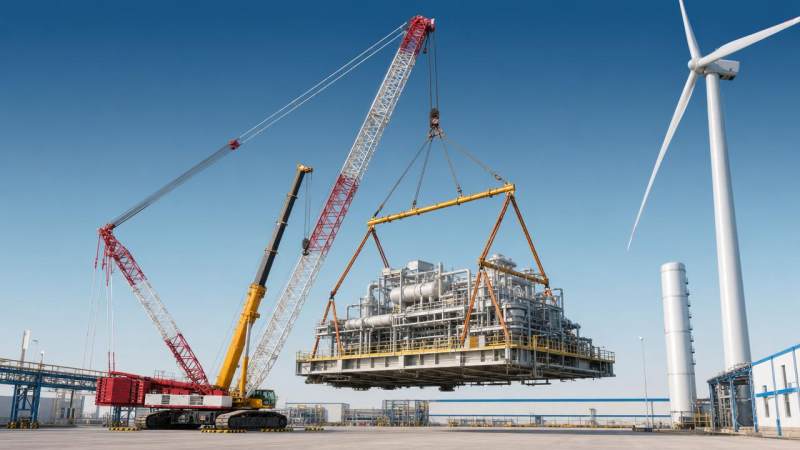
For project managers and engineering leaders, complex lifts leave little room for error. Large-scale lifting solutions reduce risk by combining precise load planning, advanced crane coordination, and site-specific execution strategies.
In wind, petrochemical, marine, mining, and infrastructure work, every lift affects safety, schedule, and cost. The right large-scale lifting solutions create control before heavy components ever leave the ground.
This article answers common questions about large-scale lifting solutions, where they fit best, how to evaluate them, and which mistakes most often increase lift risk.
What are large-scale lifting solutions in complex lifting projects?
Large-scale lifting solutions are integrated methods for moving oversized, heavy, high-value, or hard-to-access components with controlled risk.
They include crane selection, rigging design, transport interface planning, ground bearing checks, sequencing, weather criteria, and lift path validation.
A complex lift is not defined by weight alone. It may involve limited access, tandem cranes, tight tolerances, unstable ground, or energized nearby assets.
Effective large-scale lifting solutions connect engineering calculations with field execution. That link matters most when schedules are compressed and consequences are severe.
Typical elements of a lifting solution
- Load characterization, including center of gravity and dynamic behavior
- Crane configuration, radius limits, and capacity verification
- Rigging arrangement, sling angles, spreader bars, and connection points
- Ground pressure analysis and matting requirements
- Travel path, exclusion zones, and emergency contingencies
- Communication protocols and role accountability
Why do large-scale lifting solutions cut risk better than standard lift planning?
Standard lift planning often covers routine picks. Large-scale lifting solutions address interacting risks that compound during unusual or high-consequence operations.
The first advantage is predictability. Detailed engineering reduces uncertainty around capacity margins, boom deflection, tail swing, and load rotation.
The second advantage is coordination. Complex lifts rarely fail from one single error. They fail when several small assumptions go unchecked.
Large-scale lifting solutions force alignment between transport teams, crane crews, civil support, lifting engineers, and site control teams.
The third advantage is decision quality. With engineered lift scenarios, teams can compare options before mobilization instead of improvising on site.
Risk areas reduced by engineered lifting
- Overloading due to incorrect radius assumptions
- Ground failure under crane tracks or outriggers
- Rigging mismatch with real load distribution
- Interference with structures, piping, or energized lines
- Schedule slips caused by incomplete site readiness
- Weather-related instability during long boom operations
Where are large-scale lifting solutions most valuable?
Large-scale lifting solutions are most valuable where heavy loads meet difficult geometry, narrow tolerances, or strict delivery windows.
Wind energy projects depend on them for tower sections, nacelles, and blades. Height, wind exposure, and remote sites create a demanding lift environment.
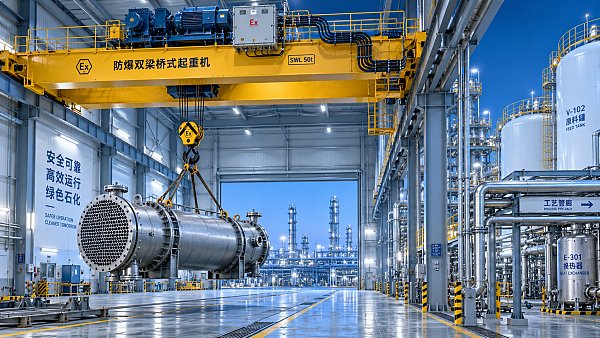
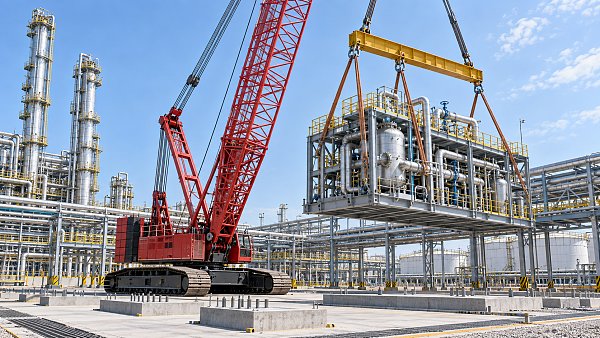
Petrochemical construction uses large-scale lifting solutions for reactors, modules, columns, and prefabricated skids near congested process areas.
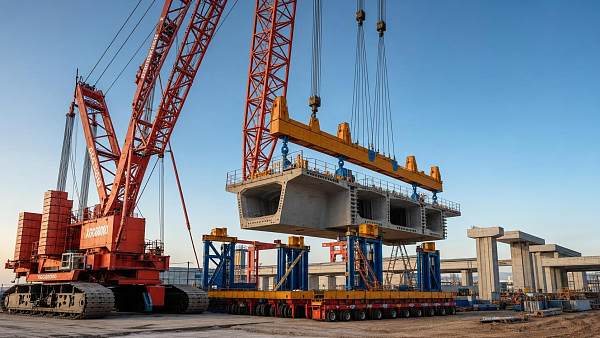
Infrastructure works rely on them for bridge segments, precast girders, tunnel components, and marine elements with restricted access.
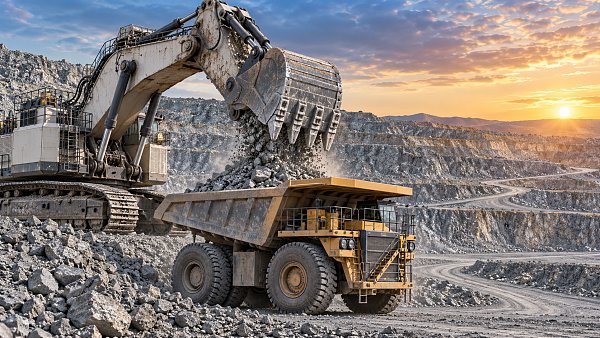
Mining and heavy industrial projects apply them to crushers, shovels, dragline parts, and plant equipment under harsh terrain conditions.
High-value application scenarios
- Tandem lifts where load sharing must stay stable
- Heavy lifts near existing live facilities
- Remote lifts with limited crane repositioning options
- Modular construction requiring exact placement tolerances
- Projects with severe weather exposure or soft ground
How should you evaluate and choose large-scale lifting solutions?
Choosing large-scale lifting solutions starts with risk profile, not equipment size. The safest option is not always the biggest crane.
First, verify the load data. Many lifting problems begin with inaccurate dimensions, hidden internals, or an incorrect center of gravity.
Second, review site conditions. Ground capacity, access roads, assembly area, slope, and nearby obstructions can eliminate otherwise attractive plans.
Third, compare lift concepts. A shorter radius, staged installation, or pre-assembly change may reduce both risk and total crane cost.
Fourth, check execution readiness. The best large-scale lifting solutions include crew competency, lifting supervision, inspection records, and decision hold points.
Selection checklist
What mistakes weaken large-scale lifting solutions and increase risk?
The most common mistake is treating a heavy lift as only a crane rental issue. Complex lifts are engineering and logistics problems first.
Another mistake is relying on nominal capacity without checking the real operating radius, boom angle, rigging weight, and wind limits.
Ground assumptions also fail often. Surface appearance can hide weak subgrade, voids, saturation, or buried services under crane travel paths.
Late design changes create hidden lift risk. A moved nozzle, altered frame, or temporary attachment can change weight balance significantly.
Communication gaps remain critical. If signaling, authority, weather triggers, and hold points are unclear, engineered plans can still break down.
Warning signs before execution
- Load details are marked “estimated” without verification
- Lift drawings do not match current site layout
- Temporary works are unfinished near crane setup areas
- Weather limits are undefined or unrealistic
- No clear contingency exists for partial execution delays
How do cost, timeline, and risk connect in large-scale lifting solutions?
Some teams focus only on day rates. However, large-scale lifting solutions should be judged by total project impact, not isolated crane cost.
A stronger lifting plan may use more engineering upfront, yet save money through fewer delays, fewer change events, and lower rework exposure.
Shorter lift windows matter too. Better sequencing can reduce site congestion, speed mechanical completion, and improve handover confidence.
Large-scale lifting solutions also support insurance, compliance, and stakeholder assurance by showing that major risks were identified and controlled.
Cost-versus-risk comparison
FAQ summary: what should be checked before approving complex lifts?
Large-scale lifting solutions cut risk because they replace assumptions with engineered visibility. That shift is decisive on projects where one lift can affect the entire delivery chain.
For sectors tracked by TF-Strategy, from crawler cranes to mining and tunnel logistics, lift success depends on disciplined planning linked to real site conditions.
Before the next complex lift, review load certainty, crane margins, ground readiness, execution controls, and contingency paths. Strong large-scale lifting solutions start long before the hook is engaged.
Related News
 Oct 09, 2026Ultra-Large Excavator Bucket Size: Capacity, Width, and Site Fit ExplainedUltra large excavator bucket size explained: compare capacity, width, payload, truck matching, and site conditions to select a reliable, high-productivity bucket.
 Oct 08, 2026How to Evaluate a Heavy Machinery Information Platform for Project Equipment SourcingHeavy machinery information platform guide: compare equipment fit, source reliability, lifecycle costs, supplier capability, and compliance to make smarter sourcing decisions.
 Oct 07, 2026How to Evaluate a Hydraulic System Component Supplier for Heavy Equipment UptimeChoose a hydraulic system component supplier with proven quality, technical fit, and reliable delivery to reduce heavy equipment downtime and lifecycle costs.
 Oct 06, 2026Selecting Petrochemical Overhead Cranes for Hazardous Areas and Heavy Process LoadsPetrochemical overhead cranes for hazardous areas: learn how to match capacity, duty, controls, corrosion protection, and maintenance access for safer, reliable lifts.
Structural Load Expert
Weekly Insights
Stay ahead with our curated technology reports delivered every Monday.