
When Should Lifting Machinery Use Superlift Systems?
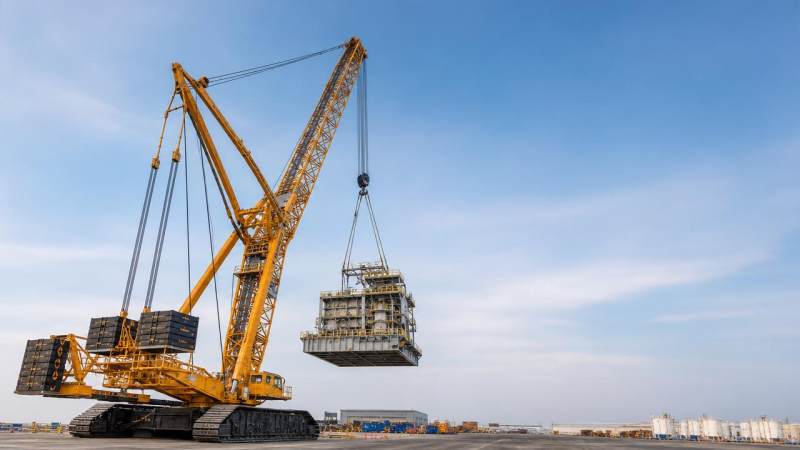
Superlift systems can transform the performance envelope of lifting machinery, but they also add complexity, cost, and planning requirements. For technical evaluators, the key question is not whether more capacity is available, but when the additional counterweight radius, structural stability, and load moment advantages justify deployment. This article examines the engineering conditions, project scenarios, and risk factors that determine when superlift configurations are the right choice for crawler cranes and other ultra-large lifting operations.
For infrastructure contractors, EPC teams, and fleet owners, superlift decisions often sit between engineering ambition and commercial discipline. A larger capacity chart is valuable only when site geometry, ground bearing, schedule pressure, and lift criticality support its use.
Understanding What a Superlift System Adds to Lifting Machinery
A superlift system extends the effective counterweight radius of heavy lifting machinery, usually through a suspended counterweight tray, derrick mast, or ballast wagon. The purpose is to increase load moment resistance and reduce boom compression stress during demanding lifts.
In practical terms, superlift does not simply “make the crane stronger.” It changes the machine’s stability triangle, load path, assembly footprint, transport quantity, and operational procedures. These effects must be evaluated together.
Core engineering effects
- Higher permissible load moment at longer radii, often relevant beyond 20–40 meters depending on crane class.
- Reduced structural demand on main boom sections during high-capacity, high-radius operations.
- Improved stability margin when lifting large components with high sail area or uncertain center of gravity.
- Increased requirement for ground preparation, ballast logistics, exclusion zones, and lift sequencing.
For technical evaluators, the first screening question is whether the standard configuration reaches the lift requirement with sufficient margin. If utilization exceeds 85–90% of rated chart capacity, a superlift configuration may deserve serious review.
The second question is whether the project can absorb added setup duration. Depending on machine size, superlift assembly may add 1–3 shifts, multiple transport loads, and additional rigging checks before the lift window opens.
The table below summarizes how superlift changes the decision profile of lifting machinery in technical, operational, and commercial terms.
The key conclusion is straightforward: superlift is justified when it solves a measurable load moment or stability constraint, not when it merely provides a visually larger crane configuration.
Project Scenarios Where Superlift Becomes the Rational Choice
Superlift systems are most appropriate when the lifted component is heavy, distant, tall, or difficult to reposition. They are especially common in sectors where one failed lift can delay a project by weeks.
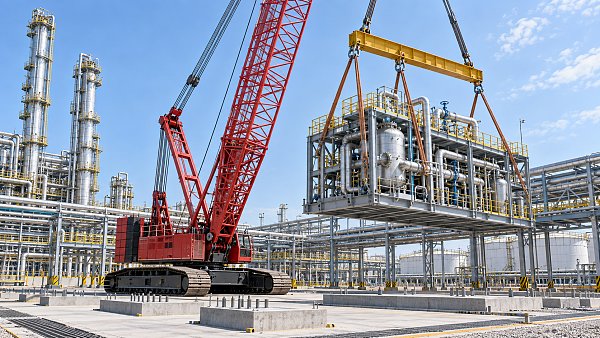
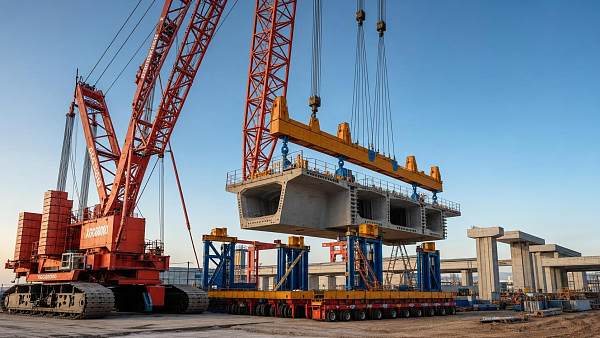
Typical applications include wind turbine nacelle installation, petrochemical module placement, nuclear island construction, bridge segment lifting, offshore yard fabrication, and large mining plant assembly. Each scenario imposes different constraints on lifting machinery.
High-radius lifts with restricted crane positioning
If the crane cannot be placed close to the load due to foundations, excavation edges, traffic corridors, or installed equipment, radius becomes the dominant factor. A 5-meter radius increase can sharply reduce chart capacity.
In these conditions, superlift may prevent the need for a larger base crane or dual-lift operation. It can also reduce site disruption when repositioning is impossible or unsafe.
Tall structures and long boom combinations
Long boom systems create greater bending and compression forces. When boom length moves into the 80–120 meter range, even moderate loads may require enhanced stability and controlled load moment behavior.
Wind energy projects illustrate this clearly. Towers above 100 meters, large rotors, and high-altitude nacelle lifts often push lifting machinery toward superlift or heavy-duty wind configurations.
Critical lifts with limited tolerance for delay
A critical lift is not defined only by weight. It may involve fragile components, expensive modules, tandem synchronization, live plant proximity, or a narrow shutdown window of 12–72 hours.
When rework or missed timing creates major commercial exposure, a superlift configuration can be chosen for stability margin and operational confidence, even if the load is not at chart limit.
Scenario screening checklist
- Confirm gross load, including hook block, rigging, lifting beam, and contingency allowance.
- Calculate working radius for pick, swing, tailing, and set-down positions.
- Check ground bearing pressure under tracks and superlift ballast route.
- Assess wind exposure, especially for loads exceeding 20 square meters of projected area.
- Compare standard, superlift, and alternative lift plans against cost, time, and risk.
A disciplined checklist avoids over-engineering. It also helps evaluators distinguish between a capacity problem, a site access problem, and a sequencing problem.
Technical Thresholds for Evaluating Superlift Deployment
Technical thresholds should be defined before procurement discussions begin. Without clear criteria, teams may select lifting machinery based on headline capacity rather than actual project geometry.
A robust evaluation normally covers 6 dimensions: load utilization, radius, boom length, ground pressure, wind sensitivity, and assembly feasibility. Each factor affects safety and commercial viability.
The following table provides practical reference ranges commonly used during early-stage technical screening. Final limits must always follow manufacturer charts, local regulations, and approved lift plans.
These thresholds are not automatic approval rules. They are decision signals that tell evaluators when deeper engineering analysis is warranted before selecting lifting machinery.
Load data quality is decisive
Superlift planning depends on reliable load information. If a module weight is estimated from early drawings, evaluators should request verified mass, center of gravity, and rigging drawings before final selection.
A common practice is to apply contingency allowances of 3–10% during planning, depending on fabrication maturity. For engineered lifts, small errors can change crane selection and ballast requirements.
Ground engineering cannot be treated as secondary
Superlift counterweights may move behind the crane or operate on a defined ballast radius. This means ground review must include crawler tracks, ballast tray paths, crane mats, and nearby underground services.
For sites involving reclaimed land, mining benches, tunnel portals, or deep foundation zones, geotechnical verification should be completed before mobilizing ultra-large lifting machinery.
Operational Risks and Common Misjudgments
The biggest risk in superlift deployment is not usually the rated capacity chart. It is the gap between the approved lift study and real site conditions on the lifting day.
Technical evaluators should challenge assumptions around crane access, ballast delivery, night work, weather monitoring, communication, and emergency laydown areas. These factors determine whether lifting machinery performs as planned.
Misjudgment 1: ignoring the rear operating envelope
Superlift systems need rear clearance. Temporary buildings, pipe racks, stockpiles, haul roads, or power lines can prevent the counterweight from moving safely through the planned operating arc.
A lift plan should map the rear radius, side clearances, and exclusion zones in 3D where possible. Two-dimensional drawings often miss overhead and temporary-site conflicts.
Misjudgment 2: treating wind limits as generic
Wind limits depend on load shape, boom length, height, and manufacturer guidance. A large vessel, blade, or panelized bridge section can become critical at lower wind speeds than a compact load.
Evaluators should require defined stop-work values, anemometer locations, forecast windows, and gust monitoring procedures. A 24-hour forecast review is not enough for high-consequence lifting.
Misjudgment 3: underestimating interface management
Superlift operations involve more people and more interfaces. Crane supplier, rigging crew, transport team, civil contractor, module fabricator, and safety authority may all affect the final lift readiness.
For critical lifts, a pre-lift meeting 24–48 hours before execution should verify roles, hold points, communication signals, rescue access, and weather decision authority.
Minimum risk controls before approval
- Approved lift plan with configuration, load chart reference, rigging layout, and lift sequence.
- Ground bearing verification, crane mat design, and marked travel routes for ballast components.
- Inspection records for boom sections, pendants, pins, ballast connections, and load monitoring devices.
- Defined weather thresholds, communication channels, emergency stop authority, and exclusion-zone control.
These controls do not eliminate risk, but they convert a complex operation into a managed engineering process with accountable decision points.
Commercial Evaluation: When Added Cost Is Justified
Superlift systems increase direct costs through transport, assembly labor, engineering review, ballast handling, and longer crane occupancy. The question is whether these costs reduce total project risk.
For many projects, the economics change when a lift affects the critical path. A 1-day lifting delay can cost more than several days of added crane preparation.
Compare total installed lift cost, not rental price
A cheaper crane plan may require road closures, extra civil works, tandem lifting, or module redesign. A superlift plan may appear costly but reduce 3–5 secondary work packages.
Technical evaluators should request cost breakdowns for mobilization, engineering, mats, operators, riggers, standby time, permits, and demobilization. This reveals the true value of each lifting machinery option.
Procurement questions that improve decision quality
- Which exact crane configuration and chart page support the proposed lift?
- How many transport loads are required for crane, boom, ballast, and superlift components?
- What is the estimated assembly and disassembly duration under normal site conditions?
- What ground preparation assumptions are included, excluded, or dependent on others?
- What contingency plan applies if wind, access, or load verification changes within 48 hours?
These questions help convert a supplier quotation into an engineering decision. They also reduce disputes between procurement, construction, and safety teams.
Where intelligence support creates value
For global infrastructure projects, heavy lifting choices are affected by regional fleet availability, transport restrictions, component lead times, and local safety norms. Independent intelligence can shorten evaluation cycles.
TF-Strategy tracks ultra-large lifting machinery, crawler crane applications, infrastructure demand, and heavy equipment trends across wind power, petrochemical, mining, tunnel, and transport projects.
For technical evaluators, this intelligence supports early feasibility screening, tender comparison, risk review, and total cost assessment before committing to a critical lift methodology.
Practical Decision Framework for Technical Evaluators
A useful superlift decision framework should be simple enough for tender review and rigorous enough for engineering gate approval. The following 5-step method works across most heavy industry sectors.
Step 1: Define the lift envelope
Document load weight, rigging weight, center of gravity, pick radius, final radius, hook height, boom clearance, and swing path. Do not evaluate lifting machinery on maximum load alone.
Step 2: Compare feasible configurations
Review at least 3 options where practical: standard crawler crane, crawler crane with superlift, and alternative method such as gantry, strand jack, or tandem lift.
Step 3: Test site constraints
Check access roads, bearing capacity, underground utilities, overhead obstructions, laydown areas, lighting, and working hours. Many superlift plans fail during logistics review, not chart review.
Step 4: Quantify risk and schedule impact
Assign risk levels to weather sensitivity, assembly complexity, supply chain dependency, and critical-path exposure. A simple 1–5 ranking can support transparent management decisions.
Step 5: Approve with hold points
Final approval should include hold points for load verification, ground inspection, crane assembly sign-off, rigging inspection, weather confirmation, and pre-lift briefing.
This framework helps prevent two common errors: approving superlift too late, after site constraints are locked, or approving it too early, before load data is mature.
Final Guidance for Superlift Selection
Superlift systems should be used when they create a clear engineering advantage: improved load moment capacity, better stability margin, safer long-radius lifting, or reduced exposure during critical operations.
They should not be selected simply because larger lifting machinery appears more conservative. If ground conditions, site footprint, logistics, or inspection capacity are weak, superlift can increase operational risk.
For technical evaluators, the strongest decision combines manufacturer data, site engineering, lift planning, weather control, and commercial comparison. The best configuration is the one that delivers safety, schedule certainty, and total project value.
TF-Strategy helps engineering teams interpret heavy equipment parameters, compare lifting methodologies, and align ultra-large machinery decisions with infrastructure execution needs. To review a project-specific lifting scenario, get a customized assessment or consult product and methodology details with our intelligence team.
Related News
 Oct 12, 2026How to Assess a High-Altitude Mining Equipment Manufacturer for Remote ProjectsHigh altitude mining manufacturer assessment guide: compare derating, cold-climate reliability, remote service, parts resilience, and lifecycle risk for smarter project decisions.
 Oct 11, 2026What Drives TBM Cutter Head Material Cost and Life-Cycle Value?Cutter head material cost explained: compare TBM alloys, wear protection, downtime risk, and life-cycle value to choose the most reliable, cost-effective solution.
 Oct 13, 2026Mining Haulage Services Procurement Checklist for Uptime and Cost ControlMining haulage services procurement checklist for stronger uptime, safer fleet selection, transparent pricing, and better cost control across changing mine conditions.
 Oct 12, 2026How to Read Mining Equipment Performance Reviews Beyond Headline MetricsMining equipment performance reviews explained: learn to assess productivity, availability, maintenance risk, site conditions, and total ownership cost for smarter fleet decisions.

Structural Load Expert
Weekly Insights
Stay ahead with our curated technology reports delivered every Monday.