
What matters most when planning high altitude mining
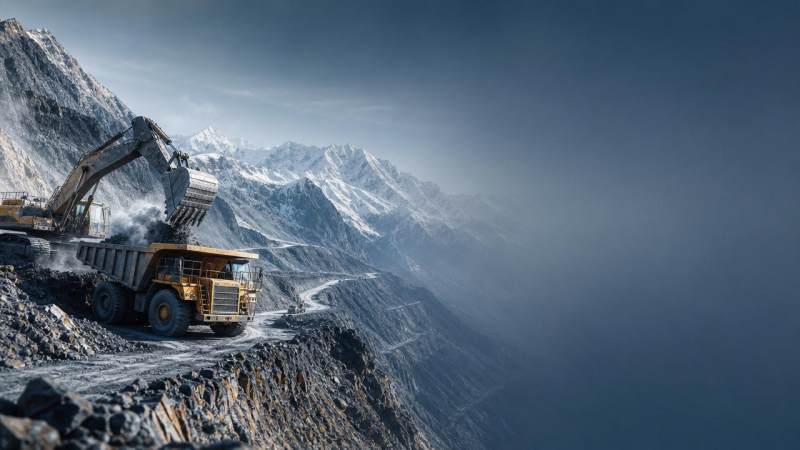
In high altitude mining, success depends on more than machine power alone. Project managers must balance oxygen-thin conditions, equipment reliability, haulage efficiency, workforce safety, and total operating cost under extreme environmental pressure. For leaders planning complex projects, understanding what matters most at every stage is essential to reducing risk, improving output, and building a resilient operation from pit design to fleet deployment.
Understanding the core of high altitude mining planning
High altitude mining refers to operations located in elevated regions, often above 2,500 meters, where low oxygen, cold temperatures, and steep terrain reshape every planning assumption.
At these elevations, engines lose power, braking distances change, and worker fatigue appears faster. The same mine plan used at sea level may fail in a mountain environment.
That is why high altitude mining must be approached as a systems challenge. Geology, haul roads, fleet sizing, maintenance cycles, energy supply, and camp logistics are tightly connected.
From a heavy industry intelligence perspective, the best outcomes come from matching physical conditions with machine capability, operating method, and long-term cost discipline.
Key environmental constraints
- Reduced air density lowers engine output and cooling efficiency.
- Large temperature swings affect tires, hydraulics, and battery behavior.
- Steep grades increase fuel burn, brake wear, and cycle-time variability.
- Remote access complicates spare parts supply and emergency response.
- Snow, wind, and unstable slopes can interrupt production windows.
Current industry priorities shaping high altitude mining
Across the global mining and infrastructure sector, several priorities now define how high altitude mining projects are evaluated, financed, and operated under stricter performance expectations.
These priorities align closely with the intelligence model used by TF-Strategy. Equipment choices should not be separated from terrain, operating cycles, and strategic project economics.
In high altitude mining, this integrated view is especially important because small errors in specification or timing can scale into major production losses.
What matters most in equipment and fleet selection
Fleet selection is often the decisive factor in high altitude mining. Machines must deliver stable output despite thin air, rough haul roads, and severe thermal stress.
Engine and powertrain adaptation
Diesel engines typically lose effective power at altitude. Turbocharging strategy, fuel mapping, and cooling design should be verified under real site conditions.
Transmission matching also matters. Improper gearing can slow uphill haulage, increase heat load, and shorten component life in high altitude mining fleets.
Haul truck and excavator matching
The loading unit and truck fleet must be balanced for altitude-adjusted cycle times, not catalog performance. Real payloads may differ sharply from nominal ratings.
Ultra-large excavators can sustain output in open-pit operations, but only if bench geometry, ground pressure, and service access are properly planned.
Maintenance readiness
High altitude mining punishes filters, seals, tires, brakes, and hydraulic lines. Preventive maintenance intervals often need adjustment rather than simple calendar repetition.
- Stock critical spares near the pit, not only at a distant warehouse.
- Track coolant behavior, brake temperatures, and engine derating trends.
- Use oil and fluid specifications suited to cold starts and thermal cycling.
- Inspect haul road damage because road quality drives component failure.
Operational design, safety, and workforce performance
Even the strongest machine setup cannot compensate for weak operational design. High altitude mining requires planning that protects both output stability and human endurance.
Pit layout and haul road engineering
Road gradient, turning radius, drainage, and surface quality directly affect cycle time, tire life, and fuel consumption. Poor road design can erase fleet efficiency gains.
At high elevation, snowmelt and freeze-thaw cycles may weaken road shoulders. Continuous road maintenance should be built into the production plan.
Worker health and shift design
Acclimatization is essential in high altitude mining. Fatigue, dehydration, and reduced concentration can increase incident risk even during routine operating tasks.
Shift schedules should reflect altitude stress, travel time, and recovery needs. Camp design, oxygen support, and medical readiness are operational planning issues, not side topics.
Weather and emergency resilience
Mountain weather changes quickly. Visibility, wind, and temperature can all alter blasting windows, lifting activity, and heavy haulage safety within hours.
Emergency plans should include slope events, road blockages, fuel interruptions, and medical evacuation constraints. Remote conditions increase the value of scenario drills.
Business value and decision impact in high altitude mining
The real value of better planning in high altitude mining is not only safety. It also improves project economics, schedule reliability, asset utilization, and investor confidence.
When fleet design, road engineering, and maintenance logic work together, mines can reduce idle time, lower cost per ton, and stabilize monthly production targets.
This is where strategic intelligence becomes practical. Physical data must be translated into decisions about machine classes, support infrastructure, and phased capacity growth.
Typical planning scenarios in high altitude mining
Not every high altitude mining project faces the same constraints. Planning should reflect deposit type, infrastructure maturity, and production scale.
- Early-stage mountain mine: focus on access roads, camp setup, pilot fleet sizing, and weather risk baselines.
- Expanding open-pit operation: focus on haulage bottlenecks, slope coordination, and shovel-truck matching.
- Remote large-scale project: focus on spare parts logistics, fuel security, and dispatch visibility.
- Low-emission transition site: focus on electric truck suitability, charging design, and cold-weather battery performance.
In each scenario, high altitude mining planning should start with data from geology, climate, elevation profile, and actual transport routes rather than assumptions.
Practical recommendations for a stronger project plan
- Test equipment performance using altitude-corrected duty cycles.
- Model haulage with seasonal road conditions, not average road conditions.
- Align maintenance staffing with remote-site response time.
- Design safety systems around acclimatization, fatigue, and rapid weather shifts.
- Use telematics and dispatch data to detect derating and bottlenecks early.
- Review TCO across fuel, tires, spares, labor support, and downtime.
A strong high altitude mining strategy connects machine physics with field execution. That connection is where operational resilience is built and defended over time.
For deeper evaluation, map site elevation, fleet behavior, haul profiles, and maintenance risk into one decision framework before major deployment begins.
Well-informed planning creates safer operations, better asset performance, and more dependable output in the demanding reality of high altitude mining.
Related News
 Oct 08, 2026How to Evaluate a Heavy Machinery Information Platform for Project Equipment SourcingHeavy machinery information platform guide: compare equipment fit, source reliability, lifecycle costs, supplier capability, and compliance to make smarter sourcing decisions.
 Oct 07, 2026How to Evaluate a Hydraulic System Component Supplier for Heavy Equipment UptimeChoose a hydraulic system component supplier with proven quality, technical fit, and reliable delivery to reduce heavy equipment downtime and lifecycle costs.
 Oct 06, 2026Selecting Petrochemical Overhead Cranes for Hazardous Areas and Heavy Process LoadsPetrochemical overhead cranes for hazardous areas: learn how to match capacity, duty, controls, corrosion protection, and maintenance access for safer, reliable lifts.
 Oct 05, 2026Tunneling Equipment Specification Planning: Key Criteria for Ground and Project RisksEquipment specification planning tunneling: learn how to match TBM systems to ground risks, geometry, safety, logistics, and lifecycle cost for more reliable project delivery.
Ms. Elena Rodriguez
Weekly Insights
Stay ahead with our curated technology reports delivered every Monday.