
Are smart highways ready to cut urban maintenance costs
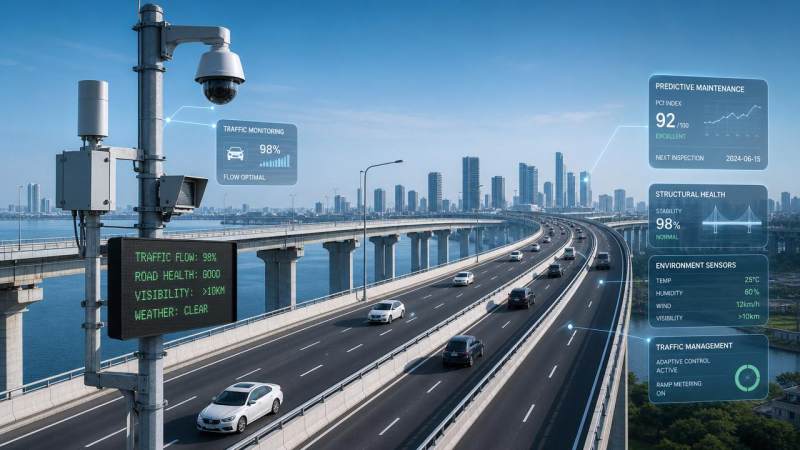
Can smart highways truly reduce lifecycle maintenance spending, or do they simply move costs from asphalt and concrete into software, sensors, and data services? The short answer is that smart highways can reduce urban maintenance costs, but not automatically and not everywhere. For financial approvers, the strongest business case appears when digital monitoring is tied to high-traffic corridors, recurring failure points, and a disciplined maintenance model that turns early warnings into faster, cheaper interventions.
The core search intent behind “smart highways” in this context is practical rather than theoretical. Readers want to know whether connected road infrastructure delivers measurable savings, what cost categories are affected, how long payback may take, and what risks could erode returns. They are not looking for futuristic narratives. They are looking for a finance-ready judgment framework.
That is especially true for approval-oriented stakeholders. Their concern is not whether smart highways sound innovative, but whether they improve asset performance, reduce emergency repairs, limit traffic disruption, and create more predictable maintenance budgets. They also need clarity on procurement risk, systems integration, vendor dependence, and the difference between pilot success and citywide economics.
This article focuses on those decision points. It explains where smart highways can lower costs, where they may simply add digital overhead, which use cases create the most credible returns, and what financial filters should be applied before approving investment. For urban agencies, contractors, and infrastructure financiers, the right question is not “Are smart highways ready?” but “Which smart highway applications are financially ready in our network?”
What financial approvers really need to know before funding smart highways
For a financial approver, the first issue is cost structure. Traditional urban road maintenance is dominated by pavement wear, drainage problems, lane closures, emergency interventions, inspection labor, and user disruption. Smart highways introduce new line items such as sensors, communication networks, software platforms, cybersecurity, and device replacement. The investment only makes sense if these digital costs prevent larger physical and operational losses.
In other words, smart highways should be judged as a maintenance efficiency system, not as a technology showcase. Their value comes from earlier detection of defects, better timing of interventions, and improved coordination between field crews, traffic management, and road machinery. If the system does not change maintenance decisions, then the city pays for extra data without reducing actual maintenance burden.
The second issue is asset criticality. Not every road deserves a smart layer. Urban expressways, freight corridors, bridges, tunnel approaches, flood-prone intersections, and areas with repeated pavement distress are usually stronger candidates than lightly used local streets. Financially, the best returns often come from concentrating smart highways on assets where one avoided failure can prevent a large repair bill and major traffic disruption.
The third issue is measurement. Before funding begins, decision-makers should define a baseline for emergency repair frequency, inspection cost, closure hours, average response time, pavement condition deterioration rate, and claim or incident exposure. Without a clean baseline, vendors can present activity as value, while actual savings remain impossible to verify.
How smart highways can actually lower urban maintenance costs
The most credible savings mechanism is predictive maintenance. Sensors embedded in pavement, bridges, drainage points, lighting systems, and roadside assets can identify abnormal vibration, moisture intrusion, temperature stress, rutting progression, or structural movement earlier than periodic manual inspection. Earlier detection usually means smaller repair scope, lower labor intensity, and fewer emergency mobilizations.
Emergency work is expensive because it compresses planning, labor scheduling, traffic control, and equipment allocation into a reactive event. It often requires night work, rapid procurement, and public communication under pressure. Smart highways help reduce this by shifting some maintenance activity from reactive to planned. That does not eliminate defects, but it can materially reduce the premium attached to fixing them late.
Another savings path is better maintenance prioritization. Cities often struggle with fragmented asset data, which leads to over-maintaining some locations and under-maintaining others. A connected highway environment can improve prioritization by combining traffic load, asset condition, weather exposure, and historical failure patterns. The result is a better sequence for resurfacing, drainage cleaning, lighting replacement, and structural inspection.
Traffic management also matters. Smart highways can reduce maintenance-related congestion through dynamic lane control, real-time traveler information, and better work-zone scheduling. For public agencies, congestion is not always booked as a maintenance line item, but it creates economic and political cost. For toll roads and major freight routes, reduced disruption can have direct revenue and service-quality implications.
There is also an equipment productivity angle. When road agencies and contractors can connect field intelligence to dispatch systems, large road machinery is used more efficiently. Pavers, milling machines, rollers, sweepers, and inspection vehicles can be deployed with better timing and reduced idle movement. In heavy urban networks, these small gains accumulate into lower operating cost and higher intervention quality.
Which smart highway applications have the strongest near-term ROI
Not all smart highways use cases are equal. For finance teams, the most bankable applications are those linked to known maintenance pain points. Pavement health monitoring is one of the clearest examples. On roads with heavy bus, freight, or mixed commercial traffic, continuous condition monitoring can flag distress progression before failures spread across larger surface areas.
Drainage monitoring is another high-value use case, especially in cities facing intense rainfall, freeze-thaw cycles, or recurring water damage. Clogged drains, standing water, and hidden subgrade saturation accelerate pavement deterioration and increase safety risk. Monitoring these conditions can reduce both maintenance cost escalation and secondary damage to surrounding infrastructure.
Bridge approaches, retaining walls, and tunnel-adjacent road segments also deserve attention. These are locations where settlement, vibration, and structural stress can trigger expensive interventions if not identified early. Given TF-Strategy’s focus on integrated heavy infrastructure intelligence, these interfaces are particularly important because roadway performance is often affected by broader geotechnical and construction conditions, not just surface wear.
Smart lighting and energy management may also show attractive returns, though these savings sit partly outside pure maintenance budgets. Connected lighting systems can reduce outage response times, lower inspection needs, and cut energy consumption. While this may not be the main reason to build smart highways, it can improve overall project economics when bundled with roadway condition monitoring.
By contrast, highly visible but weakly monetized features may be harder to justify. Public Wi-Fi, generalized infotainment systems, or broad technology installations without a maintenance linkage can dilute ROI. Financial approvers should prefer a phased architecture where each digital layer solves a defined operational problem and earns its place in the budget.
Where smart highways may fail to cut costs
Smart highways do not reduce costs when the digital layer is added without maintenance process reform. If field teams still inspect on fixed schedules, if repair approvals remain slow, or if asset data stays siloed across departments, then better sensing will not produce better outcomes. Data without action is just another overhead item.
They also struggle when technology is over-specified. Some projects install more sensors, analytics modules, and communication capacity than the operating organization can use. This drives up capital spending, software licensing, training demands, and replacement cost. In finance terms, the system becomes too expensive relative to the maintenance decisions it improves.
Another common failure point is underestimating lifecycle digital cost. Sensors degrade. Communication standards change. Platforms require updates. Cybersecurity controls must be maintained. Data storage and integration contracts can expand over time. If the business case focuses only on initial installation and ignores ten-year operating cost, apparent savings can disappear.
Vendor lock-in is a further concern. When a city adopts proprietary systems with limited interoperability, future upgrades become more expensive and bargaining power declines. Financial approvers should be alert to architectures that make switching difficult or require single-vendor dependence for analytics, maintenance support, and hardware refresh cycles.
Finally, smart highways can disappoint when deployed on the wrong asset class. Roads with low traffic, low consequence of failure, and stable condition may not generate enough avoided cost to justify smart instrumentation. A selective deployment strategy is often financially superior to a broad branding-driven rollout.
How to evaluate the business case like a capital allocator
A good approval process starts with a simple question: what cost are we trying to avoid? That cost may be emergency pavement repair, recurring water damage, inspection labor, unplanned closures, traffic control deployment, claim exposure, or accelerated resurfacing. Each smart highway component should be matched to a specific avoidable cost category.
Next, estimate the savings pathway. If sensors identify pavement defects three months earlier, how much repair scope is prevented? If drainage monitoring cuts flood-related incidents, how many emergency callouts and lane closures are avoided annually? If connected scheduling improves work-zone efficiency, how much contractor time and equipment utilization improves? Savings logic must be operationally credible, not just statistically optimistic.
Then separate direct savings from indirect value. Direct savings include reduced repair cost, lower inspection labor, fewer emergency mobilizations, and longer asset life. Indirect value includes lower congestion, better public satisfaction, reduced emissions from smoother traffic flow, and improved safety perception. Both matter, but they should not be blended carelessly. Finance teams need to know which returns are cash-like and which are strategic.
A staged pilot approach is usually the best path. Instead of approving a citywide smart highways program immediately, start with a corridor or asset cluster where failure frequency, traffic impact, and maintenance spending are already high. Require pre- and post-deployment measurement over a meaningful period. If the pilot proves lower intervention cost, fewer incidents, or slower deterioration, scaling becomes far easier to defend.
Decision-makers should also apply sensitivity analysis. What happens if sensor replacement is more frequent than expected? What if software fees rise? What if the reduction in emergency repairs is only half the forecast? A resilient business case should still show acceptable value under less favorable assumptions.
The role of road machinery and integrated infrastructure intelligence
One reason smart highways are more relevant today than a decade ago is that digital data can increasingly connect to execution, not just monitoring. Modern large road machinery can work within more data-rich maintenance workflows, supporting precise milling depths, targeted resurfacing, and better compaction control. That matters because maintenance savings are realized in the field, not on dashboards.
For organizations tracking heavy equipment performance, this creates an important bridge between infrastructure intelligence and asset economics. Road condition data can inform where machinery should be deployed first, how much material should be used, and whether intervention timing should be accelerated or deferred. In large urban programs, even modest improvements in crew routing and machine productivity can produce significant annual savings.
This integrated view aligns with TF-Strategy’s perspective on heavy infrastructure systems. Smart highways should not be assessed in isolation from construction methodology, machinery capability, and operating environment. A sensor may identify distress, but savings depend on whether the owner and contractor can mobilize the right equipment, at the right time, with the right intervention scope.
That is especially relevant around major transport interfaces, tunnels, logistics routes, and strategic freight corridors. In these settings, road availability has wider economic importance, and the cost of maintenance failure spreads beyond the highway authority itself. The more mission-critical the corridor, the more valuable a well-targeted smart maintenance model becomes.
Are smart highways ready now, or only in selective scenarios?
Smart highways are ready to cut urban maintenance costs in selective, financially disciplined scenarios. They are most ready where assets are heavily used, maintenance pain points are recurrent, and organizations are capable of acting on data quickly. They are less ready where the deployment is broad but shallow, where maintenance operations remain reactive, or where technology is installed for visibility rather than asset performance.
For financial approvers, the practical takeaway is not to ask whether smart highways are universally cost-saving. The better question is whether a proposed smart highway package reduces the total cost of maintaining a defined road portfolio over time. If the answer is supported by baseline metrics, targeted use cases, realistic lifecycle costing, and accountable operational processes, the investment can be justified.
If those conditions are absent, the project may simply shift spending into a new digital layer without solving the underlying maintenance problem. In that case, caution is appropriate. Smart highways create value when they help agencies intervene earlier, target repairs better, use road machinery more effectively, and protect high-value assets from avoidable deterioration.
In summary, smart highways are not a guaranteed maintenance cost cure, but they are no longer just a futuristic concept either. For the right urban corridors, they can improve budget predictability, reduce emergency work, and extend asset life. The winning strategy for decision-makers is focused deployment, measurable outcomes, and a clear link between digital insight and maintenance action.
Related News
 Oct 08, 2026How to Evaluate a Heavy Machinery Information Platform for Project Equipment SourcingHeavy machinery information platform guide: compare equipment fit, source reliability, lifecycle costs, supplier capability, and compliance to make smarter sourcing decisions.
 Oct 07, 2026How to Evaluate a Hydraulic System Component Supplier for Heavy Equipment UptimeChoose a hydraulic system component supplier with proven quality, technical fit, and reliable delivery to reduce heavy equipment downtime and lifecycle costs.
 Oct 06, 2026Selecting Petrochemical Overhead Cranes for Hazardous Areas and Heavy Process LoadsPetrochemical overhead cranes for hazardous areas: learn how to match capacity, duty, controls, corrosion protection, and maintenance access for safer, reliable lifts.
 Oct 05, 2026Tunneling Equipment Specification Planning: Key Criteria for Ground and Project RisksEquipment specification planning tunneling: learn how to match TBM systems to ground risks, geometry, safety, logistics, and lifecycle cost for more reliable project delivery.

Prof. Marcus Chen
Weekly Insights
Stay ahead with our curated technology reports delivered every Monday.