
Are wind power components getting easier to maintain
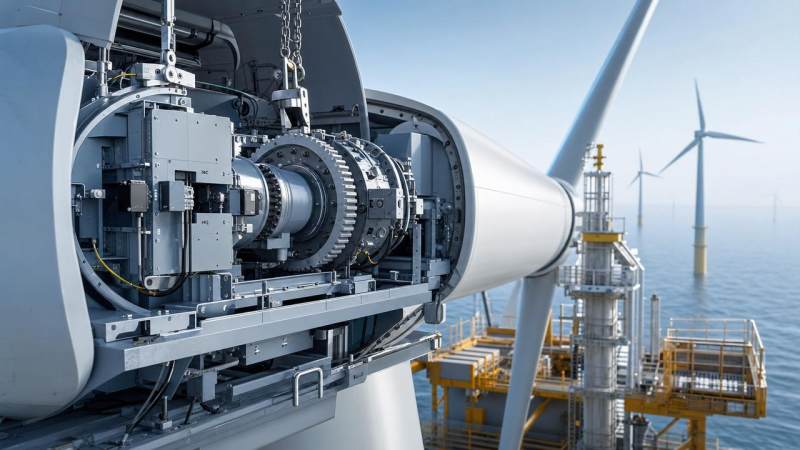
As turbines grow larger and projects move offshore, maintaining wind power components has become a defining issue across modern energy infrastructure. The question is no longer whether service complexity exists, but whether design, tools, and planning are reducing that burden.
In many cases, wind power components are getting easier to maintain. Yet the answer is conditional. Better modularity, remote diagnostics, standardized interfaces, and improved lifting methods are simplifying routine work, while larger machines and harsher sites create new challenges.
For a platform such as TF-Strategy, this shift matters beyond wind farms alone. It connects component engineering, heavy lifting strategy, access planning, replacement logistics, and lifecycle intelligence across the broader heavy equipment ecosystem.
Maintenance trends shaping wind power components
Wind power components include blades, nacelles, gearboxes, generators, converters, yaw systems, pitch systems, towers, transformers, and control units. Maintainability depends on how these parts are designed, monitored, accessed, and replaced over time.
Historically, maintenance was reactive. Teams often waited for alarms, failures, or visible wear. Today, the industry is moving toward predictive service, planned replacement windows, and easier field intervention.
That change is driven by several forces:
- Larger fleets increase the value of standardized maintenance routines.
- Offshore wind raises the cost of every unplanned visit.
- Digital monitoring makes component condition more visible.
- Heavy lifting equipment improves replacement feasibility.
- Lifecycle cost pressure favors maintainable system architecture.
So, are wind power components getting easier to maintain? In practical terms, yes for inspection, diagnosis, and planned exchange. No, if the site lacks access, spare strategy, or lifting coordination.
Why maintainability is improving in real projects
The strongest reason is modular design. More wind power components are being engineered as replaceable units rather than deeply integrated assemblies. This shortens downtime and reduces disassembly risk at height.
Modularity and component exchange
Converters, pitch motors, hydraulic packs, sensors, and cooling elements are increasingly arranged for faster isolation and removal. A smaller intervention can now solve issues that once required major teardown.
Condition monitoring and diagnostics
Modern wind power components generate more operational data. Vibration analysis, thermal imaging, oil particle sensing, and SCADA trend review help detect faults earlier and plan maintenance before failure escalates.
Better internal access design
Service platforms, ladders, hoists, anchor systems, and internal crane concepts have improved. These details do not change power output directly, but they strongly influence maintenance speed and safety.
Improved lifting strategy
Large crawler cranes, blade lifters, and specialized nacelle exchange methods have matured. This is especially important when wind power components must be replaced in narrow mountain roads or offshore staging environments.
Where maintenance is still difficult
Not all wind power components are becoming easier to maintain at the same rate. Some parts remain difficult because turbine scale, environmental exposure, and logistics complexity have increased faster than service simplicity.
Offshore wind adds another layer. Salt, humidity, vessel scheduling, wave limits, and technician transfer windows can delay even simple work. In these cases, easier maintenance depends as much on logistics as on equipment design.
Operational value of easier-to-maintain wind power components
When wind power components are easier to maintain, the benefits extend far beyond the service task itself. They affect plant availability, safety exposure, spare inventory, crane planning, and long-term return on infrastructure investment.
- Shorter outages improve annual energy production.
- Predictable service windows reduce emergency callout costs.
- Simpler component exchange lowers labor hours at height.
- Better diagnostics prevent secondary damage in adjacent systems.
- Improved access design supports stronger safety performance.
This matters in the wider heavy industry context. A maintainable turbine often depends on crane capacity, road transport feasibility, component segmentation, and project sequencing. These are the same cross-disciplinary issues studied across large machinery sectors.
For that reason, wind power components should not be assessed only as electrical or mechanical parts. They should be reviewed as assets inside a complete service chain, from fault detection to lifting execution.
Typical maintenance scenarios by component category
Different wind power components show different maintainability patterns. Understanding those patterns helps prioritize inspection budgets, spare stocking, and intervention methods.
The most maintainable wind power components today are usually those with high diagnostic visibility and low removal complexity. The least maintainable are large structural or deeply integrated parts needing heavy external support.
Practical guidance for maintenance planning
To benefit from easier-to-maintain wind power components, maintenance strategy must evolve alongside design. Better hardware alone does not guarantee lower downtime.
- Map critical wind power components by failure frequency and replacement complexity.
- Use condition monitoring thresholds linked to action plans, not just alarms.
- Align spare parts policy with crane access and transport lead time.
- Verify whether internal lifting tools can support planned exchange tasks.
- Review blade and drivetrain inspection intervals against local climate exposure.
- Standardize documentation for repeat interventions across turbine models.
It is also useful to separate maintainability into two metrics: ease of diagnosis and ease of replacement. Many wind power components now score better on diagnosis, while replacement still depends on infrastructure and weather.
This distinction helps avoid overly optimistic planning. A component may be easy to detect, but expensive to access. True maintainability requires both information clarity and physical service feasibility.
A grounded view for the next service cycle
Are wind power components getting easier to maintain? The industry direction is clearly positive. Design modularity, sensor coverage, digital diagnostics, and lifting coordination are making many routine interventions more manageable than before.
Still, easier maintenance is not universal. The largest wind power components, especially offshore or high-altitude units, remain highly dependent on access planning, crane strategy, and replacement logistics.
The most practical next step is to review wind power components through a full lifecycle lens. Compare fault visibility, exchange complexity, transport needs, and outage cost together. That approach delivers clearer maintenance priorities and stronger infrastructure performance.
For deeper heavy equipment intelligence, TF-Strategy connects these service questions with lifting systems, field methods, and equipment evolution trends. In complex energy projects, maintainability is no longer a detail. It is a strategic design criterion.
Related News
 Oct 08, 2026How to Evaluate a Heavy Machinery Information Platform for Project Equipment SourcingHeavy machinery information platform guide: compare equipment fit, source reliability, lifecycle costs, supplier capability, and compliance to make smarter sourcing decisions.
 Oct 07, 2026How to Evaluate a Hydraulic System Component Supplier for Heavy Equipment UptimeChoose a hydraulic system component supplier with proven quality, technical fit, and reliable delivery to reduce heavy equipment downtime and lifecycle costs.
 Oct 06, 2026Selecting Petrochemical Overhead Cranes for Hazardous Areas and Heavy Process LoadsPetrochemical overhead cranes for hazardous areas: learn how to match capacity, duty, controls, corrosion protection, and maintenance access for safer, reliable lifts.
 Oct 05, 2026Tunneling Equipment Specification Planning: Key Criteria for Ground and Project RisksEquipment specification planning tunneling: learn how to match TBM systems to ground risks, geometry, safety, logistics, and lifecycle cost for more reliable project delivery.
Prof. Marcus Chen
Weekly Insights
Stay ahead with our curated technology reports delivered every Monday.