
Mining equipment trends are reshaping fleet buying plans
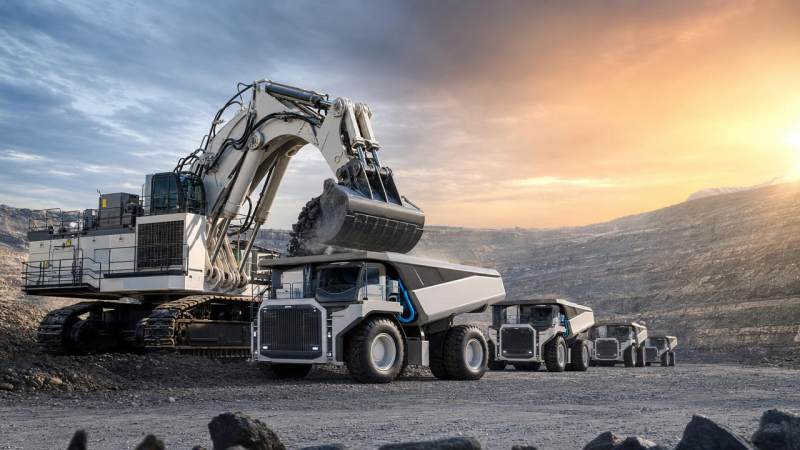
Mining equipment trends are reshaping how procurement teams evaluate fleet investment, lifecycle cost, and operational resilience. From electrified haul trucks to larger excavators, smarter telematics, and productivity-driven maintenance models, today’s buying decisions demand more than price comparison. This article explores the signals that matter most to purchasers seeking lower TCO, stronger site performance, and better alignment with long-term mining strategy.
For mining procurement teams, the buying window is no longer defined only by annual budget cycles or replacement age. Fleet decisions now sit at the intersection of fuel exposure, power availability, operator productivity, emissions goals, component lead times, and digital integration. In open-pit mining especially, a poor match between truck class, excavator loading profile, and haul road conditions can lock in avoidable cost for 5 to 10 years.
That is why mining equipment trends matter beyond industry headlines. They directly affect capex timing, spare parts strategy, maintenance contracts, and even tender language. For buyers comparing ultra-large excavators, mining dump trucks, and connected fleet systems, the question is not simply which machine is bigger or newer. The real question is which configuration delivers measurable value per ton moved, per hour worked, and per maintenance interval.
Why mining equipment trends are changing procurement logic
The first major shift is that buyers are moving from unit-price thinking to lifecycle economics. In many mining operations, fuel, tires, wear parts, and unplanned downtime can outweigh the original purchase price within the first 24 to 36 months. This means procurement teams increasingly assess cost per operating hour, payload consistency, and parts availability before signing a supply agreement.
The second shift is risk concentration. Larger machines can reduce labor intensity and raise output, but they also increase dependence on a smaller number of critical assets. If one 220-ton truck or one high-capacity excavator is offline for 48 hours, the production loss may be greater than the savings created by fleet consolidation. Procurement therefore has to evaluate redundancy, service response time, and maintenance planning with much more discipline.
From capex comparison to TCO discipline
A modern fleet review typically includes at least 4 financial lenses: initial purchase price, operating cost, residual value, and downtime risk. Buyers also add 3 practical variables that were often underweighted in the past: software support, technician training, and supply chain resilience. This broader framework helps procurement avoid low-price offers that create expensive service gaps later.
- Fuel or energy consumption per hour and per ton moved
- Planned maintenance interval, such as 250, 500, or 1,000 operating hours
- Lead time for high-wear components such as GET, tires, pumps, and hydraulic hoses
- Expected utilization rate across wet season, peak season, and reduced-demand periods
The rise of integrated fleet decisions
Another notable change in mining equipment trends is the move toward system buying rather than standalone machine buying. A truck is now evaluated with shovel pass match, loading time, gradient performance, braking strategy, and telematics compatibility. Procurement teams increasingly ask whether 3 to 5 truck models can operate on one digital monitoring architecture and one maintenance planning workflow.
This system view is especially important for organizations tracking long-term mine plans. If a site expects haul distances to expand by 15% over the next 3 years, or deeper pit phases to increase cycle time by 8 to 12 minutes, today’s equipment choice should reflect that operational future, not just current tonnage demand.
What procurement teams now ask suppliers
- What is the expected payload performance under real road conditions rather than rated conditions?
- Which parts carry the highest downtime risk, and what is the normal replenishment cycle?
- Can the machine share data with the site’s existing maintenance or dispatch platform?
- How many technician visits are typically required in the first 12 months?
- What support model applies in remote, high-altitude, or high-temperature environments?
Key equipment categories shaping fleet buying plans
Not all mining equipment trends carry the same purchasing impact. For open-pit operations, procurement teams are paying particular attention to ultra-large excavators, mining dump trucks, electrification pathways, and digital fleet visibility. These categories influence output, labor efficiency, maintenance complexity, and the long-term flexibility of the mine plan.
Ultra-large excavators and loading efficiency
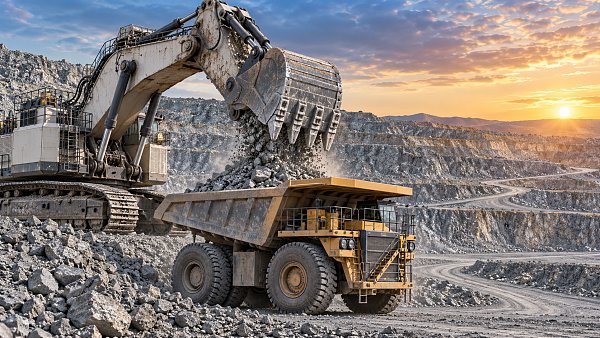
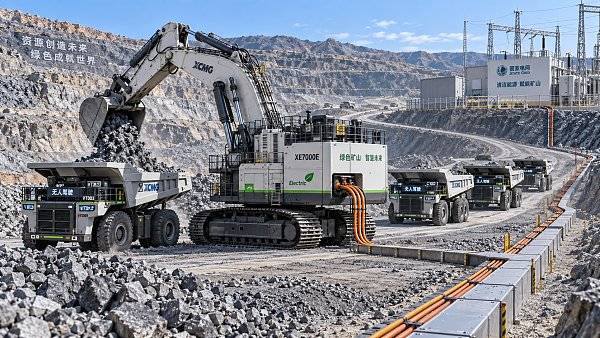
Larger excavators are often justified by fewer passes per truck, lower idle time, and improved bench productivity. Yet size alone does not guarantee value. Buyers need to check bucket-fill performance, cycle time under material variation, swing efficiency, and hydraulic stability in continuous-duty use. A machine that looks strong on paper may underperform if face conditions change frequently or if operator skill levels are uneven across shifts.
In practical terms, procurement teams often compare whether a loading unit can keep truck spotting time within a 2 to 4 minute band and maintain stable productivity over 10 to 12 hour shifts. If the excavator-truck match is poor, the result can be overloading, underloading, or queue formation at the loading point.
Mining dump trucks and the electrification question
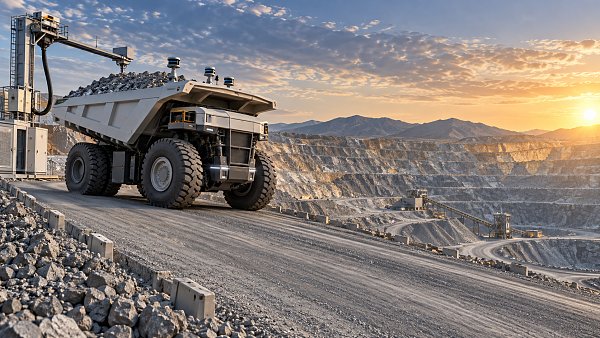
Electrified or hybrid haulage is one of the most watched mining equipment trends, but procurement decisions depend heavily on site conditions. Battery-electric truck deployment is more realistic where duty cycles are predictable, charging strategy is defined, and temperature swings are manageable. On remote or extreme sites, diesel or diesel-electric fleets may remain the practical choice in the near term.
Buyers should evaluate 5 variables together: route gradient, cycle length, charging or power infrastructure, maintenance skills, and energy price volatility. Without that full picture, an electrification plan can shift cost from fuel tanks to grid upgrades, charger downtime, or battery thermal management.
The table below outlines how procurement teams can compare major fleet options using operational rather than marketing criteria.
The main takeaway is that mining equipment trends should be evaluated as operational trade-offs. Bigger or cleaner technology can improve outcomes, but only when the site’s haul profile, maintenance capacity, and power context are clearly understood.
Telematics, remote diagnostics, and data-backed purchasing
Connected equipment is no longer optional for many fleet buyers. Telematics can reveal idle time, harsh braking, payload variance, fuel burn, and maintenance event patterns. For procurement, this means future tenders can be based on actual site behavior instead of estimates. A fleet with 85% planned availability and one with 78% availability may appear similar in brochures, but the production gap becomes substantial over 12 months.
Remote diagnostics also matter for remote mines where technician travel may take 24 to 72 hours. If software alerts can identify overheating, pressure drift, or abnormal vibration early, procurement may justify a higher acquisition cost in exchange for lower disruption risk.
A practical procurement framework for fleet renewal
Procurement teams need a repeatable way to convert mining equipment trends into bid criteria and approval logic. A useful framework combines technical fit, commercial terms, service readiness, and strategic flexibility. In most organizations, this process works best when operations, maintenance, finance, and HSE all validate the same shortlist before final negotiation.
Step 1: Define the operating envelope
Start with 6 baseline inputs: annual tonnage target, average haul distance, road gradient, climate range, shift pattern, and material density. These inputs determine whether a buyer should prioritize payload, cooling capacity, tire management, or drivetrain efficiency. A site operating at high altitude with temperatures from -10°C to 35°C requires a different equipment strategy than a low-altitude site with stable ambient conditions.
Step 2: Screen suppliers by service depth, not brochure depth
Procurement should ask for a realistic support map covering commissioning, operator training, critical spares, remote diagnostics, and field response time. A machine with a 16-week delivery promise may still be a weak option if wear-part replenishment takes 6 to 8 weeks during peak demand. The same applies to software support if the mine depends on integrated dispatch and maintenance systems.
Step 3: Use weighted decision criteria
Many buyers improve decision quality by using a weighted matrix rather than an informal review. A common structure is 30% technical suitability, 25% lifecycle cost, 20% service capability, 15% digital compatibility, and 10% delivery and contractual terms. The exact weighting can change, but the discipline reduces bias toward headline price.
The table below shows a practical procurement scorecard that can be adapted for mining dump trucks, excavators, or mixed fleet packages.
This kind of scorecard helps turn mining equipment trends into procurement controls. It also creates a documented trail for internal approval, especially when buyers must justify why a higher-priced option offers lower long-run risk.
Step 4: Build implementation into the purchase decision
A fleet purchase is incomplete without an implementation plan. Buyers should map at least 4 deployment stages: pre-delivery review, commissioning, operator ramp-up, and first-interval maintenance. If electrified units are involved, add charger availability checks, power quality review, and emergency fallback procedures before the equipment arrives on site.
Common procurement mistakes to avoid
- Buying maximum capacity when the site cannot consistently utilize it
- Ignoring haul road quality and then blaming trucks for tire cost escalation
- Assuming telematics value without assigning internal staff to use the data weekly
- Overlooking assembly, transport, and commissioning constraints for ultra-large machines
- Separating machine procurement from parts planning and technician training
How strategic intelligence improves equipment buying decisions
For procurement professionals, the challenge is not a lack of supplier claims. It is a lack of structured interpretation. That is where industry intelligence becomes valuable. Buyers need visibility into tender trends, raw material pressure, fleet electrification pathways, and the commercial implications of technology shifts across mining, tunneling, and heavy lifting ecosystems.
TF-Strategy’s value in this environment lies in connecting machine parameters with project realities. For example, a purchaser evaluating open-pit equipment may need to understand not only excavator and haul truck trends, but also how steel supply, hydraulic component availability, and remote-control adoption affect delivery timing and lifecycle support. These factors can alter procurement timing by 8 to 20 weeks depending on market conditions.
Where intelligence supports purchasing most
High-quality market intelligence helps teams make decisions in 3 critical areas: timing, specification, and negotiation. Timing support identifies whether to buy immediately or wait for a more favorable supply window. Specification support sharpens the shortlist based on operating reality. Negotiation support helps buyers define service clauses, spare package thresholds, and performance review checkpoints.
For fleets exposed to energy transition pressure, the ability to compare diesel, hybrid, and electric pathways with realistic site assumptions is increasingly important. The strongest buying plans are not built around trend chasing. They are built around phased adoption, measurable operating targets, and contractual support that matches the mine’s risk profile.
Questions buyers should answer before issuing the next RFQ
- What production bottleneck are we solving: loading, hauling, maintenance, or energy cost?
- Which mining equipment trends are relevant to our site in the next 2 years, not just the next 2 months?
- Do we need a machine, a fleet package, or a broader operating support model?
- What downtime event would hurt us most, and how should that change our supplier criteria?
- How will we measure success after 90 days, 180 days, and 12 months?
Mining equipment trends are clearly reshaping fleet buying plans, but better outcomes come from disciplined translation of those trends into procurement action. Buyers who focus on TCO, site fit, digital visibility, support readiness, and future mine conditions are better positioned to protect capital and improve operating resilience.
For organizations planning fleet renewal, expansion, or technology transition, informed comparison is now a competitive advantage. To explore deeper equipment intelligence across open-pit mining, TBM systems, and heavy engineering machinery, contact TF-Strategy for tailored insights, equipment evaluation support, or a custom procurement research brief.
Related News
 Oct 09, 2026Ultra-Large Excavator Bucket Size: Capacity, Width, and Site Fit ExplainedUltra large excavator bucket size explained: compare capacity, width, payload, truck matching, and site conditions to select a reliable, high-productivity bucket.
 Oct 08, 2026How to Evaluate a Heavy Machinery Information Platform for Project Equipment SourcingHeavy machinery information platform guide: compare equipment fit, source reliability, lifecycle costs, supplier capability, and compliance to make smarter sourcing decisions.
 Oct 07, 2026How to Evaluate a Hydraulic System Component Supplier for Heavy Equipment UptimeChoose a hydraulic system component supplier with proven quality, technical fit, and reliable delivery to reduce heavy equipment downtime and lifecycle costs.
 Oct 06, 2026Selecting Petrochemical Overhead Cranes for Hazardous Areas and Heavy Process LoadsPetrochemical overhead cranes for hazardous areas: learn how to match capacity, duty, controls, corrosion protection, and maintenance access for safer, reliable lifts.
Prof. Marcus Chen
Weekly Insights
Stay ahead with our curated technology reports delivered every Monday.