
Evolutionary Trends
How do construction safety regulations for tunneling differ between Asia and Europe in 2026?
How does construction safety regulation differ between Asia and Europe for tunneling? Discover the 2026 operational, philosophical & enforcement gaps shaping real-world TBM deployment, risk ownership, and cross-border project success.
How does construction safety regulation differ between Asia and Europe for tunneling?
It’s not a matter of “stricter” versus “looser.” In 2026, the real difference lies in *how risk is assigned, verified, and enforced*—and that shapes everything from TBM selection to shift handover protocols. Drawing on field intelligence from over 47 active tunnel projects across Southeast Asia, India, Turkey, Germany, Norway, and Spain, TF-Strategy’s Strategic Intelligence Center observes a consistent pattern: European frameworks treat safety as a *systemic boundary condition*, while many Asian jurisdictions treat it as a *project-phase enabler*. Neither is inherently superior—but misreading this distinction leads directly to compliance gaps, cost overruns, and, critically, preventable incidents.Philosophy first: Who owns the hazard?
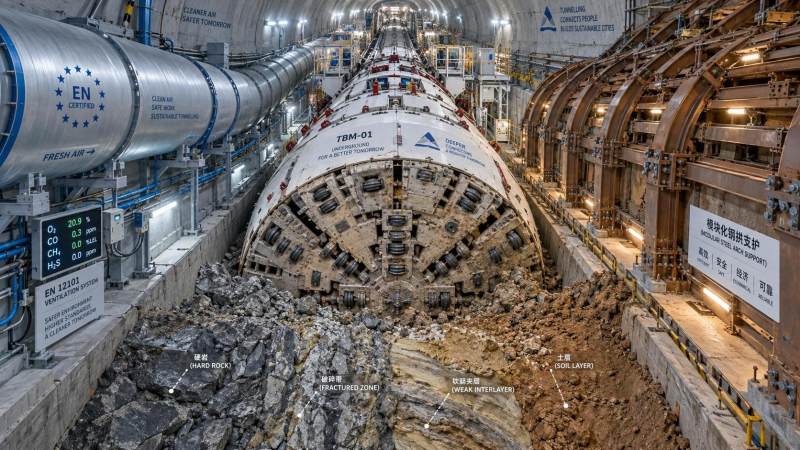
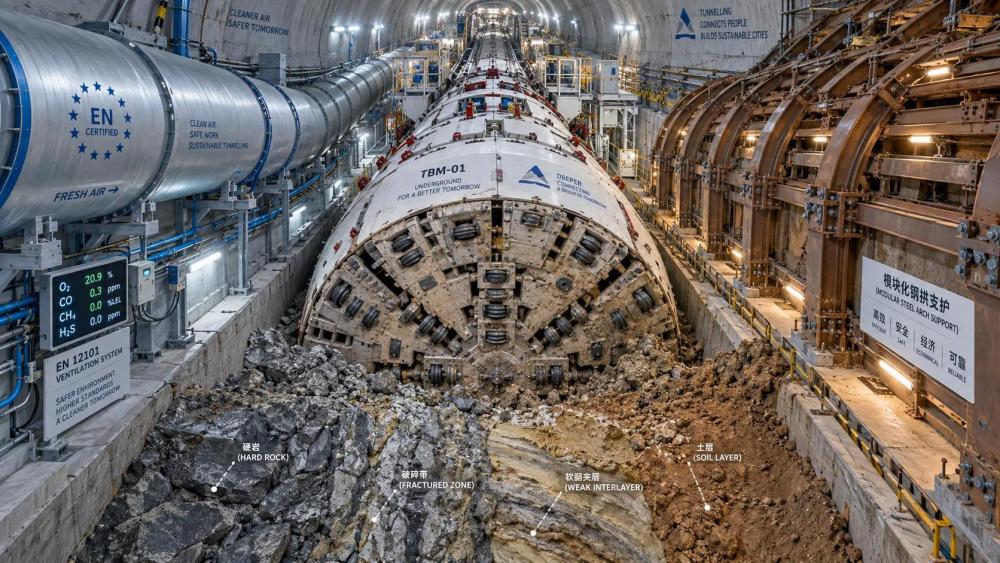
In Europe, under the EU Framework Directive 89/391/EEC and its national transpositions (e.g., Germany’s BetrSichV, UK’s CDM Regulations), the legal duty of care rests firmly with the employer—and extends upstream to designers, equipment suppliers, and even geotechnical consultants. A TBM manufacturer must demonstrate conformity with the Machinery Directive (2006/42/EC), including rigorous CE marking for critical subsystems like ventilation control, emergency egress, and cutterhead torque-limiting logic. This isn’t paperwork: Notified Bodies conduct on-site audits of assembly processes, and non-compliance can trigger immediate work stoppages—even mid-bore. Across much of Asia, responsibility remains more vertically concentrated within the contractor or client entity. National regulations (e.g., China’s GB 50330, India’s Model Building Bye-Laws Annex on Underground Works, or Indonesia’s Permenaker No. 5/2018) emphasize procedural compliance—permits issued, safety plans submitted, PPE distributed—rather than embedded system-level verification. Enforcement often follows incident-driven inspection cycles, not proactive design-stage validation. That doesn’t mean standards are low; it means *where* and *when* safety assurance is applied differs fundamentally.This divergence becomes tangible at the tunnel face. In Norway’s E16 Ringerike project, TBM advance rates were deliberately capped at 8 m/day during weak rock transitions—not due to machine limits, but because the EN 15380-compliant ground support protocol required full shotcrete curing time before subsequent ring erection. In contrast, on a comparable metro tunnel in Bangkok, the same geological conditions triggered accelerated grouting schedules and temporary steel arch reinforcement—approved via rapid client review, not harmonized product certification.
TBM-specific requirements: Beyond the cutterhead
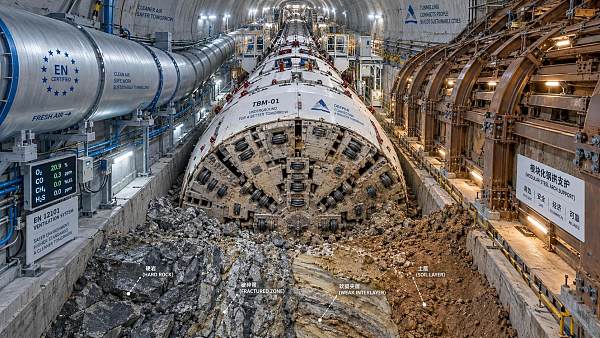
Tunnel boring machines are rarely regulated as monolithic units. The differences emerge in how subsystems are governed:- Ventilation & air quality: EN 14175-3 mandates continuous, real-time monitoring of CO, NO₂, CH₄, and dust (PM₁₀ and PM₂.₅) with automatic alarm-triggered fan ramp-up. In practice, this requires integrated sensor networks calibrated to ISO 17025 labs—common on German and Swiss projects. Across South Korea and Vietnam, local codes specify minimum airflow volumes (e.g., 120 m³/min per worker), but rarely require trace-gas detection or dynamic response logic. Contractors often deploy standalone monitors, with logs reviewed weekly—not streamed live to site control rooms.
- Emergency egress: EN 13501-2 classifies all tunnel linings, fire doors, and escape route materials by reaction-to-fire performance. Crucially, it mandates *continuous, unobstructed escape routes*—no temporary storage, no cable trays crossing walkways, no hydraulic hoses draped over ladders. In Japan’s Shinkansen tunnels, this is enforced via daily drone-based route scans. In several Indian infrastructure tenders, “escape route” is defined only as “a path to daylight,” with no stipulation on width, lighting autonomy, or obstruction thresholds—leaving interpretation to site supervisors.
- Digital safety integration: The EU’s push toward “Safety-by-Design” now includes mandatory cybersecurity assessments (per EN 50657) for TBMs with remote monitoring or PLC-based automation. This affects firmware updates, data encryption, and access control architecture. Most Asian procurement specifications still reference IEC 62443 only as “recommended”—not binding—making patch management and OT network segmentation largely voluntary.
Workforce protocols: Training vs. certification
Europe treats tunnel safety training as a *regulated profession*. In France, TBM operators must hold a CACES R482 certification renewed every 5 years—including simulator-based crisis drills (e.g., fire in the rear car, sudden water ingress). Supervisors undergo separate “Risques Spécifiques” modules covering geotechnical interpretation and rescue chain coordination. In Asia, formal certification is often limited to crane operators or welders. TBM crews typically receive client- or contractor-developed inductions—often delivered in local languages without third-party validation. While technically competent, these programs rarely assess *decision-making under ambiguity*: e.g., interpreting subtle vibration harmonics indicating cutter wear, or choosing between continuing advance or halting for probe drilling when ground radar shows anomalous reflectivity. This gap matters most during interface moments—like transitioning from soft ground to mixed-face conditions. In a 2025 Jakarta MRT extension bore, a minor face settlement was logged but not escalated; the crew interpreted it as “within tolerance” based on prior experience. In a parallel project in Lyon, identical readings triggered an immediate 4-hour halt for independent geotechnical review and revised support design—because the contract mandated escalation thresholds tied to EN 1997-1 partial factors.Geotechnical compliance: From prescription to prediction
European tunneling relies heavily on *limit state design* (LSD), where safety margins are quantified probabilistically using Eurocode 7 and national annexes. This forces explicit uncertainty modeling: What’s the 95% confidence interval on RQD? How does groundwater pressure variability affect face stability calculations? These aren’t academic exercises—they dictate whether a TBM needs foam injection, bentonite slurry, or EPB mode switching. Many Asian standards remain *prescriptive*: “For soil type X, use support type Y at spacing Z.” While practical, this approach struggles with complex urban interfaces—say, boring beneath a century-old masonry bridge in Hanoi, where historical records are incomplete and micro-tremor data is sparse. Without LSD rigor, contractors fall back on conservatism—over-designing segments, slowing progress, or (more riskily) extrapolating from adjacent projects with different stress histories. TF-Strategy’s Geological Boring Fellows note a growing convergence point: AI-assisted real-time ground characterization. Projects in Singapore and the Netherlands now feed TBM disc cutter load data, penetration rate, and spoil moisture into ML models that update predicted ground behavior hourly. But adoption hinges on regulatory acceptance—something EN standards are beginning to codify (via CEN/TS 17714), while most Asian codes lack frameworks for validating algorithmic inputs as “evidence.”What this means for cross-border teams
If you’re managing a consortium with German engineers, Korean equipment, and Indian labor—don’t default to the strictest standard. Instead:- Map each safety-critical activity (e.g., segment installation, grouting, emergency drill) to its *enforcement trigger*: Is it driven by a certified procedure, a real-time sensor threshold, or a supervisory judgment call?
- Identify “non-negotiable interfaces”: Where European design assumptions (e.g., maximum allowable face deformation) clash with Asian execution realities (e.g., local concrete curing times affecting ring build speed).
- Use TF-Strategy’s Commercial Insights module to benchmark TCO impacts—not just of compliance, but of *misaligned expectations*. For example, requiring EN-certified ventilation controls on a Southeast Asian project adds ~7% to TBM capex but reduces rework from air-quality-related stoppages by 40% in high-humidity conditions.
Next:No more content
Related News
 Sep 12, 2026Open-Pit Mining in North America: Key Project Risks and Planning PrioritiesOpen-pit mining North America: uncover key risks and planning priorities for geology, permitting, water, fleet strategy, and resilient project delivery.
 Sep 11, 2026TBM Systems in Southeast Asia: Key Selection Factors for Variable Ground ConditionsTBM systems Southeast Asia: discover key selection factors for variable ground, pressure control, monsoon resilience, and safer tunnel delivery.
 Sep 10, 2026How to Select Bridge Lifting Machinery for Span, Load, and Site ConstraintsLifting machinery for bridges: learn how to match capacity, span, radius, ground conditions, and access constraints for safer, cost-effective bridge erection.
 Sep 13, 2026How do construction safety regulations for tunneling differ between Asia and Europe in 2026?How does construction safety regulation differ between Asia and Europe for tunneling? Discover the 2026 operational, philosophical & enforcement gaps shaping real-world TBM deployment, risk ownership, and cross-border project success.

Prof. Marcus Chen
Weekly Insights
Stay ahead with our curated technology reports delivered every Monday.