
How global project tenders are changing in 2026
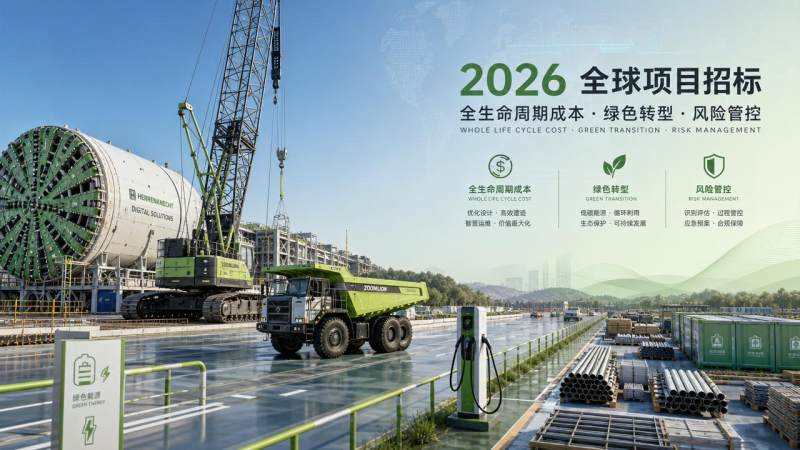
In 2026, global project tenders are becoming more data-driven, sustainability-focused, and risk-sensitive, reshaping how business evaluators assess infrastructure opportunities. From TBM deployments and open-pit mining expansions to mega lifting and smart road construction, tender decisions now depend on lifecycle cost, equipment adaptability, supply chain resilience, and compliance with green transition goals. For contractors, investors, and procurement teams, understanding these shifts is essential to identifying bankable projects, reducing execution risk, and aligning heavy machinery strategies with the next wave of global infrastructure demand.
For business evaluators, the tender document is no longer only a price invitation. It has become a multi-layer decision file linking geology, energy policy, financing conditions, equipment availability, and delivery risk.
This change is especially visible in heavy infrastructure, where a single TBM, ultra-large excavator, crawler crane, paver fleet, or mining dump truck can shape project cost for 5–15 years.
Why global project tenders are becoming more evidence-based
The first major shift in global project tenders is the movement from document compliance to evidence-based evaluation. Procurement teams increasingly ask bidders to prove assumptions with measurable operating data.
In a metro tunnel, for example, evaluators may compare cutterhead wear intervals, advance rates, ground conditioning strategy, and backup logistics across 3–5 geological zones before approving a TBM proposal.
From lowest price to lifecycle value
A lower acquisition price can be misleading when fuel, spare parts, downtime, and specialized operators are included. Many tenders now request total cost of ownership models covering 60–180 months.
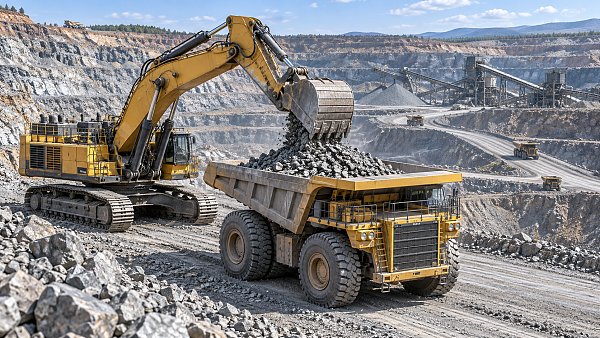
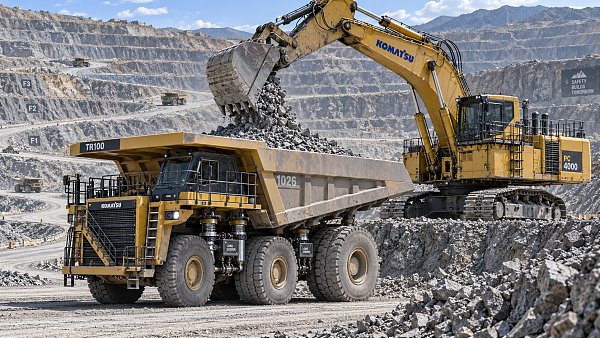
For open-pit mining expansions, evaluators may examine fuel burn per operating hour, payload utilization, tire life, maintenance windows, and workshop capacity before accepting a haulage fleet bid.
Key evidence business evaluators now request
- Historical uptime ranges, usually presented over 12–36 months of comparable project operation.
- Spare parts lead times, including critical components with 7-day, 30-day, and 90-day availability classes.
- Energy consumption benchmarks for diesel, hybrid, or battery-electric heavy equipment.
- Operator training requirements, including simulator hours, certification stages, and shift handover procedures.
The practical result is clear: bidders in global project tenders must connect technical specifications with financial outcomes. Machines are evaluated as production systems, not isolated assets.
Sustainability is moving into the tender scoring matrix
In 2026, sustainability is no longer a separate appendix. It is often embedded in scoring formulas, eligibility gates, financing requirements, and environmental permit conditions.
For business evaluators, this means green criteria must be translated into commercial terms: fuel exposure, carbon reporting workload, grid access, battery logistics, and disposal responsibility.
The table below outlines how sustainability-related criteria are changing the evaluation of global project tenders across major heavy industry applications.
The key conclusion is that sustainability affects tender bankability. Projects with clearer energy pathways, measurable emissions controls, and documented safety processes are easier to finance and execute.
Green transition does not mean one equipment answer
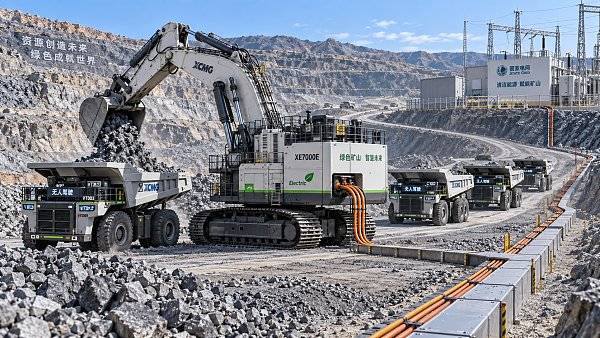
Battery-electric mining trucks may be compelling where haul distances, charging windows, and grid stability are favorable. In remote sites, hybrid or optimized diesel systems may remain practical.
Business evaluators should therefore avoid treating sustainability as a slogan. A credible bid should include 2–3 energy scenarios and explain operational trade-offs in measurable terms.
Risk allocation is becoming more granular
Another defining change in global project tenders is more detailed risk allocation. Owners want fewer unresolved assumptions before contract award, particularly for billion-dollar infrastructure programs.
Risk now moves beyond insurance clauses. It includes geological uncertainty, customs delays, raw material volatility, cyber exposure, operator scarcity, and extreme weather disruption.
Geological and operating uncertainty
For tunnel projects, tenders increasingly require bidders to map machine configuration against rock strength, water inflow, abrasive zones, and settlement limits within defined chainage segments.
For mining, evaluators examine ramp gradients, altitude, temperature range, and payload cycle time. A truck performing well at sea level may require derating above 3,000 meters.
Supply chain resilience as a scoring factor
After several years of logistics disruption, global project tenders increasingly ask bidders to identify critical-path components and backup sourcing plans before mobilization.
For crawler cranes, this may include boom sections, hydraulic cylinders, control modules, wire rope, transport permits, and port handling capacity across a 4–12 week delivery window.
Practical risk questions before bid submission
- Which 10 components could stop production for more than 48 hours?
- Which permits, route surveys, or customs steps require more than 30 days?
- Which operating assumptions change if fuel or electricity prices move by 15%?
- Which subcontractor responsibilities must be verified before financial close?
These questions help evaluators distinguish a persuasive tender from an executable tender. The winning proposal is often the one that exposes risk early and prices it rationally.
How business evaluators should compare heavy equipment strategies
Global project tenders in 2026 reward integrated equipment strategies. Evaluators need a repeatable framework that links machine choice, construction method, financing, and delivery assurance.
At TF-Strategy, this approach is often described as intelligence stitching: connecting physical parameters with site methodology and strategic infrastructure demand.
The following comparison framework can help procurement and investment teams assess bidders without relying on price alone.
This framework supports a more balanced tender review. It also reduces internal disagreement between engineering, procurement, finance, and risk teams during final bidder clarification.
Scoring should reflect project criticality
Not every tender needs the same scoring weight. A nuclear lifting package may assign 40% or more to safety engineering, while a road fleet may prioritize quality traceability.
For a mining haulage package, a balanced matrix may include 25% lifecycle cost, 25% productivity, 20% supply assurance, 15% energy transition readiness, and 15% service capability.
Digital intelligence is changing tender timing and visibility
Business evaluators are under pressure to identify opportunities earlier. Waiting until a tender is formally released can leave only 2–6 weeks for technical and commercial preparation.
The more competitive approach is to monitor pre-tender signals: feasibility studies, environmental approvals, financing announcements, raw material supply needs, and early contractor involvement notices.
Why early intelligence matters
In global project tenders, early intelligence allows bidders to align manufacturing slots, evaluate partners, reserve specialized equipment, and prepare localized compliance documentation.
For TBM projects, a 6-month early signal may allow contractors to review cutterhead material choices, segment logistics, slurry plant design, and underground backup systems.
For wind power or petrochemical lifting, early visibility can determine whether a suitable crawler crane is available within a 30–90 day installation window.
A 5-step intelligence workflow
- Track project signals across planning, funding, permitting, and procurement stages.
- Classify opportunities by sector, location, equipment intensity, and estimated mobilization timeline.
- Map technical demand against available TBM, mining, lifting, road, or haulage resources.
- Assess financial, geopolitical, logistics, and compliance risks before bid commitment.
- Prepare a go, no-go, or partner-led response within 7–15 working days.
This workflow helps teams avoid late-stage bidding fatigue. It also improves bid discipline by filtering projects that lack technical fit or acceptable risk-adjusted returns.
Common mistakes when evaluating global project tenders
As tender documents become more complex, evaluators often face information overload. The most expensive mistakes usually happen before price negotiation begins.
A disciplined review should identify hidden obligations, unrealistic schedule assumptions, and mismatches between equipment capability and local execution conditions.
Mistake 1: Treating technical compliance as technical suitability
A machine may satisfy minimum specifications yet still perform poorly on the actual site. Compliance is a threshold; suitability requires context, simulation, and operational comparison.
Mistake 2: Underestimating service infrastructure
A remote mining fleet may need field service trucks, component exchange plans, trained technicians, and parts storage for 12-hour or 24-hour production cycles.
Mistake 3: Ignoring data obligations
Many tenders now require digital reporting on productivity, emissions, safety events, and maintenance. Failure to plan data capture can create disputes during acceptance.
Mistake 4: Separating procurement from method engineering
Procurement teams should not select heavy machinery without method input. Lift plans, excavation sequences, haul road geometry, and paving tolerances directly affect equipment value.
What winning bidders will do differently in 2026
Winning bidders will combine technical depth with commercial clarity. They will show how equipment choices reduce risk, protect schedule, and support the owner’s strategic objectives.
In practical terms, a strong response to global project tenders should include a clear operating model, a realistic delivery schedule, and a quantified maintenance strategy.
Recommended bid package elements
- A site-specific equipment selection note covering at least 4 major operating assumptions.
- A lifecycle cost model with sensitivity cases for fuel, electricity, utilization, and parts lead time.
- A risk register separating owner, contractor, supplier, logistics, and regulatory responsibilities.
- A digital reporting plan covering daily, weekly, and monthly performance indicators.
- A sustainability statement tied to measurable actions, not generic environmental language.
These elements make the tender easier to evaluate. They also give decision committees stronger evidence when comparing similar prices or negotiating contract conditions.
Where TF-Strategy supports decision quality
TF-Strategy focuses on the intelligence layer behind heavy infrastructure decisions. Its coverage spans TBM systems, ultra-large excavators, crawler cranes, road machinery, and mining dump trucks.
For business evaluators, the value lies in connecting project signals, equipment parameters, construction methodology, and market movement before a formal tender deadline compresses decisions.
Through sector news, tender tracking, evolutionary trend analysis, and commercial insight, TF-Strategy helps teams build sharper assumptions and reduce avoidable exposure in complex bids.
Conclusion: tender evaluation is becoming strategic infrastructure intelligence
The direction is unmistakable: global project tenders are becoming more analytical, more sustainability-linked, and more sensitive to execution risk.
Business evaluators who rely only on headline price will miss critical signals in lifecycle cost, equipment adaptability, supply chain resilience, and digital compliance.
The stronger approach is to evaluate tenders as living infrastructure systems, where every TBM, excavator, crane, paver, and dump truck affects long-term project value.
If your team needs sharper visibility into global project tenders, heavy equipment demand, or project-specific risk factors, connect with TF-Strategy to explore tailored intelligence support and practical decision guidance.
Related News
 Oct 12, 2026How to Assess a High-Altitude Mining Equipment Manufacturer for Remote ProjectsHigh altitude mining manufacturer assessment guide: compare derating, cold-climate reliability, remote service, parts resilience, and lifecycle risk for smarter project decisions.
 Oct 11, 2026What Drives TBM Cutter Head Material Cost and Life-Cycle Value?Cutter head material cost explained: compare TBM alloys, wear protection, downtime risk, and life-cycle value to choose the most reliable, cost-effective solution.
 Oct 12, 2026How to Read Mining Equipment Performance Reviews Beyond Headline MetricsMining equipment performance reviews explained: learn to assess productivity, availability, maintenance risk, site conditions, and total ownership cost for smarter fleet decisions.
 Oct 11, 2026Payload Management Systems: Preventing Overloads Without Slowing ProductionPayload management helps prevent overloads, protect equipment, and keep production moving. Learn how accurate targets, pass planning, alerts, and calibration improve every load.



Prof. Marcus Chen
Weekly Insights
Stay ahead with our curated technology reports delivered every Monday.