
Is Open-Pit Mining Still Profitable in 2026?
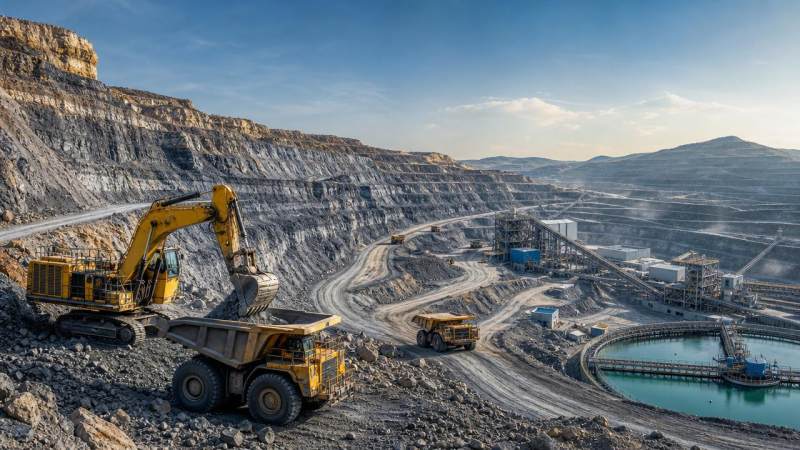
In 2026, open-pit mining profitability is no longer judged by output alone. For financial approvers, the real question is whether rising fuel costs, stricter ESG demands, automation investments, and fleet utilization can still deliver a defensible return on capital.
As equipment cycles grow more data-driven and ore grades become harder to access, decision-makers need a clearer view of total cost, productivity risk, and long-term asset value before approving the next major mining investment.
Is Open-Pit Mining Still Profitable in 2026?
Yes, open-pit mining can still be profitable in 2026, but the profit model has changed significantly.
The strongest projects are not simply the largest pits. They are operations with disciplined stripping ratios, reliable haulage, strong ore control, and predictable permitting.
Open-pit mining remains attractive because it can move large volumes at comparatively low unit cost when geology and logistics support scale.
However, margins now depend on more variables than commodity price alone. Diesel exposure, tire supply, labor availability, and water access all affect returns.
A profitable open-pit mining project in 2026 usually has three strengths: accessible ore, controlled haul distance, and equipment matched to production rhythm.
When these factors weaken, even high commodity prices may not protect free cash flow.
What Changed in the Economics of Open-Pit Mining?
The cost structure of open-pit mining has become more sensitive to energy, compliance, and fleet availability.
In earlier cycles, higher output often solved operational pressure. In 2026, higher output can also expose bottlenecks faster.
Longer haul roads increase fuel burn, tire wear, road maintenance, and cycle time. These factors can quietly erode headline productivity.
Open-pit mining also faces more demanding environmental expectations. Dust suppression, slope monitoring, water recycling, and rehabilitation plans now affect capital approval.
Automation adds another layer. It can reduce variability, but it requires connectivity, data discipline, maintenance capability, and trained operational support.
The result is a wider gap between average and high-performing sites.
- Low-performing sites lose value through idle equipment and weak dispatch control.
- Mid-performing sites protect margin through maintenance and fuel discipline.
- High-performing sites integrate planning, automation, and real-time production governance.
This is why open-pit mining profitability now requires operational intelligence, not only geological confidence.
Which Cost Drivers Decide Whether Open-Pit Mining Makes Money?
The first driver is the stripping ratio. More waste movement means more truck hours before saleable ore reaches the plant.
A favorable stripping ratio supports open-pit mining economics because loaders, excavators, and dump trucks spend more time moving value-bearing material.
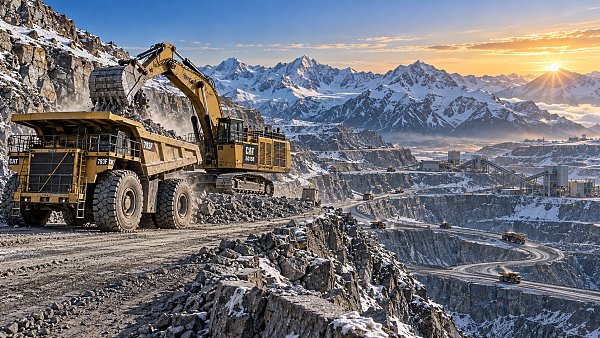
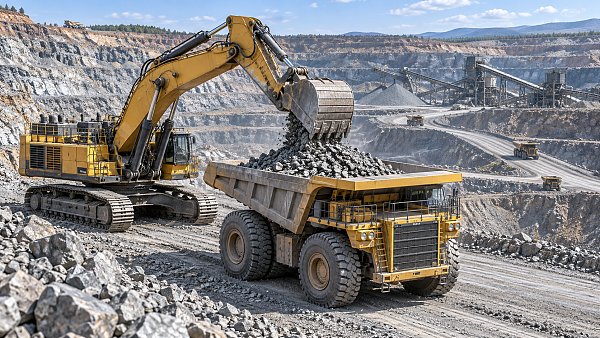
The second driver is haulage efficiency. Haul trucks often represent the largest mobile equipment cost in open-pit mining.
Small changes in payload compliance, queuing, road gradient, and empty return time can shift annual cost materially.
The third driver is equipment availability. A large excavator may look productive on paper, but unscheduled downtime can disrupt the whole pit sequence.
The fourth driver is processing alignment. Mining faster than the plant can treat ore ties up capital and may increase rehandling.
The fifth driver is closure liability. In 2026, profitable open-pit mining must include rehabilitation funding from the beginning.
Does Automation Improve Open-Pit Mining Profitability?
Automation can improve open-pit mining profitability, but only when the operating system is ready for it.
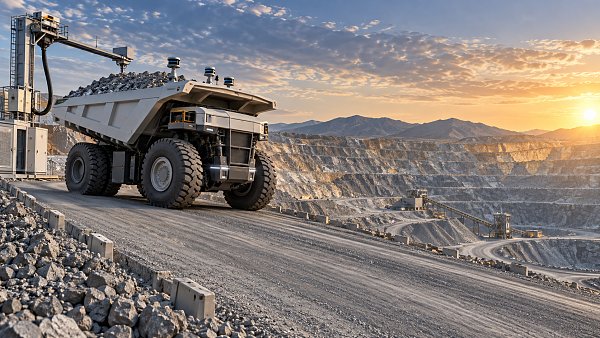
Autonomous haulage, remote drilling, fleet dispatch, and predictive maintenance can reduce variability across long production shifts.
The commercial benefit usually comes from safer operations, steadier truck speeds, fewer idle minutes, and better maintenance planning.
Still, automation is not a shortcut for weak mine planning. Poor road design and unclear dispatch rules will limit digital gains.
Open-pit mining automation requires reliable communication networks, clean data, trained technicians, and a strong change management process.
A phased rollout is often safer than a full-site conversion. Start with monitoring, then dispatch optimization, then autonomous functions.
Where automation creates the clearest value
- High-volume haulage routes with repeatable traffic patterns.
- Drilling programs requiring precise burden and spacing control.
- Maintenance programs with enough sensor history for prediction.
- Remote operations where safety exposure is a major constraint.
In these conditions, open-pit mining can convert digital investment into lower unit cost and higher asset utilization.
How Do ESG Rules Affect Open-Pit Mining Returns?
ESG rules no longer sit outside the financial model. They influence permits, financing costs, insurance, community acceptance, and closure obligations.
For open-pit mining, the main ESG pressure points are land disturbance, water consumption, dust emissions, diesel exhaust, and tailings risk.
These issues do not automatically make open-pit mining unprofitable. They require earlier planning and more transparent measurement.
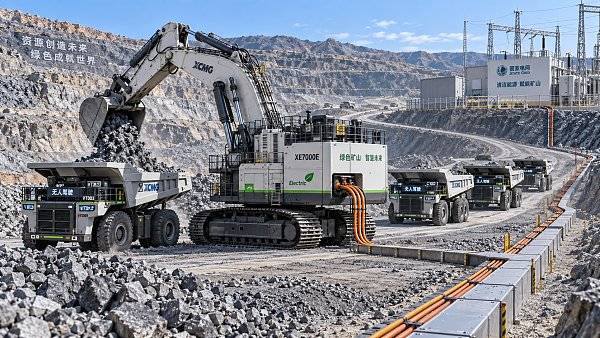
Electrified support equipment, trolley-assist haulage, renewable power contracts, and water recycling can reduce exposure to volatile operating costs.
However, green upgrades must be evaluated against mine life. Short-life assets may not recover large infrastructure investments.
Long-life open-pit mining projects often have more room to justify electrification, automation, and progressive rehabilitation systems.
When Is Open-Pit Mining Better Than Underground Mining?
Open-pit mining is usually stronger when ore sits near the surface and can be extracted at large scale.
It often offers simpler access, higher production rates, and easier equipment deployment than underground mining.
Underground mining may become preferable when ore is deep, land disturbance is constrained, or stripping ratios become uneconomic.
The decision is not only technical. It also depends on permitting timelines, commodity strategy, capital availability, and social license.
Some assets begin with open-pit mining and later transition underground. This approach can generate early cash flow before deeper extraction.
The transition must be planned carefully. Pit slope stability, portal placement, and shared infrastructure affect both phases.
Key comparison points
- Open-pit mining favors volume, visibility, and lower access complexity.
- Underground mining favors deeper ore and smaller surface footprints.
- Hybrid strategies require strong long-term sequencing discipline.
What Are the Biggest Profitability Mistakes in 2026?
The first mistake is approving open-pit mining based on average commodity price assumptions without testing downside scenarios.
A strong project should survive lower grades, higher fuel prices, delayed permits, and temporary equipment shortages.
The second mistake is underestimating haulage escalation. As pits deepen and widen, haul distance can become the hidden margin killer.
The third mistake is buying oversized equipment without matching maintenance capacity, workshop layout, and operator competence.
The fourth mistake is treating ESG as reporting language rather than a hard operating constraint.
The fifth mistake is ignoring data quality. Open-pit mining decisions depend on reliable production, maintenance, and geology data.
How Should a New Open-Pit Mining Investment Be Judged?
A 2026 investment case should begin with a full life-of-mine economic model, not a single production target.
The model should connect geology, fleet sizing, road design, processing capacity, energy price, ESG cost, and closure obligations.
Sensitivity testing is essential. Open-pit mining profitability should be tested under conservative price, cost, and recovery assumptions.
Equipment selection should follow the mine plan. Excavators, loaders, dozers, drills, and haul trucks must support the same production logic.
Fleet utilization deserves special attention. Idle capital is expensive, especially when financing costs remain elevated.
A practical review should include these steps:
- Confirm orebody geometry and realistic mining phases.
- Stress-test stripping ratio and haul distance.
- Match equipment size to maintenance capacity.
- Estimate energy exposure and decarbonization options.
- Build ESG, water, and closure costs into capital planning.
- Define data systems before automation spending begins.
This approach helps open-pit mining projects avoid optimistic assumptions and identify the true breakeven structure.
Conclusion: Profit Is Still Possible, but Precision Matters
Open-pit mining remains profitable in 2026 when scale, geology, equipment, and operating discipline work together.
The best projects will not rely on volume alone. They will rely on controlled cost, reliable data, and resilient planning.
For complex heavy-industry decisions, TF-Strategy tracks the machinery, methods, and strategic signals shaping modern open-pit mining worldwide.
The next practical step is to review mine plans against haulage risk, automation readiness, ESG exposure, and total cost of ownership.
When those factors are measured honestly, open-pit mining can still deliver strong returns in a more demanding global infrastructure era.
Related News
 Oct 12, 2026How to Assess a High-Altitude Mining Equipment Manufacturer for Remote ProjectsHigh altitude mining manufacturer assessment guide: compare derating, cold-climate reliability, remote service, parts resilience, and lifecycle risk for smarter project decisions.
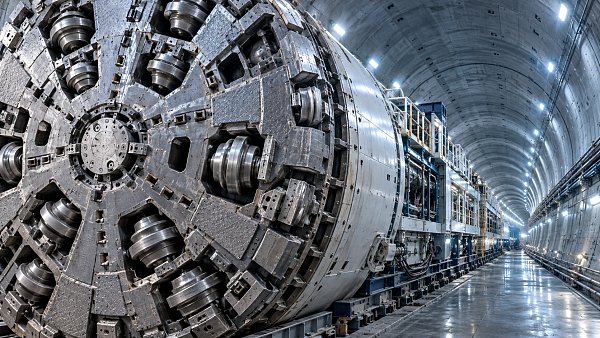
 Oct 11, 2026What Drives TBM Cutter Head Material Cost and Life-Cycle Value?Cutter head material cost explained: compare TBM alloys, wear protection, downtime risk, and life-cycle value to choose the most reliable, cost-effective solution.
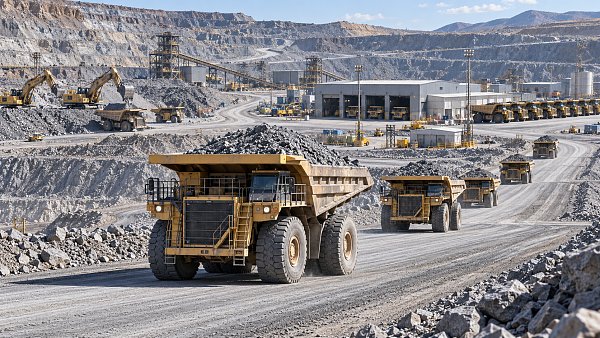
 Oct 13, 2026Mining Haulage Services Procurement Checklist for Uptime and Cost ControlMining haulage services procurement checklist for stronger uptime, safer fleet selection, transparent pricing, and better cost control across changing mine conditions.
 Oct 12, 2026How to Read Mining Equipment Performance Reviews Beyond Headline MetricsMining equipment performance reviews explained: learn to assess productivity, availability, maintenance risk, site conditions, and total ownership cost for smarter fleet decisions.
Prof. Marcus Chen
Weekly Insights
Stay ahead with our curated technology reports delivered every Monday.