
What construction machinery innovations are worth watching now?
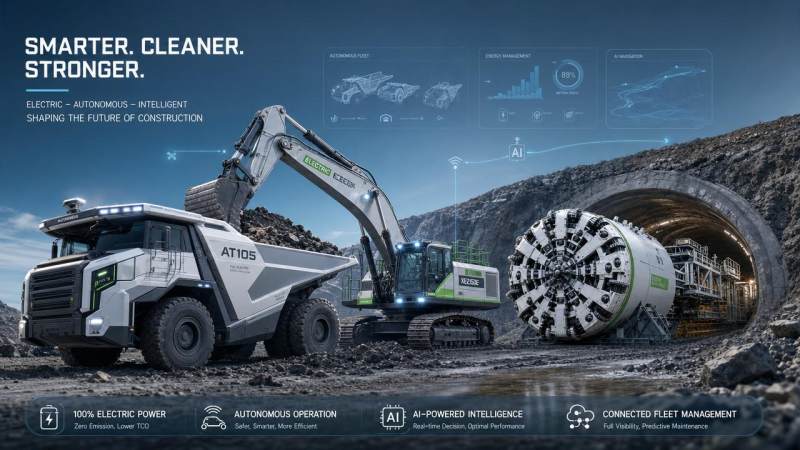
From autonomous haulage to electrified fleets and AI-guided tunneling, construction machinery innovations are changing how infrastructure is designed, executed, and sustained. The real advantage is not novelty alone. It is better uptime, safer crews, lower fuel exposure, stronger data visibility, and greater resilience when schedules, geology, weather, and energy prices become unpredictable.
Across tunneling, mining, heavy lifting, and road building, innovation now links machine hardware with software, power systems, and service models. That matters because major projects no longer evaluate equipment only by rated capacity. They compare total cost of ownership, carbon performance, remote operability, maintainability, and fit with digital construction workflows.
Why a checklist approach matters for construction machinery innovations
Not every new feature deserves immediate adoption. Some construction machinery innovations produce measurable value in difficult operating environments. Others remain impressive demonstrations without strong project economics. A checklist helps separate strategic advances from expensive distractions.
This approach is especially useful in heavy industry, where one equipment decision affects production continuity, logistics planning, operator training, maintenance inventories, safety systems, and financing assumptions for years.
Core checklist: construction machinery innovations worth watching now
- Prioritize autonomous and semi-autonomous operation where repetitive routes, hazardous zones, and round-the-clock duty cycles can turn consistency into immediate safety and productivity gains.
- Evaluate electrification by duty profile, charging strategy, grid access, and payload impact rather than assuming every machine class will decarbonize at the same pace.
- Track AI-assisted guidance systems that improve digging paths, cutterhead control, lift planning, grading precision, and machine health forecasting with usable field data.
- Assess remote operations platforms for mines, tunnel headings, and high-risk lifts where distance can reduce personnel exposure without sacrificing control quality.
- Compare advanced materials and wear-part upgrades that extend cutter, bucket, tire, and structural life under abrasive geology, heat, and heavy cyclic loading.
- Review digital twin and telematics integration to connect equipment behavior with scheduling, fuel burn, geotechnical conditions, and maintenance decision cycles.
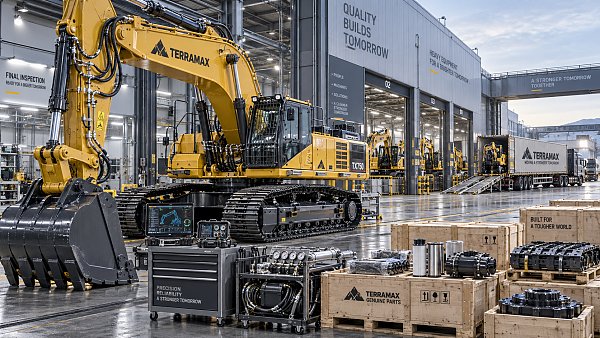
- Examine modular design and serviceability because faster component swaps and better access often deliver greater value than small headline performance increases.
- Measure energy recovery and hydraulic efficiency upgrades, especially in cranes, excavators, and haulage systems with frequent braking, lowering, or repeated motion cycles.
- Verify cybersecurity and control-system resilience before scaling connected fleets, since digital dependence can create new downtime and operational continuity risks.
- Model lifecycle economics using uptime, labor availability, maintenance intervals, emissions rules, and spare-parts lead times instead of relying on purchase price alone.
Which innovations stand out by application
TBM and underground construction
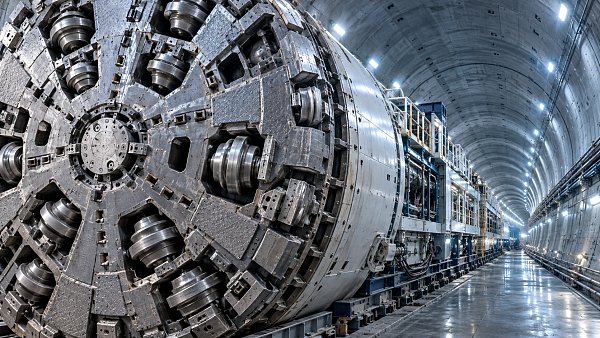
In tunneling, the most important construction machinery innovations combine sensing, automation, and material science. AI-assisted TBM guidance can interpret cutterhead vibration, thrust, torque, and spoil behavior in near real time. That improves alignment control and helps crews respond earlier to changing strata.
Another area worth watching is cutterhead tooling evolution. New alloys, heat-treatment methods, and wear monitoring systems can reduce interventions in difficult ground. In long drives, even modest gains in cutter life can significantly improve schedule certainty.
Open-pit mining and heavy excavation
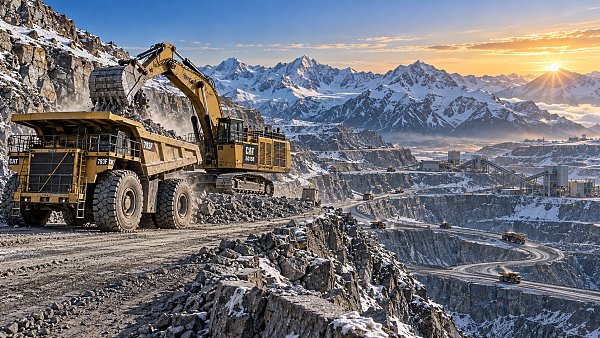
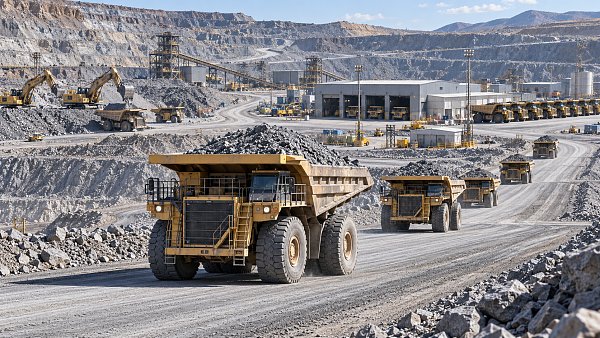
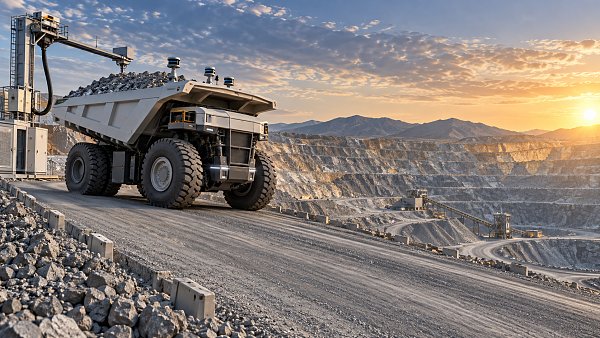
Autonomous haulage remains one of the clearest examples of high-value innovation. Predictable routes and repetitive cycles make mining an ideal environment for machine autonomy. The biggest impact is often reduced variability, improved tire management, and safer movement across large sites.
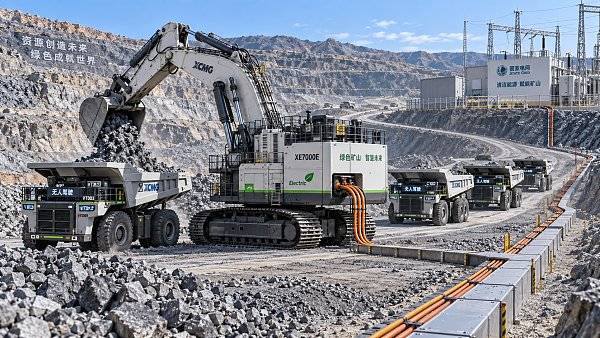
Pure electric and hybrid mining trucks are also gaining strategic attention. Their value depends on charging architecture, altitude, temperature, and haul profile. In some cases, trolley assist or mixed-energy fleets may outperform full electrification in both cost and reliability.
Crawler cranes and ultra-large lifting
For lifting operations, construction machinery innovations increasingly focus on safety envelopes, precision control, and wind-aware planning. Sensor fusion can support load-path monitoring, ground-pressure awareness, and more stable execution during turbine, petrochemical, and nuclear component installation.
Electro-hydraulic optimization is another development to monitor. Smoother control logic and energy-efficient power systems can reduce fuel burn during long setup periods and repeated heavy lifts, while improving controllability in confined project sites.
Road machinery and paving systems
Smart paving has moved beyond basic automation. Today, machine control systems can integrate compaction data, mat temperature, and pass-count records. This supports more consistent road quality and lowers the risk of early-life surface defects.
Low-emission road equipment also matters in urban projects with stricter environmental rules. Electric rollers, hybrid pavers, and connected fleet scheduling can improve both compliance and neighborhood acceptance, especially on night work or enclosed sites.
Commonly overlooked risks when judging construction machinery innovations
Infrastructure mismatch. Advanced machines may require charging systems, wireless coverage, ventilation upgrades, or workshop tools that existing sites cannot support without hidden capital spending.
Data without decisions. Telematics platforms often produce dashboards but not operational discipline. If no one translates alerts into maintenance or production action, digitalization adds noise rather than value.
Vendor lock-in. Some connected equipment ecosystems limit interoperability with mixed fleets, third-party analytics, or external control platforms. That can weaken long-term flexibility and negotiating power.
Pilot bias. A successful demonstration under controlled conditions does not guarantee scalable performance in abrasive ground, extreme climate, remote locations, or labor-constrained service environments.
Training gaps. Many construction machinery innovations fail not because the machine is weak, but because digital workflows, fault diagnostics, and safe operating logic were never fully embedded on site.
How to evaluate these innovations in practice
- Define one operating problem first, such as excessive idle fuel, unsafe face access, poor grade consistency, or high wear-part replacement frequency.
- Select metrics before trials begin, including uptime, cycle-time stability, energy use, intervention frequency, and maintenance labor per operating hour.
- Run pilots in demanding conditions, not ideal ones, so the innovation is tested against heat, dust, congestion, variable geology, or grid instability.
- Check service depth and spare-parts support, because advanced platforms lose credibility quickly if software experts or key components are hard to access.
- Build a phased adoption roadmap, moving from assisted functions to deeper automation only after proving safety, reliability, and financial return.
Strategic takeaway for the next equipment cycle
The most important construction machinery innovations are not always the most visible. The strongest candidates usually improve three things at once: operational continuity, risk control, and lifecycle efficiency. That is why autonomy, electrification, AI guidance, advanced wear materials, and connected maintenance systems deserve close attention now.
For organizations tracking tunnel boring machines, open-pit fleets, crawler cranes, road machinery, and mining dump trucks, the smart next step is simple. Compare innovations by project fit, infrastructure readiness, and measurable economic impact. Then scale only what strengthens delivery certainty. In the current market, disciplined adoption is more powerful than fast adoption.
Related News
 Oct 13, 2026OEM Equipment Suppliers in Europe: Vetting Quality, Lead Times, and SupportCompare OEM equipment Europe suppliers on quality, lead times, and after-sales support. Discover practical vetting steps to reduce downtime and buy heavy equipment with confidence.
 Oct 12, 2026How to Assess a High-Altitude Mining Equipment Manufacturer for Remote ProjectsHigh altitude mining manufacturer assessment guide: compare derating, cold-climate reliability, remote service, parts resilience, and lifecycle risk for smarter project decisions.
 Oct 11, 2026What Drives TBM Cutter Head Material Cost and Life-Cycle Value?Cutter head material cost explained: compare TBM alloys, wear protection, downtime risk, and life-cycle value to choose the most reliable, cost-effective solution.
 Oct 13, 2026Mining Haulage Services Procurement Checklist for Uptime and Cost ControlMining haulage services procurement checklist for stronger uptime, safer fleet selection, transparent pricing, and better cost control across changing mine conditions.
Prof. Marcus Chen
Weekly Insights
Stay ahead with our curated technology reports delivered every Monday.