
What new energy construction means for long term investment
What does new energy construction really signal for long term investment? Beyond headlines, it reflects capital discipline, equipment innovation, policy alignment, and infrastructure demand across mining, transport, and power systems. For information researchers, understanding how new energy construction reshapes project pipelines and heavy industry value chains is essential to identifying durable opportunities, operational risks, and the strategic logic behind future investment returns.
In practical terms, new energy construction is not limited to solar farms or wind towers. It extends into transmission corridors, access roads, deep foundation work, mineral extraction, equipment electrification, and logistics systems that support large-scale project execution over 10-, 15-, and even 25-year cycles.
For B2B researchers tracking heavy industry, this matters because asset value is increasingly determined by how well machinery, engineering methods, and infrastructure planning align with energy transition demand. TF-Strategy follows this intersection closely across TBM deployment, open-pit mining, crawler cranes, road machinery, and mining haulage.
Why new energy construction has become a long-cycle investment signal
The phrase new energy construction often appears in market commentary as a growth theme, but for long term investment it is better understood as a capital allocation pattern. Projects in this category usually involve high upfront expenditure, multi-stage delivery, and operating horizons that frequently exceed 12 years.
That structure creates a different investment logic from short-cycle commodity trades. Returns are influenced by permitting duration, grid integration, civil engineering complexity, equipment utilization rates, and maintenance cost profiles. In many cases, the first 24 to 36 months are dominated by construction risk rather than revenue generation.
From theme investing to infrastructure discipline
A useful way to assess new energy construction is to break it into four linked layers: resource supply, site development, power delivery, and operating efficiency. Each layer has different machinery requirements and different investment sensitivities. A mine supplying copper or lithium has a different risk profile from a wind turbine assembly corridor.
For example, a utility-scale renewable project may look attractive on headline capacity, but weak transport access or poor lifting logistics can delay delivery by 3 to 9 months. That delay affects crane scheduling, contractor cash flow, and the timing of downstream power connection.
What researchers should examine first
- Project duration: Is the construction timeline closer to 6 months, 18 months, or 36 months?
- Equipment intensity: Does execution depend on high-capacity cranes, large excavators, or specialized tunneling systems?
- Grid and transport links: Are roads, substations, tunnels, or haul routes already available?
- Cost resilience: Can the project absorb diesel, steel, tire, or hydraulic component inflation of 8% to 15%?
The table below shows how different parts of new energy construction translate into investment signals across the heavy industry value chain.
The key conclusion is that new energy construction should be analyzed as a systems buildout, not a single asset class. Investors and researchers who only track generation capacity may miss the machinery, materials, and civil works that often determine real project economics.
How heavy equipment demand reveals the quality of investment opportunity
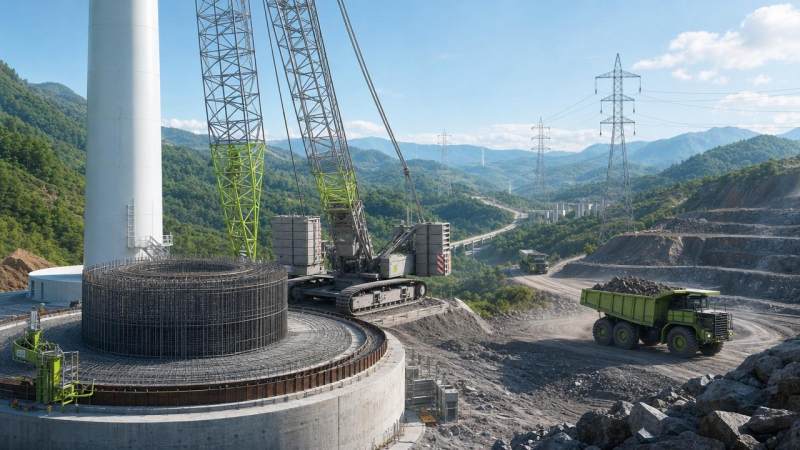
A strong pipeline in new energy construction usually creates measurable equipment demand before full revenue appears on site. This is especially visible in mountain wind projects, underground transmission works, mining expansions, and large industrial roads connecting remote energy assets.
Researchers should watch utilization intensity, replacement cycles, and technology substitution. When project owners shift from conventional fleets to digitalized or lower-emission machinery over a 2- to 5-year period, it often signals that construction volumes are becoming more durable rather than merely speculative.
TBM and underground infrastructure
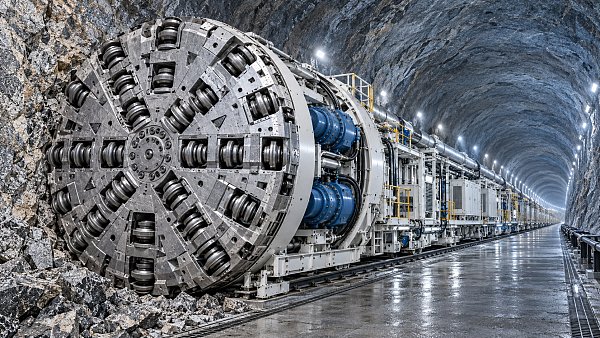
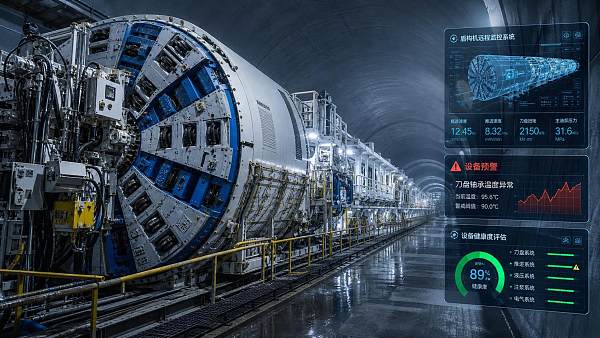
Tunnel boring machines matter in new energy construction when power transmission, pumped storage, metro-linked utility corridors, or mountain routes require stable underground solutions. A TBM project has a very different investment profile from surface construction because geological uncertainty, cutter wear, and segment logistics can materially change cost per meter.
In difficult rock conditions, cutter head maintenance intervals may tighten from every 300 meters to every 100 meters. That change affects downtime, spare part planning, and contractor margins. For long term investment analysis, this is a reminder that engineering complexity can create both barriers to entry and execution risk.
Open-pit mining and mineral security
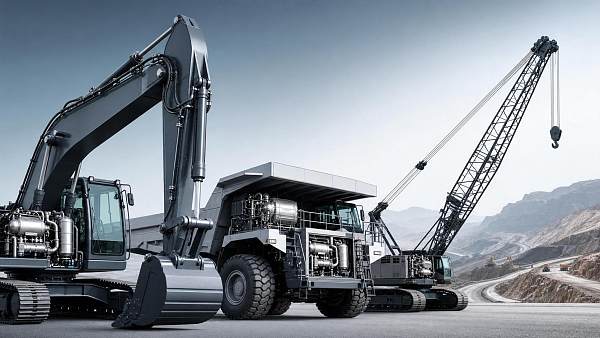
The energy transition depends on mined materials, and new energy construction therefore extends upstream into copper, nickel, lithium, rare earths, and metallurgical inputs. Ultra-large excavators and mining dump trucks become investment indicators because they reveal whether supply growth is moving from planning to physical execution.
A mine that adds 2 to 4 haul routes, expands waste stripping, and upgrades loading fleets is signaling confidence in medium-term offtake, not just short-term price support. In this sense, heavy equipment deployment can serve as an early operational signal for infrastructure-linked demand.
Crawler cranes, roads, and assembly logistics
Wind, nuclear-adjacent energy infrastructure, and petrochemical transition projects rely on large crawler cranes because lifting is not a minor support function. It is often a schedule bottleneck. If nacelles, towers, reactors, or oversized modules cannot be lifted within the planned weather window, site economics can deteriorate quickly.
Road machinery is equally important. In many renewable zones, 20 to 60 kilometers of access roads, temporary platforms, or widened turning radii are required before major components arrive. This is one reason new energy construction has broad industrial spillover, especially for contractors and equipment suppliers.
The next table highlights how heavy machinery categories map to specific construction signals and what researchers should infer from them.
Taken together, these signals help researchers distinguish promotional project announcements from capital-intensive construction programs with measurable execution depth.
Key risks that can weaken long term returns
Not every wave of new energy construction translates into healthy investment returns. In heavy industry, three risk groups usually deserve close attention: timing risk, equipment risk, and supply chain risk. Each can change the economics of a project even when strategic demand remains strong.
Timing risk across permits, weather, and logistics
A project may have strong policy support yet still underperform because execution windows are narrow. Mountain wind sites may lose 20% to 30% of planned lifting days during severe weather periods. Underground works may face permit revisions or water ingress, extending schedules by 8 to 20 weeks.
Researchers should therefore compare announced completion dates with realistic construction sequencing. If access roads, foundation curing, and crane mobilization are not synchronized, downstream milestones become unreliable.
Equipment transition risk
Electrified or remote-controlled equipment can improve efficiency, but transition periods are not frictionless. A mining fleet moving to pure electric haulage may require charging design, power management, operator retraining, and spare parts changes over 6 to 18 months. Short-term productivity can fluctuate before stabilizing.
This is where strategic intelligence becomes valuable. TF-Strategy tracks developments such as 5G remote-controlled excavation, material upgrades for TBM cutter heads, and the business logic of pure electric mining trucks. For researchers, these signals help separate durable innovation from costly experimentation.
Supply chain concentration and input volatility
Large projects often depend on a limited set of specialized suppliers for hydraulic systems, wear parts, steel sections, tires, and lifting components. A disruption in one category can halt multiple work fronts. Cost inflation of 10% in key consumables may not destroy a project, but repeated disruptions can erode margin discipline.
In some research workflows, analysts also benchmark external intelligence feeds and archived references, including 无, to compare tender flow, contractor activity, and material movement. The value is not the link itself, but the habit of triangulating project signals before drawing investment conclusions.
A practical 5-point risk screen
- Check whether core permits are complete or still conditional.
- Assess whether construction depends on one critical machine class or supplier.
- Review whether transport access is permanent, temporary, or still under development.
- Estimate whether commissioning depends on a separate grid or processing milestone.
- Compare expected asset life with maintenance planning over at least 5 years.
How information researchers can evaluate new energy construction more effectively
For information researchers, the challenge is not finding more headlines. It is building a repeatable framework that links construction activity to investment durability. The best approach is usually cross-functional, combining project engineering signals with procurement, operations, and infrastructure context.
Focus on project pipeline quality, not only volume
A pipeline of 50 announced projects is less meaningful than 12 projects with clear financing, contractor mobilization, and equipment orders. Researchers should classify opportunities into at least three stages: announced, committed, and executable. That simple filter often removes a large portion of noise.
If a project has confirmed civil works, access improvements, long-lead equipment planning, and visible contractor sequencing, it deserves more weight in long term investment research than one defined only by target capacity.
Use machinery intelligence as a leading indicator
The heavy equipment lens is useful because it shows where capital becomes physical. TBM selection reveals underground commitment. Excavator fleet expansion points to raw material readiness. Crane deployment marks installation intensity. Road machinery orders indicate the practical opening of remote project zones.
This is one area where TF-Strategy provides relevant value to research-driven audiences. Its Strategic Intelligence Center connects machinery parameters, engineering methods, tender developments, and commercial demand logic so that analysts can interpret new energy construction with more operational depth.
Recommended research workflow
- Step 1: Map the value chain from resource extraction to final power delivery.
- Step 2: Identify the 3 to 5 machinery categories most critical to execution.
- Step 3: Track delivery lead times, replacement parts, and maintenance intervals.
- Step 4: Compare announced milestones with physical construction prerequisites.
- Step 5: Reassess TCO, downtime risk, and policy dependency every quarter.
Researchers who adopt this workflow are better positioned to identify which new energy construction trends are creating resilient industrial demand and which ones may remain vulnerable to delays, cost pressure, or weak logistics integration.
A second pass through external records, including sources like 无, can support scenario checking when comparing project announcements against machinery deployment and contractor behavior across regions.
What long term investors and industry analysts should take away
New energy construction matters because it turns policy ambition into physical systems. Those systems depend on tunnels, mines, heavy lifts, roads, and haulage networks as much as they depend on generation hardware. Long term investment value therefore sits in execution quality, not in narrative momentum alone.
When researchers examine project stages, equipment intensity, supply chain resilience, and operating cost logic together, they gain a clearer view of which opportunities can sustain returns through full construction and operating cycles. That approach is especially useful in sectors where delivery complexity is high and capital is locked in for 10 years or more.
If you want deeper visibility into how TBM systems, ultra-large excavators, crawler cranes, road machinery, and mining dump trucks are shaping new energy construction, explore more solution-oriented intelligence from TF-Strategy. To refine your project screening framework, get a tailored perspective, or discuss equipment-led infrastructure signals, contact us to learn more solutions.
Related News
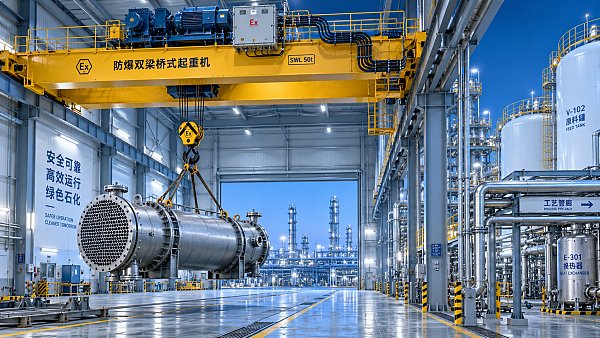
 Oct 06, 2026Selecting Petrochemical Overhead Cranes for Hazardous Areas and Heavy Process LoadsPetrochemical overhead cranes for hazardous areas: learn how to match capacity, duty, controls, corrosion protection, and maintenance access for safer, reliable lifts.
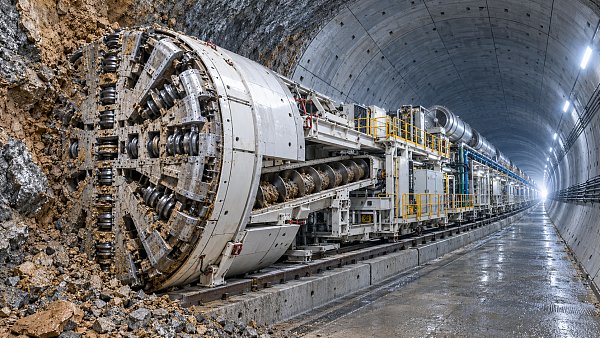
 Oct 05, 2026Tunneling Equipment Specification Planning: Key Criteria for Ground and Project RisksEquipment specification planning tunneling: learn how to match TBM systems to ground risks, geometry, safety, logistics, and lifecycle cost for more reliable project delivery.
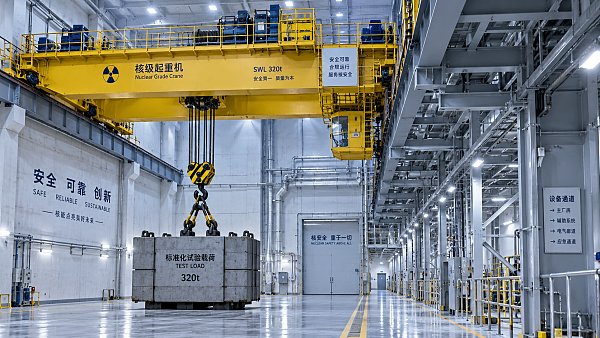
 Oct 04, 2026Nuclear Lifting Equipment Cost: Budgeting for Compliance, Testing, and Lifecycle RiskNuclear lifting equipment cost explained: budget for compliance, proof-load testing, installation, documentation, and lifecycle risk to make confident procurement decisions.
 Oct 03, 2026How to Assess TBM Manufacturers for Hard-Rock Tunneling Projects?Choose the right tunnel boring machine manufacturer for hard-rock projects. Explore key criteria for design, lifecycle cost, factory quality, and service support.
Dr. Alistair Vaughn
Weekly Insights
Stay ahead with our curated technology reports delivered every Monday.