
What global mining projects reveal about supply risk in 2026
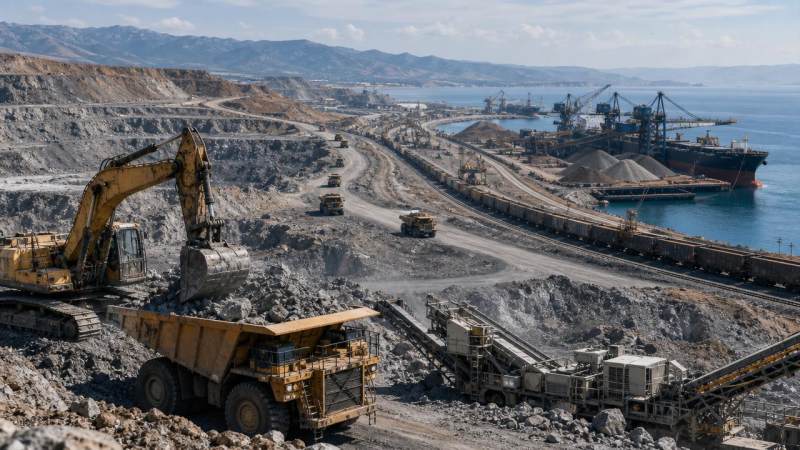
As 2026 approaches, global mining projects are becoming one of the clearest indicators of supply risk, cost volatility, and geopolitical exposure across critical materials markets. For business evaluation professionals, tracking where projects advance, stall, or face permitting and logistics pressure offers a practical lens on future availability, investment timing, and equipment demand in an increasingly complex resource landscape.
The signal is not only about ore grades or reserve size. It is also about power access, water rights, haulage routes, contractor capacity, and policy consistency. In this sense, global mining projects reveal how supply risk will actually materialize in 2026.
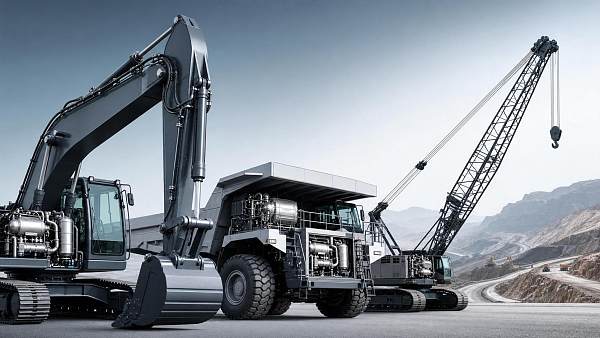
For heavy industry intelligence, this matters across the chain. Mines drive demand for excavators, dump trucks, road machinery, cranes, and supporting infrastructure. They also shape the commercial timing of energy, transport, and construction decisions.
Why global mining projects are a practical supply risk lens in 2026
Commodity markets often react to headlines, yet project execution tells a deeper story. A mine can look strong on paper while facing weak grid access, slow environmental approval, or fragile export logistics.
That is why global mining projects should be read as operating systems, not isolated assets. The real question is whether a project can move from feasibility to sustained output without major disruption.
In 2026, supply risk will likely come from delays rather than absolute resource scarcity. Development schedules, capital inflation, and regional instability can reduce available tonnage long before reserves become the issue.
The most useful signals to monitor
- Permitting progress versus original timeline
- Power, water, and road readiness
- Contractor mobilization and fleet delivery status
- Political stability and tax regime changes
- Port access, rail links, and border exposure
- Ore processing complexity and commissioning risk
Scenario one: new copper and lithium projects show where transition supply may tighten
Energy transition materials remain central to market attention. Yet many new copper and lithium assets are entering jurisdictions with infrastructure gaps or stricter social licensing requirements.
In this scenario, global mining projects reveal that volume growth may arrive later than expected. A delayed concentrator, water conflict, or transmission bottleneck can quickly change the 2026 supply picture.
Core judgment points in this scenario
Watch whether mine construction is supported by parallel infrastructure buildout. If roads, substations, and camp logistics lag, nameplate capacity becomes less meaningful for near-term planning.
Also assess processing risk. Some lithium brine and hard rock projects face scale-up uncertainty, while lower-grade copper projects may need more equipment intensity and energy per unit of output.
Scenario two: iron ore and bulk commodity expansions test logistics resilience
Bulk commodities operate at a different scale. Here, the biggest issue is often not geology but transport reliability. Rail, port, and fleet efficiency can determine whether supply stays smooth during demand swings.
Global mining projects in iron ore, bauxite, and coal still matter in 2026 because they anchor large equipment cycles. Delays in overburden removal, haul road development, or crusher installation ripple quickly through shipment expectations.
Core judgment points in this scenario
The key is integrated capacity. A mine expansion without synchronized rail slots or port dredging can create stranded output. Supply risk appears as congestion, not as missing reserves.
Weather exposure also matters. Heavy rainfall, heat stress, and dust controls increasingly affect uptime. These risks raise maintenance loads for dump trucks, excavators, and road equipment.
Scenario three: politically sensitive regions amplify geopolitical supply risk
Some of the most resource-rich regions carry elevated policy uncertainty. This makes global mining projects especially valuable as early warning tools for 2026 supply risk.
A project can be technically viable yet commercially unstable if royalties shift, export rules change, or local security deteriorates. In these cases, supply risk is tied to continuity rather than production potential.
Core judgment points in this scenario
Track how often operators revise schedules, contractors, or capex guidance. Frequent revisions often indicate weak institutional support or unresolved site access issues.
Review export corridors as carefully as the mine itself. Border crossings, sanctions risk, and maritime insurance costs may become larger constraints in 2026.
How different project scenarios create different supply risk outcomes
Not all global mining projects affect the market in the same way. The table below shows how project type changes the risk profile and the related heavy equipment implications.
Scenario-based recommendations for reading global mining projects
A better reading framework improves both market judgment and operational planning. Global mining projects should be assessed with a layered approach instead of a single production forecast.
Recommended evaluation actions
- Separate reserve quality from execution quality.
- Score projects by infrastructure readiness, not only capex size.
- Map equipment demand against project phase timing.
- Compare country risk with logistics route risk.
- Recheck project assumptions after each permitting milestone.
- Use contractor availability as a leading indicator of delay.
This is where TF-Strategy adds value. Its focus on machinery parameters, project methods, and strategic intelligence helps connect mine development signals with real equipment deployment conditions.
That connection is critical in 2026. A project that secures funding but lacks fleet delivery, haul road preparation, or lifting capacity may still become a supply risk event.
Common misreads that distort 2026 supply risk assessments
One frequent error is treating project approval as equivalent to future output. In reality, approval begins a new chain of execution risks rather than removing uncertainty.
Another mistake is ignoring supporting infrastructure. Roads, substations, workshops, and camp systems are often less visible than the pit or plant, yet they shape startup speed.
A third blind spot is underestimating equipment lead times. If ultra-class trucks, shovels, or crawler cranes arrive late, mine schedules slip and global mining projects lose supply relevance for 2026.
Finally, some analyses overlook brownfield strain. Existing mines may maintain output only through rising stripping ratios, higher maintenance spend, and more complex fleet management.
What to do next with global mining projects as a decision framework
The most useful next step is to build a live watchlist of global mining projects by commodity, jurisdiction, development stage, and logistics dependency. This turns scattered news into structured risk intelligence.
Then compare project status with supporting equipment and infrastructure signals. If a mine advances but transport and power do not, supply risk remains elevated for 2026.
For broader heavy industry analysis, combine project-level tracking with machinery trend monitoring. Excavation intensity, haulage requirements, and lifting demand often confirm whether project momentum is real.
In short, global mining projects reveal more than future tonnage. They show where execution friction, geopolitical pressure, and industrial capacity will shape supply risk in 2026.
TF-Strategy supports this view by linking mining intelligence with equipment reality. When project milestones, machinery deployment, and infrastructure conditions are read together, decision quality becomes far stronger.
Related News
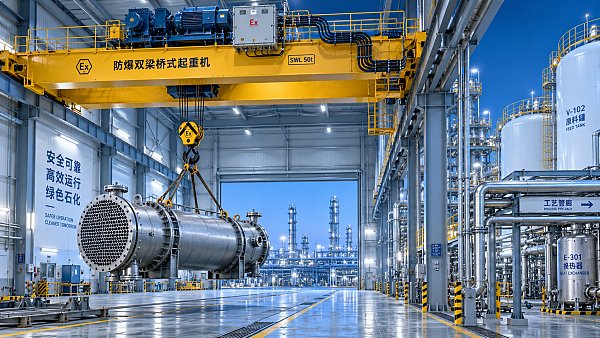
 Oct 06, 2026Selecting Petrochemical Overhead Cranes for Hazardous Areas and Heavy Process LoadsPetrochemical overhead cranes for hazardous areas: learn how to match capacity, duty, controls, corrosion protection, and maintenance access for safer, reliable lifts.
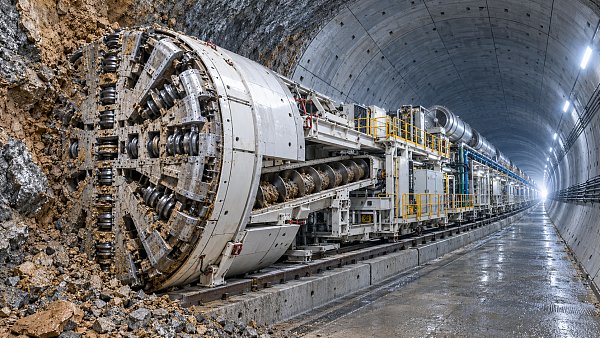
 Oct 05, 2026Tunneling Equipment Specification Planning: Key Criteria for Ground and Project RisksEquipment specification planning tunneling: learn how to match TBM systems to ground risks, geometry, safety, logistics, and lifecycle cost for more reliable project delivery.
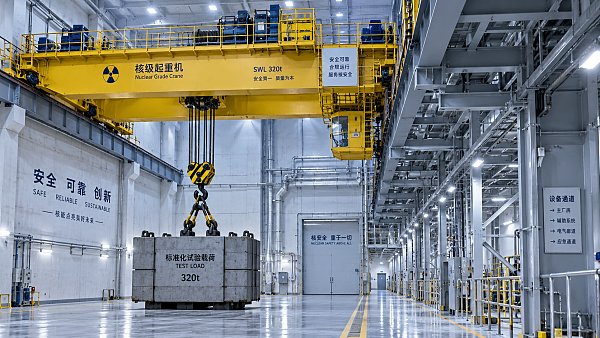
 Oct 04, 2026Nuclear Lifting Equipment Cost: Budgeting for Compliance, Testing, and Lifecycle RiskNuclear lifting equipment cost explained: budget for compliance, proof-load testing, installation, documentation, and lifecycle risk to make confident procurement decisions.
 Oct 03, 2026How to Assess TBM Manufacturers for Hard-Rock Tunneling Projects?Choose the right tunnel boring machine manufacturer for hard-rock projects. Explore key criteria for design, lifecycle cost, factory quality, and service support.
Dr. Alistair Vaughn
Weekly Insights
Stay ahead with our curated technology reports delivered every Monday.