
Heavy Equipment Digitalization: Which Data Systems Improve Uptime and Maintenance Planning?
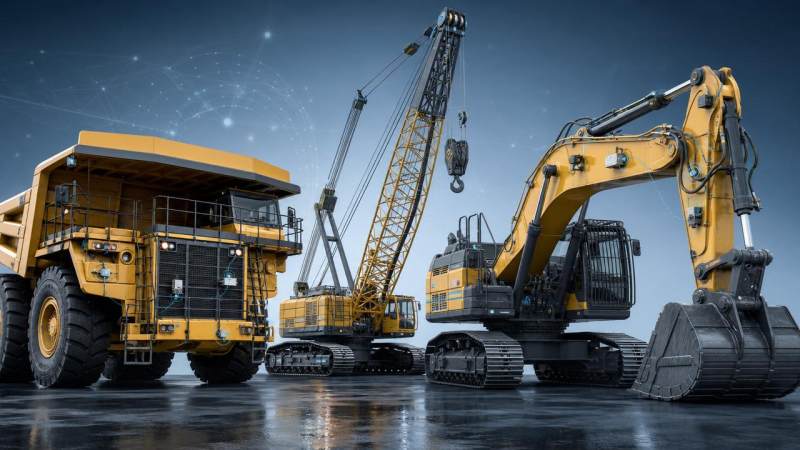
Why does heavy equipment digitalization matter so much for uptime today?
Heavy equipment digitalization is no longer a side project for industrial fleets. It now shapes how service teams prevent failures, schedule labor, and protect machine availability.
In tunnel boring, open-pit mining, lifting, road building, and heavy haulage, a missed warning can stop an entire work chain. The cost is rarely limited to one machine.
That is why the best data systems focus on uptime first, not just visibility. A dashboard looks useful, but uptime improves only when data leads to faster decisions.
In practical terms, heavy equipment digitalization connects machine signals, fault history, maintenance records, parts planning, and operating context into one usable workflow.
This matters even more in sectors tracked by TF-Strategy, where equipment works under high load, variable geology, remote locations, and tight project windows.
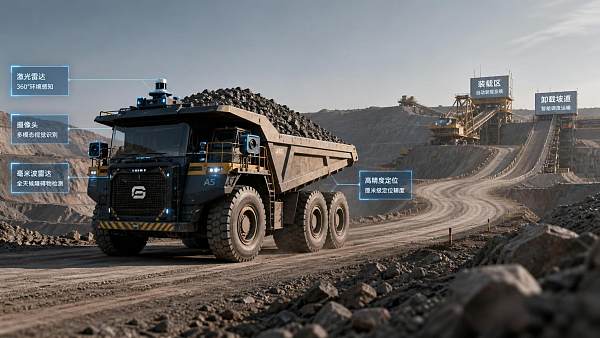
For a TBM, sensor trends may reveal cutterhead stress before visible damage appears. For a mining dump truck, temperature and payload patterns may expose drivetrain risk earlier.
So the real question is not whether to digitize. It is which data systems actually improve maintenance planning instead of generating more noise.
Which data systems actually improve maintenance planning, not just reporting?
The most effective setup usually combines several systems. No single platform covers machine condition, service execution, and planning quality equally well.
A useful way to judge heavy equipment digitalization is to ask one simple question: does this system help decide what to do next, with confidence and speed?
- Telematics platforms collect location, engine hours, fuel burn, idle time, temperature, load, and fault codes.
- Condition monitoring systems track wear signals such as vibration, pressure drift, hydraulic contamination, and abnormal thermal behavior.
- CMMS or EAM platforms organize work orders, service intervals, labor allocation, inspection history, and parts demand.
- Predictive analytics tools detect patterns that suggest likely failure windows before breakdowns occur.
- Parts and inventory systems link predicted service needs to stock levels, lead times, and supplier constraints.
If only telematics exists, maintenance planning remains reactive. If only a CMMS exists, schedules may ignore real operating stress. The best value comes from integration.
In heavy industry, the operating environment changes everything. A crawler crane on a wind project and an excavator in abrasive overburden should not share the same service logic.
That is why TF-Strategy often frames digital decisions around physical parameters and construction methods, not software features alone. The machine context determines the data priority.
A quick comparison that helps narrow the choice
The table shows a common pattern. Heavy equipment digitalization works best when systems complement each other instead of competing for ownership of maintenance decisions.
How do you know which data matters for different machine types?
Not all uptime data carries equal value. The right signals depend on load cycles, duty intensity, environment, and failure consequences.
A common mistake is collecting every available parameter. More common in successful programs is selecting a short list of failure-linked indicators first.
For TBMs, maintenance planning often benefits from tracking cutter wear trends, slurry or spoil handling load, bearing temperature, hydraulic pressure stability, and advance rate changes.
For ultra-large excavators, useful signals include swing stress, pump performance, bucket cycle time, structural strain, and lubrication compliance.
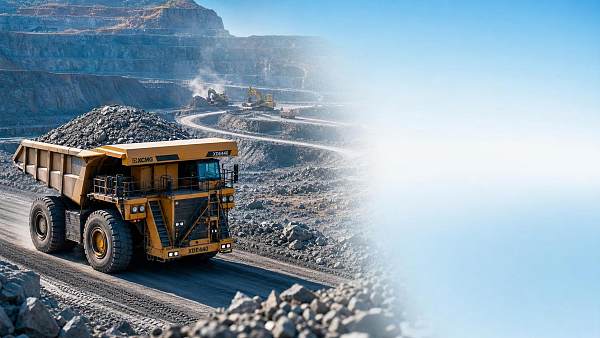
For mining dump trucks, attention usually goes to brake temperature, tire health, payload variance, retarder behavior, transmission events, and altitude-related performance drift.
For crawler cranes, uptime planning often depends on hoist system loads, hydraulic response, boom stress, wind operating records, and repeated overload events.
For large road machinery, screed temperature consistency, compaction patterns, hydraulic output, and engine load are often more important than broad generic metrics.
This is where heavy equipment digitalization becomes operational rather than theoretical. A useful data model reflects the machine’s failure physics and jobsite reality.
What usually goes wrong during implementation?
Many digital maintenance projects fail for reasons that have little to do with software quality. The problem is often workflow design.
One frequent issue is alert overload. If every fault code generates a task, planners stop trusting the system and go back to manual judgment.
Another issue is poor data ownership. Telematics may sit with operations, while service records stay elsewhere. That split weakens maintenance planning immediately.
There is also the problem of threshold mismatch. A vibration level that is acceptable for one duty cycle may be dangerous in another.
In actual deployment, the more reliable approach is to tune rules around equipment class, environment, and known failure modes.
- Do not launch with every available sensor if nobody will act on the output.
- Do not separate machine alerts from parts planning and technician scheduling.
- Do not assume OEM defaults match altitude, dust, geology, or extreme temperature conditions.
- Do not measure digital success only by data volume or screen count.
The strongest heavy equipment digitalization programs are usually narrow at first. They target a few high-cost failures, then expand after trust is built.
Is predictive maintenance worth it, or is disciplined planning enough?
This is one of the most searched questions, and the honest answer is that both matter. Predictive tools are powerful, but they cannot replace maintenance discipline.
If inspection routines are inconsistent, failure codes are not cleaned, or service history is incomplete, predictive models become unreliable very quickly.
On the other hand, disciplined planning alone may miss degradation patterns that emerge between scheduled intervals. That is especially risky in high-intensity continuous operations.
A practical decision rule is simple. Use scheduled maintenance to control known wear items, then use predictive maintenance to catch variation and abnormal behavior.
For example, planned service can manage filters, lubrication, and periodic inspections. Predictive maintenance can identify unusual pump decline, bearing instability, or thermal anomalies.
Heavy equipment digitalization becomes more valuable when these two layers support each other. One creates discipline. The other creates foresight.
What is the smartest way to evaluate heavy equipment digitalization before scaling it?
A full rollout should come after a narrow proof of value. That proof needs operational measures, not just technical connectivity.
A useful pilot often starts with one machine family, one failure category, and one planning bottleneck. That makes results easier to trust and compare.
The evaluation should include at least these questions.
- Did unplanned stoppages fall for the selected failure mode?
- Did lead time for service decisions become shorter?
- Did planned parts availability improve?
- Did false alarms decline after threshold tuning?
- Did maintenance history become more complete and reusable?
TF-Strategy’s industry lens is useful here because digital value in heavy machinery rarely comes from software alone. It comes from linking engineering conditions with strategic operating decisions.
For that reason, the best next step is usually not to compare features endlessly. It is to map failure risk, identify the most decision-critical data, and test one integrated workflow.
If heavy equipment digitalization is approached that way, uptime gains are easier to measure, maintenance planning becomes more predictable, and expansion decisions become far less speculative.
A sensible roadmap starts with data that supports action, not data collected for its own sake. That is usually where long-term reliability improvement begins.
Related News
 Sep 14, 2026What Drives Surface Mining Equipment Cost Across a Mine’s Operating Life?Surface mining equipment cost depends on fleet matching, fuel, wear, maintenance, availability, and rebuild timing. Explore lifecycle strategies that protect output and margins.
 Sep 13, 2026Crawler Crane Application Analysis for Wind Farms, Bridges, and Confined SitesCrawler crane application analysis for wind farms, bridges, and confined sites—optimize lift paths, ground conditions, access, and schedules for safer project delivery.
 Sep 12, 2026Open-Pit Mining in North America: Key Project Risks and Planning PrioritiesOpen-pit mining North America: uncover key risks and planning priorities for geology, permitting, water, fleet strategy, and resilient project delivery.
 Sep 11, 2026TBM Systems in Southeast Asia: Key Selection Factors for Variable Ground ConditionsTBM systems Southeast Asia: discover key selection factors for variable ground, pressure control, monsoon resilience, and safer tunnel delivery.

Heavy Haulage Strategist
Weekly Insights
Stay ahead with our curated technology reports delivered every Monday.