
Heavy Haulage Trucks vs Standard Transport: Which Loads Justify the Extra Cost?
Heavy Haulage Trucks vs Standard Transport: Which Loads Justify the Extra Cost?
When evaluating transport budgets, the real question is not whether heavy haulage trucks cost more, but which loads make that premium worthwhile.
For project teams, the choice affects cost, schedule, permit complexity, and delivery risk.
In practice, standard transport works well for many routine shipments.
But once dimensions, axle loads, or route restrictions change, the economics shift quickly.
That is where heavy haulage trucks become less of a luxury and more of a control tool.
The key is knowing which loads truly justify the extra cost, and which do not.
What separates heavy haulage trucks from standard transport
Standard transport usually handles general freight within common legal size and weight limits.
That includes palletized goods, normal steel sections, containerized cargo, and moderate machinery.
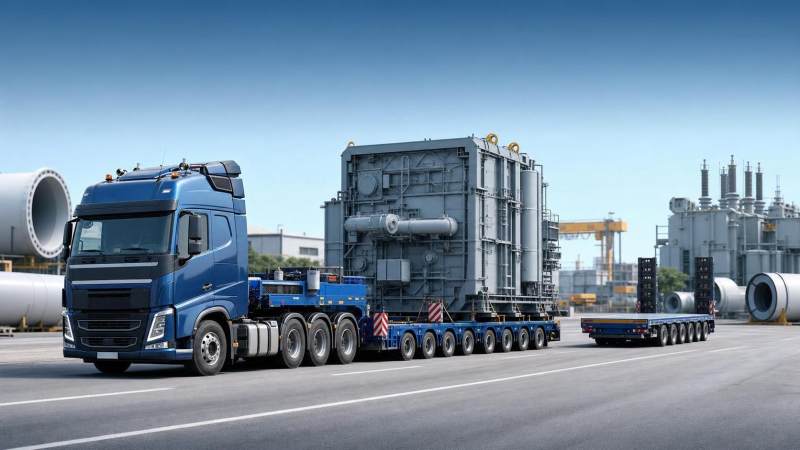
Heavy haulage trucks are built for abnormal loads.
These loads may be excessively heavy, over-width, over-height, over-length, or awkwardly balanced.
The difference is not only the truck itself.
It also includes trailers, axle configuration, route studies, escort planning, permits, and unloading coordination.
Typical features of heavy haulage trucks
- Multi-axle trailers for higher weight distribution
- Low-bed or modular trailer systems for oversized equipment
- Prime movers with higher torque and braking capacity
- Engineering support for bridge limits, gradients, and turning radius
- Permit management and escort vehicle coordination
So the premium is tied to a complete transport solution, not just a larger truck.
Which loads usually justify heavy haulage trucks
The best candidates are loads that create legal, physical, or operational barriers for standard transport.
If a load disrupts route safety or compliance, heavy haulage trucks often become the lower-risk option.
1. Mining and quarry equipment
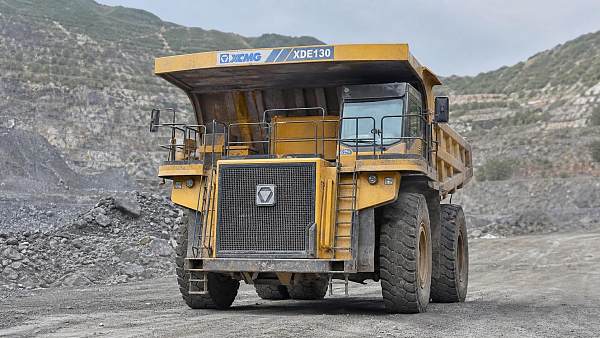
Large excavator bodies, haul truck components, crushers, and conveyor modules often exceed normal dimensions.
For these assets, heavy haulage trucks reduce disassembly pressure and shorten site mobilization windows.
2. TBM and tunneling components
Cutterheads, shield sections, and backup gantry elements are classic heavy haulage trucks cargo.
Their geometry is difficult, valuable, and time-sensitive, especially for urban tunnel projects.
3. Wind, energy, and petrochemical modules
Transformers, pressure vessels, turbine sections, and refinery modules frequently justify specialized transport.
Here, damage risk and schedule penalties can easily exceed the extra transport price.
4. Crawler crane and road machinery assemblies
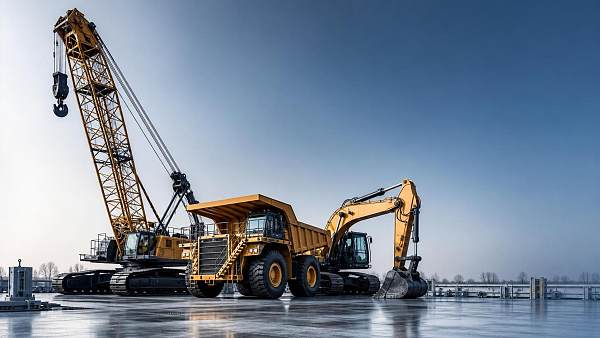
Main frames, lattice boom sections, and oversized paving equipment often need tailored axle layouts.
In these cases, heavy haulage trucks help protect both the equipment and the route infrastructure.
When standard transport is still the smarter financial choice
Not every large machine needs heavy haulage trucks.
That is an expensive assumption, and it often leads to over-specification.
Standard transport can be the better choice when:
- The load can be split into legal modules without major labor or reassembly risk
- The route is simple and accessible to regular flatbeds or step-deck trailers
- Delivery windows are flexible and permit delays are unnecessary
- Cargo value is moderate and handling complexity is low
- No bridge strengthening, escort support, or utility clearance is required
If a load fits normal legal thresholds with manageable packaging, standard transport usually wins on direct cost.
The real cost drivers behind heavy haulage trucks
The line-item freight rate tells only part of the story.
The real comparison should focus on total delivered cost and exposure.
Direct cost factors
- Special trailer rental and prime mover capacity
- Permits, escorts, pilot cars, and police support
- Route surveys and engineering checks
- Loading cranes, jacking systems, and site preparation
- Longer transit times and limited travel windows
Indirect cost factors
- Project delay risk if a critical component arrives late
- Extra labor for disassembly and reassembly under standard transport
- Higher damage probability from repeated handling
- Insurance consequences for high-value cargo movement
- Contract penalties tied to construction milestones
This is why heavy haulage trucks can look expensive upfront but still protect project value better.
A practical decision framework for load selection
A useful assessment starts with five questions.
Together, they show whether heavy haulage trucks are a premium expense or a justified safeguard.
- Is the load legally compliant on standard transport without exceptional permits?
- Can the cargo be broken down safely without harming performance or warranty?
- Does route complexity create bridge, height, turning, or pavement concerns?
- What is the financial impact of one week of delay or one damage event?
- Will specialized transport reduce total handling steps and coordination risk?
If the last three answers point to higher exposure, heavy haulage trucks usually make sense.
If the first two answers are favorable, standard transport may remain commercially sound.
Side-by-side comparison for procurement decisions
Why this matters more in heavy industry today
Recent market shifts make the transport decision more strategic than before.
Equipment is getting larger, projects are moving faster, and site windows are tighter.
That is especially visible in tunneling, mining, wind power, and petrochemical construction.
For intelligence-driven organizations such as TF-Strategy, transport is not a back-office detail.
It is part of equipment utilization, project sequencing, and total cost of ownership planning.
Final take: pay more only when the load creates bigger risks
Heavy haulage trucks are justified when load dimensions, mass, value, or schedule sensitivity change the risk equation.
They are especially valuable for TBM sections, mining equipment, crane assemblies, and energy modules.
Standard transport remains the right answer for compliant, modular, and lower-risk freight.
The smartest decision is not based on truck price alone.
It comes from comparing delivery certainty, handling exposure, route constraints, and schedule consequences.
Before approving the next shipment, test the load against those factors first. That is usually where the real savings appear.
Related News
 Sep 22, 2026How to Evaluate a High-Altitude Mining Solutions Manufacturer for Remote ProjectsEvaluate a high-altitude mining solutions manufacturer with proven derating, cooling, service logistics, and lifecycle-cost support for remote projects.
 Sep 21, 2026Industrial Supplier Evaluation: A Risk-Based Scorecard for Quality, Capacity, and DeliveryIndustrial supplier evaluation made practical: use a risk-based scorecard to assess quality, capacity, and delivery reliability, reduce project risk, and select suppliers with confidence.
 Sep 20, 2026Comparing Heavy Equipment Warranty Suppliers: Coverage, Claims, and Downtime RiskSupplier comparison for heavy equipment warranty: evaluate coverage, claims speed, service networks, and downtime risk to protect uptime and project costs.
 Sep 19, 2026Mining Truck Technology Trends: What Fleet Managers Should Prioritize for 2026Mining truck technology trends for 2026: prioritize electrification, autonomy, predictive maintenance, and road intelligence to improve fleet uptime, safety, and cost control.

Heavy Haulage Strategist
Weekly Insights
Stay ahead with our curated technology reports delivered every Monday.