
When heavy haulage equipment becomes too costly to run
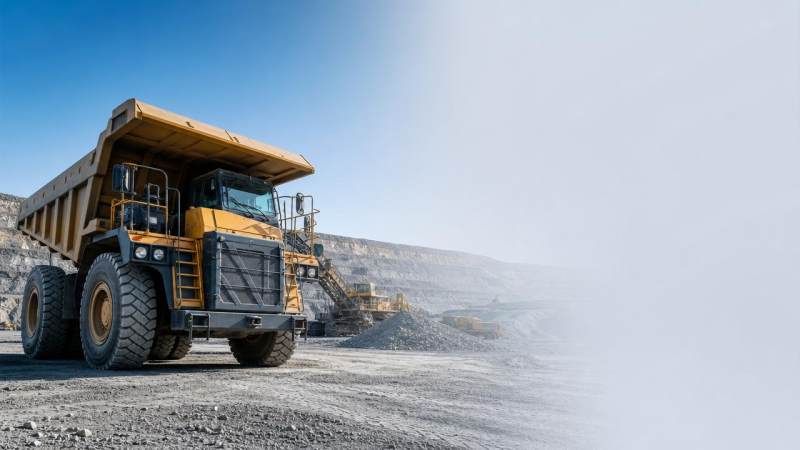
When heavy haulage equipment becomes too costly to run, finance leaders are rarely dealing with a simple maintenance problem. They are usually looking at a deeper issue involving asset utilization, rising operating volatility, project delivery risk, and weakened return on invested capital.
For financial approvers, the key question is not whether costs are rising. It is whether those costs are temporary, manageable, and justified by output, or whether the fleet has crossed into value destruction.
This is the point where heavy haulage equipment stops being an operational line item and becomes a strategic capital decision. The right response is not always replacement, and it is not always cost cutting.
Instead, the most effective response comes from understanding what is driving total cost of ownership, how much productive value the equipment still delivers, and which intervention best protects margins without disrupting production.
Why finance teams should treat costly heavy haulage equipment as a capital allocation issue
For contractors, miners, and infrastructure operators, heavy haulage equipment often sits at the center of production. When operating cost rises too far, the effect spreads quickly into cash flow, schedule confidence, and bid competitiveness.
That matters especially for finance decision-makers because expensive haulage assets consume capital in several ways at once. They require ongoing maintenance spend, tie up working capital in parts inventory, and increase exposure to unplanned downtime.
In many fleets, cost inflation does not appear suddenly. It builds through small losses: lower fuel efficiency, more tire damage, more operator-induced wear, delayed component rebuilds, and reduced payload consistency across shifts.
By the time those issues reach the monthly financial report, the organization may already be absorbing weaker asset productivity and higher cost per ton moved. That is why heavy haulage equipment performance should be monitored as an investment case, not only as an engineering matter.
From a finance perspective, the core test is simple. Is the machine still generating acceptable output relative to its operating cost, risk profile, and replacement alternatives? If not, management needs a structured intervention.
What usually makes heavy haulage equipment too costly to run
The most visible cost driver is fuel. In heavy haulage, even a modest deterioration in fuel burn can create a major budget impact across a year, especially when routes involve gradients, stop-start patterns, poor haul road conditions, or high altitude.
Maintenance is the second major factor, but it is more complex than repair invoices. Aging equipment often requires more frequent service, longer workshop time, and more specialized parts, all of which raise both direct and indirect cost.
Indirect cost is where many finance teams underestimate the problem. A truck or haulage unit that spends too much time out of service affects dispatch efficiency, loader matching, labor utilization, and sometimes contract penalties tied to production shortfalls.
Tires, undercarriage components, hydraulic systems, and driveline rebuilds can also shift the economics quickly. Once component life becomes inconsistent, budgeting becomes less reliable and emergency procurement becomes more likely.
Labor cost adds another layer. Older or poorly optimized heavy haulage equipment may require more operator skill to maintain productivity, more technician hours to diagnose faults, and more supervision to coordinate uptime.
There is also the technology gap. Newer machines can offer telematics, predictive diagnostics, payload optimization, idle control, and energy management features that older fleets simply cannot match. Over time, that capability gap becomes a cost gap.
How to tell whether rising costs are still acceptable or already destructive
Not every expensive machine should be retired. Some units remain commercially viable because they operate in specialized conditions, serve short-term project needs, or support a production chain where replacement would cause even greater disruption.
That is why finance approvers need a threshold-based view rather than a purely emotional one. The right question is not whether a machine is expensive, but whether its incremental cost remains justified by incremental output and strategic necessity.
A practical starting point is cost per productive unit, such as cost per ton hauled, cost per operating hour, or cost per kilometer under load. These metrics should be tracked against both historical baseline and current fleet peers.
If operating cost is rising while output stays stable, the problem may still be manageable. If cost rises while output falls, downtime increases, and schedule reliability weakens, the machine is likely moving into economically destructive territory.
Finance teams should also watch cost volatility. A machine with moderately high but predictable cost may still be manageable in budgeting terms. A machine with unstable repair events and uncertain availability is much harder to justify.
Another warning sign is declining maintenance efficiency. If each additional dollar spent on service no longer produces a meaningful improvement in uptime, the asset may be beyond efficient intervention and nearing replacement logic.
The hidden costs that make old or inefficient haulage fleets look cheaper than they really are
One of the most common financial errors is comparing only book value and visible maintenance spend. Fully depreciated heavy haulage equipment can appear financially attractive because the capital cost has already been absorbed.
However, low book value does not mean low economic cost. In fact, older units often carry heavy hidden costs that never appear clearly in basic fixed asset reporting. These are the costs that distort decision-making.
First is downtime spillover. When a haul unit is unavailable, the rest of the production system may underperform. Excavators wait, shift targets slip, and replacement units are used inefficiently. The financial impact extends beyond the truck itself.
Second is reduced planning certainty. If dispatch teams cannot rely on availability, organizations hold more operational slack, more standby equipment, or more overtime capacity. That increases cost without creating additional output.
Third is safety and compliance exposure. Aging heavy haulage equipment may carry higher risk of braking issues, visibility limitations, structural fatigue, or emissions non-compliance. These risks can lead to incidents, shutdowns, or insurance consequences.
Fourth is lost strategic competitiveness. A company running inefficient haulage fleets may struggle to price new work aggressively, especially in sectors where project owners are increasingly sensitive to reliability, carbon intensity, and whole-life delivery economics.
What financial approvers should ask before approving repairs, rebuilds, or replacement
When a major repair request arrives, the decision should not be framed as approval versus refusal. It should be framed as a comparison among three capital paths: continue operating, rebuild, or replace.
The first question is how much useful life the repair is expected to restore. A large maintenance event only makes sense if it delivers measurable additional uptime and output over a meaningful period.
The second question is whether the machine’s post-repair performance will meet current production needs. Restoring an old unit to operable condition is not the same as restoring it to competitive economic performance.
The third question is how the repair compares with a component rebuild program. In some cases, a structured rebuild extends asset life at lower annualized cost than replacement, especially where duty cycles are still favorable.
The fourth question is whether replacement offers more than lower maintenance. New heavy haulage equipment may also improve fuel efficiency, payload control, dispatch visibility, operator safety, and asset utilization, which changes the full return calculation.
Finally, approvers should ask whether the decision supports wider fleet strategy. A repair that keeps one isolated unit running may create greater parts complexity, training burden, and service fragmentation across the fleet.
Using lifecycle analysis to make better heavy haulage equipment decisions
Lifecycle analysis is the most reliable way to move beyond reactive spending. It helps finance leaders see whether the organization is paying too much to preserve assets that no longer align with operating requirements.
At minimum, the model should include acquisition cost, financing structure, fuel consumption, tire cost, labor input, preventive maintenance, unplanned repairs, downtime losses, resale value, and expected utilization.
For project-based operations, the model should also include contract duration, haul profile, production targets, and site conditions. A machine that looks expensive in one scenario may still be rational in another if it is matched properly to duty requirements.
Good lifecycle analysis should not rely on generic manufacturer assumptions alone. It should be anchored in site-level data such as actual cycle times, payload factors, idle time, route quality, and environmental stress conditions.
Finance teams gain the most value when lifecycle analysis is used comparatively. Instead of asking whether one machine is costly, compare several strategies side by side: keep current fleet, rebuild selected units, lease interim capacity, or replace with newer models.
This approach makes decision-making more objective. It also creates a clearer justification trail for boards, procurement committees, and project stakeholders who need to understand why capital is being deployed in a certain direction.
How equipment intelligence reduces cost without forcing immediate fleet replacement
Not every cost problem requires new assets. In many cases, better equipment intelligence can recover margin before major capital expenditure becomes necessary. This is especially important when budgets are tight or asset lead times are long.
Telematics and condition monitoring can identify excessive idling, harsh acceleration, brake abuse, payload imbalance, and route inefficiency. These issues quietly erode economics, yet they are often correctable through management discipline.
Predictive maintenance is another strong lever. Instead of reacting to failures after they disrupt output, operators can intervene earlier based on component health trends. That lowers emergency repair cost and reduces expensive unplanned downtime.
Fuel analytics can also reshape economics. If one site, route, or shift burns significantly more fuel per productive unit, managers can investigate operator behavior, haul road conditions, loading practices, or mechanical inefficiency before costs escalate further.
For finance approvers, the value of equipment intelligence is not technical sophistication for its own sake. The value lies in converting uncertain operating cost into measurable controllable variables that support better budgeting and stronger ROI decisions.
When replacing heavy haulage equipment becomes the financially smarter move
Replacement becomes attractive when the cost of preserving the existing fleet exceeds the long-term value it can produce. This often happens gradually, but several signals make the case clearer.
One signal is repeated major repair events with shrinking intervals between them. Another is chronic downtime that disrupts production planning even after maintenance budgets are increased. A third is poor fuel and payload efficiency versus available alternatives.
Replacement also becomes financially compelling when newer technology changes site economics materially. If modern heavy haulage equipment can lower cost per ton, improve uptime, and reduce labor intensity at scale, the business case strengthens quickly.
In some regions, replacement is also driven by emissions rules, safety requirements, or energy transition goals. Diesel-heavy fleets may face rising pressure as electric or hybrid haulage options become more commercially viable in specific applications.
Still, replacement should not be treated as a default upgrade path. The best decisions come from matching the new asset to the real production environment, not from assuming that newer automatically means better.
A practical decision framework for financial approvers
For finance leaders reviewing costly heavy haulage equipment, a simple framework can improve both speed and quality of decisions. First, establish whether the asset is operationally critical or substitutable within the current fleet.
Second, measure true economic performance using cost per productive unit, availability, downtime impact, and maintenance volatility. Avoid relying only on depreciation status or headline repair spend.
Third, compare intervention scenarios: continue running, targeted rebuild, partial fleet renewal, rental support, or full replacement. Quantify each scenario using a consistent lifecycle cost model and realistic site assumptions.
Fourth, factor in strategic effects such as bid competitiveness, compliance risk, technology readiness, and carbon performance. These may not appear in short-term operating accounts, but they affect future margin and market position.
Fifth, set trigger points in advance. For example, if maintenance cost exceeds a defined share of replacement value, or if availability falls below a critical threshold, the asset moves automatically into strategic review.
This framework helps organizations avoid two common mistakes: overspending to preserve weak assets, and replacing equipment too early without capturing the remaining value of the existing fleet.
Conclusion: cost pressure is a signal, not just a symptom
When heavy haulage equipment becomes too costly to run, the real issue is usually broader than maintenance. It is a signal that asset economics, production reliability, and capital deployment may no longer be aligned.
For financial approvers, the most effective response is disciplined analysis rather than instinctive cost cutting. The objective is to identify whether the equipment still creates value, whether that value can be restored, or whether capital should move elsewhere.
Organizations that manage heavy haulage equipment well do not wait for breakdowns to force decisions. They use lifecycle thinking, operating data, and strategic fleet planning to protect margins while sustaining delivery performance.
In a capital-intensive industry, that discipline matters. The winners are not simply those who spend less on machines, but those who know exactly when to maintain, when to rebuild, and when to replace.
Related News
 Oct 06, 2026Selecting Petrochemical Overhead Cranes for Hazardous Areas and Heavy Process LoadsPetrochemical overhead cranes for hazardous areas: learn how to match capacity, duty, controls, corrosion protection, and maintenance access for safer, reliable lifts.
 Oct 05, 2026Tunneling Equipment Specification Planning: Key Criteria for Ground and Project RisksEquipment specification planning tunneling: learn how to match TBM systems to ground risks, geometry, safety, logistics, and lifecycle cost for more reliable project delivery.
 Oct 04, 2026Nuclear Lifting Equipment Cost: Budgeting for Compliance, Testing, and Lifecycle RiskNuclear lifting equipment cost explained: budget for compliance, proof-load testing, installation, documentation, and lifecycle risk to make confident procurement decisions.
 Oct 03, 2026How to Assess TBM Manufacturers for Hard-Rock Tunneling Projects?Choose the right tunnel boring machine manufacturer for hard-rock projects. Explore key criteria for design, lifecycle cost, factory quality, and service support.
Heavy Haulage Strategist
Weekly Insights
Stay ahead with our curated technology reports delivered every Monday.