
Ultra-Large Excavators Explained: Key Capacity, Reach, and Site Access Factors
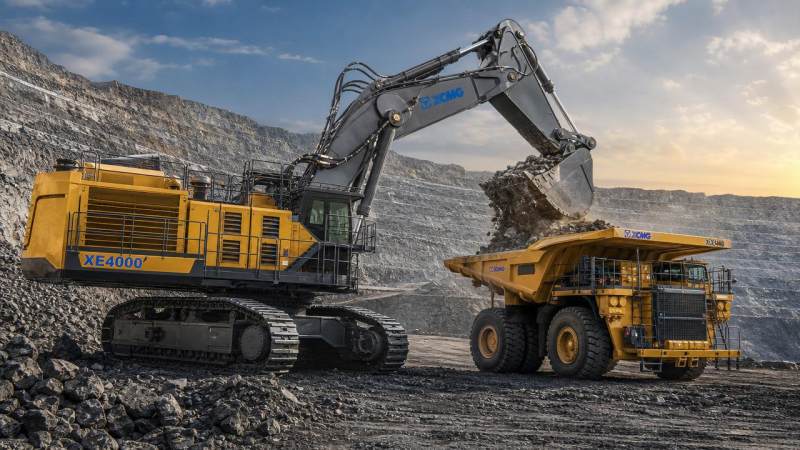
Ultra-Large Excavators Explained: Key Capacity, Reach, and Site Access Factors
For technical evaluators, brochure numbers are only a starting point.
Ultra-large excavators must match material, bench geometry, haulage flow, and site constraints at the same time.
That is why the best machine on paper can still underperform in the field.
A reliable assessment looks beyond nominal bucket size or engine power.
It connects digging performance, structural limits, maintenance access, transport logistics, and operating rhythm.
This guide breaks down the core capacity, reach, and site access factors that shape selection decisions for ultra-large excavators.
Why capacity is more than bucket volume
Bucket capacity is the most visible figure, but it is never the whole capacity story.
Actual output depends on fill factor, swell characteristics, fragmentation, and the consistency of the loading cycle.
In open-pit mining, a 40 m³ bucket may not deliver expected tonnage if blasted rock is oversized.
Wet clay or sticky overburden can reduce discharge quality and slow truck spotting.
This also means hourly productivity should be reviewed in tons, not just cubic meters.
- Check rated bucket volume against target material density.
- Model fill factor under expected fragmentation conditions.
- Review cycle time with truck queue assumptions.
- Compare theoretical and effective tons per hour.
When evaluating ultra-large excavators, effective payload transfer per shift is the number that matters most.
Reach, bench geometry, and working envelope
Reach determines whether the machine fits the bench design without forcing inefficient positioning.
Maximum digging reach looks impressive, yet usable reach is often smaller under real load conditions.
Boom and arm geometry, dump height, and crowd force all affect the usable working envelope.
If the bench is too high, the operator may need repeated repositioning.
If the truck body sits too far from the swing center, cycle time stretches quickly.
That extra swing angle can erase the advantage of a larger machine.
What to verify in the reach profile
- Maximum digging depth and reach at ground level.
- Dump height versus truck sidewall height.
- Front shovel or backhoe suitability for the mine plan.
- Swing radius clearance in narrow loading zones.
The best ultra-large excavators are not simply long-reaching. They are geometrically aligned with the site layout.
Cycle efficiency and match factor
Productivity rises when the excavator and haul truck work as a balanced system.
A machine that takes too many passes wastes time.
A machine that overfills or poorly matches truck bodies creates spillage, payload inconsistency, and tire area cleanup.
For ultra-large excavators, pass matching remains one of the clearest decision tools.
Many operations still target a four-pass or five-pass truck loading pattern.
That target keeps load distribution stable and limits queue variability.
In practical terms, ultra-large excavators should be selected as part of a production chain, not as isolated assets.
Ground pressure, stability, and undercarriage limits
Large operating weight improves breakout force and structural robustness, but it also raises ground interaction risks.
Soft haul road edges, reclaimed surfaces, and wet pit floors can compromise stability.
Ground bearing pressure should be checked against seasonal conditions, not only dry-season averages.
From a risk perspective, undercarriage wear also deserves early attention.
Long tramming distances can sharply increase maintenance cost per productive hour.
This is especially true when ultra-large excavators are moved frequently between benches.
Ground and stability checklist
- Assess bearing capacity under wet and transitional weather.
- Review track width and contact area.
- Estimate tramming distance per month.
- Include slope approach and bench edge tolerance.
A machine that cannot stand securely or move economically will not deliver reliable mine productivity.
Site access and transport planning often decide feasibility
This is where many ultra-large excavators face hidden barriers.
A machine may fit production needs perfectly, yet fail the access plan.
Transport width, component weight, bridge limits, turning radii, and assembly space can delay mobilization for weeks.
In remote mining regions, logistics can be as critical as digging performance.
More importantly, assembly and commissioning often need heavy lift support, hardstand preparation, and specialized crews.
That creates schedule dependencies beyond the excavator itself.
- Confirm shipping split by major modules.
- Check route restrictions for height, axle load, and bridge class.
- Review on-site assembly footprint and crane requirements.
- Verify spare parts access after commissioning.
For technical selection, site access should be treated as a first-stage filter, not a final logistics note.
Powertrain, controls, and operating context
Recent evaluation trends show growing attention to powertrain architecture and control systems.
Diesel-hydraulic and electric drive configurations behave differently under long-duty cycles.
The right choice depends on energy supply, emissions goals, altitude, temperature, and maintenance capability.
Control precision matters as much as raw force.
Smooth hydraulic response helps maintain bucket fill, reduce shock loads, and improve operator consistency.
In harsh sites, monitoring systems also support predictive maintenance and uptime planning.
- Compare fuel or energy consumption per moved ton.
- Check derating risk at altitude and extreme heat.
- Review onboard diagnostics and remote monitoring depth.
- Assess control smoothness in repetitive loading cycles.
For ultra-large excavators, advanced controls increasingly influence whole-life efficiency, not just operator comfort.
How to evaluate ultra-large excavators with fewer blind spots
A sound review process combines technical data with site-specific operating logic.
Start with the material profile and production target.
Then test each candidate against geometry, truck match, access constraints, and service conditions.
This reduces the risk of selecting an oversized or poorly matched asset.
In real projects, the strongest decision is rarely the one with the biggest specification sheet.
It is the one that keeps tons moving safely, predictably, and profitably.
That is the practical standard TF-Strategy applies when interpreting heavy equipment intelligence.
If you are comparing ultra-large excavators, build your shortlist around effective output, workable reach, ground suitability, and access feasibility first.
Once those four factors align, the remaining specifications become much easier to judge with confidence.
Related News
 Oct 25, 2026Comparing Industrial Equipment Suppliers: Lead Times, Warranties, and ServiceMake a smarter industrial equipment supplier comparison. Explore lead times, warranty coverage, and service support to reduce downtime risk and choose with confidence.
 Oct 24, 2026Choosing Lifting Equipment for Middle East Petrochemical Plants in Hazardous AreasExplore petrochemical lifting equipment Middle East plants can rely on. Compare hazardous-area certification, capacity, and heat limits to make informed procurement decisions.
 Oct 23, 2026Selecting Lifting Equipment for Nuclear Component Transport: Key Safety CriteriaSelecting lifting machinery for nuclear component transport? Discover essential safety criteria, load control checks, and supplier requirements to guide confident procurement.
 Oct 22, 2026Tunnel Boring Machines in Southeast Asia: EPB vs. Slurry for Soft GroundCompare tunnel boring machines Southeast Asia projects rely on: EPB vs. slurry for soft ground. Discover how groundwater, settlement risks, and spoil handling shape the right choice.

Related News

Heavy Haulage Strategist
Weekly Insights
Stay ahead with our curated technology reports delivered every Monday.