
TBM Construction Methods: EPB vs Slurry TBMs for Different Ground Conditions
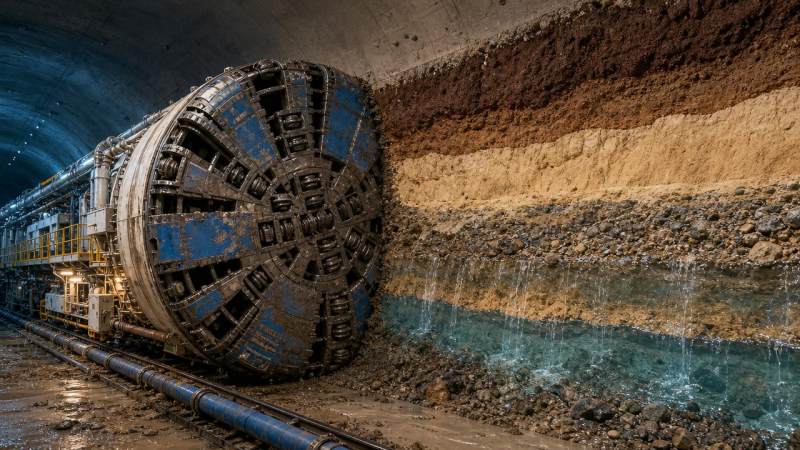
Selecting the right TBM construction methods is a high-stakes technical decision that directly affects excavation stability, advance rate, cost control, and project risk.
For technical evaluators, the comparison between Earth Pressure Balance (EPB) and Slurry TBMs is not simply about machine type—it depends on ground permeability, face pressure control, spoil behavior, groundwater conditions, and settlement tolerance.
This article examines how EPB and Slurry TBMs perform across different geological scenarios, helping infrastructure teams align tunneling methodology with safety, productivity, and lifecycle value.
What Makes TBM Construction Methods a Strategic Evaluation Issue?
TBM construction methods define how the tunnel face is supported, how excavated material is transported, and how risks are controlled during continuous boring.
For technical evaluators, the key question is not whether a TBM is advanced, but whether its working principle matches actual ground behavior.
Core evaluation logic
- Face stability must be maintained within acceptable pressure ranges, especially under shallow cover, mixed ground, or urban settlement constraints.
- Spoil removal must suit soil plasticity, abrasiveness, moisture content, and the available space for treatment plants or muck logistics.
- Groundwater control must consider permeability, hydrostatic pressure, intervention requirements, and environmental discharge restrictions.
- Lifecycle cost should include machine configuration, consumables, additives, separation systems, downtime risk, and contractual delay exposure.
TF-Strategy views these decisions through a heavy-industry intelligence lens, connecting geological parameters, machinery capability, and project delivery strategy.
EPB vs Slurry: Which Ground Conditions Favor Each Method?
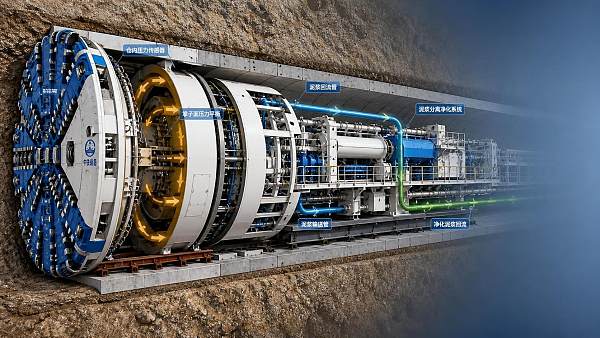
The most important split between EPB and Slurry TBMs is the face support medium. EPB uses conditioned excavated soil; slurry uses pressurized bentonite suspension.
The following comparison helps evaluators match TBM construction methods with soil permeability, settlement sensitivity, and spoil handling requirements.
In practice, EPB is often favored for cohesive urban ground, while Slurry TBMs gain advantage in coarse, saturated, and highly permeable geology.
How EPB TBMs Perform in Urban and Mixed Soft Ground
EPB machines are widely used in metro, utility, road, and rail projects where soil can be conditioned into a controllable plastic mass.
Their success depends on balancing cutterhead torque, chamber pressure, screw conveyor extraction, and additive dosage under changing soil conditions.
Where EPB is usually the stronger choice
- Urban clay and silt zones where low permeability helps maintain stable chamber pressure without excessive groundwater inflow.
- Projects with limited surface space, because EPB operations do not require a large slurry separation plant.
- Alignment sections requiring frequent pressure adjustments due to shallow cover, buried utilities, or sensitive buildings.
- Projects where muck can be transported by conveyor or wagons after conditioning and does not require intensive fluid treatment.
However, EPB is not a universal answer. Very permeable sand, high groundwater pressure, or unstable gravel lenses can reduce reliability.
When EPB is selected for transitional ground, evaluators should verify conditioning tests, screw conveyor sealing capacity, and intervention strategy before procurement.
When Slurry TBMs Reduce Risk in Water-Bearing Ground
Slurry TBMs are designed for conditions where pressurized fluid support offers better stability than conditioned excavated soil alone.
They are particularly relevant for river crossings, coastal tunnels, large-diameter road tunnels, and granular formations with significant water flow.
Key advantages for technical evaluators
- Hydraulic face support can be controlled accurately when permeability and groundwater pressure are beyond typical EPB comfort zones.
- Slurry transport removes excavated material through pipelines, which can be advantageous in long drives or constrained underground logistics.
- Separation plants allow engineered handling of granular spoil, although site footprint and environmental controls must be planned early.
- The method can support large-diameter tunneling where face stability demand and settlement tolerance are both demanding.
The trade-off is complexity. Slurry systems require experienced operation, slurry quality management, separation capacity, and strict monitoring of loss or blowout risks.
Parameter Checklist for Selecting TBM Construction Methods
Before comparing suppliers or prices, evaluators should convert geological reports into measurable selection parameters for TBM construction methods.
The table below summarizes practical checkpoints that help clarify whether EPB or Slurry technology deserves priority in early technical review.
A strong selection report should not rely on average ground descriptions. It should map risks by chainage, transition zone, and operating mode.
Cost, Logistics, and Schedule: What Procurement Teams Often Underestimate
Procurement decisions around TBM construction methods often focus on machine purchase or rental cost, while hidden operational cost receives less scrutiny.
For billion-dollar infrastructure programs, the wrong tunneling method can increase claims, delay interfaces, and reduce contract margin.
Cost drivers that should appear in the evaluation model
- EPB cost exposure includes additives, screw conveyor wear, muck conditioning tests, and potential delays in unstable permeable lenses.
- Slurry cost exposure includes separation plant procurement, bentonite circulation, slurry treatment, disposal compliance, and higher surface logistics.
- Both methods require planned interventions, cutter tool supply, monitoring instruments, trained operators, and contingency plans.
- Interface costs may arise from segment supply, grout performance, shaft capacity, ventilation, and spoil transport bottlenecks.
Technical evaluators should also test schedule sensitivity. A cheaper method that loses advance rate in critical ground may be more expensive overall.
Application Scenarios: Matching Method to Project Risk
Different infrastructure projects impose different priorities. A metro station approach, a subsea crossing, and a mountain portal cannot be evaluated identically.
This scenario table helps align TBM construction methods with common engineering environments and commercial constraints.
Scenario-based evaluation prevents oversimplification. The best choice is usually the method with the most controllable risk envelope, not the most familiar machine.
Compliance, Monitoring, and Safety Checks Before Approval
TBM construction methods must be assessed with safety systems, environmental obligations, and contractual monitoring requirements in view.
International projects commonly reference machinery safety principles, pressure work procedures, environmental discharge rules, and local tunnel construction codes.
Practical approval checklist
- Confirm face pressure monitoring, alarms, and operator response procedures for normal, transition, and emergency conditions.
- Review intervention methods, including compressed air, hyperbaric access, tool change frequency, and medical safety planning where applicable.
- Validate spoil, slurry, or additive disposal routes against environmental permits and local treatment capacity.
- Check instrumentation plans for settlement, pore pressure, lining deformation, vibration, and adjacent asset protection.
The approval package should integrate design assumptions with live operational controls, because ground response rarely follows a single deterministic model.
Common Misjudgments in EPB and Slurry Method Selection
Many selection failures come from treating geological reports as static documents rather than probabilistic risk maps for TBM construction methods.
Misjudgment 1: Choosing EPB only because site space is limited
Limited space matters, but it cannot override high permeability, uncontrolled inflow, or insufficient fines content. Geological behavior should lead the decision.
Misjudgment 2: Assuming Slurry always provides lower settlement
Slurry can control water-bearing granular ground well, but poor slurry management, pressure loss, or separation bottlenecks can still create settlement risk.
Misjudgment 3: Ignoring transition zones
Short transition zones can dominate schedule risk. Evaluators should request drive-by-drive controls, not only a single method recommendation.
FAQ for Technical Evaluators
How should we start comparing TBM construction methods?
Start with permeability, groundwater head, fines content, abrasiveness, and settlement tolerance. Then compare operating systems, not only machine names.
Is EPB suitable for sandy ground?
EPB can work in sandy ground when conditioning creates a stable plug and water pressure is manageable. Clean, permeable sand increases uncertainty.
When does Slurry become the safer technical option?
Slurry becomes attractive when water-bearing granular layers, high permeability, or strict face pressure control make soil-based chamber support unreliable.
What should be included in a procurement specification?
Include ground zoning, pressure ranges, cutterhead concept, wear protection, intervention requirements, spoil treatment, monitoring obligations, and acceptance criteria.
Why Choose TF-Strategy for TBM Method Intelligence?
TF-Strategy supports evaluators who need more than equipment descriptions. We connect machine parameters, construction methodology, and infrastructure strategy.
Our Strategic Intelligence Center tracks TBM technology, cutterhead material evolution, heavy machinery supply signals, and global project tender dynamics.
Consult us for decision-ready support
- Parameter confirmation for EPB, Slurry, and mixed-ground tunneling assumptions before technical approval.
- Method selection support based on geology, groundwater, settlement limits, logistics, and lifecycle cost exposure.
- Procurement intelligence covering supplier comparison points, delivery-cycle risks, spare parts planning, and specification clarity.
- Commercial insights for contractors seeking lower TCO, safer construction planning, and better alignment with infrastructure schedules.
If your team is reviewing TBM construction methods for a complex tunnel, contact TF-Strategy to discuss geology, parameters, certification expectations, delivery constraints, and quotation priorities.
Visioning Terra-Force, Intelligence Navigating Engineering: our role is to help infrastructure teams choose tunneling methods with confidence, discipline, and measurable value.
Related News
 Oct 17, 2026Tunnel Boring Machine Supplier List: Compare TBM Types and Service CoverageExplore our tunnel boring machinery supplier list to compare EPB, slurry and hard rock TBMs, assess service coverage and lifecycle costs, and build a smarter procurement shortlist.
 Oct 16, 2026Heavy-Duty Petrochemical Lifting: Selecting Cranes by Load, Radius, and Site AccessExplore heavy-duty petrochemical lifting solutions. Compare cranes by load, radius, site access, and ground support to reduce project risk and optimize lifting costs.
 Oct 15, 2026Crane Selection for Petrochemical Turnarounds: Capacity, Radius, and Site AccessExplore petrochemical lifting solutions cranes can deliver, with expert guidance on capacity, working radius, and site access to help you plan a safer, more efficient turnaround.
 Oct 14, 2026High-Capacity Heavy Lifting Solutions: Matching Load, Radius, and Ground ConditionsDiscover heavy lifting solutions high capacity projects demand—compare load charts, working radius, and ground conditions to select a feasible, cost-effective system.
Geological Boring Fellow
Weekly Insights
Stay ahead with our curated technology reports delivered every Monday.