
Which tunneling equipment innovations cut site risk fastest?
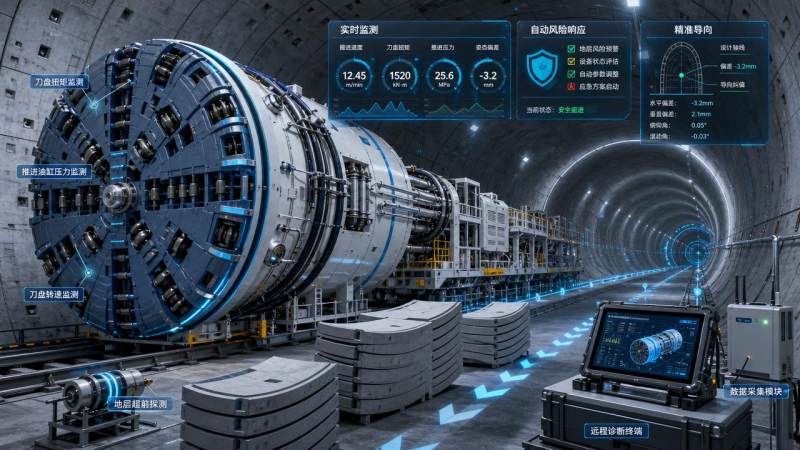
For quality-control and safety leaders, the fastest risk reductions often come from tunneling equipment innovations that improve ground awareness, automate hazard response, and stabilize performance under changing geology. From smarter cutterhead monitoring to remote diagnostics and precision guidance, the newest systems help teams detect defects earlier, reduce human exposure, and keep compliance visible. This article examines which upgrades deliver the quickest site-level safety gains and how to prioritize them in real projects.
In active TBM drives, risk rarely comes from one dramatic failure alone. More often, it builds through 5 to 10 small deviations: rising cutterhead temperature, delayed slurry balance adjustment, unstable ring build quality, poor visibility of wear, or incomplete intervention records. For safety managers and QC teams, the most valuable tunneling equipment innovations are therefore not always the most futuristic. They are the ones that shorten detection time, reduce manual exposure at the face, and make corrective action repeatable within the same shift.
That practical view matters across urban metro tunnels, mountain crossings, utility drives, and complex mixed-ground sections. Whether the machine is operating at 8 m/day or 25 m/day, site risk falls fastest when crews can identify abnormal conditions within minutes rather than after a full cycle, and when maintenance, navigation, and ground response are visible across engineering, quality, and EHS teams.
Which tunneling equipment innovations reduce risk at the site level first
Not every upgrade delivers the same speed of impact. For most projects, the quickest gains come from four categories of tunneling equipment innovations: real-time condition monitoring, automated hazard response, precision guidance, and remote diagnostics. These are the systems that influence daily exposure, intervention frequency, and defect discovery without waiting for a full machine redesign.
1. Real-time cutterhead and cutter condition monitoring
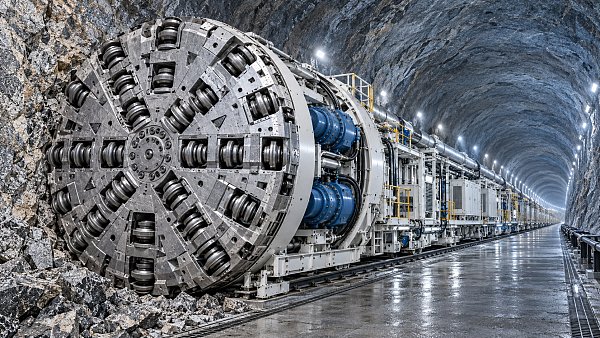
Cutterhead performance is often the earliest warning zone. Sensor packages that track vibration, torque fluctuation, bearing temperature, penetration rate, and wear trend can reveal abnormal rock interaction or blocked muck flow before visible damage appears. On mixed-face projects, even a 10% to 15% deviation from the normal torque-penetration relationship may justify an immediate inspection decision.
For QC personnel, this matters because quality defects and safety events often share the same root cause. Unstable cutting can increase segment load variation, ring convergence risk, and slurry or spoil inconsistency. Monitoring systems that update every 5 to 30 seconds allow the control room to compare live values with baseline envelopes and escalate early.
Fastest risk reduction mechanism
- Earlier detection of abnormal tool wear before manual face intervention is required
- Reduced unplanned stoppages linked to hidden bearing or drive overload
- Better correlation between excavation behavior and ring build quality
- More defensible maintenance records for compliance review
2. Ground prediction and face stability sensing
Forward-looking probing, seismic prediction, and continuous pressure trend analysis are among the most valuable tunneling equipment innovations in variable geology. They are especially important in sections with faulted rock, water-bearing layers, karst risk, or urban settlement sensitivity. A warning window of even 3 to 20 meters can materially change response quality.
When teams can identify permeability change, cavity indicators, or face pressure instability before breakthrough, they can adjust advance rate, grouting sequence, or conditioning dosage under controlled conditions. That reduces the chance of rushed human intervention and limits the downstream impact on segment handling, spoil management, and settlement control.
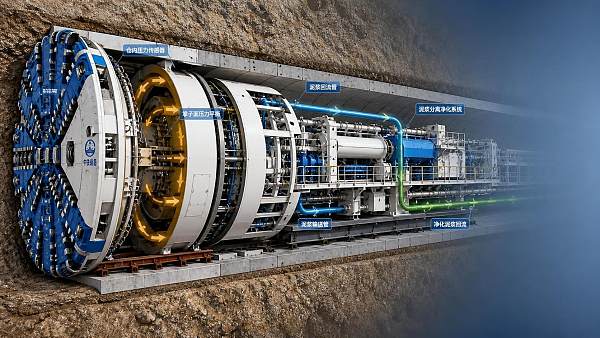
3. Automated hazard response in slurry, EPB, and hydraulic systems
Automation does not remove the need for experienced operators, but it can reduce reaction delay. In practice, alarm-linked shutdown logic, pressure interlocks, seal lubrication monitoring, and auto-adjustment of spoil extraction or slurry circulation often cut site risk faster than cosmetic digital upgrades. A 20-second faster response to overpressure or lubrication loss can prevent a multi-hour incident.
For safety leaders, the key is not simply whether alarms exist, but whether alarm thresholds are layered. A three-level logic model, such as advisory, intervention, and shutdown, tends to be more effective than a single alarm point because it aligns operator behavior with actual escalation risk.
The table below compares common tunneling equipment innovations by speed of deployment and site-level risk reduction value.
The main lesson is simple: the best early investments are those that shorten the interval between anomaly, decision, and intervention. Among tunneling equipment innovations, systems that improve visibility and reaction speed usually outperform headline-grabbing upgrades that require major process change before value appears.
How QC and safety teams should prioritize investments
A useful prioritization model is to score each innovation against three dimensions: exposure reduction, defect prevention, and implementation friction. If a system reduces worker exposure by one manual intervention per week, cuts fault diagnosis time from 4 hours to 45 minutes, and can be installed in under 30 days, it deserves early attention.
Map risk by tunnel phase, not by equipment category alone
Different phases create different risk concentrations. Launch and breakthrough may need stronger guidance, settlement monitoring, and communication redundancy. Peak production may depend more on cutter wear analytics, segment handling safety, and hydraulic system stability. By contrast, intervention-heavy periods may justify remote inspection tools and lockout verification technology first.
Many projects make the mistake of buying digital features in bundles without a phase-specific plan. For example, a project with 12 months of repetitive urban drive conditions may gain more from automated pressure trend analysis and ring build traceability than from a premium visualization layer that adds little control value.
Use a 4-factor decision screen
- How many manual entries into hazardous zones can this innovation avoid each month?
- Will it detect quality drift before the next ring, shift, or maintenance cycle?
- Can supervisors verify actions through logs, alarms, or trend history?
- Does the project team have the training capacity to use it within 2 to 6 weeks?
Red flags during evaluation
- Too many dashboards with no clear alarm ownership
- No baseline values for torque, vibration, slurry density, or face pressure
- Sensor additions that are not linked to work instructions
- Remote diagnostics without cybersecurity and access control procedures
The following framework helps teams compare investments based on direct site benefit rather than vendor presentation quality.
For most organizations, a shorter implementation window with strong traceability is preferable to a technically superior option that requires major system reconfiguration. Tunneling equipment innovations only cut risk quickly when project teams can act on the data without delay.
High-impact innovations by operating scenario
The fastest path to lower risk depends on the geology, tunnel environment, and machine type. A mountain tunnel in fractured rock does not share the same priorities as an urban EPB drive below utilities. Below are the scenarios where specific tunneling equipment innovations usually deliver the earliest measurable benefit.
Urban tunneling with settlement sensitivity
In dense urban settings, precision guidance, face pressure stability, grout injection control, and ring build traceability rise to the top. A navigation deviation of even 10 to 20 mm can have downstream implications in constrained corridors, while delayed grout confirmation may affect void closure behind the lining.
Here, the best tunneling equipment innovations are those that merge machine data with construction tolerance controls. If segment erection, bolt torque confirmation, and tail void grouting records remain disconnected, quality and safety signals arrive too late.
Hard rock and mixed-ground drives
On hard rock and transition sections, cutterhead load analytics and forward geology indication often produce the fastest risk reduction. Sudden changes in penetration rate, vibration signature, or disc cutter temperature can flag unstable contact conditions well before a serious intervention is scheduled.
Projects that track only total advance and total downtime often miss this. QC and safety teams should instead monitor at least 6 recurring indicators: cutter consumption trend, unplanned stoppage count, intervention hours, face-pressure stability range where applicable, ring geometry acceptance, and hydraulic fault recurrence.
Remote or high-utilization projects
Where OEM engineers are not always onsite, remote diagnostics and assisted troubleshooting become especially valuable. If a recurrent hydraulic, electrical, or data bus fault takes 3 to 5 hours to diagnose each time, remote access can cut cumulative exposure and production disruption significantly over a month.
These projects also benefit from predictive spare-parts planning linked to condition data. Risk drops faster when maintenance teams know which subsystems are approaching service limits within the next 50 to 100 operating hours rather than reacting after a fault trip.
Implementation mistakes that slow down safety gains
Even strong tunneling equipment innovations can underperform if rollout is weak. The most common problem is treating technology deployment as an IT task rather than a site control process. Sensors, diagnostics, and alarms only reduce risk when they are tied to response thresholds, owner names, and documented intervention steps.
Mistake 1: installing sensors without baseline envelopes
A vibration alert is not useful if no one has defined what normal looks like under current geology. Teams should collect at least 7 to 14 days of stable operating data where possible, then set conditional ranges by geology type, advance mode, and tool condition. Without baselines, alarms either become noise or get ignored.
Mistake 2: weak linkage between alarms and field action
If a pressure anomaly appears on the screen but no work instruction defines slowdown, inspection, grouting check, or stop criteria, the technology adds visibility without control. The minimum practical approach is a one-page alarm matrix listing parameter, threshold, action owner, response time, and escalation path.
Mistake 3: overlooking human factors during adoption
Many systems fail because training is compressed into a single vendor session. A better model is 3 stages: initial familiarization, supervised live use across 1 to 2 shifts, and a review after 2 weeks of operation. This is particularly important for complex dashboards, remote support tools, and semi-automated control logic.
A practical rollout checklist
- Define the top 3 site risks the upgrade is meant to reduce
- Assign action owners for every critical alarm or anomaly class
- Set review frequency: per shift, daily, and weekly trend review
- Validate data quality before using outputs for operational decisions
- Link records to maintenance, QC, and EHS reporting lines
For portals such as TF-Strategy, the strategic value lies in translating equipment innovation into execution intelligence. QC and safety managers do not need more isolated specifications. They need clear guidance on which upgrades cut intervention exposure, improve compliance visibility, and support safer production under real geological uncertainty.
What decision-makers should ask suppliers before purchase or retrofit
Before approving a retrofit or selecting a new machine package, decision-makers should ask how the proposed innovation performs in real tunneling workflows. The right question is not only “What can the system measure?” but “How quickly does it help the site avoid a hazard, defect, or unplanned intervention?”
Key supplier questions
- Which critical parameters are measured continuously, and at what refresh interval?
- Can alarms be customized by geology, operating mode, and project stage?
- What data is stored locally, and for how many days if connectivity drops?
- How are remote diagnostics secured and permission-controlled?
- What training and commissioning support is required during the first 14 to 30 days?
- How does the system support incident review, trend analysis, and audit evidence?
The strongest tunneling equipment innovations are those that fit the contractor’s control structure, not just the manufacturer’s technical roadmap. For quality and safety leaders, priority should go to systems that reduce exposure quickly, make machine behavior more predictable, and create usable records for every shift.
If you are evaluating upgrades for TBM operations, segment quality control, or risk visibility under changing geology, TF-Strategy can help you compare solutions through an engineering and operational lens. Contact us to discuss project-specific priorities, request a tailored equipment intelligence brief, or explore more tunneling equipment innovations that deliver measurable site safety gains faster.
Related News
 Oct 06, 2026Selecting Petrochemical Overhead Cranes for Hazardous Areas and Heavy Process LoadsPetrochemical overhead cranes for hazardous areas: learn how to match capacity, duty, controls, corrosion protection, and maintenance access for safer, reliable lifts.
 Oct 05, 2026Tunneling Equipment Specification Planning: Key Criteria for Ground and Project RisksEquipment specification planning tunneling: learn how to match TBM systems to ground risks, geometry, safety, logistics, and lifecycle cost for more reliable project delivery.
 Oct 04, 2026Nuclear Lifting Equipment Cost: Budgeting for Compliance, Testing, and Lifecycle RiskNuclear lifting equipment cost explained: budget for compliance, proof-load testing, installation, documentation, and lifecycle risk to make confident procurement decisions.
 Oct 03, 2026How to Assess TBM Manufacturers for Hard-Rock Tunneling Projects?Choose the right tunnel boring machine manufacturer for hard-rock projects. Explore key criteria for design, lifecycle cost, factory quality, and service support.
Geological Boring Fellow
Weekly Insights
Stay ahead with our curated technology reports delivered every Monday.