
Tunnel Boring Machine Selection Guide: Ground Conditions, Diameter, and Support Systems
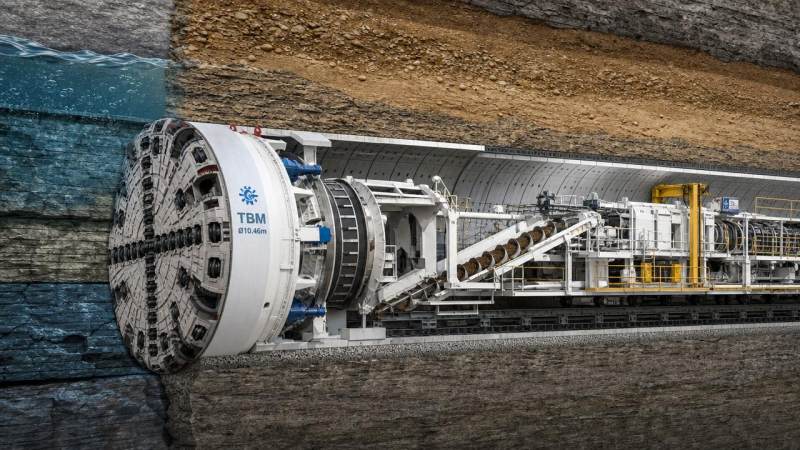
Tunnel Boring Machine Selection Guide: Ground Conditions, Diameter, and Support Systems
Selecting the right tunnel boring machine is a high-stakes technical decision.
It shapes advance rate, cutter wear, settlement control, safety margins, and total project cost.
In practice, tunnel boring machine selection is never about one parameter alone.
Ground behavior, excavation diameter, and support needs must be reviewed as one system.
That is where many evaluations become clearer.
A machine that performs well in stable rock may fail economically in mixed-face ground.
Likewise, a larger shield can improve functional capacity while increasing torque, thrust, and lining demands.
This guide explains how to compare tunnel boring machine options with a disciplined technical lens.
Why tunnel boring machine selection starts with ground conditions
Ground conditions define the excavation environment before any mechanical choice is made.
That means the first screening step is always a reliable geotechnical baseline.
Key inputs include rock strength, abrasivity, weathering, groundwater pressure, permeability, and faulted zones.
Face stability risk also matters, especially in urban crossings and shallow overburden sections.
From a selection standpoint, the biggest question is simple.
Will the tunnel boring machine excavate mostly rock, mostly soft ground, or frequent transitions between both?
Typical machine fit by ground type
- Hard rock tunnels often favor gripper TBM or single shield TBM configurations.
- Fractured rock with unstable sections may push selection toward double shield arrangements.
- Soft cohesive soils commonly require Earth Pressure Balance, or EPB, tunnel boring machine designs.
- High water pressure and granular soils often support slurry shield selection.
- Mixed-face and variable geology require stronger attention to cutterhead adaptability and pressure control.
This is why geological variability often matters more than average conditions.
A tunnel boring machine sized for mean values can struggle badly at local extremes.
Recent project lessons show that transition zones drive many delays, not uniform sections.
So the smarter approach is to select for the hardest critical window, not the easiest average stretch.
Ground data that should not be treated lightly
- Uniaxial compressive strength and Cerchar abrasivity for cutter consumption forecasts.
- Particle size distribution for spoil conditioning and slurry separation needs.
- Groundwater level, inflow potential, and expected face pressure window.
- Swelling, squeezing, or clogging behavior that affects continuous operation.
- Boulder content and obstructions that may create torque spikes or intervention risks.
How tunnel diameter changes the selection logic
Diameter is more than a geometric requirement.
It changes structural loads, installed power, cutterhead design, segment handling, and logistics planning.
As tunnel diameter increases, performance sensitivity becomes sharper.
Even modest changes can affect thrust demand, backup length, ventilation strategy, and shaft constraints.
That also means tunnel boring machine selection should match the full construction system, not just the excavation face.
What usually changes with larger diameter
- Higher torque and thrust requirements across both startup and steady excavation.
- More demanding segment erection cycles and heavier ring components.
- Greater settlement sensitivity in soft ground and urban environments.
- Stronger need for reliable mucking, slurry circulation, or screw conveyor balance.
- Larger launch and reception arrangements with tighter site interface control.
A common mistake is treating diameter as a late-stage civil design output.
In reality, diameter should be evaluated alongside the tunnel boring machine concept from the start.
This becomes even more important when utilities, walkways, rail clearances, or ventilation ducts are involved.
A slightly oversized tunnel can simplify operations later, but it may create avoidable capital and ground control penalties now.
Diameter and cutterhead performance
Cutterhead opening ratio, tool layout, and wear access must scale with the tunnel profile.
For larger machines, intervention strategy becomes a front-end design issue.
If expected wear is high, safe and fast cutter replacement can protect the whole business case.
That is especially true in abrasive rock or long drives with limited access windows.
Support systems often decide real-world success
A tunnel boring machine never works alone.
Its support systems determine whether theoretical performance becomes actual production.
This includes spoil removal, slurry treatment, segment supply, grout delivery, ventilation, power, and guidance systems.
In many tenders, these interfaces are underestimated.
Yet they often separate smooth drives from chronic downtime.
Support system checks during evaluation
- Can the mucking system match peak production without frequent choke points?
- Is the spoil conditioning plan proven for sticky, abrasive, or water-bearing material?
- Does the segment handling system suit ring weight, site geometry, and cycle time targets?
- Are grout volume, pressure, and curing assumptions aligned with expected void control?
- Is backup train length compatible with launch shaft and tunnel logistics?
A technically sound tunnel boring machine can still underperform if support capacity lags behind excavation capability.
This is why integrated evaluation is essential.
The machine, the ground, and the support chain should be modeled as one operating ecosystem.
EPB, slurry, and rock support implications
EPB systems depend heavily on consistent conditioning, screw conveyor reliability, and face pressure discipline.
Slurry systems need stable separation performance, pipeline integrity, and treatment plant redundancy.
Rock TBM projects may shift focus toward ground support installation rate, scaling control, and cutterhead access.
Different tunnel boring machine types create different support bottlenecks.
That is why selection must reflect operational reality, not catalog performance alone.
A practical comparison framework for tunnel boring machine options
A useful evaluation matrix should be simple enough to compare bids, but detailed enough to expose risk.
The best frameworks balance technical fit, operating resilience, and lifecycle cost.
This kind of framework keeps tunnel boring machine decisions grounded in measurable trade-offs.
It also improves discussions between civil, mechanical, and operations teams.
Common selection risks and how to reduce them
Most tunnel boring machine selection errors are not dramatic.
They usually begin as small assumptions left unchallenged.
- Using incomplete geotechnical data for final machine specification.
- Ignoring mixed-face sections because they represent a short alignment length.
- Focusing on headline advance rate instead of net monthly output.
- Undervaluing cutter access, spare strategy, and intervention time.
- Separating support system procurement from main tunnel boring machine evaluation.
The practical fix is to review uncertainty explicitly.
Score each tunnel boring machine option against best case, expected case, and adverse case scenarios.
That approach often reveals whether a cheaper machine is actually more expensive under real project pressure.
Final decision points that deserve a hard look
Before closing a tunnel boring machine recommendation, a few final checks help sharpen confidence.
- Confirm that the selected machine fits the most difficult ground interval, not only the average profile.
- Verify that tunnel diameter choices align with structural, operational, and launch constraints.
- Test whether support systems can sustain planned production under peak loads.
- Review intervention, maintenance, and consumable strategies as cost drivers.
- Compare bidders on lifecycle resilience, not only procurement price.
A strong tunnel boring machine selection process connects ground truth, machine design, and construction execution.
When those pieces line up, performance becomes more predictable and risk becomes easier to manage.
That is the real goal.
Choose the tunnel boring machine that best matches the ground, the diameter, and the support reality of the project.
Related News
 Oct 24, 2026Choosing Lifting Equipment for Middle East Petrochemical Plants in Hazardous AreasExplore petrochemical lifting equipment Middle East plants can rely on. Compare hazardous-area certification, capacity, and heat limits to make informed procurement decisions.
 Oct 23, 2026Selecting Lifting Equipment for Nuclear Component Transport: Key Safety CriteriaSelecting lifting machinery for nuclear component transport? Discover essential safety criteria, load control checks, and supplier requirements to guide confident procurement.
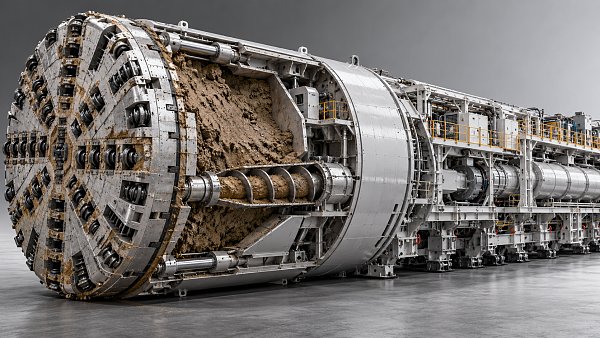
 Oct 22, 2026Tunnel Boring Machines in Southeast Asia: EPB vs. Slurry for Soft GroundCompare tunnel boring machines Southeast Asia projects rely on: EPB vs. slurry for soft ground. Discover how groundwater, settlement risks, and spoil handling shape the right choice.
 Oct 21, 2026Choosing Tunneling Equipment for the Middle East: Rock, Soil, and GroundwaterCompare underground tunneling equipment Middle East projects need. Explore rock, soil, groundwater, and TBM options to reduce risk and make confident procurement decisions.
Related News

Geological Boring Fellow
Weekly Insights
Stay ahead with our curated technology reports delivered every Monday.