
TBM Technology vs Conventional Tunneling: How to Evaluate Ground Conditions, Speed, and Risk
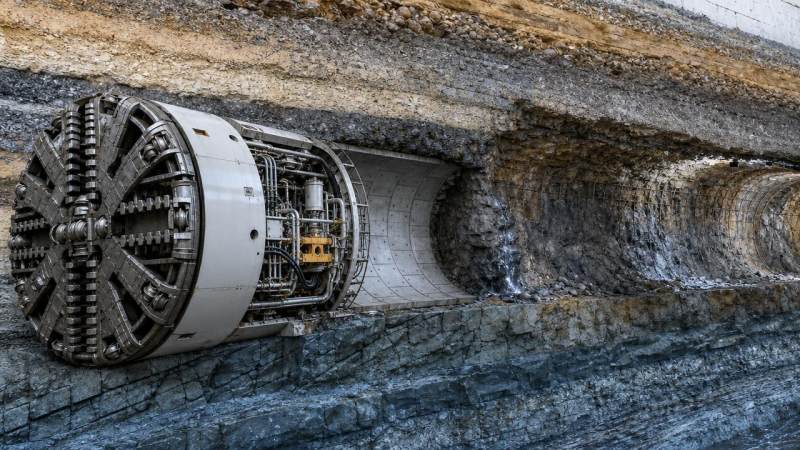
Choosing between TBM technology and conventional tunneling is rarely a narrow engineering call. It shapes schedule certainty, capital deployment, safety exposure, and the ability to manage surprises underground. In major infrastructure programs, that choice also influences procurement strategy, stakeholder confidence, and lifetime project economics.
The comparison matters more today because tunnel projects are being pushed into denser cities, deeper rock formations, mixed ground, and tighter environmental limits. For organizations tracking global heavy industry through platforms such as TF-Strategy, the real question is not which method is universally better. It is which method fits the ground, the delivery model, and the risk tolerance of a specific project.
What the choice really involves
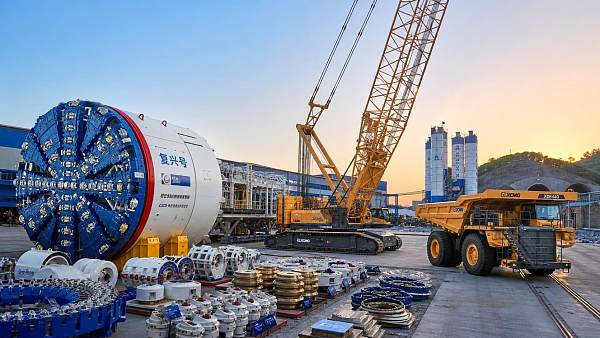
At a basic level, TBM technology uses a mechanized system to excavate, support, and often segmentally line a tunnel in a continuous sequence. Conventional tunneling usually relies on drill-and-blast or sequential mechanical excavation, followed by staged support and lining.
That sounds straightforward, but the commercial implications are very different. TBM technology typically demands higher upfront planning, factory lead time, and logistics discipline. Conventional methods usually offer more flexibility at the tunnel face, especially when geology changes quickly or access conditions are fragmented.
In practice, the decision sits at the intersection of geology, machine capability, construction methodology, and financing pressure. This is exactly where heavy-equipment intelligence becomes useful: physical parameters only matter when they are tied to delivery outcomes.
Ground conditions are the first filter
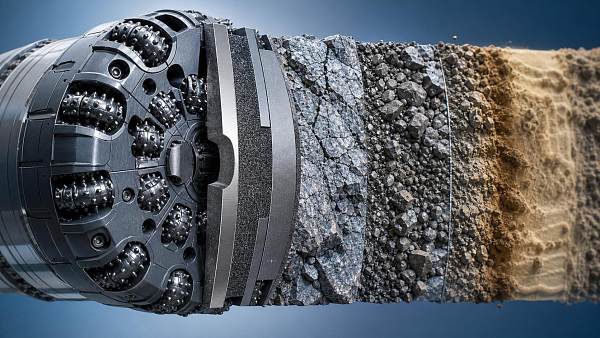
No schedule model or cost benchmark can compensate for weak geotechnical understanding. Before comparing methods, the project needs a realistic picture of rock mass quality, groundwater behavior, abrasivity, faulting, overburden, and the likelihood of mixed-face conditions.
TBM technology performs best when the geology is sufficiently understood and the tunnel length justifies mechanization. Long drives in relatively predictable conditions often reward the stability and repeatability of a TBM system.
Conventional tunneling becomes more attractive when the alignment crosses short, variable sections with abrupt geological transitions. It can also fit projects where multiple access points allow staged excavation by headings, benches, or adits.
Ground factors that change the answer
- Stable and continuous strata usually favor sustained TBM technology performance.
- High groundwater pressure may support slurry or EPB solutions, but only with strong spoil and pressure control.
- Highly fractured rock or fault zones can slow both methods, yet they often penalize a poorly matched TBM more severely.
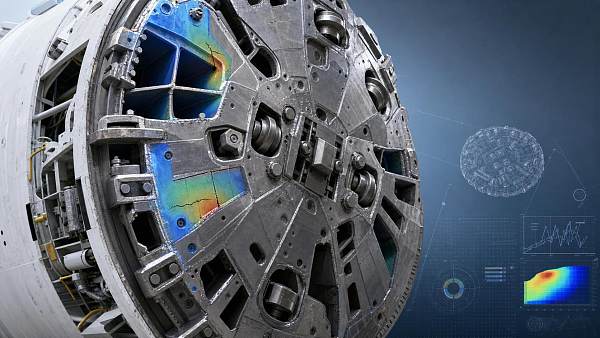
- Extreme abrasivity raises cutter consumption, maintenance stops, and lifecycle cost.
- Mixed-face conditions increase uncertainty because the excavation face does not behave uniformly.
A useful discipline is to test the alignment by risk zones rather than average geology. Average values often hide the short sections that trigger the biggest claims, delays, and redesigns.
Speed is more than advance rate
One of the most common mistakes is to compare tunneling methods using headline meters per day. Advance rate matters, but decision quality improves when speed is measured across the whole delivery chain.
TBM technology can deliver impressive production once the machine is launched, the supply chain is stable, and the crew has settled into a rhythm. However, that performance depends on assembly, commissioning, segment supply, backup system reliability, and spoil removal efficiency.
Conventional tunneling may show lower continuous advance, yet it can gain time when mobilization is simpler, excavation starts earlier, or multiple faces are opened simultaneously. In mountainous projects, this difference can be decisive.
So the better speed question is this: which method gives the most reliable path to the contractual completion date, not the most impressive peak output on paper?
Risk sits in the mismatch, not only in the method
Neither approach is inherently low risk. Risk rises when the selected method is poorly aligned with geology, utility constraints, urban settlement limits, or the organization’s ability to manage complex equipment.
With TBM technology, major exposures often include cutter wear, face instability, hyperbaric intervention, segment quality issues, backup failures, and delayed replacement parts. A highly capable machine can still underperform if support systems are weak.
Conventional tunneling carries a different profile. Blasting restrictions, vibration limits, ventilation demands, labor intensity, and ground support sequencing can all expand schedule and safety risk. Urban environments may narrow the practical room for drill-and-blast even when geology is favorable.
Where decision-makers should look harder
- How much of the alignment has verified borehole and laboratory data.
- Whether contingency plans exist for fault zones, inflows, and tool change disruptions.
- How dependent the chosen method is on imported spares, specialist crews, or long logistics chains.
- Whether contract packaging rewards transparency or pushes risk downstream unrealistically.
This is why intelligence-led evaluation matters. TF-Strategy’s perspective on heavy equipment trends, material evolution, and project delivery signals is useful because risk is now partly technical and partly strategic.
Cost control depends on the full system
TBM technology is often described as capital-intensive, while conventional tunneling is seen as more flexible but slower. That summary is directionally true, yet it is too simple for investment-grade decisions.
A more accurate view separates cost into four layers: procurement, production, disruption, and recovery. Procurement covers the machine, segments, transport, and assembly. Production includes labor, power, consumables, and support systems.
Disruption costs are where budgets often break. Unexpected water ingress, difficult tool interventions, settlement incidents, or re-support requirements can erase any theoretical savings. Recovery costs then appear through claims, redesign, standby time, or delayed opening.
In long and repetitive tunnel programs, TBM technology may reduce total cost of ownership by improving predictability and lowering unit cost over distance. In shorter, geologically broken, or access-rich projects, conventional methods may protect capital and preserve optionality.
Typical project scenarios
Urban metro tunnels with tight settlement limits often point toward TBM technology, especially when surface disruption must be minimized. Mechanized excavation also helps where environmental controls and public scrutiny are intense.
Long water conveyance tunnels can also favor TBM technology if rock conditions are sufficiently mapped and alignment continuity is strong. The economics improve when continuous boring reduces construction duration over large distances.
By contrast, mountain tunnels with several access adits may support conventional tunneling, particularly when rock classes vary sharply and multiple headings can accelerate progress. The same logic can apply to complex caverns and junctions where geometry changes frequently.
Hybrid strategies are increasingly relevant. Some projects use TBM technology for long mainline sections and conventional excavation for stations, cross passages, portals, or problematic zones. That blended approach can balance efficiency with control.
A practical evaluation framework
A sound decision process starts with geology, but it should end with delivery resilience. Comparing bids or concepts without a shared evaluation framework usually leads to false confidence.
- Map the tunnel by geotechnical risk segments, not only by total length.
- Test TBM technology against cutter life, face support, intervention strategy, and supply-chain robustness.
- Assess conventional tunneling against blast limits, support cycles, ventilation, and access efficiency.
- Model schedule certainty using disruption scenarios, not base-case assumptions alone.
- Compare total project exposure, including claims risk, environmental constraints, and commissioning delay.
Where internal knowledge is limited, external intelligence can sharpen the benchmark. Market signals around cutter-head materials, remote diagnostics, electrification, and global equipment lead times can materially change the decision window.
What to do next
The most useful next step is not to ask whether TBM technology is superior in general. It is to define the tunnel’s risk structure, operational constraints, and tolerance for upfront capital versus downstream uncertainty.
Projects that perform well usually establish a short list of decision gates: geological confidence, schedule criticality, urban sensitivity, logistics maturity, and intervention readiness. Once those gates are clear, the method choice becomes more disciplined and less political.
For teams following global infrastructure and heavy-equipment intelligence, the advantage lies in connecting machine parameters with business consequences. That is where comparisons between TBM technology and conventional tunneling become actionable, not theoretical. A better decision starts with better ground data, then moves through production reality, and ends with a risk model that can survive real construction conditions.
Related News
 Sep 05, 2026When Should Projects Specify Luffing-Jib Crawler Cranes for Restricted Sites?Crawler cranes luffing jib solutions for restricted sites: assess clearance, capacity, lift geometry, and planning trade-offs for safer project delivery.
 Sep 04, 2026How Intelligent Drilling Rigs Improve Penetration Rates in Variable Mining Ground ConditionsMining equipment intelligence and drilling rigs adapt to changing ground conditions, improving penetration rates, hole quality, and uptime. Explore smarter drilling strategies.
 Sep 03, 2026How to Match Heavy Equipment Attachments to Soil, Material, and Jobsite ConditionsHeavy equipment attachments matched to soil, materials, and jobsite conditions improve productivity, reduce wear, and support safer, smarter equipment decisions.
 Sep 02, 2026How Infrastructure Supply Intelligence Supports Smarter Sourcing DecisionsInfrastructure supply intelligence sourcing helps teams reduce equipment risk, validate availability, control lifecycle costs, and make smarter infrastructure procurement decisions.
Geological Boring Fellow
Weekly Insights
Stay ahead with our curated technology reports delivered every Monday.