
Tunnel Boring Machine Cutter Head Selection: Rock Conditions, Wear Rate, and Cost Factors
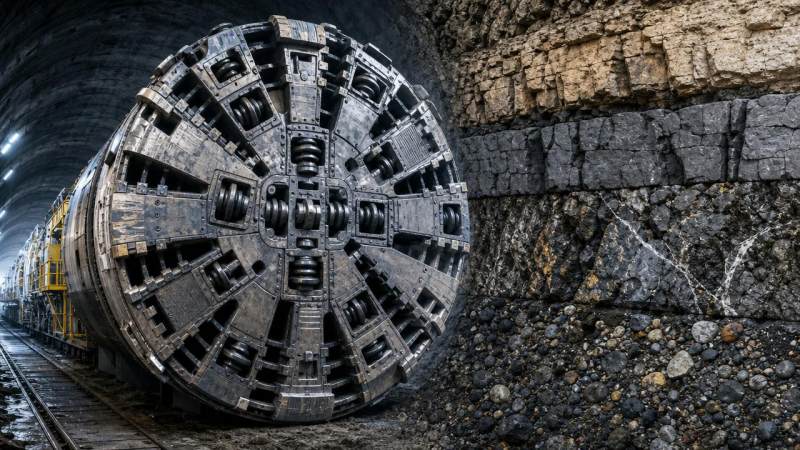
Tunnel Boring Machine Cutter Head Selection: Rock Conditions, Wear Rate, and Cost Factors
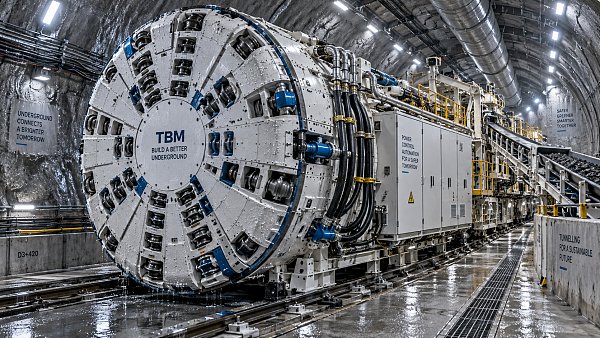
Choosing the right tunnel boring machine cutter head shapes more than cutting performance.
It influences advance rate, stoppage frequency, maintenance cycles, and final project cost.
For procurement and project planning, this decision sits at the center of schedule certainty.
A tunnel boring machine can only perform as well as its cutter head matches the ground.
That sounds simple, but real projects rarely face one uniform rock profile.
More often, crews encounter mixed geology, fault zones, abrasive bands, and variable groundwater.
This is why tunnel boring machine cutter head selection should start with risk, not only price.
The best choice balances rock conditions, wear rate expectations, intervention limits, and lifecycle economics.
When these factors align early, the tunnel boring machine becomes more predictable and far less expensive to operate.
Why Cutter Head Selection Drives Project Economics
Many buying decisions focus on the tunnel boring machine purchase package as a whole.
Yet the cutter head often determines the real operating cost during excavation.
A lower upfront price can quickly disappear if cutters wear too fast.
The same happens when the cutter head design causes repeated chamber entries or difficult tool changes.
In practical terms, cutter head selection affects five cost lines at once:
- Penetration rate and daily advance output.
- Cutter consumption and spare inventory.
- Downtime for inspections and replacement.
- Energy demand under variable rock resistance.
- Safety exposure during interventions.
From a procurement viewpoint, this changes how value should be compared.
The right tunnel boring machine cutter head is not the cheapest component. It is the option that lowers total cost per excavated meter.
Start with Rock Conditions, Not Catalog Specifications
Rock conditions are the first filter in tunnel boring machine cutter head selection.
Compressive strength matters, but it is only one piece of the decision.
Projects also need to review abrasivity, fracture pattern, quartz content, block size, and groundwater behavior.
These factors influence disc cutter layout, opening ratio, muck flow, and structural reinforcement.
For hard, massive rock, a tunnel boring machine usually needs strong cutter load capacity.
For fractured ground, stable muck discharge and reduced blockage risk become equally important.
In mixed-face conditions, the cutter head must tolerate uneven loading across different zones.
That is often where simplified specification comparisons fail.
Key geological checks before buying
- UCS and tensile strength ranges across the alignment.
- Cerchar Abrasivity Index or equivalent wear indicator.
- Joint spacing, fault frequency, and unstable transition sections.
- Mineralogy, especially quartz-rich bands.
- Water inflow and fines that may affect cutter inspection access.
If geotechnical data is incomplete, the safer procurement move is to price uncertainty directly into the tunnel boring machine cutter head strategy.
Understanding Wear Rate Before It Hits the Schedule
Wear rate is where many tunnel boring machine budgets drift off course.
A cutter head may look technically suitable, but still become uneconomic under abrasive ground.
This happens because wear cost is never limited to the cutter itself.
It includes labor, intervention time, chamber access systems, and production losses during stoppages.
In difficult tunnels, a small increase in wear rate can trigger a major rise in cost per meter.
That is why tunnel boring machine selection should use wear forecasting, not rough historical averages alone.
What to ask suppliers about wear
- Expected cutter life under similar geology.
- Assumptions behind that estimate.
- Maximum acceptable wear before replacement.
- Time required for typical cutter change cycles.
- Availability of local spare stock and emergency supply.
Recent market shifts make this even more important.
Projects are pushing longer drives, tighter delivery windows, and stricter safety controls.
That means tunnel boring machine cutter head decisions must account for maintainability as carefully as cutting power.
Matching Cutter Head Design to Cost Priorities
Not every project values the same cost variables.
Some drives prioritize maximum speed. Others prioritize reliability under uncertain ground.
This is where tunnel boring machine cutter head selection becomes a procurement strategy issue.
A high-output design may deliver value in stable hard rock with good intervention access.
A more conservative design may outperform it when geology changes often.
In real procurement reviews, the most useful comparison is not model versus model. It is risk-adjusted cost scenario versus risk-adjusted cost scenario.
How to Compare Supplier Proposals More Accurately
Supplier offers for a tunnel boring machine often look similar on the surface.
The difference appears when assumptions are unpacked carefully.
Some proposals are built around ideal geology. Others are built around actual uncertainty.
That gap can reshape both CAPEX and OPEX over the full drive.
Use this comparison checklist
- Check whether geology references match your site investigation data.
- Review cutter head reinforcement zones and material grades.
- Compare estimated tool consumption per kilometer.
- Confirm intervention method, frequency, and safety constraints.
- Price spare parts, logistics, and response time together.
- Ask for references from similar tunnel boring machine projects.
A stronger signal is how transparently the supplier explains failure modes.
When a tunnel boring machine vendor clearly discusses wear, blockage, and mixed-ground loading, the proposal is usually more mature and more usable.
A Practical Buying Framework for Better Tunnel Boring Machine Decisions
A practical framework keeps the cutter head decision focused and defensible.
It also helps teams align engineering judgment with commercial approval.
- Map the alignment into geological risk segments.
- Estimate wear rate by segment, not by project average.
- Convert wear forecasts into downtime and spare cost.
- Test supplier proposals against worst-case transition zones.
- Select the tunnel boring machine cutter head with the best lifecycle resilience.
This approach makes procurement discussions much clearer.
Instead of debating broad preferences, teams can compare quantified trade-offs.
That is especially useful for long tunnels, cross-border supply chains, and fixed completion windows.
In those cases, tunnel boring machine reliability often creates more value than a marginal discount at contract signing.
Final Takeaway
A tunnel boring machine cutter head should be chosen as a cost-control tool, not just a mechanical part.
The strongest decisions start with real rock conditions, then move through wear rate, maintenance access, and total delivered cost.
When procurement teams use this logic, tunnel boring machine performance becomes easier to predict and easier to defend commercially.
That also means fewer surprises underground and better control over schedule commitments.
Before finalizing any purchase, review the cutter head against geology, expected wear, intervention limits, and full lifecycle cost per meter. That is where smarter tunnel boring machine value is built.
Related News
 Oct 27, 2026Construction Equipment Efficiency: How to Reduce Idle Time on JobsitesBoost construction equipment efficiency with smarter scheduling, telematics, and safe shutdown practices. Discover how to reduce idle time and fuel waste on your jobsite.
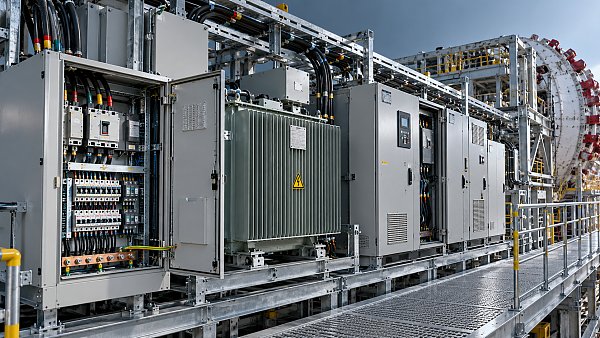
 Oct 26, 2026How TBM Electrical Systems Distribute Power and Protect Against FaultsExplore how TBM equipment electrical systems distribute power, coordinate fault protection, and maintain essential services. Learn what to check for safer, more reliable tunneling.
 Oct 25, 2026Comparing Industrial Equipment Suppliers: Lead Times, Warranties, and ServiceMake a smarter industrial equipment supplier comparison. Explore lead times, warranty coverage, and service support to reduce downtime risk and choose with confidence.
 Oct 24, 2026Choosing Lifting Equipment for Middle East Petrochemical Plants in Hazardous AreasExplore petrochemical lifting equipment Middle East plants can rely on. Compare hazardous-area certification, capacity, and heat limits to make informed procurement decisions.

Related News


Geological Boring Fellow
Weekly Insights
Stay ahead with our curated technology reports delivered every Monday.