
Tunnel Boring Machine Technology Explained: Types, Systems, and Jobsite Limits
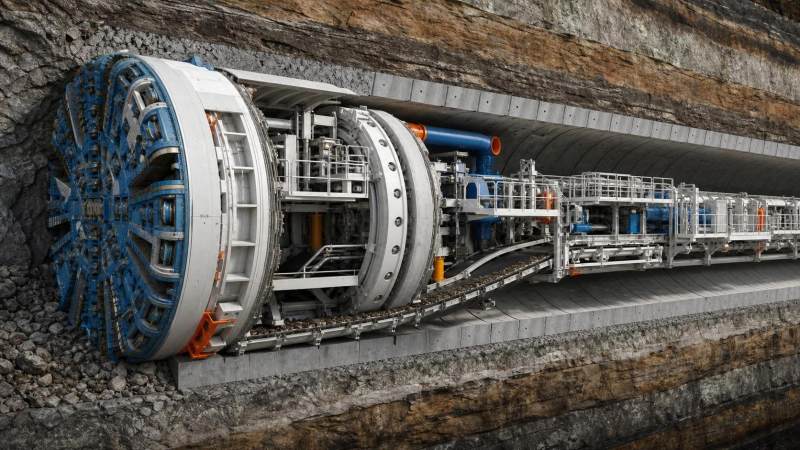
Tunnel Boring Machine Technology Explained: Types, Systems, and Jobsite Limits
Tunnel boring machine technology is changing how underground projects are screened, priced, and de-risked.
It no longer sits only in the equipment domain.
It now shapes procurement logic, schedule confidence, and whole-life construction strategy.
When teams assess a tunnel drive, the machine must match ground behavior, support systems, logistics, and recovery constraints.
That is why tunnel boring machine technology should be reviewed as a full operating system, not a single machine.
The core question is simple: can the selected TBM hold stable performance under actual jobsite limits?
Why Tunnel Boring Machine Technology Matters in Project Evaluation
Modern tunneling demands speed, face stability, worker safety, and predictable ground treatment.
Tunnel boring machine technology directly affects all four.
A strong technical review looks beyond diameter and installed power.
It asks how the machine manages pressure, wear, alignment, spoil, and segment installation over time.
In practice, mismatches usually come from geology variability, utility restrictions, launch shaft size, or poor backup logistics.
The decision lens should include five checks
- Ground conditions across the full alignment, not only the reference boreholes.
- Face support method and pressure control range.
- Cutterhead access, tool replacement time, and wear exposure.
- Spoil removal capacity versus expected advance rate.
- Assembly, transport, launch, and retrieval constraints at the site.
Main Types of Tunnel Boring Machine Technology
Not all TBMs solve the same problem.
The best tunnel boring machine technology choice depends on rock strength, groundwater, fines content, settlement tolerance, and tunnel purpose.
Open gripper TBM
This design works best in competent rock with limited squeezing and manageable groundwater.
It pushes against tunnel walls using grippers and often delivers high advance rates in stable formations.
Its weakness appears in fractured ground, fault zones, and heavy inflows.
Single shield and double shield TBM
Shielded rock machines add protection and lining support where the ground is less reliable.
Double shield units can bore and line simultaneously in suitable rock.
That can improve utilization when the geology allows continuous cycles.
Earth Pressure Balance TBM
EPB tunnel boring machine technology is widely used in soft ground with fine-grained soils.
It balances the face using conditioned excavated material inside the chamber.
This makes it useful in urban corridors where settlement control is critical.
However, sticky clays, oversized cobbles, or poor conditioning can reduce stability and screw conveyor efficiency.
Slurry shield TBM
Slurry tunnel boring machine technology performs well in water-bearing soils, mixed faces, and permeable strata.
It supports the face with pressurized slurry and separates spoil at a surface treatment plant.
The method is powerful, but the support system is complex and highly logistics-dependent.
Variable density and hybrid solutions
Mixed geology is pushing tunnel boring machine technology toward hybrid concepts.
These machines aim to handle rapid changes in groundwater and soil structure without major downtime or unsafe pressure swings.
Core Systems That Define Real TBM Performance
The performance of tunnel boring machine technology depends on system integration more than headline power figures.
Cutterhead and cutting tools
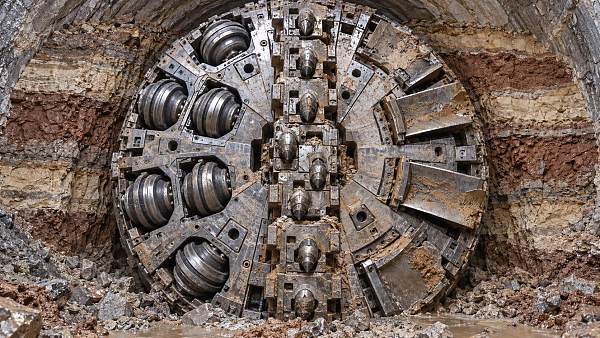
Cutterhead opening ratio, tool layout, wear protection, and torque reserve affect penetration and face control.
In mixed ground, tool accessibility becomes a major risk factor.
Thrust, torque, and drive control
Installed capacity matters, but control quality matters more.
Stable torque delivery helps avoid overload, face disturbance, and segment stress during variable ground response.
Face support and pressure management
This is one of the most important parts of tunnel boring machine technology.
Pressure must stay within a narrow operating window.
Too low can trigger settlement or inflow.
Too high can heave the ground or damage nearby assets.
Spoil transport and separation
A TBM stops being productive when mucking cannot keep up.
Belt conveyors, screw conveyors, slurry circuits, pumps, and treatment plants must be sized to peak demand.
Guidance, lining, and backup systems
Guidance accuracy affects final alignment and downstream fit-out work.
Segment handling, grouting, ventilation, power supply, and backup train layout also shape daily output.
Where Tunnel Boring Machine Technology Reaches Its Limits
Every machine has a limit envelope.
Understanding that envelope is essential before procurement and final method selection.
Geological uncertainty
The biggest challenge is not difficult ground alone.
It is changing ground.
Mixed face conditions, faults, karst voids, boulders, and abrupt water pressure shifts can disrupt planned operations fast.
Urban settlement tolerance
In dense cities, tunnel boring machine technology must work within strict movement thresholds.
Even small deviations can affect utilities, foundations, rail systems, or sensitive industrial facilities.
Space and logistics restrictions
Some projects have enough geology data but not enough site access.
Limited shaft size, narrow staging zones, restricted spoil haulage, and weak utility supply can cap actual performance.
Maintenance and intervention exposure
Hyperbaric intervention, cutter replacement, and chamber access can become schedule drivers.
That is especially true when the original tunnel boring machine technology review underestimates wear intensity or access frequency.
A Practical Assessment Framework for TBM Selection
A useful review framework keeps tunnel boring machine technology tied to measurable jobsite realities.
- Map geology by risk zone, not by average condition.
- Match face support logic to groundwater and fines behavior.
- Test spoil handling against peak production, not ideal production.
- Check intervention strategy, spare parts, and tool replacement windows.
- Review launch, assembly, rescue, and retrieval scenarios early.
- Tie monitoring data to operating thresholds and response actions.
This approach makes tunnel boring machine technology easier to compare across bids and equipment concepts.
More importantly, it turns technical selection into a risk-managed commercial decision.
Final Takeaway
Tunnel boring machine technology is best understood as a coordinated underground production system.
Machine type matters, but system balance matters more.
The strongest evaluations connect geology, face control, spoil logistics, maintenance exposure, and site constraints in one view.
That is where better procurement decisions usually start.
If the goal is lower mismatch risk, safer tunneling, and steadier output, tunnel boring machine technology should always be judged under real jobsite limits, not brochure assumptions.
Related News
 Sep 22, 2026How to Evaluate a High-Altitude Mining Solutions Manufacturer for Remote ProjectsEvaluate a high-altitude mining solutions manufacturer with proven derating, cooling, service logistics, and lifecycle-cost support for remote projects.
 Sep 21, 2026Industrial Supplier Evaluation: A Risk-Based Scorecard for Quality, Capacity, and DeliveryIndustrial supplier evaluation made practical: use a risk-based scorecard to assess quality, capacity, and delivery reliability, reduce project risk, and select suppliers with confidence.
 Sep 20, 2026Comparing Heavy Equipment Warranty Suppliers: Coverage, Claims, and Downtime RiskSupplier comparison for heavy equipment warranty: evaluate coverage, claims speed, service networks, and downtime risk to protect uptime and project costs.
 Sep 19, 2026Mining Truck Technology Trends: What Fleet Managers Should Prioritize for 2026Mining truck technology trends for 2026: prioritize electrification, autonomy, predictive maintenance, and road intelligence to improve fleet uptime, safety, and cost control.
Geological Boring Fellow
Weekly Insights
Stay ahead with our curated technology reports delivered every Monday.