
TBM Technology vs Drill and Blast: Which Tunneling Method Fits Your Ground Conditions?
TBM Technology vs Drill and Blast: Which Tunneling Method Fits Your Ground Conditions?
Choosing between TBM technology and drill and blast is rarely a simple budget call.
Ground behavior, tunnel length, geometry, water pressure, and access constraints usually drive the final method.
That also means early technical screening matters more than many project teams expect.
A method that looks fast on paper can become slow if the geology keeps forcing interruptions.
This comparison explains how TBM technology and drill and blast perform under different ground conditions and why the choice affects risk, productivity, and lifecycle value.
What Makes TBM Technology Different?
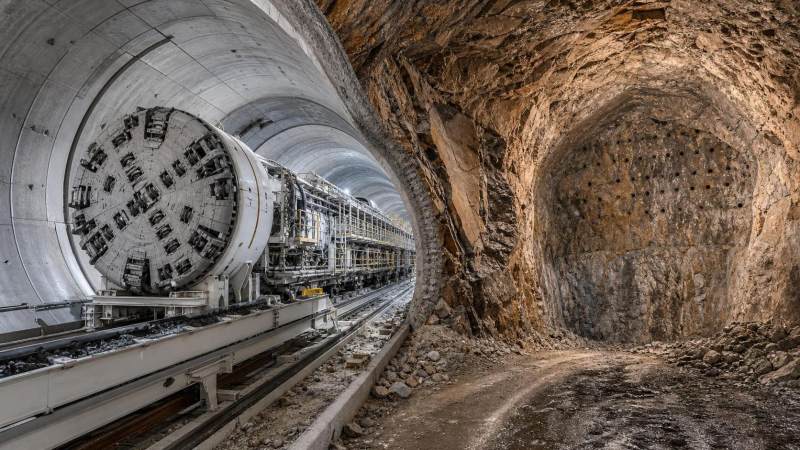
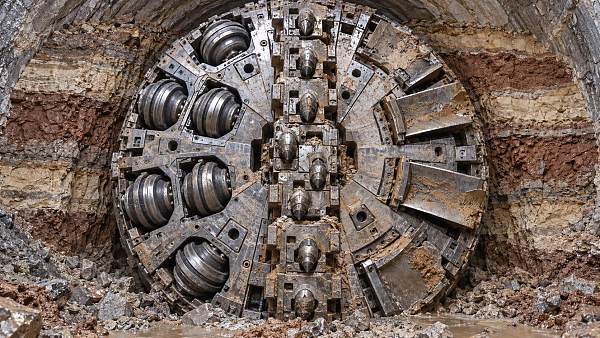
TBM technology uses a mechanized excavation system that continuously cuts, supports, and removes material.
Depending on ground conditions, the machine may be hard rock, EPB, or slurry type.
The main advantage is consistency.
When the geology is predictable, TBM technology can deliver stable advance rates, better circular profiles, and lower surface disturbance.
It also supports high-quality segmental lining integration, which helps long tunnels and high-spec infrastructure projects.
Core strengths of TBM technology
- High production potential in long, continuous drives.
- Better control of settlement in urban or sensitive zones.
- Improved worker safety through enclosed mechanized operations.
- More uniform finished tunnel geometry.
- Reduced blast vibration, noise, and overbreak.
Still, TBM technology is not automatically the best answer.
Its performance depends heavily on how well the machine type matches the real ground, not the assumed ground.
Where Drill and Blast Still Holds a Strong Edge
Drill and blast remains highly relevant, especially in variable rock masses and complex tunnel layouts.
It uses repeated cycles of drilling, charging, blasting, mucking, and support installation.
That sounds slower, but flexibility is its real advantage.
When tunnel shapes change often, or cross passages are frequent, drill and blast adapts with less equipment lock-in.
It can also be more practical for shorter tunnels where TBM setup and launch costs are hard to justify.
Typical advantages of drill and blast
- Handles changing tunnel sections with less redesign pressure.
- Works well in fractured, irregular, or mixed-quality rock.
- Lower initial capital intensity than most TBM technology solutions.
- Simpler mobilization for remote or staged projects.
- Easier recovery from local geological surprises.
The trade-off is that vibration, overbreak, and cyclic scheduling can reduce precision and complicate environmental control.
Ground Conditions: The Real Decision Driver
The best method usually emerges from a realistic ground model.
Not from a generic preference for mechanization or traditional excavation.
In practice, four ground-related questions matter most.
1. Is the geology uniform or highly variable?
TBM technology performs best when lithology and structural conditions stay relatively consistent over long distances.
Frequent transitions between hard rock, faulted zones, and squeezing ground increase operational risk.
Under those conditions, drill and blast often offers better tactical control.
2. How much groundwater pressure is present?
High water inflow can challenge both methods, but the risk profile differs.
Appropriately selected TBM technology, especially slurry or EPB systems, can manage pressure effectively in soft ground.
In fractured rock with sudden inflows, drill and blast may allow more localized treatment and staged stabilization.
3. Is the ground abrasive, blocky, or faulted?
Abrasive rock can raise cutter wear and maintenance downtime in TBM technology operations.
Blocky or faulted formations may also trigger instability at the face.
That does not rule out TBMs, but it does demand stronger contingency planning.
4. How sensitive is the surface environment?
In dense urban corridors, settlement control and low vibration can outweigh higher upfront costs.
That is where TBM technology often becomes the preferred choice.
For remote mountain tunnels, drill and blast may remain more resilient and economical.
Tunnel Geometry, Access, and Schedule Pressure
Ground conditions are central, but alignment and construction logistics also shape the decision.
This is where many early comparisons become too narrow.
Long and straight tunnels
TBM technology usually gains an advantage in long drives with limited geometric change.
Once launched, steady excavation can support a more predictable schedule.
Short or segmented tunnels
For shorter lengths, setup time can weaken the business case for TBM technology.
Drill and blast often reaches productive work faster with less launch infrastructure.
Complex junctions and caverns
Stations, caverns, and multiple branches reduce the simplicity advantage of TBM technology.
Drill and blast generally provides more freedom in non-circular and changing excavation profiles.
Tight schedule windows
Schedule pressure should be assessed carefully, not emotionally.
TBM technology can be faster overall, but only after design finalization, procurement, assembly, and commissioning.
If permitting or site access remains uncertain, drill and blast may reduce startup exposure.
Cost Is Important, but Total Risk Matters More
A narrow CAPEX comparison can distort the decision.
The smarter lens is total project exposure.
From a technical evaluation perspective, the real question is not which method is cheaper in isolation.
It is which method creates fewer costly surprises across the full delivery cycle.
That includes downtime, support changes, environmental claims, equipment wear, and schedule slippage.
A Practical Screening Framework
In actual project reviews, a structured comparison works better than a single-method preference.
A practical screening sequence can look like this.
- Define the ground model using boreholes, mapping, hydrogeology, and uncertainty bands.
- Match likely ground behavior to suitable TBM technology types or drill and blast sequences.
- Test alignment constraints, including curves, caverns, shafts, and access limitations.
- Compare schedule pathways, including procurement lead times and startup readiness.
- Quantify risk costs, not just direct excavation costs.
- Stress-test both methods against worst-case geological scenarios.
This approach often reveals that the best answer is conditional, not absolute.
Some projects even split methods by section, using TBM technology in one zone and drill and blast in another.
Final Take: Fit the Method to the Ground, Not the Trend
TBM technology is powerful when geology is sufficiently understood, alignment is favorable, and low disturbance is a priority.
Drill and blast stays competitive where geology changes often, layouts are irregular, or flexibility matters more than automation.
The more useful signal is not whether a method is modern or conventional.
It is whether the excavation strategy truly matches the ground response you expect to face.
For teams tracking infrastructure execution through a strategic lens, this is exactly where informed analysis creates value.
At TF-Strategy, that means linking geology, machine capability, and construction logic into a decision framework that is practical, not theoretical.
If the goal is better delivery certainty, start with the ground conditions, then let the tunneling method follow.
Related News
 Sep 19, 2026Mining Truck Technology Trends: What Fleet Managers Should Prioritize for 2026Mining truck technology trends for 2026: prioritize electrification, autonomy, predictive maintenance, and road intelligence to improve fleet uptime, safety, and cost control.
 Sep 17, 2026How TBM Guidance Technology Maintains Alignment Through Curves and Variable GroundTunnel boring machine guidance technology helps teams maintain precise alignment through curves and variable ground, reducing risk, improving lining accuracy, and protecting schedules.
 Sep 16, 2026Infrastructure Equipment Market Reference: Demand, Pricing, and Supplier BenchmarksInfrastructure equipment market reference for buyers: assess demand signals, total cost, pricing risks, and supplier benchmarks for tunnels, mining, cranes, and road projects.
 Sep 15, 2026How to Evaluate Infrastructure Equipment Suppliers for Complex Project RequirementsInfrastructure equipment solutions supplier evaluation guide for complex projects: assess technical fit, lifecycle cost, reliability, local support, and contract risk.
Geological Boring Fellow
Weekly Insights
Stay ahead with our curated technology reports delivered every Monday.