
Earthmoving Equipment Types Explained: Which Machines Fit Excavation, Loading, and Grading?
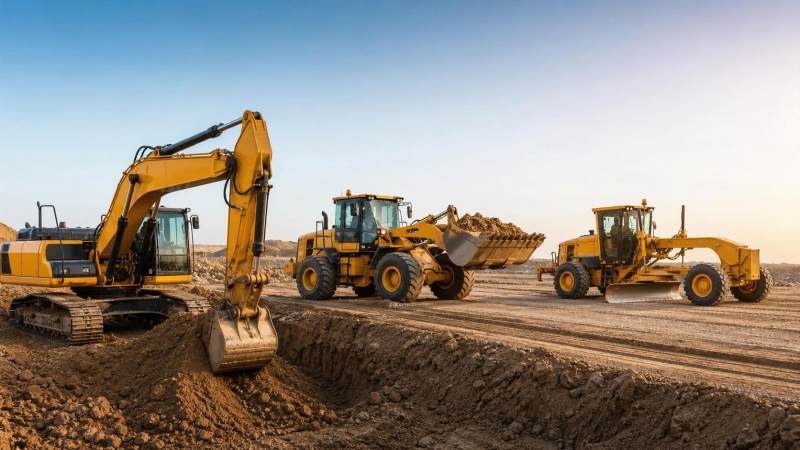
Choosing the right earthmoving equipment is rarely a simple fleet decision. It shapes excavation speed, haul cycles, finish quality, fuel use, and the risk profile of the entire site. When excavation, loading, and grading overlap on one schedule, machine fit matters more than machine size alone.
That is why earthmoving equipment remains a central topic across mining, road building, utilities, urban development, and large civil works. The best results come from matching ground conditions, material behavior, reach, payload, and precision requirements rather than relying on habit or brand preference.
From the perspective of TF-Strategy, where heavy industry is viewed through both equipment physics and project strategy, this matching process is becoming more data-driven. Contractors now compare not only output, but also total cost of ownership, digital control, safety margins, and future energy transition options.
What earthmoving equipment really includes
In practical terms, earthmoving equipment covers machines that cut, move, load, spread, compact, or shape soil and rock. The category is broader than excavators alone, and each machine type serves a different point in the work cycle.
Excavators break and remove material. Loaders handle stockpiles and truck loading. Bulldozers push and spread. Motor graders refine slope and surface tolerance. Articulated or rigid dump trucks connect excavation zones with disposal or processing points.
The value of understanding these roles is immediate. A machine that performs well in trenching may be inefficient in fine grading. A loader with strong breakout force may still fail to support a long-haul loading strategy if the truck match is poor.
Why machine selection matters more now
Earthmoving equipment decisions used to focus heavily on capacity and availability. That still matters, but project conditions have changed. Schedules are tighter, fuel volatility is higher, and rework is less acceptable on infrastructure programs.
At the same time, site environments are becoming more complex. Urban jobs need compact access and lower emissions. Open-pit operations need continuous output under harsh temperatures. Transport corridors demand tight grading tolerances and digital verification.
TF-Strategy tracks these shifts across heavy sectors, from ultra-large excavators in mining to road machinery defining pavement accuracy. The same principle appears everywhere: machine selection is no longer just operational. It is strategic.
Excavation machines and where they fit best
Excavators are usually the first reference point when people discuss earthmoving equipment. Yet even within this group, fit depends on digging depth, swing radius, attachment needs, and material hardness.
Crawler excavators
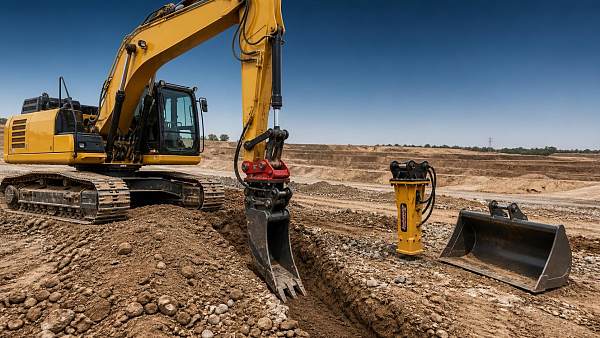
Crawler excavators remain the standard choice for bulk excavation, trenching, slope cutting, and rock work. Their stability suits rough ground, and attachment flexibility supports breakers, grapples, and compaction tools.
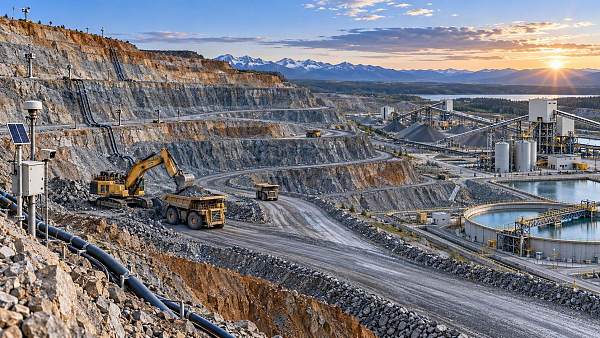
They are often the best answer when the site demands sustained digging force and reliable underfoot performance. In mining-adjacent applications, larger crawler units also support high-volume loading into haul trucks.
Wheeled excavators and compact excavators
Wheeled excavators fit better where mobility between short work zones matters. Utilities, roadside repairs, and urban drainage works often benefit from their travel speed and reduced surface disruption.
Compact excavators serve confined spaces, landscaping, and light civil packages. They trade brute force for access, lower ground pressure, and easier transport, which can be more valuable on congested sites.
Loading equipment and the economics of cycle time
Loading is where many projects either gain momentum or lose it. Even strong excavation output creates bottlenecks if loading tools do not match truck size, material density, and stockpile layout.
Wheel loaders
Wheel loaders are among the most versatile earthmoving equipment types. They handle aggregate yards, short-cycle loading, backfilling, plant feeding, and cleanup operations with high mobility.
They work best when travel distances are short and bucket loading speed matters. On quarry and mining support sites, the right loader-truck pass match can significantly improve hourly output.
Track loaders and skid steer loaders
Track loaders suit soft or uneven terrain where traction is a concern. Skid steers fit smaller sites, especially where multiple attachments are needed for grading, material handling, or surface preparation.
These machines rarely replace larger primary loaders, but they often improve support efficiency. In practice, the right secondary earthmoving equipment can reduce idle time across the entire spread.
Grading equipment and the difference between rough and finish work
Grading is not a single task. Rough grading shapes mass movement and drainage direction. Finish grading creates surface accuracy for pavements, foundations, utility corridors, and platform construction.
Bulldozers
Bulldozers are ideal for pushing, spreading, slot dozing, and rough shaping. They excel where material needs to move over short distances and where ground conditions demand traction and blade control.
On cut-and-fill jobs, dozers often create the working platform for the rest of the fleet. Their role is especially important before precision equipment can deliver final levels.
Motor graders
Motor graders are the precision specialists in earthmoving equipment fleets. They shape crowns, shoulders, sub-base layers, and drainage profiles with a level of finish that dozers usually cannot match.
This is why large road machinery remains a key infrastructure pillar. Surface accuracy affects later paving quality, material consumption, and long-term maintenance performance.
Common project scenarios and practical equipment pairings
Most jobs do not rely on a single machine category. Performance comes from pairing earthmoving equipment around actual workflow rather than around procurement categories.
- Utility trenching often combines compact or wheeled excavators, skid steers, and compact rollers.
- Road subgrade works usually depend on excavators, dozers, graders, and articulated dump trucks.
- Quarry and mine support zones may require large excavators, wheel loaders, and rigid haul trucks.
- Industrial platform development often mixes bulk earthmoving equipment with precision grading and compaction tools.
The important point is sequence. A grader cannot recover poor moisture control or badly distributed fill. A loader cannot solve a haul road layout that causes truck queuing. Fleet logic matters as much as machine logic.
What to evaluate before selecting a machine
A useful earthmoving equipment decision starts with site truth, not brochure specifications. The same rated machine can perform very differently depending on slope, weather, haul distance, and operator support.
- Material type: clay, blasted rock, sand, mixed fill, or abrasive overburden require different tools.
- Ground condition: soft ground may favor tracks, while paved access can favor wheeled mobility.
- Cycle design: loading time, truck waiting time, and dump route often determine real productivity.
- Accuracy needs: rough mass movement and finish grading should not be evaluated with the same criteria.
- Support ecosystem: parts availability, telematics, service response, and operator familiarity affect uptime.
This broader view reflects the TF-Strategy approach to heavy equipment intelligence. Physical parameters matter, but they become useful only when connected to project method, commercial risk, and long-term asset performance.
Digital control, energy transition, and the next selection standard
Another reason earthmoving equipment selection deserves closer attention is that the machines themselves are changing. Telematics, payload monitoring, grade control, remote diagnostics, and semi-autonomous functions are moving into normal procurement discussions.
In parallel, electrification and lower-emission platforms are reshaping how fleets are planned. While pure electric mining trucks and remote-controlled excavation may seem distant from smaller projects, the commercial logic is spreading downward.
For many operations, the near-term benefit is better visibility. Data on idle time, bucket payload, route efficiency, and fuel burn helps refine which earthmoving equipment types truly deliver value on similar future work.
Building a better decision framework
A sound decision framework is less about finding a universal best machine and more about narrowing fit. Start by separating bulk excavation, loading, haul support, rough grading, and finish grading into distinct requirements.
Then compare equipment options against measurable job conditions. Look at ground pressure, breakout force, pass counts, blade control, haul interface, and expected rework exposure. That approach creates clearer trade-offs.
When the project is large or technically exposed, it also helps to benchmark against wider heavy industry signals. Intelligence from mining, tunneling, lifting, and road construction often reveals where productivity standards are heading next.
The most effective next step is to map each work package to the earthmoving equipment function it actually needs, then test that map against cycle time, surface tolerance, uptime support, and total ownership cost. That turns equipment choice into a controlled project decision rather than a reactive purchase.
Related News
 Sep 15, 2026How to Evaluate Infrastructure Equipment Suppliers for Complex Project RequirementsInfrastructure equipment solutions supplier evaluation guide for complex projects: assess technical fit, lifecycle cost, reliability, local support, and contract risk.
 Sep 14, 2026What Drives Surface Mining Equipment Cost Across a Mine’s Operating Life?Surface mining equipment cost depends on fleet matching, fuel, wear, maintenance, availability, and rebuild timing. Explore lifecycle strategies that protect output and margins.
 Sep 13, 2026Crawler Crane Application Analysis for Wind Farms, Bridges, and Confined SitesCrawler crane application analysis for wind farms, bridges, and confined sites—optimize lift paths, ground conditions, access, and schedules for safer project delivery.
 Sep 12, 2026Open-Pit Mining in North America: Key Project Risks and Planning PrioritiesOpen-pit mining North America: uncover key risks and planning priorities for geology, permitting, water, fleet strategy, and resilient project delivery.

Hydraulic Power Analyst
Weekly Insights
Stay ahead with our curated technology reports delivered every Monday.