
How to choose earthmoving equipment for uneven jobsite terrain
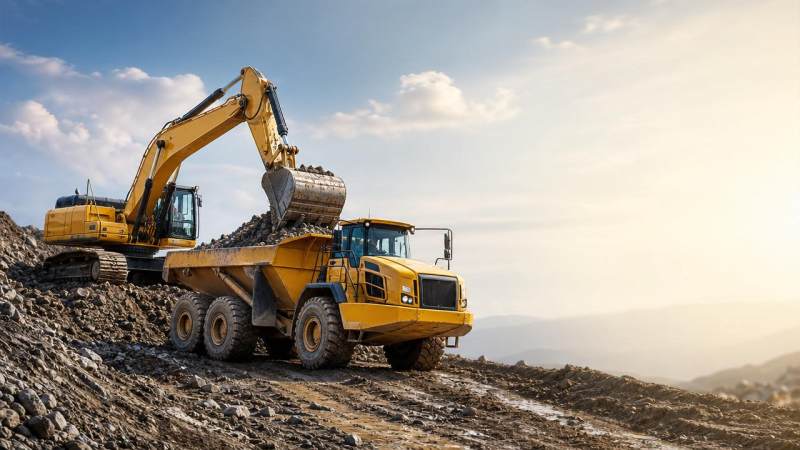
Uneven ground can turn routine site work into a safety, productivity, and cost challenge. Choosing the right earthmoving equipment is not just about machine size—it requires matching traction, stability, ground pressure, reach, and operator control to real terrain conditions. This guide helps operators understand how to evaluate rough, sloped, soft, or rocky jobsites and select equipment that delivers safer handling, better efficiency, and more reliable performance.
Why uneven terrain changes every earthmoving equipment decision
On flat, compacted ground, many machines can perform acceptably. On broken grades, soft shoulders, blasted rock, or wet haul routes, the same machine may lose traction, overload one side, or create unsafe swing conditions.
For operators, the problem is practical rather than theoretical. A poor fit between machine and terrain increases rework, fuel burn, cycle times, undercarriage wear, and rollover risk. It also reduces confidence in tight working windows.
In heavy infrastructure, mining support, road construction, and site preparation, earthmoving equipment must be selected around the ground first, then the production target. That principle is central to risk-aware equipment planning.
- Soft ground demands low ground pressure and flotation, not just more horsepower.
- Steep or cross-sloped work needs stability geometry, balanced load paths, and precise control response.
- Rocky terrain accelerates tire cuts, bucket wear, track damage, and shock loading through the frame.
- Restricted benches or narrow cuttings require compact swing, reach planning, and visibility support.
How to assess the jobsite before choosing earthmoving equipment
Before comparing excavators, dozers, loaders, or articulated haulers, operators should classify the terrain in a simple but disciplined way. This avoids choosing a machine based only on availability or nominal capacity.
Start with five terrain questions
- Is the ground firm, soft, saturated, or variable across the work zone?
- Will the machine travel longitudinally on slopes, work across slopes, or both?
- Are there embedded rocks, loose spoil, mud pockets, trench edges, or uncompacted backfill?
- How much reach, lift height, dump clearance, and swing space are required?
- What weather pattern may change the ground condition during the shift or week?
This first-pass review often reveals that the real decision is not wheel versus track alone. It may involve attachment size, track shoe type, axle articulation, tire choice, travel route layout, or bench preparation.
The table below helps operators connect terrain conditions with the most important machine selection priorities for earthmoving equipment.
A terrain map does not need to be complex. Even a basic site walk with operators, supervisors, and maintenance staff can prevent the wrong earthmoving equipment from being assigned to a difficult area.
Which machine types fit rough, sloped, soft, or rocky jobsites?
Different machine families solve different terrain problems. Operators should think in terms of ground interaction, travel pattern, and task sequence rather than broad assumptions about machine size.
Tracked excavators
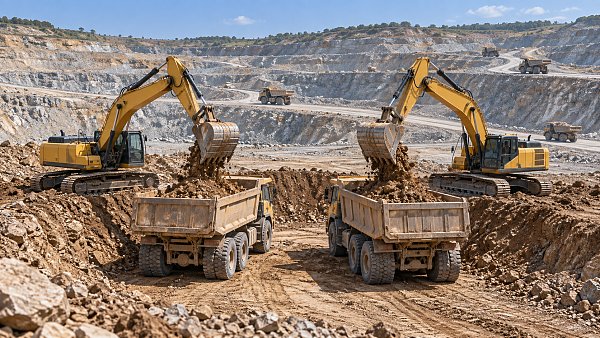
Tracked excavators are often the first choice on uneven terrain because they spread weight better than wheeled units and maintain useful traction on soft or broken ground. They also allow digging from a stable position while keeping haul units on firmer routes.
Dozers
Dozers are valuable when the job starts with terrain correction. They cut access, level pads, manage spoil, and create safer travel lanes for other earthmoving equipment. On unstable jobsites, site preparation by dozer can be more important than adding bigger loading machines.
Wheel loaders and skid steer or compact track loaders
Wheel loaders work well where travel speed matters and the surface is reasonably maintained. Compact track loaders can outperform larger wheeled machines in confined, muddy, or highly variable terrain, especially during utility, landscaping, or road-edge repair work.
Articulated dump trucks versus rigid haul units
Articulated haulers usually handle uneven routes, rolling grades, and lower-quality haul roads better than rigid trucks. Their articulation and traction design help maintain movement where a rigid frame may lose efficiency or require more road building.
Use this comparison when matching earthmoving equipment to terrain-sensitive tasks.
The key takeaway is simple: the best earthmoving equipment for uneven terrain is usually the machine that maintains safe consistency, not the machine with the largest nominal output.
What technical factors should operators and buyers check first?
When terrain is difficult, a specification sheet should be read differently. Peak power matters, but the decision often turns on stability and controllability under real site conditions.
Ground pressure and undercarriage setup
Low ground pressure reduces sink risk in wet or loose soil. Track width, shoe design, and machine weight distribution affect flotation. On abrasive rock, however, wider tracks may not always be the lowest-wear solution.
Center of gravity and working radius
As the boom extends or the bucket fills, the working envelope changes. Uneven terrain magnifies this. Operators should review lift charts, swing limits, and rear overhang exposure, especially near edges or on partially prepared benches.
Hydraulic smoothness and operator control
Jerky movements increase spill, shock, and track instability. Precise hydraulic modulation is essential when handling rock, shaping slopes, trenching beside unstable walls, or loading trucks from uneven cut faces.
Visibility, cameras, and machine feedback
Blind zones are more dangerous on broken terrain because the machine itself may pitch or settle during the cycle. Camera systems, slope indicators, load feedback, and travel alarms support safer operation, especially during low-light or weather-affected shifts.
- Check whether the machine will work mostly stationary, travel-loaded, or both.
- Review attachment weight together with the material density, not separately.
- Confirm guarding requirements for hoses, belly plates, steps, lights, and cylinders.
- Consider service access because muddy or rocky jobsites slow daily inspection and repairs.
A practical procurement guide for earthmoving equipment on difficult ground
Many selection mistakes happen because teams buy for the average day rather than the worst workable day. On uneven terrain, procurement should focus on reliable operating windows, maintenance tolerance, and total job flow.
Five procurement priorities
- Define the dominant terrain hazard: slope, mud, rock, edge work, or route instability.
- Match the machine to the highest-risk task, not only to the highest-volume task.
- Evaluate attachment and undercarriage options as part of the base decision.
- Estimate downtime exposure from tire damage, track wear, stuck events, and route recovery.
- Check parts support and field service responsiveness for remote or high-intensity projects.
Operators should be included in this process early. They often identify control sensitivity, visibility limitations, entry and exit safety, and real maneuvering constraints that are missed in office-only evaluations.
The following table can be used as a fast selection scorecard for earthmoving equipment in uneven terrain procurement.
This framework supports better buying decisions because it links daily operating conditions to cost, safety, and achievable output rather than to brochure comparisons alone.
Common mistakes when choosing earthmoving equipment for uneven jobsites
Some errors appear repeatedly across construction, quarry support, utility installation, and mining-adjacent earthworks. Most are preventable with better site reading and machine-task matching.
- Choosing larger buckets to raise hourly output, then losing cycle stability on slopes or soft pads.
- Using wheel-based equipment on routes that are too wet or too rocky to maintain consistent traction.
- Ignoring undercarriage or tire specification and focusing only on engine power and payload.
- Assuming one machine can handle excavation, loading, grading, and haul support equally well in highly variable ground.
- Underestimating how weather changes site trafficability from one shift to the next.
The hidden cost of a poor choice is often not the machine price. It is the chain reaction: slower production, support equipment delays, route repairs, operator fatigue, and higher exposure to incidents.
How TF-Strategy supports smarter equipment decisions in complex terrain
For operators and project teams working around open-pit mining support, road building, heavy lifting access works, and major earth engineering, the challenge is rarely a lack of machine options. The challenge is selecting the right earthmoving equipment with the right operational logic.
TF-Strategy brings value by connecting machine parameters, construction methods, terrain constraints, and total project goals. Its heavy-industry intelligence perspective is especially useful when jobsites involve difficult haul roads, remote conditions, mixed fleets, or pressure to reduce total cost of ownership.
Where that intelligence helps operators and contractors
- Comparing tracked and wheeled solutions for different soil-bearing capacities and route quality.
- Understanding how equipment choices affect delivery reliability in infrastructure and resource projects.
- Reviewing trend impacts such as remote operation, electrification, and smarter machine monitoring.
- Supporting discussions around TCO, maintenance planning, and task-specific fleet combinations.
In practice, that means better questions before deployment: Can the machine hold productivity after rain? Does the route need preparation first? Is the attachment too aggressive for the bench width? Those questions protect both output and safety.
FAQ: earthmoving equipment selection on uneven terrain
How do I choose between tracked and wheeled earthmoving equipment?
Choose tracked equipment when ground pressure, traction, and soft-surface stability are the main concern. Choose wheeled equipment when maintained travel surfaces, faster movement, and frequent repositioning matter more. On mixed sites, a combination often performs best.
What matters more on a rough jobsite: machine size or stability?
Stability usually matters first. A larger machine may deliver less real output if it cannot travel safely, hold grade, or operate near edges without constant adjustment. Stable cycle performance generally beats nominal peak capacity.
Are articulated dump trucks better for uneven haul routes?
In many cases, yes. Articulated units are often better suited to rolling, muddy, or lower-standard haul roads. They are not always the lowest-cost answer, but they can reduce route sensitivity and improve movement consistency on difficult terrain.
What should operators inspect daily on uneven terrain jobs?
Focus on tracks or tires, fluid leaks, structural guards, loose pins, bucket or blade wear, travel route deterioration, and fresh soft spots. Also confirm visibility systems and check whether overnight rain or blasting has changed the operating surface.
Why choose us for equipment intelligence and next-step planning
If you need to choose earthmoving equipment for rough, sloped, muddy, or rocky terrain, TF-Strategy can support a more informed decision process. Our strength is not generic product promotion. It is connecting physical machine behavior, project method, and heavy-industry operating reality.
You can reach out to discuss practical points such as parameter confirmation, machine category selection, attachment matching, expected delivery windows, TCO-sensitive options, terrain-specific operating risks, and documentation needs for project review.
For contractors, fleet planners, and operators facing difficult ground conditions, that conversation can shorten trial-and-error, reduce misallocation, and improve site readiness before the first machine starts work.
Related News
 Oct 06, 2026Selecting Petrochemical Overhead Cranes for Hazardous Areas and Heavy Process LoadsPetrochemical overhead cranes for hazardous areas: learn how to match capacity, duty, controls, corrosion protection, and maintenance access for safer, reliable lifts.
 Oct 05, 2026Tunneling Equipment Specification Planning: Key Criteria for Ground and Project RisksEquipment specification planning tunneling: learn how to match TBM systems to ground risks, geometry, safety, logistics, and lifecycle cost for more reliable project delivery.
 Oct 04, 2026Nuclear Lifting Equipment Cost: Budgeting for Compliance, Testing, and Lifecycle RiskNuclear lifting equipment cost explained: budget for compliance, proof-load testing, installation, documentation, and lifecycle risk to make confident procurement decisions.
 Oct 03, 2026How to Assess TBM Manufacturers for Hard-Rock Tunneling Projects?Choose the right tunnel boring machine manufacturer for hard-rock projects. Explore key criteria for design, lifecycle cost, factory quality, and service support.

Hydraulic Power Analyst
Weekly Insights
Stay ahead with our curated technology reports delivered every Monday.