
When do industrial excavation techniques save more fuel?
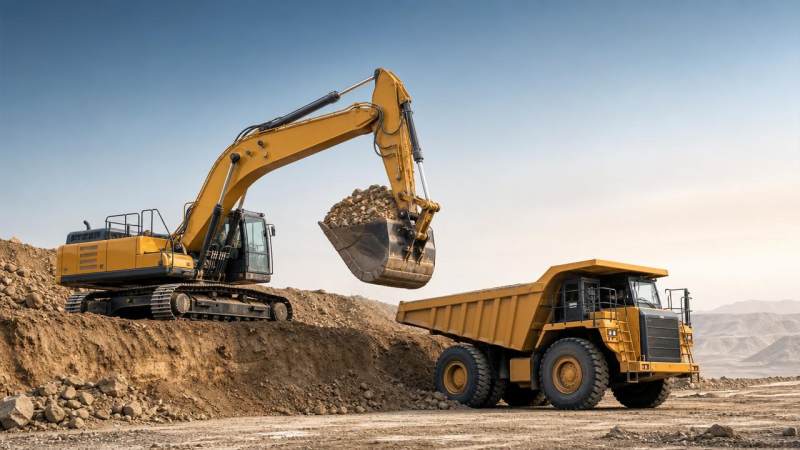
When do industrial excavation techniques save more fuel? For operators, the answer depends on more than machine size—it comes down to digging method, ground conditions, cycle time, and jobsite coordination. Understanding how industrial excavation techniques affect fuel burn helps crews cut waste, improve productivity, and protect equipment performance in demanding earthmoving environments.
Why fuel savings depend on technique, not just machine power
Many operators assume fuel use is mainly a function of engine rating or bucket size. In reality, industrial excavation techniques often determine whether a machine works inside its efficient load zone or wastes diesel through unnecessary travel, rehandling, idle time, and poor bucket fill.
This matters across open-pit mining, road construction, utility trenching, quarry loading, and large infrastructure earthworks. In each case, the same excavator can produce very different fuel results depending on cut geometry, truck spotting, swing angle, bench design, and operator rhythm.
For users and operators, the practical question is simple: when do industrial excavation techniques reduce liters per cubic meter moved? The answer usually appears when the method reduces motion without reducing output.
- Shorter swing angles reduce hydraulic demand and cycle time.
- Better face preparation improves bucket penetration and fill factor.
- Stable haul-unit positioning prevents waiting, overreaching, and repeated corrections.
- Reduced idling and cleaner sequencing keep engines working under productive load.
What operators should measure on site
Fuel efficiency in excavation is not only liters per hour. That number can mislead crews, because a lower burn rate may still come with lower production. Better indicators include liters per bank cubic meter, liters per truck loaded, or fuel burn per productive cycle.
TF-Strategy tracks this issue from a heavy-equipment intelligence perspective. By linking machine parameters, excavation methods, and site logistics, operators can judge whether a technique is truly saving fuel or merely slowing output.
Which industrial excavation techniques usually save more fuel?
Not every method performs the same in every ground condition. The fuel-saving value of industrial excavation techniques changes with material density, fragmentation, moisture, haul-unit access, and machine match. The table below compares common techniques from an operator’s viewpoint.
The common pattern is clear. Fuel savings appear when the excavation method reduces resistance, rotation, waiting, or rework. A larger engine may still be necessary, but industrial excavation techniques decide how often that power is wasted.
High-impact methods in heavy-duty environments
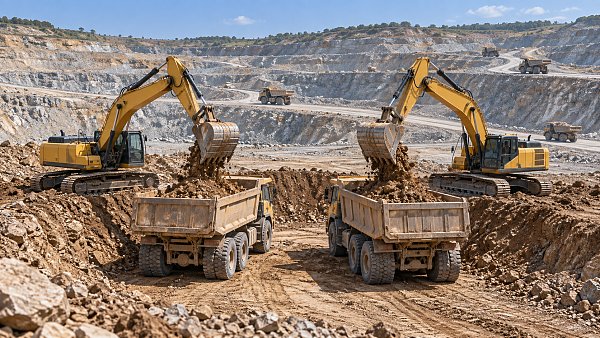
In mining and mass earthworks, operators often gain the biggest fuel benefit by controlling the loading zone rather than changing the machine. Better truck approach lanes, consistent face height, and disciplined bucket loading sequences frequently produce stronger savings than minor engine-setting changes.
In confined projects such as urban trenching or foundation excavation, fuel savings usually come from reduced machine travel, fewer spoil moves, and tighter coordination with support equipment. Here, industrial excavation techniques work as a jobsite system, not as an isolated machine habit.
How ground conditions change the fuel equation
Operators know that soil is never just soil. Wet clay, loose sand, blasted rock, frozen overburden, and mixed fill each demand a different digging response. Fuel-efficient industrial excavation techniques match the resistance profile of the ground instead of fighting it with brute force.
Soft or loose materials
In loose material, overdigging and long reaches are common sources of waste. Fast but uncontrolled motions often spill material, reduce fill consistency, and force repeat cycles. A smoother, shorter pattern usually lowers fuel per cubic meter even if peak engine load looks modest.
Dense soils and hard strata
When material is dense, the wrong technique can push the machine into repeated stall-like behavior. That burns fuel quickly and increases wear on bucket teeth, cutting edges, pins, and hydraulic components. Controlled attack angle, layer-by-layer cutting, and pre-loosening often outperform aggressive forcing.
Mixed ground and variable faces
Mixed ground creates inconsistent bucket loading. Operators may alternate between partial fills and overload events, both of which hurt fuel efficiency. In these cases, the most effective industrial excavation techniques include regular face trimming and constant adjustment of digging depth rather than fixed, repetitive strokes.
- Check whether bucket fill is stable from cycle to cycle.
- Watch for engine lugging in hard spots and underfilled passes in soft zones.
- Review whether pre-treatment, ripping, or blasting can reduce total fuel over the shift.
Excavation method comparison: where operators lose fuel most often
Operators often ask whether fuel waste comes from digging, swinging, traveling, or waiting. In practice, losses are distributed across the whole cycle. This comparison table highlights where industrial excavation techniques succeed or fail in daily production.
This is why fuel management cannot be separated from production planning. The best industrial excavation techniques reduce wasted motion across the entire cycle, not just during bucket penetration. For operators, that means watching the whole loading system, including trucks, faces, and ground preparation.
How to choose fuel-saving industrial excavation techniques for different jobs
There is no universal best technique. Selection should depend on material, required output, machine configuration, available support equipment, and site restrictions. Operators and site supervisors can use the following decision logic to choose practical fuel-saving methods.
- Define the production target in useful units such as truckloads per hour or cubic meters per shift.
- Identify the dominant loss: hard digging, long swing, queue delays, travel distance, or rehandling.
- Select industrial excavation techniques that attack that specific loss first.
- Measure results over several cycles, not just a single pass, because short-term variation can mislead.
- Recheck wear parts and hydraulic response, since technique and maintenance interact closely.
Selection factors operators should not ignore
- Bucket geometry and tooth condition strongly affect penetration efficiency.
- Boom and arm reach should match the cut, or the machine will work outside efficient geometry.
- Truck body height and approach angle influence loading speed and swing path.
- Site drainage and underfoot stability change traction, travel losses, and positioning time.
TF-Strategy supports this decision process by connecting physical machine data with construction methodology and commercial impact. For contractors and operators, that means more informed choices about technique, fleet match, and total cost of ownership instead of isolated fuel numbers.
Common mistakes that make industrial excavation techniques burn more fuel
Fuel waste often comes from habits that look productive but are not. These mistakes appear in both small job sites and billion-dollar infrastructure works. Correcting them usually delivers faster savings than waiting for a fleet upgrade.
Mistake 1: chasing peak speed instead of efficient cycles
Faster joystick movement does not always mean better output. If fast motions increase spillage, underfilling, or corrective movements, fuel per cubic meter rises. Efficient industrial excavation techniques prioritize controlled repeatability over visual aggressiveness.
Mistake 2: ignoring jobsite coordination
An excavator can be operated well and still waste fuel if trucks arrive badly spaced or spoil zones are poorly arranged. Operators should report these system losses because machine efficiency depends heavily on surrounding traffic flow and dispatch discipline.
Mistake 3: using one digging style for every material
Uniform technique across changing ground conditions leads to either unnecessary resistance or poor fill factor. Good operators adapt stroke length, cutting depth, and bucket attack angle as material behavior changes.
FAQ: practical questions from operators about fuel-saving excavation
Do industrial excavation techniques save more fuel than engine idle controls alone?
In many production environments, yes. Idle controls reduce waste during pauses, but industrial excavation techniques influence every working cycle. If a site has long swings, repeated repositioning, or poor fill factor, method changes can produce larger total savings than idle settings by themselves.
Which jobs see the fastest benefit from technique changes?
Bulk loading, trenching, and repetitive truck loading usually show results quickly because cycle patterns are easy to compare. Open-pit and quarry operations also benefit when face management and haul-unit positioning are improved. Highly variable demolition or mixed-ground work may need longer monitoring.
Should operators focus on liters per hour or liters per cubic meter?
Liters per cubic meter is usually the better field indicator because it links fuel to actual output. A low hourly burn rate can hide poor production. For fleet managers, combining both metrics with cycle time gives a more balanced view of performance.
Can pre-ripping or ground preparation really reduce total fuel cost?
Often it can, especially in dense or cemented material. Although preparation adds another step, it may lower breakout resistance enough to shorten cycles, reduce stress on hydraulics, and limit wear-part consumption. The right answer depends on material hardness, production targets, and available support equipment.
Why operators and contractors use TF-Strategy for excavation decisions
Industrial excavation techniques do not exist in isolation. They connect with machine sizing, hydraulic behavior, ground response, project sequencing, and fuel-sensitive operating cost. TF-Strategy focuses on that full relationship across TBM operations, open-pit mining, ultra-large excavators, road machinery, and heavy haulage systems.
For users and operators, this means practical intelligence rather than generic advice. TF-Strategy analyzes how construction methodology, physical parameters, and strategic procurement decisions fit together, helping project teams reduce TCO, improve delivery confidence, and avoid costly mismatches between equipment capability and site reality.
- Ask about parameter confirmation for excavation, loading, or hauling combinations.
- Request support for equipment selection based on ground condition and productivity goals.
- Discuss delivery timing, project-stage matching, and deployment planning.
- Review customized solution paths for fuel-sensitive operations, remote-control trends, or electrification transition.
- Clarify applicable compliance, safety, and documentation needs for cross-border infrastructure projects.
If your team is evaluating industrial excavation techniques for fuel savings, contact TF-Strategy to compare methods, confirm operating assumptions, and build a more reliable excavation plan around productivity, equipment life, and commercial outcome.
Related News
 Oct 06, 2026Selecting Petrochemical Overhead Cranes for Hazardous Areas and Heavy Process LoadsPetrochemical overhead cranes for hazardous areas: learn how to match capacity, duty, controls, corrosion protection, and maintenance access for safer, reliable lifts.
 Oct 05, 2026Tunneling Equipment Specification Planning: Key Criteria for Ground and Project RisksEquipment specification planning tunneling: learn how to match TBM systems to ground risks, geometry, safety, logistics, and lifecycle cost for more reliable project delivery.
 Oct 04, 2026Nuclear Lifting Equipment Cost: Budgeting for Compliance, Testing, and Lifecycle RiskNuclear lifting equipment cost explained: budget for compliance, proof-load testing, installation, documentation, and lifecycle risk to make confident procurement decisions.
 Oct 03, 2026How to Assess TBM Manufacturers for Hard-Rock Tunneling Projects?Choose the right tunnel boring machine manufacturer for hard-rock projects. Explore key criteria for design, lifecycle cost, factory quality, and service support.

Hydraulic Power Analyst
Weekly Insights
Stay ahead with our curated technology reports delivered every Monday.