
Industrial Lifting Technology Selection Guide: Load, Reach, Duty Cycle, and Safety Factors
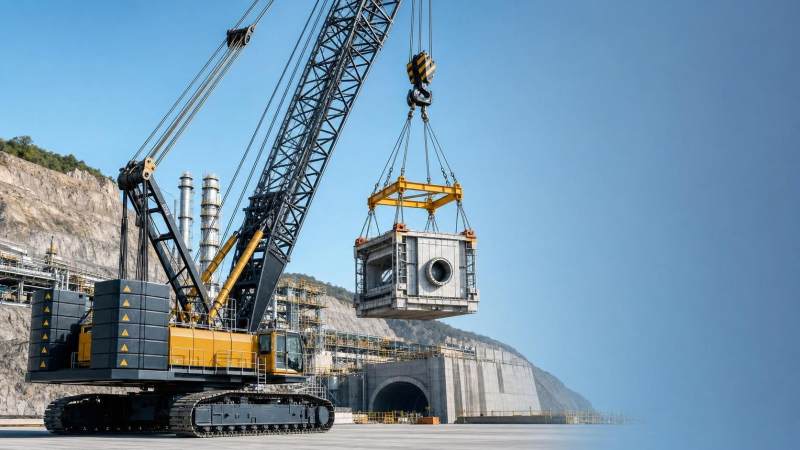
Choosing industrial lifting technology is rarely a matter of matching a rated capacity to a single load figure. In heavy industry, the real decision sits at the intersection of load behavior, working radius, duty cycle, site access, and safety tolerance. For projects tied to tunnels, mines, energy facilities, and large civil packages, the wrong selection can distort schedules, raise total cost of ownership, and introduce avoidable risk long before the first lift begins.
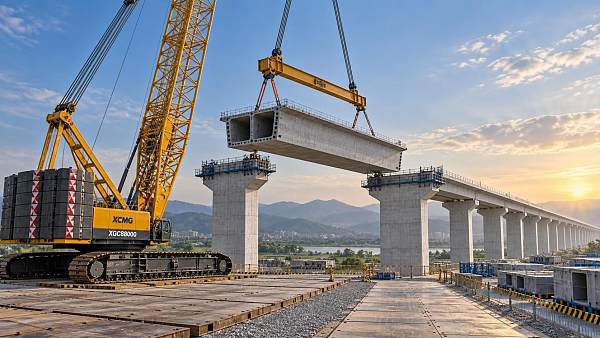
That is why industrial lifting technology now receives closer scrutiny across global infrastructure programs. At TF-Strategy, where heavy equipment intelligence connects machine physics with construction strategy, lifting decisions are viewed as part of a larger system. A crawler crane supporting wind turbine erection, a handling solution around TBM components, or a lifting setup in a high-output mining environment all depend on disciplined evaluation rather than nameplate assumptions.
What industrial lifting technology really covers
Industrial lifting technology includes far more than one machine category. It covers crawler cranes, overhead systems, gantries, hydraulic lifting units, strand jacks, specialized hoists, and integrated control systems used to move heavy or oversized components safely.
In practice, the selection question is not only “How much can it lift?” A more useful question is “How reliably can it lift this load, at this reach, under these site conditions, for this duration, with this level of operational control?”
That broader view matters because heavy lifts often involve irregular geometries, shifting centers of gravity, tandem actions, temporary foundations, and partial assembly sequences. The technology has to support the method, not just the mass.
Why selection pressure is increasing
Current project environments leave less room for approximation. Larger modules, tighter sites, stricter safety rules, and accelerated delivery windows are changing how industrial lifting technology is evaluated.
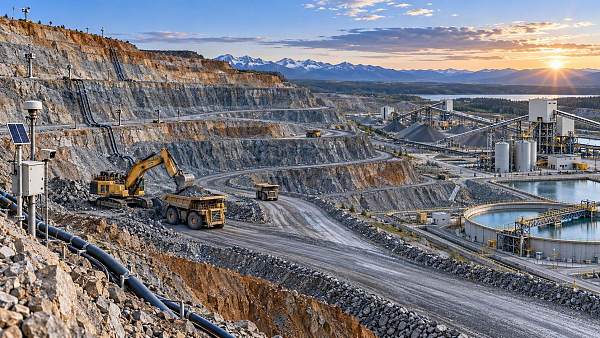
This is especially visible in sectors followed closely by TF-Strategy. Wind power components keep growing in hub height and section weight. Petrochemical and nuclear projects depend on precise heavy placement. TBM logistics involve confined handling sequences. Open-pit mining and road infrastructure demand lifting systems that remain dependable under punishing operating cycles.
A second shift is digitalization. Load monitoring, remote diagnostics, lift planning software, and fleet telemetry increasingly influence equipment choice. Selection now blends mechanical capability with data visibility and operational intelligence.
The four criteria that shape the decision
Load is more than weight
The load value in a drawing is only a starting point. Technical review should consider rigging weight, lifting attachments, spreaders, hooks, dynamic effects, and any fluid or material still contained in the component.
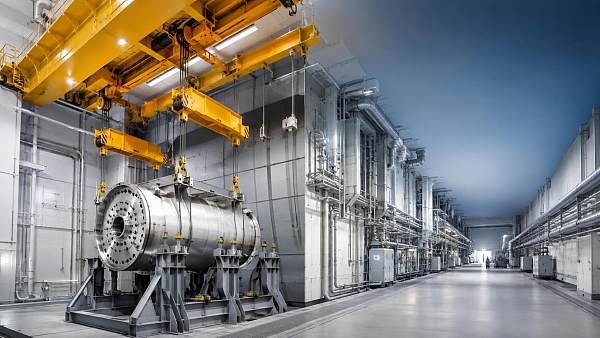
Shape also matters. Long, flexible, wind-sensitive, or asymmetrical loads create different demands than compact steel blocks. A TBM cutterhead section, for example, behaves differently from a transformer or a precast segment handler.
Reach changes the real capacity
Reach is often where early assumptions fail. As radius increases, available lifting capacity usually falls. Boom configuration, counterweight, jib arrangement, and ground preparation all interact with that radius curve.
This is why industrial lifting technology cannot be screened using maximum capacity alone. A crane that appears oversized on paper may become marginal at the required pick-and-place geometry.
Duty cycle defines productivity and wear
Duty cycle refers to how often, how long, and under what loading pattern the equipment operates. A one-time critical lift and a continuous handling operation should not be assessed with the same logic.
High-frequency cycles affect thermal load, hydraulic stress, rope life, maintenance intervals, and energy consumption. For repetitive lifting in mining support yards or tunneling logistics, duty cycle may influence lifecycle cost more than headline lifting capacity.
Safety factors must reflect the real environment
Safety margin is not a box-ticking exercise. It should reflect wind exposure, uneven ground, operator visibility, communication quality, load stability, and consequences of failure.
In complex heavy-industry settings, safety factors also include procedural discipline. Lift sequencing, exclusion zones, rigging verification, emergency recovery options, and monitoring systems all contribute to actual lift security.
Typical application contexts
Different sectors ask different things from industrial lifting technology. The decision framework stays consistent, but the weighting of each factor changes.
The table shows why context matters. A solution that performs well in repetitive yard handling may be poorly suited to ultra-heavy static positioning or constrained underground support tasks.
How to assess fit before committing
A practical review process usually becomes clearer when the equipment is tested against the operating method rather than the procurement sheet.
- Map the heaviest and most difficult lifts, not only the average lifts.
- Check capacity at actual radius, boom setup, and hook height.
- Evaluate ground bearing pressure, access roads, assembly area, and transport constraints.
- Review the expected duty cycle against maintenance windows and spare support.
- Test control features, monitoring systems, and integration with digital lift planning tools.
- Confirm how safety margins change under wind, temperature, altitude, or restricted visibility.
This approach reduces the risk of selecting industrial lifting technology that looks efficient in tender documentation but struggles during execution.
Cost, risk, and the hidden effect of underselection
The lowest acquisition or rental figure is not always the most economical path. Underselected lifting systems often create secondary costs through longer setup times, reduced weather windows, extra crane moves, additional rigging complexity, and repeated lift engineering revisions.
Overselection has its own penalty, especially where mobilization, transport, assembly footprint, and idle time are significant. The best industrial lifting technology choice usually sits in a narrow zone between operational resilience and unnecessary excess.
This is where strategic intelligence becomes useful. Market data, project benchmarks, and evolving equipment trends help decision-makers understand whether a requirement is technically justified or simply conservative by habit.
Where industry signals are heading
Several signals deserve attention. Lift planning is becoming more data-driven. Electrification and energy efficiency are influencing auxiliary systems. Remote monitoring is improving condition visibility. Safety expectations are shifting from compliance documents toward measurable operational control.
For organizations following the broader heavy-equipment landscape through sources such as TF-Strategy, these signals matter because lifting technology no longer stands apart from the rest of project strategy. It interacts with decarbonization goals, workforce availability, digital supervision, and long-cycle asset planning.
A practical next step
A sound lifting review begins with a structured matrix: load case, required reach, duty profile, site condition, and safety threshold. Once those factors are visible, equipment options become easier to compare on a realistic basis.
For complex projects, it is worth pairing technical lift parameters with broader intelligence on construction method, logistics, and sector trends. That combination often reveals whether a selected system will simply complete the lift, or support the full project with better reliability, lower disruption, and stronger control over risk.
In industrial lifting technology, better decisions usually come from asking sharper questions early. Load, reach, duty cycle, and safety factors remain the foundation, but the strongest outcomes come from evaluating them in the real context of the job.
Related News
 Sep 15, 2026How to Evaluate Infrastructure Equipment Suppliers for Complex Project RequirementsInfrastructure equipment solutions supplier evaluation guide for complex projects: assess technical fit, lifecycle cost, reliability, local support, and contract risk.
 Sep 14, 2026What Drives Surface Mining Equipment Cost Across a Mine’s Operating Life?Surface mining equipment cost depends on fleet matching, fuel, wear, maintenance, availability, and rebuild timing. Explore lifecycle strategies that protect output and margins.
 Sep 13, 2026Crawler Crane Application Analysis for Wind Farms, Bridges, and Confined SitesCrawler crane application analysis for wind farms, bridges, and confined sites—optimize lift paths, ground conditions, access, and schedules for safer project delivery.
 Sep 12, 2026Open-Pit Mining in North America: Key Project Risks and Planning PrioritiesOpen-pit mining North America: uncover key risks and planning priorities for geology, permitting, water, fleet strategy, and resilient project delivery.
Structural Load Expert
Weekly Insights
Stay ahead with our curated technology reports delivered every Monday.